Blueprint Takeoff

Search documents
Home Depot’s B2B Business Nears 50% of Revenue
PYMNTS.com· 2026-02-24 15:51
New distribution networks, direct job-site delivery, and digital tools (e.g., AI estimating) aim to embed Home Depot in contractors’ workflows, positioning it more like a construction-supply distributor than a traditional big-box chain.The retailer’s multi-year “Supply House” strategy is shifting focus to professional customers which are now nearly half of revenue.Home Depot is learning to grow even when housing does not.By completing this form, you agree to receive marketing communications from PYMNTS and ...



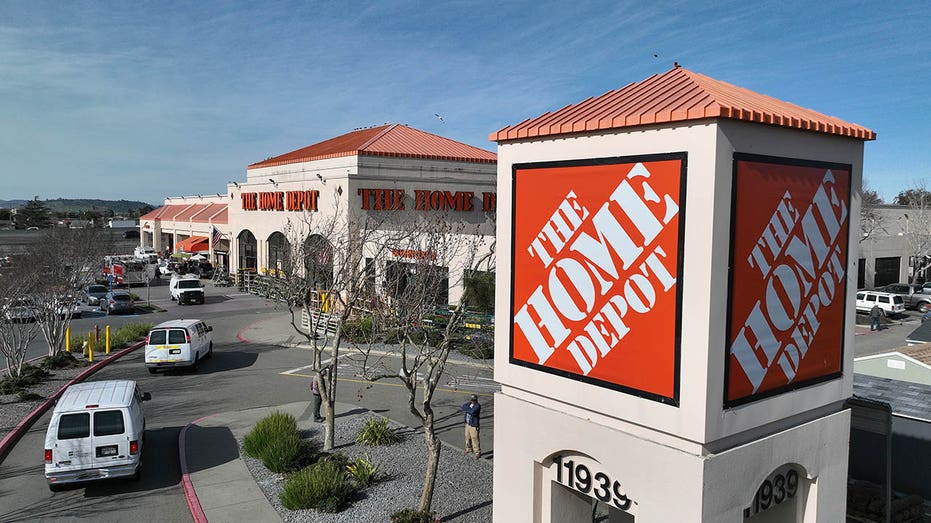
Home Depot's B2B Business Nears 50% of Revenue Amid DIY Slowdown
PYMNTS.com· 2026-02-24 15:51
Core Insights - Home Depot is shifting its focus towards professional customers, which now account for nearly half of its revenue, through a multi-year "Supply House" strategy aimed at embedding itself in contractors' workflows [1][5][19] - The company reported fourth-quarter 2025 adjusted earnings per share of $2.72 on revenue of $38.2 billion, which, despite being down 3.8% year over year, exceeded Wall Street expectations [3][4] - The growth of Home Depot's professional business reflects a structural repositioning rather than a temporary shift due to market conditions [5][7] Business Strategy - Home Depot is evolving from a traditional big-box retailer to a construction-supply distributor by integrating digital tools and direct job-site delivery [1][6] - The company has developed a "parallel distribution system" with Specialized Distribution Centers and a logistics fleet of over 8,000 trucks to facilitate direct delivery to construction sites [13][14] - The introduction of the AI-powered "Blueprint Takeoff" tool aims to streamline the estimation process for contractors, enhancing operational efficiency [16] Market Dynamics - The professional contractor segment, referred to as "Complex Pro," is characterized by longer project cycles and needs-based repairs, making it more resilient compared to the discretionary DIY market [7][15] - Home Depot's financials indicate a decline in transactions by 8.5% year over year, while the average ticket size increased by 2.4%, highlighting a shift in consumer behavior [9] - The company plans to limit new store openings to about 15 locations in 2026, focusing instead on enhancing supply chain capabilities and digital tools [19] Industry Trends - The retail landscape is shifting, with major players like Home Depot blurring the lines between merchant and service platform, similar to trends seen in eCommerce [6][8] - The divergence in performance between Pro-heavy categories and consumer-driven renovations underscores the impact of housing turnover on retail home improvement demand [18] - If successful, Home Depot may redefine its role in the construction economy, transitioning from a cyclical retailer to a hybrid distributor [20]