
Cannabis lending

Search documents
3 Cannabis REITs Investors Are Watching Closely in January 2026
Marijuana Stocks | Cannabis Investments And News. Roots Of A Budding Industry.™· 2026-01-22 15:00
Core Insights - The cannabis sector is evolving as capital markets reopen, leading investors to focus on cannabis real estate investment trusts (REITs) for more predictable revenue during uncertain times [1][17] - January 2026 is a critical month for investors to reassess income opportunities and monitor tenant performance updates [1][8] Group 1: Innovative Industrial Properties (IIPR) - IIPR is the largest cannabis-focused REIT in the U.S., specializing in acquiring industrial cannabis properties and leasing them back to licensed operators [2][4] - The portfolio includes over 100 properties across nearly 20 states, primarily cultivation and processing facilities, with long lease terms supporting recurring revenue visibility [4][6] - IIPR has maintained positive operating cash flow despite tenant liquidity stress, with funds from operations sufficient to support dividends [6][7] Group 2: Chicago Atlantic Real Estate Finance (REFI) - REFI operates as a mortgage-focused cannabis REIT, providing senior secured loans to cannabis operators, generating income primarily through interest payments [8][10] - The company targets operators in limited-license states, which often support stronger pricing and margins, and has shown consistent earnings strength with stable net interest income [10][11] - REFI maintains available lending capacity, allowing continued loan origination, but borrower performance is critical for earnings stability [12] Group 3: NewLake Capital Partners (NLCP) - NLCP is a smaller cannabis property REIT that acquires cannabis-related real estate through sale-leasebacks, with a portfolio that includes both dispensaries and cultivation facilities [13][15] - The company owns over 30 properties across roughly a dozen states, focusing on secondary and emerging cannabis markets, which can create opportunities but also add tenant risk [15][16] - Financially, NLCP has a conservative balance sheet with stable revenue year over year, and funds from operations continue to cover dividends [16][17] Group 4: Overall Market Insights - Cannabis REITs present a different risk profile compared to traditional cannabis stocks, focusing on income generation rather than retail sales growth [17] - Tenant health remains the primary risk across the sector, with IIPR, REFI, and NLCP serving different investor objectives, highlighting the importance of diversification [17]



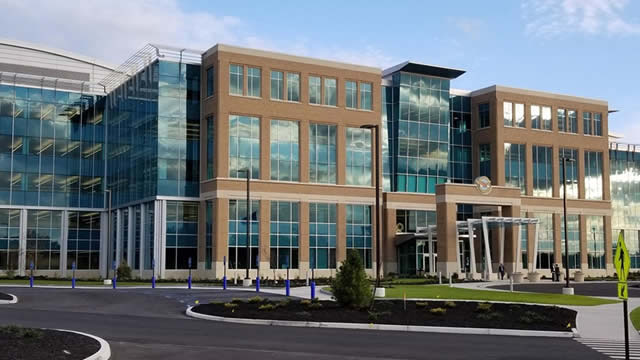
Best Cannabis REITs for July 2025: High-Yield Picks for Income Investors
Marijuana Stocks | Cannabis Investments And News. Roots Of A Budding Industry.™· 2025-07-10 14:00
Core Insights - Cannabis REITs are gaining momentum as investors seek dividend-paying stocks with long-term growth potential, with the U.S. cannabis market projected to exceed $45 billion by the end of 2025 [1][4] - The sector is benefiting from federal reclassification efforts and pro-cannabis amendments, improving investor sentiment and technical strength among several cannabis REITs [2][3] - Cannabis REITs provide a stable income stream and exposure to a rapidly growing industry, making them attractive for dividend investors [1][3] Company Summaries - **Innovative Industrial Properties, Inc. (IIPR)**: The largest cannabis REIT in the U.S., owning over 110 properties across 19 states, with a focus on long-term, triple-net lease agreements. In the most recent quarter, IIPR reported $74 million in rental revenue, a 12% year-over-year increase, and net income of $35 million, or $1.22 per share [5][8] - **NewLake Capital Partners, Inc. (NLCP)**: Owns 32 properties across 15 states, focusing on long-term leases with financially healthy cannabis businesses. In its latest quarterly report, NLCP posted $19 million in rental revenue, a 10% increase, and net income of $11 million, or $0.45 per share [9][10] - **Chicago Atlantic Real Estate Finance, Inc. (REFI)**: Specializes in lending capital to licensed cannabis operators, having deployed over $500 million across more than a dozen states. REFI reported $22 million in revenue, a 15% year-over-year increase, and net income of $13 million, or $0.68 per share [10][12] Market Trends - The cannabis sector is experiencing significant growth, with increasing legalization efforts and rising tenant demand, positioning cannabis REITs as one of the best asset classes to watch [3][4] - Each of the highlighted REITs offers a unique approach to accessing the cannabis industry, with IIPR focusing on scale, NLCP on tenant quality, and REFI on high yields through lending [13][14] - The importance of real estate financing in the cannabis supply chain is becoming critical as legalization evolves, making these REITs top candidates for investors seeking yield and diversification [14]

Chicago Atlantic Real Estate Finance(REFI) - 2025 Q1 - Earnings Call Transcript
2025-05-07 14:02
Financial Data and Key Metrics Changes - The loan portfolio principal totaled $407 million across 30 portfolio companies with a weighted average yield to maturity of 16.9%, down from 17.2% in the previous quarter [11] - Net interest income for Q1 was $13 million, a 7.3% decrease from $14.1 million in Q4 2024, primarily due to a decrease in non-recurring fees [15] - Total leverage was 28% of book equity as of March 31, down from 34% at the end of 2024 [12] - Distributable earnings per share were approximately $0.47 and $0.46 for basic and fully diluted shares, consistent with the previous quarter [19] Business Line Data and Key Metrics Changes - Gross originations during the quarter were $4.4 million, with $500,000 to new borrowers and $3.9 million to existing borrowers on delayed draw, offset by $9.2 million in sales and repayments [11] - The percentage of fixed-rate loans and floating-rate loans with floors greater than or equal to the prevailing prime rate was 71.2% [11] Market Data and Key Metrics Changes - The cannabis pipeline across the Chicago Atlantic platform stands at $462 million, with expectations for deployments to accelerate in Q2 and Q3 [9][23] - The company remains the third top-performing exchange-listed mortgage REIT, outperforming the median and average total return for all exchange-listed mortgage REITs by approximately 51% and 55% respectively since inception [10] Company Strategy and Development Direction - The company aims to create a differentiated and low-levered risk-return profile insulated from cannabis equity volatility [9] - The focus is on deploying capital with consumer and product-focused operators in limited license jurisdictions at low leverage profiles [7] - The company is cautious in its approach, reflecting selectivity in deployment due to market uncertainties and low valuations in the cannabis sector [40] Management's Comments on Operating Environment and Future Outlook - Management believes that the current operating environment is characterized by volatility and uncertainty, particularly in the cannabis equity markets [6][12] - The company expects to compete for refinancing opportunities in 2025, with a significant number of maturities anticipated [30] - Rescheduling of cannabis regulations could lead to increased cash flow for borrowers and greater market activity, although significant new entrants to the market are not yet evident [32][34] Other Important Information - The company raised approximately $1 million in net proceeds from the issuance of common stock through its ATM program [19] - The CECL reserve on loans held for investment decreased to approximately $3.3 million from $4.4 million, primarily due to the reversal of reserves related to loan number nine [17] Q&A Session Summary Question: Can you provide details on the near-term pipeline of $462 million? - The pipeline is generally related to CapEx, with expectations for deployments to accelerate in Q2 and Q3 [22][23] Question: What pricing assumptions are being made in underwriting? - Pricing in the industry is evolving, with adjustments made based on market conditions and state-specific developments [25][26] Question: How much visibility is there into repayments and net portfolio growth in 2025? - The aim is to achieve net portfolio growth in 2025, with significant maturities expected [30] Question: How would rescheduling impact the business? - Rescheduling could significantly increase after-tax free cash flow for borrowers and enhance the overall market environment [32] Question: What are the unfunded commitments at the end of the quarter? - There are approximately $19.8 million of unfunded commitments related to construction milestones and other projects [43]
Chicago Atlantic Real Estate Finance(REFI) - 2025 Q1 - Earnings Call Transcript
2025-05-07 14:00
Financial Data and Key Metrics Changes - The company's net interest income for Q1 2025 was $13 million, a 7.3% decrease from $14.1 million in Q4 2024, primarily due to a decrease in non-recurring fees and the impact of a 50 basis point decrease in the prime rate [14][18] - The loan portfolio principal totaled $407 million across 30 portfolio companies, with a weighted average yield to maturity of 16.9%, down from 17.2% in the previous quarter [10][11] - Total leverage was 28% of book equity as of March 31, compared to 34% at the end of 2024 [11] Business Line Data and Key Metrics Changes - Gross originations during the quarter were $4.4 million, with $500,000 funded to new borrowers and $3.9 million to existing borrowers on delayed draw, offset by sales and repayments of $9.2 million [10] - The percentage of fixed-rate loans and floating-rate loans with floors at or above the prevailing prime rate was 71.2% [10] Market Data and Key Metrics Changes - The cannabis pipeline across the Chicago Intake platform stands at $462 million, with expectations for deployments to accelerate in Q2 and Q3 [8][21] - The company remains the third top-performing exchange-listed mortgage REIT, outperforming the median and average total return for all exchange-listed mortgage REITs by approximately 51% and 55% respectively since inception [9] Company Strategy and Development Direction - The company aims to create a differentiated and low-levered risk-return profile insulated from cannabis equity volatility, focusing on credit and collateral first [6][8] - The management emphasizes a disciplined and patient approach to capital deployment, prioritizing credit protection and risk-adjusted returns [8] Management's Comments on Operating Environment and Future Outlook - Management noted that the current operating environment is characterized by volatility in the cannabis equity markets, which affects capital providers [6] - The company is optimistic about net portfolio growth in 2025, with significant maturities expected and a focus on refinancing strong-performing assets [30][42] Other Important Information - The company raised approximately $1 million in net proceeds from the issuance of common stock through its ATM program, with a weighted average selling price representing a premium to book value [18] - The CECL reserve on loans held for investment decreased to approximately $3.3 million from $4.4 million, primarily due to the reversal of reserves related to loan number nine [15][16] Q&A Session Summary Question: Can you provide details on the near-term pipeline of $462 million? - Management indicated that the pipeline is generally related to CapEx and expects deployments to accelerate in Q2 and Q3 [21][22] Question: How are pricing assumptions being adjusted in underwriting? - Management noted that pricing in the industry is evolving, with downward price compression observed in various states, including Massachusetts [24][26] Question: What visibility do you have into repayments and net portfolio growth? - Management aims for net portfolio growth in 2025, with a focus on refinancing strong-performing assets [30][42] Question: How would rescheduling impact the business? - Management believes rescheduling would significantly increase after-tax free cash flow for borrowers, enhancing downside protection and supporting growth [33] Question: What are the unfunded commitments at the end of the quarter? - The company has approximately $19.8 million in unfunded commitments, which are contingent on meeting certain conditions [44] Question: How does the allocation process for funding opportunities work? - Management explained that all opportunities are given equal consideration across funds, but specific allocations depend on eligibility and diversification requirements [50]