Dior 26SS新托特包

Search documents
嘲讽苦命牛马? 迪奥新风格翻车惹怒打工人|贵圈
Xin Lang Cai Jing· 2026-01-12 09:36
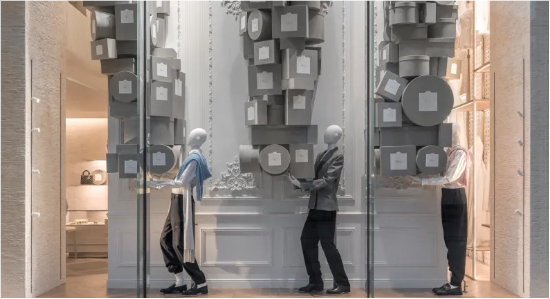
Core Viewpoint - The recent changes in Dior's store display style have sparked significant backlash on social media, with many users perceiving the new design as mocking "working-class individuals" [2][3][5]. Group 1: Store Display Changes - Since January, Dior has introduced a new global store display style featuring models in suits carrying large boxes, which has been criticized for resembling "medieval working-class individuals" [2][3]. - Users have commented that the new display style appears to lack the luxury feel traditionally associated with Dior, with some likening it to Uniqlo [5][19]. - The juxtaposition of high-priced suits (ranging from 60,000 to 70,000 yuan) with the portrayal of models as overburdened workers has led to feelings of mockery among consumers [21][7]. Group 2: Product Reception - Dior's new bags have also faced criticism on social media, with users describing them as "tacky" and "cheap," further contributing to the negative perception of the brand [23]. - A recent flagship store opened in Beijing, which spans five floors, has been met with mixed reviews, particularly regarding the newly launched Dior restaurant, which has a low rating of 3.9 on review platforms [10][24]. Group 3: Financial and Operational Challenges - LVMH, Dior's parent company, reported a 4% decline in revenue to €39.81 billion and a 22% drop in net profit to approximately €5.7 billion for the first half of 2025 [12][26]. - The fashion and leather goods sector, which includes Dior, experienced a 7% decline in organic revenue, with profit margins decreasing by 4.1 percentage points to 34.7% [12][26]. - Dior has also faced operational challenges, including a data breach incident and over 5,700 complaints related to service issues, which have further strained consumer trust [13][27]. Group 4: Market Trends and Consumer Behavior - The luxury market is experiencing a downturn, particularly in key markets like China and the U.S., with the Chinese market recording six consecutive quarters of negative growth [13][28]. - Analysts suggest that the rise of domestic brands and changing consumer preferences, particularly among Gen Z, are reshaping the luxury market landscape, posing additional challenges for traditional luxury brands like Dior [28].