Flow Planner

Search documents
自动驾驶论文速递!VLA、世界模型、强化学习、轨迹规划等......
自动驾驶之心· 2025-10-18 04:00
Core Insights - The article discusses advancements in autonomous driving technologies, highlighting various research contributions and their implications for the industry. Group 1: DriveVLA-W0 - The DriveVLA-W0 training paradigm enhances the generalization ability and data scalability of VLA models by using world modeling to predict future images, achieving 93.0 PDMS and 86.1 EPDMS on NAVSIM benchmarks [6][12] - A lightweight Mixture-of-Experts (MoE) architecture reduces inference latency to 63.1% of the baseline VLA, meeting real-time deployment needs [6][12] - The data scaling law amplification effect is validated, showing significant performance improvements as data volume increases, with a 28.8% reduction in ADE and a 15.9% decrease in collision rates when using 70M frames [6][12] Group 2: CoIRL-AD - The CoIRL-AD framework combines imitation learning and reinforcement learning within a latent world model, achieving an 18% reduction in collision rates on the nuScenes dataset and a PDMS score of 88.2 on the Navsim benchmark [13][16] - The framework integrates RL into an end-to-end autonomous driving model, addressing offline RL's scene expansion issues [13][16] - A decoupled dual-policy architecture facilitates structured interaction between imitation learning and reinforcement learning, enhancing knowledge transfer [13][16] Group 3: PAGS - The Priority-Adaptive Gaussian Splatting (PAGS) framework achieves high-quality real-time 3D reconstruction in dynamic driving scenarios, with a PSNR of 34.63 and SSIM of 0.933 on the Waymo dataset [23][29] - PAGS incorporates semantic-guided pruning and regularization to balance reconstruction fidelity and computational cost [23][29] - The framework demonstrates a rendering speed of 353 FPS with a training time of only 1 hour and 22 minutes, outperforming existing methods [23][29] Group 4: Flow Planner - The Flow Planner achieves a score of 90.43 on the nuPlan Val14 benchmark, marking the first learning-based method to surpass 90 without prior knowledge [34][40] - It introduces fine-grained trajectory tokenization to enhance local feature extraction while maintaining motion continuity [34][40] - The architecture employs adaptive layer normalization and scale-adaptive attention to filter redundant information and strengthen key interaction information extraction [34][40] Group 5: CymbaDiff - The CymbaDiff model defines a new task for sketch-based 3D outdoor semantic scene generation, achieving a FID of 40.74 on the Sketch-based SemanticKITTI dataset [44][47] - It introduces a large-scale benchmark dataset, SketchSem3D, for evaluating 3D semantic scene generation [44][47] - The model employs a Cylinder Mamba diffusion mechanism to enhance spatial coherence and local neighborhood relationships [44][47] Group 6: DriveCritic - The DriveCritic framework utilizes vision-language models for context-aware evaluation of autonomous driving, achieving a 76.0% accuracy in human preference alignment tasks [55][58] - It addresses limitations of existing evaluation metrics by focusing on context sensitivity and human alignment in nuanced driving scenarios [55][58] - The framework demonstrates superior performance compared to traditional metrics, providing a reliable solution for human-aligned evaluation in autonomous driving [55][58]

扩散规划器全新升级!清华Flow Planner:基于流匹配模型的博弈增强算法(NeurIPS'25)
自动驾驶之心· 2025-10-15 23:33
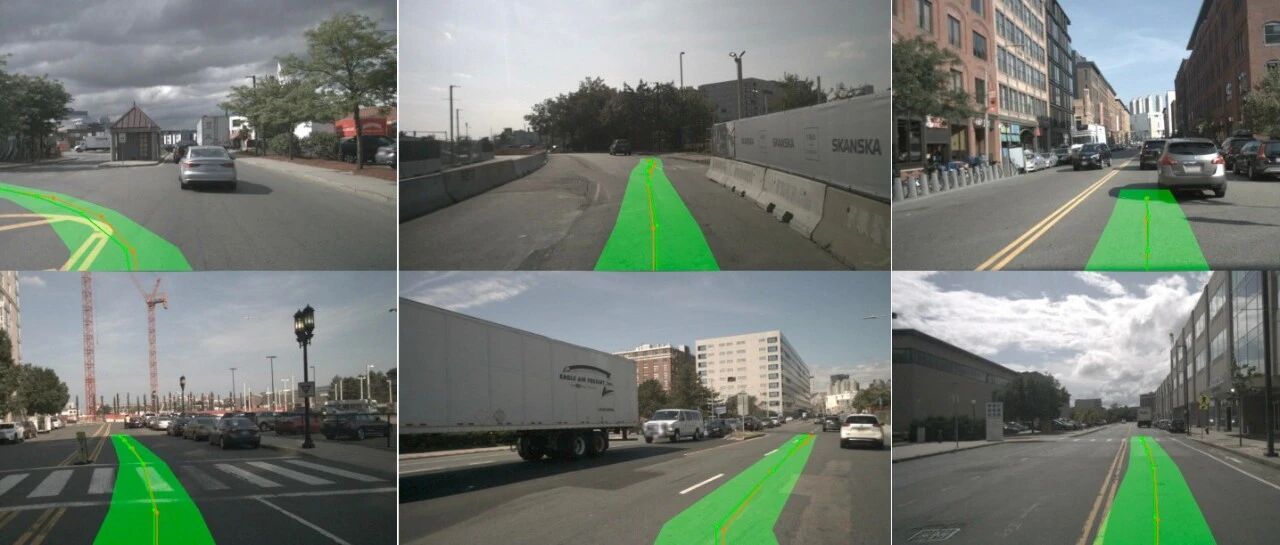
Core Insights - The article presents a new autonomous driving decision-making algorithm framework called Flow Planner, which improves upon the existing Diffusion Planner by effectively modeling advanced interactive behaviors in high-density traffic scenarios [1][4][22]. Group 1: Background and Challenges - One of the core challenges in autonomous driving planning is achieving safe and reliable human-like decision-making in dense and diverse traffic environments [3]. - Traditional rule-based methods lack generalization capabilities in dynamic traffic games, while learning-based methods struggle with limited high-quality training data and the need for effective game behavior modeling [6][8]. Group 2: Innovations of Flow Planner - Flow Planner introduces three key innovations: fine-grained trajectory tokenization, interaction-enhanced spatiotemporal fusion, and classifier-free guidance for trajectory generation [4][23]. - Fine-grained trajectory tokenization allows for better representation of trajectories by dividing them into overlapping segments, improving coherence and diversity in planning [8]. - The interaction-enhanced spatiotemporal fusion mechanism enables the model to effectively capture spatial interactions and temporal consistency among various traffic participants [9][13]. - Classifier-free guidance allows for flexible adjustment of model sampling distributions during inference, enhancing the generation of driving behaviors and strategies [10]. Group 3: Experimental Results - Flow Planner achieved state-of-the-art (SOTA) performance on the nuPlan benchmark, surpassing 90 points on the Val14 benchmark without relying on any rule-based prior or post-processing modules [11][14]. - In the newly proposed interPlan benchmark, Flow Planner significantly outperformed other baseline methods, demonstrating superior response strategies in high-density traffic and pedestrian crossing scenarios [15][20]. Group 4: Conclusion - The Flow Planner framework significantly enhances decision-making performance in complex traffic interactions through its innovative modeling approaches, showcasing strong potential for adaptability across various scenarios [22][23].