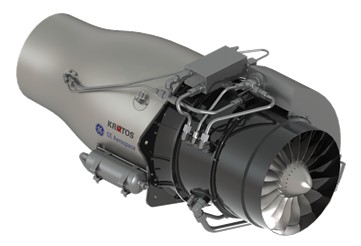
GEK1500 engine

Search documents
General Electric Lands Air Force Deal
Benzinga· 2026-02-23 18:54
Core Insights - The contract focuses on designing the next-generation GEK1500 engine for small Collaborative Combat Aircraft (CCA), emphasizing high performance and cost-effectiveness [2][3][4] Engine Development - The GEK1500 engine is designed to provide a thrust capacity of 1,500 pounds, suitable for unmanned aerial systems, collaborative combat aircraft, and missiles [2] - The design incorporates lessons learned from the GEK800 engine to improve thrust, power generation, and cost efficiency [2] Strategic Importance - The U.S. Air Force prioritizes engines that balance high performance with low cost, which is essential for the operational capabilities of small CCAs [3] - The contract includes provisions for assessing design risks and evaluating engine performance under realistic flight conditions, which may enhance the GEK1500's capabilities [3] Market Context - General Electric's stock is currently trading 0.5% below its 20-day simple moving average and 1.2% below its 100-day simple moving average, indicating short-term weakness [6] - Despite the positive contract news, the broader market experienced declines, with General Electric's stock reflecting this trend [5] Technical Analysis - The Relative Strength Index (RSI) is at 50.00, indicating neutral territory, while the Moving Average Convergence Divergence (MACD) is at 0.10, suggesting bearish pressure on the stock [7] - The combination of a neutral RSI and bearish MACD indicates mixed momentum for General Electric's stock [7] Earnings Outlook - The next significant catalyst for General Electric's stock is the earnings report scheduled for April 21, 2026 [8] Analyst Consensus - The stock carries a Buy Rating with an average price target of $296, with recent analyst upgrades raising targets to $335, $374, and $380 from JP Morgan, UBS, and Citigroup respectively [9] - Key resistance is identified at $344.30 and key support at $325.00, with an EPS estimate of $1.61 and a revenue estimate of $10.65 billion [9]


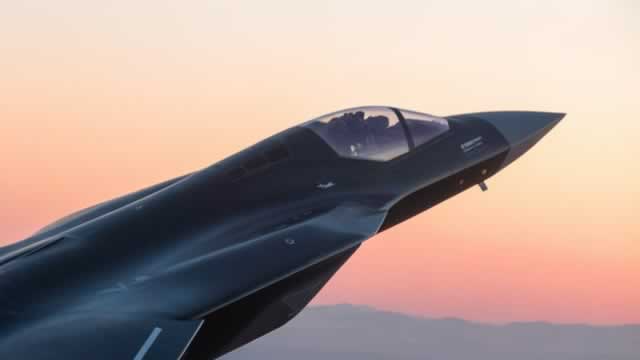
Kratos and GE Aerospace Win U.S. Air Force Award to Design Engine for Expendable Combat Collaborative Aircraft
Globenewswire· 2026-02-23 13:00
Core Viewpoint - Kratos Defense & Security Solutions and GE Aerospace have secured a $12.4 million contract with the U.S. Air Force to design the GEK1500 engine, aimed at enhancing performance and reducing costs for small Collaborative Combat Aircraft (CCA) [1][2]. Group 1: Contract and Engine Development - The contract focuses on completing the preliminary design of the GEK1500 engine, which is expected to meet high performance and cost targets [1]. - The GEK1500 engine is designed to provide 1,500 lbs of thrust and is intended for use in unmanned aerial systems, collaborative combat aircraft, and missiles [3]. - The development of the GEK1500 builds on the successful GEK800 engine program, utilizing lessons learned to improve thrust, power generation, and lifecycle costs [2][4]. Group 2: Strategic Collaboration - The partnership between Kratos and GE Aerospace is formalized through a teaming agreement that aims to advance propulsion technologies for affordable unmanned aerial systems and CCA-type aircraft [5]. - This collaboration enhances the companies' existing relationship and is based on a 2024 Memorandum of Understanding to develop cost-effective engines for unmanned platforms [5]. Group 3: Technological Advancements - Recent altitude testing of the GEK800 engine has demonstrated critical technologies that will enhance the performance of future systems, including increased range and decreased lifecycle costs [4]. - The GEK1500 engine design leverages the successful architecture of the GEK800 cruise missile engine, which is currently undergoing technical maturation [3]. Group 4: Company Backgrounds - Kratos has over 25 years of experience in developing small, affordable engines for UAS, drones, and missile platforms, while GE Aerospace brings a century of expertise in propulsion technology [7]. - GE Aerospace operates with an installed base of approximately 49,000 commercial and 29,000 military aircraft engines, emphasizing its leadership in aerospace propulsion [8].