
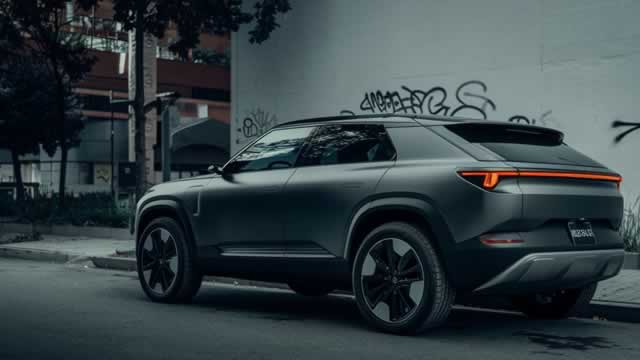
Han L sedan

Search documents
BYD, Tesla's biggest rival in China, just doubled its profits
Business Insider· 2025-04-25 12:05
Core Insights - BYD reported a 100% increase in net profit for the first quarter, reaching 9.15 billion yuan (approximately $1.3 billion), surpassing Tesla in this key metric [1] - Operating revenues for BYD rose by 37% year-over-year, totaling 170.4 billion yuan (around $23.3 billion) [2] - BYD's earnings per share surged by 99% to 3.12 yuan (about $0.43) [2] Company Performance - BYD overtook Tesla in overall annual revenue last year, reporting $107 billion compared to Tesla's $98 billion [2] - BYD's sales increased by 60% in the first three months of 2025, while Tesla's deliveries fell short of analyst expectations [4] - Tesla's net income for the same period was reported at $409 million, a decline of over 70% compared to the previous year [1] Technological Advancements - BYD introduced a new charging system capable of providing 250 miles of charge in just five minutes, utilizing 1,000 kW chargers, which are four times more powerful than Tesla's current chargers [3] - Tesla plans to launch 500 kW chargers later this year [3] Market Position - BYD's vehicles, including the Han L sedan and Tang L SUV, are priced starting at $30,000, but remain unavailable in the US market [4] - Despite the unavailability in the US, BYD continues to outpace Tesla in sales [4]


比亚迪 - 关于最新 10C 超快充技术的六大关键问题
2025-03-23 15:39
Summary of BYD Co Ltd Conference Call Company Overview - **Company**: BYD Co Ltd - **Industry**: Electric Vehicles (EVs) - **Rating**: Outperform - **Price Targets**: - 1211.HK: HK$460.00 - 002594.CH: RMB 420.00 - **Analysts**: Eunice Lee, Neil Beveridge, Brian Ho, Mika Fu Key Points 1. Introduction of 10C Ultra-Fast Charging Technology - BYD announced its 10C fast-charging technology, capable of delivering 1,000kW power output, extending driving range by 400km with a 5-minute charge, comparable to refueling at a gas station [1][2] 2. Core Questions Addressed - **How was 10C ultra-fast charging achieved?** - Achieved through advancements in materials, engineering, and system integration [10] - **Battery Chemistry and Degradation Concerns** - Utilizes high-speed Li-ion channel technology and redesigned blade battery architecture, reducing internal resistance by 50% [12] - LFP batteries have a longer lifecycle, with BYD's redesigned blade battery boasting a lifecycle 35% longer than previous generations [14] - **Competitive Positioning** - BYD leads with 10C charging, while competitors like CATL are at 6C technology [17][18] 3. Charging Infrastructure Plans - BYD plans to build 4,000 1MW charging stations, targeting long-distance travel needs [20] - Estimated cost for a 1,000kW charger is around US$200/kW, with a total station cost of approximately US$950k [20][23] - Timeline for rollout is estimated at 2 years, leveraging existing infrastructure [21] 4. Industry Implications - BYD's advancements may alleviate driving range anxiety, a significant concern for EV buyers [27][30] - Other battery manufacturers are expected to accelerate fast-charging technology deployment in response [28] 5. Implications for BYD - The new technology will debut in the Han L sedan and Tang L SUV in April 2025, laying a foundation for future model launches [33] - Shift in competitive focus from price to advanced technologies, enhancing BYD's market position [34] 6. Financial Projections - **Revenue Growth**: Projected CAGR of 29.6% from 2023 to 2025, with revenues expected to reach CNY 1,012 billion by 2025 [4] - **Earnings Growth**: Net earnings projected to grow at a CAGR of 40.1%, reaching CNY 61,496 million by 2025 [4] 7. Performance Metrics - **Current Price**: 1211.HK at HK$417.00, with a 10% upside to the target price [5] - **Market Cap**: HKD 1,284.87 billion [5] 8. Valuation Metrics - Reported P/E for 2025E is 19.2x, with EV/Sales at 1.1x [8] Additional Insights - The introduction of ultra-fast charging technology may reduce the appeal of battery swapping for individual consumers, favoring fast charging solutions instead [29] - BYD's strong R&D capabilities are highlighted, indicating a strategic shift towards advanced technology in the EV market [34]
