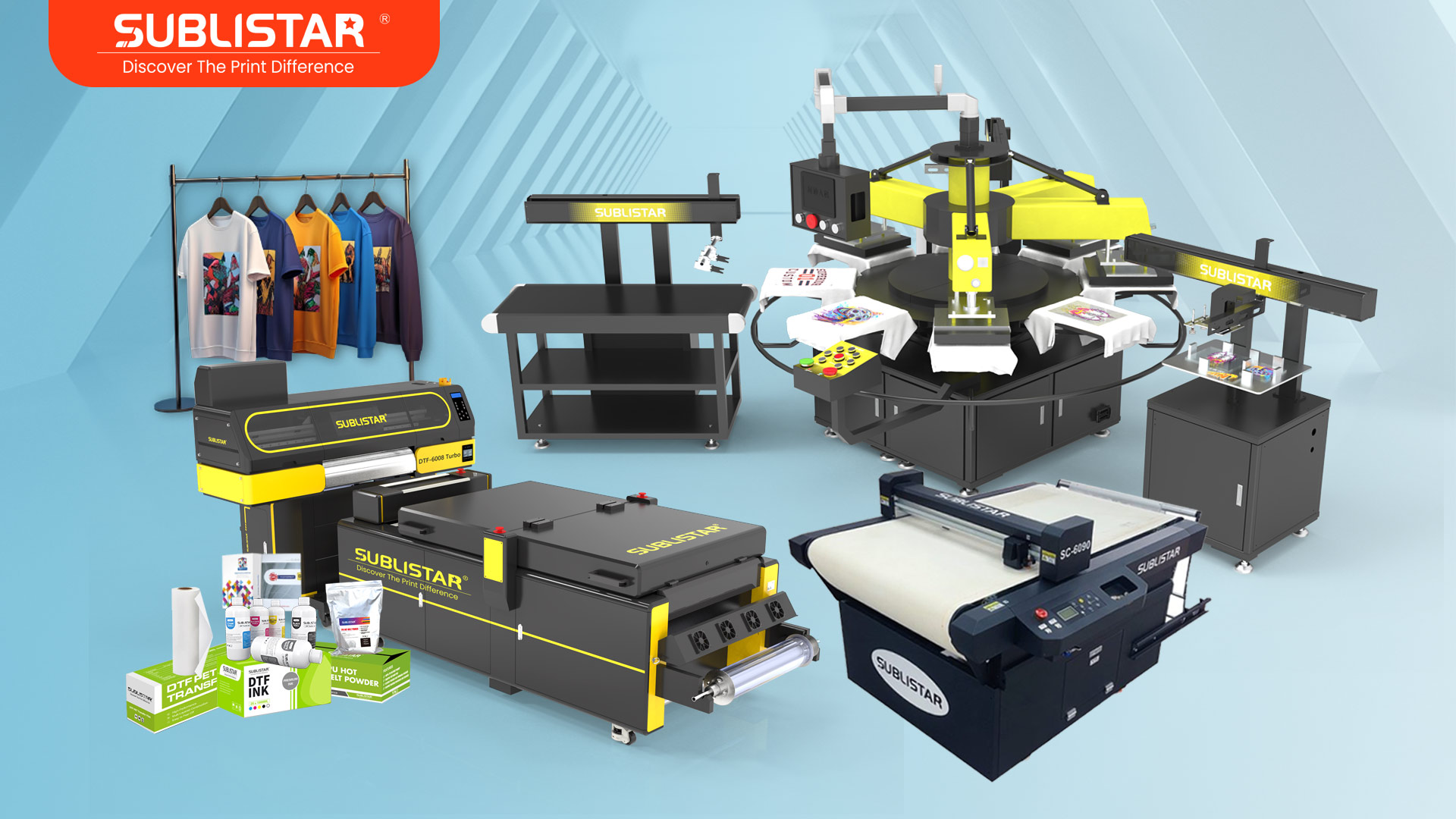
Integrated DTF workflow automation systems

Search documents
Sublistar Identifies Key DTF Production Trends Driving Industrial Adoption in 2026
Globenewswire· 2026-02-16 13:02
Core Insights - Sublistar has identified emerging shifts in DTF printing production, highlighting challenges in scalability, color consistency, labor efficiency, and environmental compliance as key factors reshaping production systems [1] Group 1: Production Efficiency and Flexibility - Sublistar has expanded its multi-head DTF production platforms to enhance production efficiency and flexibility, with seven- and eight-head configurations now in active deployment to support higher-volume output [2] - The modular approach allows manufacturers to balance efficiency and customization without sacrificing production stability [2] Group 2: Color Capabilities - There is a growing demand for advanced multi-color DTF configurations beyond standard setups, driven by the need for color differentiation in brand-driven apparel production [3] - Sublistar's multi-color DTF solutions have met certification criteria established by Keypoint Intelligence, confirming performance in color consistency and output stability [3] Group 3: Sustainability and Powderless Systems - Sublistar has observed increased emphasis on environmental compliance among DTF producers, particularly in Europe, leading to the development of powderless DTF systems [5][6] - The company has introduced powderless DTF printers designed to achieve stable adhesive jetting behavior and controlled curing performance, with finished prints passing internal durability testing of up to 50 wash cycles [8] Group 4: Workflow Automation - Labor cost is a significant constraint affecting DTF production profitability, prompting Sublistar to expand its automation roadmap across the DTF workflow [9] - The introduction of patented multi-station automated heat press systems has improved production efficiency while reducing labor requirements [11] Group 5: Supporting Systems for Operational Predictability - Sublistar is investing in supporting systems to improve production predictability, including automated maintenance functions and software tools for real-time visibility into production status [13] - These systems aim to reduce variability and support stable operation as production scales and complexity increases [13] Conclusion - The evolution of DTF printing is increasingly defined by production-oriented requirements, with Sublistar's investments in multi-head platforms, expanded color capabilities, powderless systems, and integrated workflow automation reflecting a commitment to scalable, industrial-level DTF production [14]