Joby aircraft

Search documents
Your next ride with Uber could be in the sky
Business Insider· 2026-02-25 13:03
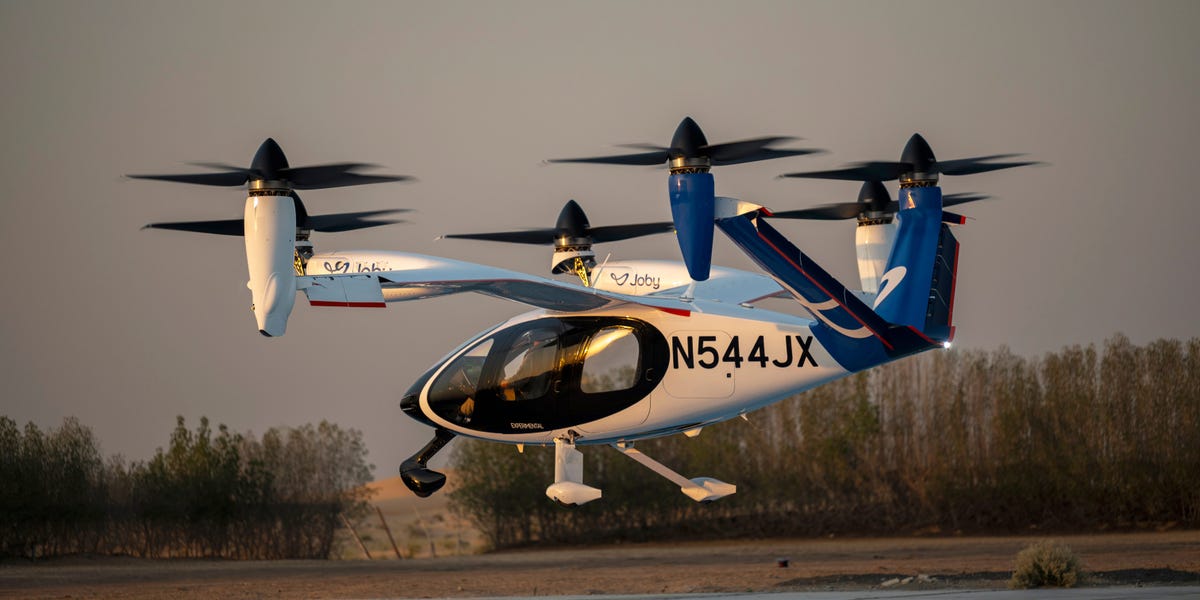
Core Insights - Uber will enable passengers to book air taxi rides in Dubai by the end of 2026 using electric vehicles from Joby Aviation [1][2] - Joby's aircraft can accommodate up to four passengers and will operate from four vertiports in Dubai, connecting key locations [2] - The partnership aims to integrate air mobility into existing transportation systems, enhancing convenience for users [6] Group 1 - Joby Aviation is in the final stages of certifying its air taxi service with the Federal Aviation Administration, although there are no immediate plans to launch in the US [2] - The air taxi service will be available alongside traditional Uber ride-hailing options, including Uber Black for pickups and drop-offs [6] - Joby plans to expand its service to other markets such as New York, Los Angeles, the UK, and Japan after the Dubai launch [7] Group 2 - The partnership follows Uber's acquisition of Joby Elevate in 2020, where Uber invested $75 million in the air mobility division [7] - This initiative is part of Uber's broader strategy to adapt to changing transportation demands, especially after shedding several divisions during the pandemic [8]



He tried to bring flying taxis to Uber. Now, he's at Joby to finish the job.
Business Insider· 2025-10-18 10:23
Core Insights - The electric flying car industry is transitioning from speculative to tangible, with significant advancements in technology and public demonstrations showcasing the viability of eVTOLs [4][24]. - Joby Aviation, under the leadership of Eric Allison, aims to integrate flying cars into a service model similar to Uber, leveraging past experiences from both Zee.Aero and Uber's Elevate division [3][21]. Company Background - Eric Allison has been involved in the eVTOL sector since 2010, starting with Zee.Aero, which was founded by Google co-founder Larry Page [1][5]. - Wisk Aero, a subsidiary of Boeing, is the current embodiment of the work done at Zee.Aero and Kitty Hawk, focusing on autonomous flying taxis [2][11]. Technological Evolution - The concept of flying taxis has evolved significantly since 2010, with advancements in battery technology, inverters, and computing power making electric propulsion feasible for aircraft [13][14]. - The initial vision for personal air vehicles has shifted towards a more defined model of air taxi services, reflecting changes in market demand and technological capabilities [15][12]. Industry Challenges - The transition from a speculative idea to a credible service has faced skepticism, but recent public demonstrations have helped to shift perceptions [24][16]. - The challenge of convincing the public and stakeholders about the feasibility of flying cars has been a significant hurdle, requiring a clear and ambitious vision [19][20]. Customer Experience - The envisioned customer experience for Joby Aviation includes a seamless integration with existing ride-hailing services, allowing users to book flying taxi rides through familiar platforms like Uber [21][22]. - The operational model aims to provide a stress-free travel experience, significantly reducing travel time to major airports [22][23]. Future Outlook - The company is focused on achieving milestones such as the first passenger flight and aims for broader adoption, with long-term goals extending beyond initial successes [25].