
Passive funds

Search documents
Morningstar: Active Funds Underperformed Passive Peers in 2025
Yahoo Finance· 2026-02-19 19:07
You can find original article here WealthManagement. Subscribe to our free daily WealthManagement newsletters. Actively managed mutual funds and ETFs failed to beat their passive counterparts in 2025, according to the semi-annual Active/Passive Barometer from Morningstar. The findings confirm earlier Morningstar research showing that actively managed funds rarely remain in the top quartile of performance in their categories beyond a year. Only 38% of actively managed mutual funds and ETFs beat their ass ...
Turn Geopolitical Risk Into Emerging Market Alpha in Active ETFs
Etftrends· 2025-11-17 22:21
Core Insights - Emerging market equities, including ex-U.S. stocks, have shown strong performance in 2023, providing significant upside outside of major tech stocks driven by AI [1] - Geopolitical risks have escalated, complicating foreign investments, with events like the Russian invasion of Ukraine and tariff wars creating layered challenges [1][2] - Active ETFs can leverage fundamental research to navigate geopolitical volatility, potentially outperforming passive funds in uncertain markets [3][4] Investment Strategies - Passive funds face challenges in low-information markets, as strict allocation rules can hinder performance during geopolitical events [2] - Active ETFs, such as the T. Rowe Price International Equity ETF (TOUS), utilize fundamental research to identify firms with strong cash flow and profitability, allowing for quicker adaptation to external shocks [4] - The flexibility of active ETFs positions them as a valuable addition to portfolios, especially in the face of geopolitical risks where passive funds may struggle [5]

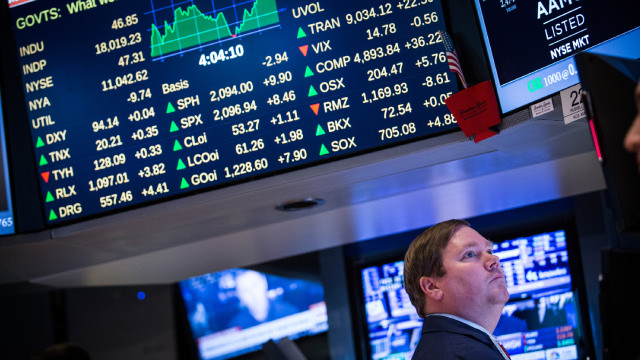
Morningstar: Short-Term Active Fund Outperformance Is Often Random
Yahoo Finance· 2025-10-16 18:20
Core Insights - Advisors are advised to avoid chasing actively-managed ETFs and mutual funds based on short-term performance, as a study from Morningstar indicates that most funds fall out of the top quartile by year two [1][5] Fund Performance Analysis - Morningstar's study analyzed approximately 9,000 mutual funds and ETFs from 2021 to 2024, revealing that passive funds generally maintain middle-tier performance over 10 to 15 years, providing more consistent but average returns [3] - Actively managed ETFs and mutual funds that initially performed in the top quartile often did so randomly, with a significant number dropping out of this category over time [4][5] Advisor Behavior and Trends - There has been a notable increase in advisor allocations to ETFs, particularly active ETFs, with 80% of advisors currently investing in them, and the share of active ETF assets rising from 25% in 2024 to 29% in 2025 [2] - Factors driving this trend include access to diverse markets and strategies, along with improved liquidity and transparency [2] Long-term Performance Considerations - The study highlighted that by 2024, out of 20 categories of actively managed funds, 11 categories had all their funds fall out of the top quartile, emphasizing the importance of long-term performance metrics over short-term gains [5] - Some actively-managed fund categories exhibited slightly better performance retention over three years, including intermediate core bond, foreign large blend, small blend, and small value [6]