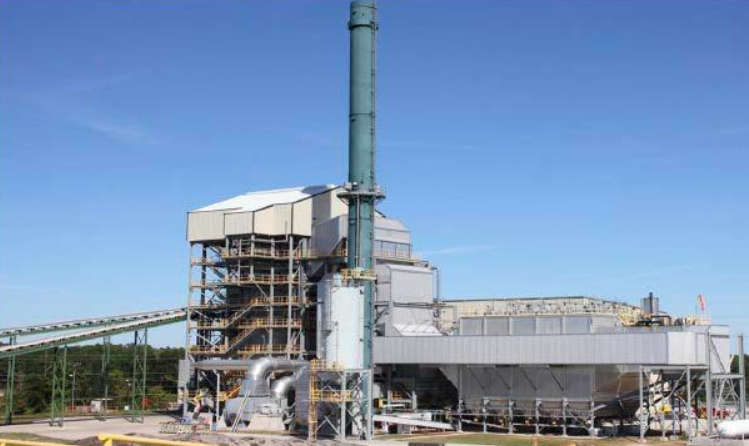
Power generation facility

Search documents
1606 Corp. Signs Term Sheet to Acquire 55 MW Texas Power Generation Facility and 50,000 Sq. Ft. Data Center-Ready Infrastructure Site
Globenewswire· 2026-02-17 13:00
Core Viewpoint - 1606 Corp. has proposed an acquisition of a 55 MW power generation facility in Texas for approximately $11.67 million, aimed at enhancing its energy infrastructure strategy focused on AI and data centers [4][7][8]. Company Summary - 1606 Corp. is a publicly traded Nevada corporation that focuses on power infrastructure and energy assets supporting AI, data center, and industrial demand [1][13]. - The company aims to develop a scalable portfolio of energy infrastructure assets to support next-generation AI and data center demand [8]. Acquisition Details - The proposed acquisition includes 132 acres of real property, a 50,000 square-foot climate-controlled warehouse, and associated equipment and infrastructure [3][4]. - The transaction will consist of $7.5 million in cash at closing and the assumption of approximately $4.17 million in existing debt related to the power plant [4]. - The acquisition is expected to close on or before March 11, 2026, pending final documentation and customary closing conditions [5]. Strategic Significance - This acquisition is positioned to strengthen 1606 Corp.'s energy portfolio, allowing the company to capitalize on the growing global demand for AI-driven data center power solutions [7][8]. - Sim Agro Inc. is expected to oversee the operations of the new facility, bringing international expertise in high-efficiency power generation [10]. Industry Context - The global captive power generation market is projected to grow from approximately $227.9 billion in 2025 to $310.9 billion by 2030, with a CAGR of 6.4% [11]. - The data center power infrastructure market is expected to expand from $20.2 billion in 2024 to $42.4 billion by 2030, growing at a CAGR of 13.2% [11]. - Global data center electricity demand is forecasted to more than double, increasing from 61.8 GW in 2025 to 134.4 GW by 2030, driven by the rise of AI workloads and high-density computing [11][12].