Retail and Office Properties

Search documents
Armada Hoffler Properties(AHH) - 2025 Q4 - Earnings Call Transcript
2026-02-17 14:32
Financial Data and Key Metrics Changes - For Q4 2025, normalized FFO attributable to common shareholders was $29.5 million or $0.29 per diluted share, exceeding expectations [24] - FFO attributable to common shareholders was $23.1 million or $0.23 per diluted share, while AFFO was $17.8 million or $0.17 per diluted share [25] - Same-store NOI for the portfolio increased 6.3% on a GAAP basis and 7.1% on a cash basis [25] - For the full year 2025, normalized FFO attributable to common shareholders was $110.1 million or $1.08 per diluted share, above guidance [27] Business Line Data and Key Metrics Changes - Retail same-store NOI for Q4 was up 5.6% on a GAAP basis and 3.4% on a cash basis, driven by new leasing and rent commencements [15] - Office same-store NOI for Q4 was up over 10% GAAP and nearly 17% cash, supported by leasing and rent commencements [19] - Year-over-year, office same-store NOI increased 6% GAAP and 7% cash, with occupancy gains at key properties [19] Market Data and Key Metrics Changes - Retail same-store results year-over-year were up 1% GAAP and down 1% cash, impacted by anchor space vacancies due to bankruptcies [15] - Year-end occupancy was just under 95%, affected by temporary seasonal tenants [16] - The office portfolio fundamentals remain strong, with nearly eight years of WALT and only 1.7% rollover in 2026 [23] Company Strategy and Development Direction - The company announced a rebranding to AH Realty Trust, effective March 2nd, marking a strategic transformation [5] - Planned divestitures include the multifamily portfolio and fee income businesses to simplify operations and improve income predictability [6][7] - The focus will shift to retail and office assets in growing markets, aiming for a streamlined operating model and reduced leverage [9][10] Management's Comments on Operating Environment and Future Outlook - Management emphasized the importance of maintaining full dividend coverage from cash flows generated by operating properties while reducing debt [11] - The company expects 2026 to be a transition year, with guidance reflecting discontinued operations and a focus on disciplined growth [10][12] - Management is confident in the ability to drive consistent NOI growth through proactive leasing and tenant retention [23] Other Important Information - The company is under an LOI for 11 of its 14 multifamily assets, with negotiations progressing towards final terms [7] - The exit of the construction business is nearly complete, and discussions are ongoing for the real estate financing investments [8] - The company aims to improve its long-term growth trajectory and deliver shareholder value more consistently [9] Q&A Session Summary Question: Long-term growth trajectory and financing plans for acquisitions - Management indicated a balanced approach to leverage and capital allocation, emphasizing the need for shares to trade at the right level relative to NAV for future acquisitions [37][38] Question: Expected retail to office NOI split in five years - Management expressed a focus on both retail and office, with an emphasis on retail in the short term while remaining open to opportunities in both sectors [40][41] Question: Context on mixed-use communities and office investments - Management confirmed a capability in mixed-use developments but emphasized a current focus on retail investments, with a willingness to sell office assets if pricing is favorable [46][48] Question: Update on multifamily dispositions - Management is under LOI for 11 assets, aiming for competitive pricing in the mid-5 cap range, with significant progress made in negotiations [50][51] Question: Dividend payout ratio trends - Management indicated a conservative approach to capital allocation, with a focus on maintaining a healthy dividend while simplifying and deleveraging the company [52][53] Question: Development as part of long-term strategy - Management acknowledged the importance of development but indicated a preference for acquisitions in the near term, with surgical development opportunities considered [58][59] Question: Expected growth in core businesses for 2026 - Management noted that 2026 may be a gap year for growth due to vacancies but anticipates stronger growth in 2027 [62]

Distribution Per Unit Increased 3.1% Year-on-Year to 1.85 cents in 1H FY2026
Globenewswire· 2026-02-13 15:20
Core Insights - Lendlease REIT has strengthened its portfolio through the divestment of Jem office and the strategic acquisition of a 70% stake in PLQ Mall, enhancing its exposure to resilient suburban catchments in Singapore [1][4]. Financial Performance - In the first half of FY2026, Lendlease REIT reported a gross revenue of S$101.9 million and a net property income of S$74.0 million, reflecting declines of 1.6% and 1.2% year-on-year, respectively, primarily due to the Jem office divestment and the exit of Cathay Cineplexes [5]. - On a like-for-like basis, excluding the Jem office divestment, gross revenue and net property income increased by 0.6% and 1.1%, respectively [5]. - Distributable income grew by 11.7% year-on-year to S$48.6 million, resulting in a distribution of 1.85 cents per unit, driven by lower interest expenses [7][9]. Capital Management - Following the Jem office divestment, net sales proceeds were mainly used to repay borrowings, reducing the gearing ratio to 38.4% from 42.7% [10]. - The weighted average cost of debt decreased to 2.90% per annum, and the interest coverage ratio improved to 1.8 times [10][11]. - Approximately 72% of borrowings are hedged to fixed rates, with S$701.2 million in debt facilities available for working capital needs [11]. Operational Performance - As of December 31, 2025, Lendlease REIT's portfolio committed occupancy was approximately 95%, with a retail portfolio occupancy rate of 99.5% [12]. - The tenant retention rate was 64.5%, which would improve to 76.8% excluding the impact of Cathay Cineplexes [16]. - The retail portfolio achieved a positive rental reversion of 10.4%, with tenant sales and visitation growing by 7.2% and 9.6% year-on-year, respectively [15]. Strategic Initiatives - The reconfiguration of retail spaces at PLQ Mall has commenced, expected to enhance rental rates upon completion [16]. - A two-year energy tariff contract has been secured for the Singapore portfolio, anticipated to reduce electricity expenses by approximately 15% per annum starting July 1, 2026 [10][14].


The Smart Investor’s Guide to the Best Singapore REITs in 2026
The Smart Investor· 2026-01-13 06:00
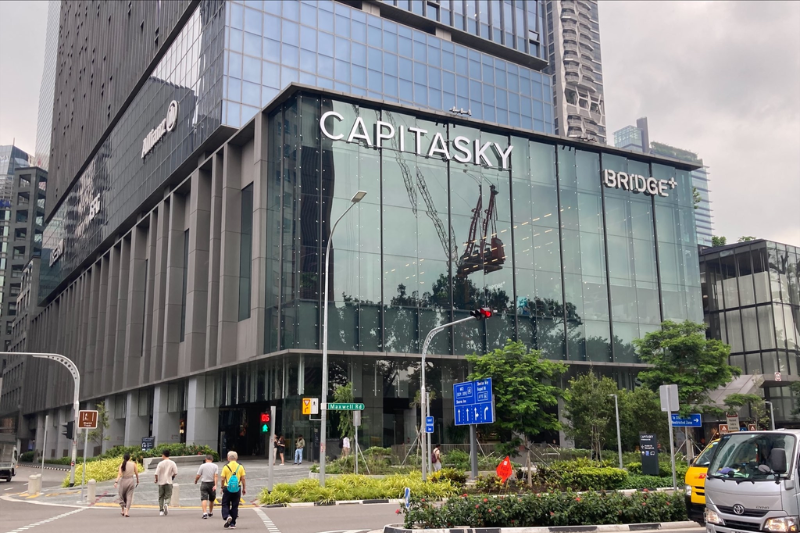
Core Insights - Singapore REITs (S-REITs) are stabilizing as financing conditions improve and income investing gains momentum, but the recovery will not be uniform across all REITs [1][22] - The best-performing REITs will focus on income visibility rather than just high yields, emphasizing disciplined capital management and operational excellence [2][24] Group 1: CapitaLand Integrated Commercial Trust (CICT) - CICT is the largest retail-and-office REIT on the SGX, with a portfolio valued at S$25.9 billion across 21 properties in Singapore, Germany, and Australia, demonstrating operational resilience [3][4] - As of 3Q2025, CICT's portfolio occupancy was 97.2%, with positive rental reversions of 7.8% for retail and 6.5% for office properties [4][19] - CICT maintained a disciplined balance sheet with aggregate leverage at 39.2% and reduced the average cost of debt to 3.3% [4][5] Group 2: Frasers Centrepoint Trust (FCT) - FCT focuses on essential services in its suburban retail portfolio, which accounts for 54% of gross rental income, providing stability against economic fluctuations [8][10] - In FY2025, FCT achieved a portfolio occupancy of 98.1% and positive rental reversions of 7.8%, with a DPU increase of 0.6% to S$0.12113 [9][10] - The trust's disciplined capital management is reflected in its aggregate leverage of 39.6% and an average cost of debt of approximately 3.8% [9][10] Group 3: Parkway Life REIT (PLife) - PLife owns hospitals and nursing homes, providing predictable income due to the essential nature of healthcare services [11][12] - The REIT's lease structure includes long master leases with built-in rental increases, ensuring income stability [12][13] - For 1H2025, PLife reported a DPU of S$0.0765, with a conservative gearing of 35.4% [13][14] Group 4: Keppel DC REIT - Keppel DC REIT focuses on data centers, catering to the growing demand from cloud computing and digital infrastructure [15][16] - The REIT's gearing was 29.8% as of 3Q2025, allowing for significant debt headroom for acquisitions [17][20] - In 1H2025, DPU surged 12.8% YoY to S$0.05133, driven by tenant issue resolutions and organic rental growth [17][20] Group 5: Comparative Analysis - CICT anchors the group with its scale and high occupancy, while FCT offers defensive income through its suburban retail focus [19][20] - PLife is noted for its predictable income stream, and Keppel DC REIT provides a high-growth profile with lower current income [20][21] - These REITs serve complementary roles, allowing investors to build a resilient income stream amidst macroeconomic shifts [21][22]
Is CapitaLand Integrated Commercial Trust Ready to Shine as Rates Fall?
The Smart Investor· 2025-09-22 09:30
Core Viewpoint - CapitaLand Integrated Commercial Trust (CICT) demonstrates resilience in the face of rising financing costs, with potential for growth as interest rates are expected to decrease in September 2025 [1][4]. Group 1: Financial Performance - CICT's distribution per unit (DPU) increased by 3.5% in the first half of 2025 despite higher borrowing costs [1]. - The trust's portfolio occupancy rate was high at 96.3% at the end of June, with favorable rental reversion rates of 7.7% for retail and 4.8% for office portfolios [3]. - CICT is backed by CapitaLand Investment Limited (CLI), which has S$117 billion in funds under management, allowing CICT to borrow at more attractive interest rates [3]. Group 2: Growth Potential - Lower interest rates could reduce financing costs, enabling CICT to refinance existing loans and acquire new assets at lower premiums [4]. - CICT's gearing ratio is around 38%, well below the Monetary Authority of Singapore's ceiling of 50%, providing substantial debt headroom for new acquisitions [4]. - Upcoming acquisitions include a 55% stake in CapitaSpring, which has an entry yield of 4%, indicating CICT's capability to finance high-quality assets [5]. Group 3: Strategic Management - CICT has a track record of profitable and strategic acquisitions, positioning it well to benefit from any imminent drop in interest rates [6]. - The trust's strong leasing momentum in Singapore's retail and office sectors, along with proactive capital and cost management, contributes to its growth [2]. Group 4: Market Challenges - The retail segment is sensitive to consumer spending trends, with tenant sales per square foot showing a slight decline of 0.2% year on year [7]. - The office segment faces structural risks from hybrid working arrangements and new market supply, impacting future demand [8]. - Despite these challenges, projected rental reversion remains positive for the rest of 2025, indicating a favorable outlook for shareholders [8]. Group 5: Investment Outlook - CICT combines scale, resilience, and high-quality assets, offering stability and regular dividends to investors [9]. - The management has proven reliable in navigating economic uncertainties, setting the stage for potential growth as interest rates are expected to decrease [10].