Rivian Autonomy Processor (RAP1)

Search documents
Is It Time to Buy Rivian After Uber Partnership?
Yahoo Finance· 2026-03-24 15:07
Core Insights - Rivian Automotive has secured a significant partnership with Uber Technologies, which will aid in funding its autonomous driving initiatives [1][2] - Uber is set to invest up to $1.25 billion in Rivian, with an immediate $300 million following regulatory approval, and plans to purchase 10,000 autonomous R2 vehicles [2] - Rivian aims to achieve full Level 4 autonomous driving by 2028, leveraging a custom chip and a sensor-rich approach [3][4] Investment and Partnership Details - The agreement with Uber includes an option for Uber to buy an additional 40,000 R2 vehicles starting in 2030, with the R2 robotaxis expected to launch in San Francisco and Miami by 2028 [2] - Rivian has a history of forming strategic partnerships, including a significant investment from Amazon in 2019 and a joint venture with Volkswagen, which invested up to $5.8 billion [5][6] Business Strategy and Growth - Rivian's software business is rapidly growing and has contributed to achieving positive gross margins, with plans to enhance this segment through full autonomous driving and robotaxi services [9] - The company is positioned to potentially benefit from a late-mover advantage by learning from the experiences of competitors like Waymo and Tesla [9]

Rivian Unveils Custom AI Chip, Reduces Dependence on Nvidia
PYMNTS.com· 2025-12-16 14:00
Core Insights - Rivian Automotive has introduced a custom AI chip and a comprehensive autonomy platform developed in-house, marking a significant shift from reliance on third-party solutions like Nvidia's processors [2][3][6] - The new silicon and software architecture will support next-generation driver assistance and automated capabilities, starting with the upcoming R2 vehicle line [2][4] Rivian's Custom Silicon and Platform Design - The Rivian Autonomy Processor (RAP1) is a custom chip optimized for vision-centric AI tasks, fabricated by Taiwan Semiconductor Manufacturing Co. (TSMC) [4] - The RAP1 powers the new Autonomy Compute Module 3 (ACM3), expected to be shipped on production vehicles starting with the R2 in late 2026 [4][13] - Future vehicles will incorporate lidar sensors alongside cameras and radar as part of a multimodal sensor strategy to enhance object detection [5] Shift from General Purpose Chips - Rivian plans to replace Nvidia processors in earlier autonomy systems with its in-house silicon in future vehicles [6] - The leadership emphasizes that compute, sensors, models, and software must be developed together for improved development speed and flexibility [7] Subscription Offering - Rivian has launched a subscription service, Autonomy+, priced at $2,500 upfront or $49.99 per month, which offers enhanced driver-assistance features [8] - The service is projected to work on over 3.5 million miles of mapped roads in the U.S. and Canada, significantly expanding Rivian's assisted driving coverage [8] Strategic Parallels in Auto and Tech - Rivian's move to develop its own silicon aligns it with companies like Tesla, which has also pursued vertical integration for competitive advantage [10] - Other automakers, including BYD, XPeng, and Nio, are also developing proprietary chips and autonomy platforms, reflecting a trend towards control over core compute components [11] - The strategy mirrors Apple's shift to custom silicon in consumer devices, aiming for performance and integration advantages [12]

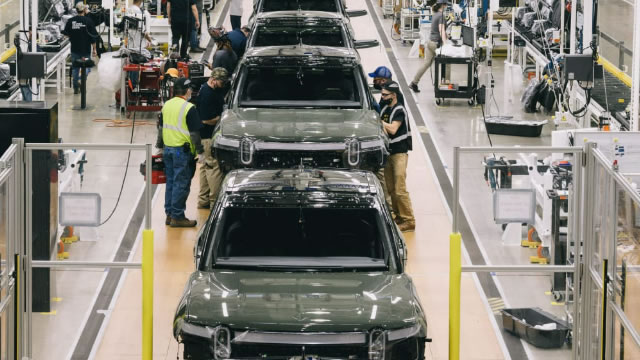
Rivian’s Autonomy Bombshell Changes Everything—Even Its Valuation
Yahoo Finance· 2025-12-15 18:38
Core Viewpoint - Rivian is transitioning from a traditional automaker to a technology-focused company, which could lead to higher valuation multiples if it successfully sells high-margin technology products rather than just low-margin vehicles [1][4][17] Company Developments - Rivian's stock price surged by 12.1% to $18.42, driven by positive analyst sentiment and a shift in market perception towards its technology capabilities [5][3] - The company is preparing to launch an affordable mass-market vehicle platform, supported by a joint venture with Volkswagen and a strong balance sheet [6][11] Technological Advancements - Rivian is developing proprietary technology, including the Rivian Autonomy Processor (RAP1) and the Autonomy+ software platform, which are expected to reduce costs and enhance profitability [7][15] - The Autonomy+ platform, set to launch in early 2026, will offer subscription-based revenue opportunities, creating a predictable cash flow model [8][9] Financial Performance - Rivian reported a 324% year-over-year increase in Software & Services revenue to $416 million, largely due to its joint venture with Volkswagen [11] - The company achieved a positive Gross Profit of $24 million in Q3 2025, indicating effective cost management ahead of its mass-market vehicle launch [12] Production and Market Strategy - The R2 platform, a midsize SUV, is scheduled for production in the first half of 2026, targeting a broader demographic with a starting price around $45,000 [13][14] - Rivian's proprietary technology is crucial for maintaining margins while offering a more affordable vehicle, positioning the R2 as a potential volume seller [15] Competitive Positioning - Rivian has differentiated itself from other struggling EV startups by securing significant capital and validating its technology through in-house development [16] - Analysts believe Rivian's current valuation does not fully reflect its potential as a leader in software-defined technology, suggesting further growth opportunities if it successfully executes its plans [17]
Why Rivian Stock Rebounded Today
The Motley Fool· 2025-12-13 00:45
Core Viewpoint - Rivian is accelerating its artificial intelligence (AI) strategy, which has led to significant stock price movements following its inaugural Autonomy & AI Day event [1][3]. Group 1: Stock Performance - Rivian's shares increased by 12% on Friday after the AI event, but fell by 6% on Thursday after the event concluded [1][3]. - The current stock price is $18.38, with a market capitalization of $20 billion [4]. Group 2: AI Developments - Rivian introduced the Rivian Autonomy Processor (RAP1), a custom-designed chip for vision-centric AI, which integrates processing and memory into a single module [5]. - The company plans to incorporate Light Detection and Ranging (LiDAR) technology into future R2 mid-size electric SUV models to enhance safety and real-time detection [6]. Group 3: Subscription Service - Rivian announced Autonomy+, a subscription service launching in early 2026, offering hands-free assisted driving on 3.5 million miles of marked roads in the U.S. and Canada, priced at a one-time fee of $2,500 or $49.99 per month [6]. Group 4: Analyst Sentiment - Investment bank Needham raised its price target for Rivian's stock to $23 per share, indicating a positive shift in sentiment towards the company's AI-driven autonomy strategy [7].

Rivian Is Now an AI Stock. Is It Finally a Buy?
247Wallst· 2025-12-12 18:22
Core Insights - Rivian Automotive held its first Autonomy and AI Day conference, introducing its first in-house AI chip, the Rivian Autonomy Processor (RAP1) [1] Company Developments - The unveiling of the Rivian Autonomy Processor (RAP1) marks a significant step in the company's efforts to enhance its autonomous driving capabilities [1]

Rivian Post Autonomy & AI Day: Is the Stock Worth Buying Now?
ZACKS· 2025-12-12 13:51
Core Insights - Rivian Automotive hosted its first Autonomy & AI Day, emphasizing stronger autonomy, improved AI, and a more capable tech platform for future models [1] - The company is facing a slowdown in U.S. EV demand and increased price competition from Chinese automakers [2] - Rivian's stock has risen 24% year-to-date but remains 79% below its IPO price [2] Technology Developments - Rivian introduced its in-house silicon chip, the Rivian Autonomy Processor (RAP1), designed for heavy AI and vision workloads, delivering 205 gigabytes per second bandwidth [4] - The new hardware will support an AI-powered "Rivian Assistant" and near-term software updates for hands-free driving on over 3.5 million miles of North American roads [5] - Integration of LiDAR into future models aims for Level 4 self-driving capabilities, positioning Rivian closer to competitors like Waymo [6] Product and Market Strategy - Rivian plans to launch the affordable R2 model in the first half of 2026, targeting a starting price of around $45,000 [10] - A partnership with Volkswagen involves an investment of up to $5.8 billion by 2027, focusing on developing next-generation electrical architecture and software [11] Financial Overview - Rivian's cash balance decreased to $7.1 billion at the end of Q3 2025, with a high capex forecast of $1.8–$1.9 billion [12] - The company has lowered its 2025 delivery guidance to 41,500-43,500 units, down from previous estimates [13] - Zacks Consensus Estimate projects revenue growth of 8% in 2025 and 36% in 2026, with adjusted EBITDA loss estimates for 2025 narrowing slightly [14][15]
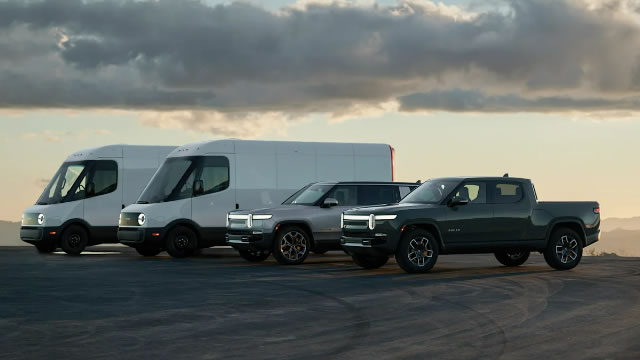
Rivian Takes On Tesla In Self-Driving Race With Level 4 Autonomy Goal, $49.99/Month Subscription, R2 LiDAR - Rivian Automotive (NASDAQ:RIVN)
Benzinga· 2025-12-12 08:10
Core Insights - Rivian Automotive Inc. is entering the autonomous driving market with its proprietary AI chip, the Rivian Autonomy Processor (RAP1), targeting Level 4 autonomy [1][2]. Group 1: Autonomous Driving Strategy - The RAP1 chip can process 5 billion pixels per second, supporting Rivian's Gen 3 Autonomy Computer [2]. - Rivian's autonomous driving approach includes a combination of LiDAR and camera systems, with upcoming R2 models equipped with LiDAR sensors, 11 cameras, and 5 radars [2]. Group 2: Assisted Driving Features - Rivian introduced the Universal Hands Free (UHF) assisted driving system, capable of operating on over 3.5 million miles of roads in the U.S. and Canada, allowing for autonomous lane changes on highways [3]. - The UHF feature will be available in second-generation R1 models in the future [3]. Group 3: Subscription Model - Rivian announced the Autonomy+ subscription service, priced at a one-time fee of $2,500 or a monthly fee of $49.99, set to launch in early 2026 [4]. Group 4: Competitive Landscape - Rivian's pricing for its autonomous driving technology is significantly lower than Tesla's, which charges $8,000 for its Full Self-Driving (FSD) package or $99 per month [5]. - Rivian's competitors in the autonomous driving space include Alphabet's Waymo and Baidu's Apollo Go, both of which are leading in ride-hailing services [6][7]. Group 5: Market Reactions - Rivian's stock saw a 1.22% increase to $16.63 in after-hours trading, indicating positive market sentiment following the announcements [9].


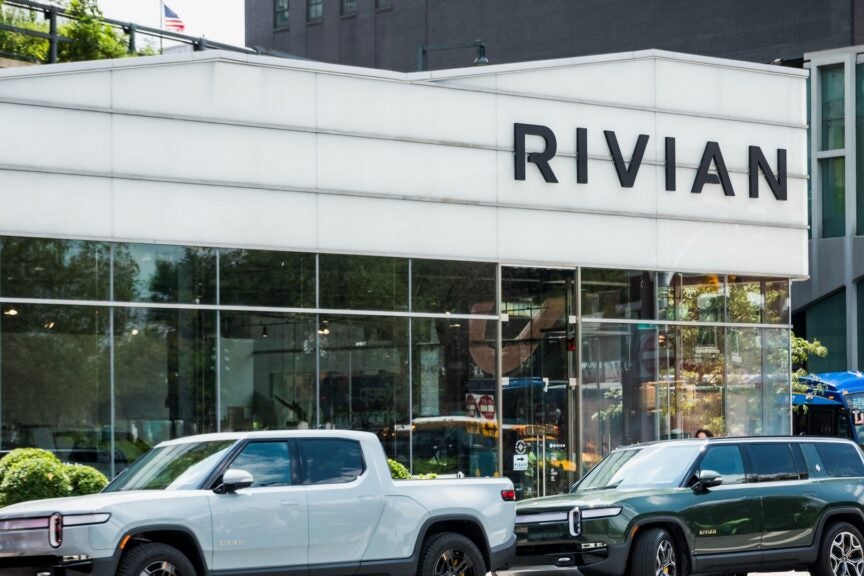
Rivian Unveils Custom Silicon, Next-Gen Autonomy Platform, and Deep AI Integration at Inaugural Autonomy & AI Day
Businesswire· 2025-12-11 17:20
Core Insights - Rivian announced significant advancements in automotive technology during its first Autonomy & AI Day, focusing on proprietary silicon, next-generation vehicle autonomy, and AI-driven software architecture [1][2][3] Technology Developments - The company introduced its in-house 1600 sparse TOPS inference chip, which is expected to enhance self-driving capabilities and aims for Level 4 (L4) autonomy, significantly improving the ownership experience [2][3] - Rivian's technology roadmap includes the Rivian Autonomy Processor (RAP1), a custom 5nm processor that integrates processing and memory, ensuring high efficiency and compliance with automotive safety standards [3][4] - The third-generation Autonomy computer, Autonomy Compute Module 3 (ACM3), will be integrated with LiDAR in future R2 models to enhance real-time detection and spatial data processing [4][5] Software Innovations - Rivian's software-first approach is exemplified by the Rivian Autonomy Platform, which utilizes a Large Driving Model (LDM) trained on extensive datasets to optimize driving strategies [6][8] - Upcoming software enhancements for the second-generation R1 vehicles include Universal Hands-Free (UHF) capabilities, allowing for extended hands-free driving [7] Subscription and Business Model - The company plans to launch an autonomy subscription service, Autonomy+, in early 2026, priced at $2,500 for a one-time fee or $49.99 per month, aimed at improving road safety and meeting customer demand [8] AI Integration - Rivian is leveraging AI through the Rivian Unified Intelligence (RUI), which enhances diagnostics and service infrastructure, and will soon power the Rivian Assistant, a voice interface for vehicles [9][11][12] - The RUI will facilitate predictive maintenance and improve self-service diagnostics for customers [12] Strategic Vision - Rivian's vertically integrated strategy allows for rapid evolution of the vehicle experience, combining user-facing features with foundational technology to drive growth [13][14]