Space Launch System (SLS)

Search documents
Artemis II: WSJ Takes You Inside NASA’s High-Stakes Moon Mission
The Wall Street Journal· 2026-04-01 14:52
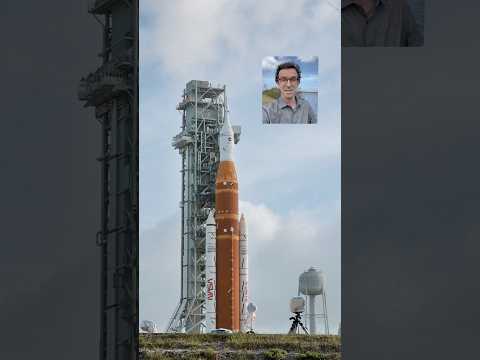
This is a big deal. This is a high stakes mission. >> I think everybody's pretty excited and understands uh the significance of this launch.>> I am here at uh NASA's Kennedy Space Center in Florida. Uh behind me uh right up here is the space launch system rocket with the Orion crew vehicle stacked on top of it. This is a high stakes mission for the agency, for the contractors, and most of all for the crew that's going to be on board Orion when SLS takes off.I think the nation and the world has been waiting ...

SpaceX, Boeing, and Lockheed Will Take America Back to the Moon -- but Not Just Yet
The Motley Fool· 2026-03-15 09:05
Core Insights - NASA has revised its moon landing schedule, delaying Artemis II to April and postponing Artemis III's landing to 2028, but this is seen as a strategic move to enhance future missions [3][4][6] Mission Timeline - Artemis II will now take place in April, focusing on a lunar flyby rather than a landing, while Artemis III will practice docking in Low Earth Orbit in 2027 instead of landing on the moon [3][4][6] - The actual moon landing is now planned for Artemis IV in 2028, with a potential for two landings in that year due to an accelerated launch cadence [6] Cost Management - Each Artemis launch currently costs $4.1 billion, attributed to infrequent launches and ongoing development of the Space Launch System (SLS) [9][12] - NASA aims to standardize the SLS design to reduce costs and increase launch frequency, moving towards a "near-Block I" version that incorporates proven technology [10][11] Industry Implications - The changes in the Artemis program could positively impact contractors like Boeing, Northrop Grumman, and Lockheed Martin by making SLS more cost-effective and politically favorable [11][13] - The proposed adjustments may prevent Congress from shifting contracts to competitors like SpaceX, thereby securing ongoing contracts for existing aerospace companies [12][13]



NASA Eyes Boeing-Lockheed Rocket Component For Moon Mission As Costs Skyrocket: Report - Boeing (NYSE:BA)
Benzinga· 2026-03-05 03:59
Group 1 - NASA is seeking rocket components from Boeing and Lockheed Martin's joint venture, United Launch Alliance (ULA) [1] - The Exploration Upper Stage of NASA's Space Launch System, built by Boeing, has faced delays and costs have exceeded $2.8 billion [2] - NASA plans to potentially use ULA's Vulcan rocket's Centaur V for lunar missions, which shares the same propellant as the SLS, although this plan is not finalized [2] Group 2 - NASA has delayed the launch of the Artemis II vehicle due to issues with the rocket, specifically an "interrupted flow of helium" observed by engineers [3]
BREAKING! NASA Working SLS Helium Issue; Preparing For Rollback
The Launch Pad· 2026-02-21 15:48
BREAKING! NASA teams are working a newly discovered technical concern with the Space Launch System following analysis of data collected overnight. Engineers identified an interruption in helium flow within the SLS Interim Cryogenic Propulsion Stage (ICPS) — the upper stage that performs the crucial burn sending the Orion spacecraft out of Earth orbit and onto its trajectory around the Moon. Mission managers at Kennedy Space Center are now troubleshooting the issue and preparing for a likely rollback of the ...

President Trump Just Cut the Budget on Boeing's and Lockheed's Most Important Space Program
The Motley Fool· 2025-05-17 11:07
Core Insights - The Trump administration's proposed budget for fiscal year 2026 includes a significant 24% cut to NASA's funding, reducing it from $24.8 billion to $18.8 billion, which may impact major space companies' revenue streams [3][4] - The budget proposal suggests the termination of the Space Launch System (SLS) program, which has been criticized for its high costs and delays, with a projected cost of $4 billion per launch and being 140% over budget [6][8] - The proposed budget allocates $7 billion for lunar exploration under Project Artemis and $1 billion for Mars missions, but cuts funding for the Mars Sample Return mission [5][6] Impact on Companies - The termination of the SLS program threatens an estimated $82 billion in contracts for major contractors like Boeing, Lockheed Martin, and Northrop Grumman, which were expected to benefit from Project Artemis [8] - Conversely, the budget cuts could create opportunities for more cost-effective space contractors like SpaceX and Blue Origin, which are positioned to take over roles currently held by traditional aerospace companies [9][11] - SpaceX's Starship and Blue Origin's New Glenn rocket are projected to offer lunar missions at significantly lower costs, with Starship estimated at less than $3 billion per trip and New Glenn at $3.4 billion [9][10] Long-term Industry Outlook - The proposed changes indicate a shift towards more budget-conscious space operations, potentially sidelining established companies in favor of newer, more efficient competitors [11][12] - While this transition may not be favorable for current investors in traditional aerospace stocks, it could lead to a more sustainable and cost-effective future for the space industry [12]