Vidda G11

Search documents
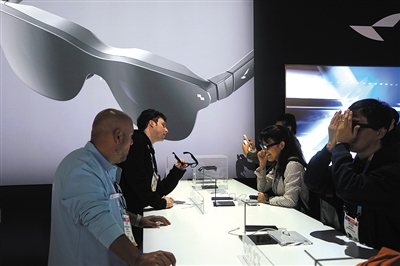
产品迭代出货激增 智能眼镜“热”撬动产业链升级
Xin Hua Wang· 2026-01-26 02:35
Core Insights - The smart glasses market is experiencing explosive growth, with China's shipment volume expected to reach 4.5 million units by 2026, representing a year-on-year increase of 77% [2][5]. Technology and Application Breakthroughs - The launch of the first eSIM smart glasses, "Thunderbird X3 Pro Project eSIM," showcases independent functionalities such as calls, AI conversations, and real-time translation without needing a smartphone [3]. - The integration of AI smart glasses with automotive technology allows users to control vehicle functions remotely and receive real-time navigation and speed information while driving [3]. - Recent advancements in optical technology, lightweight design, and independent communication capabilities have addressed previous limitations of smart glasses, enabling a transition from accessories to standalone devices [3][4]. Market Growth and Demand - The smart glasses market is projected to see significant growth, with shipments expected to reach 2.54 million units in 2025 and 4.51 million units in 2026, reflecting year-on-year growth rates of 92.9% and 77.7%, respectively [5][6]. - The core growth areas for smart glasses in 2026 will focus on consumer scenarios such as home use, travel, health management, content creation, and information services [6]. Industry Chain Upgrades - The demand for smart glasses is driving deep collaboration across the supply chain, enhancing product integration and production efficiency [7]. - Companies are innovating to meet the evolving demands for lightweight, low-power, and high-performance imaging systems, with new products being developed to align with market needs [8]. Challenges and Collaborative Solutions - The smart glasses industry faces challenges including balancing product weight, battery life, performance, and cost, as well as improving user education and market awareness [10]. - The first half of 2026 is expected to see advancements in optical displays and AI chips, but challenges related to production yield, cost control, and supply chain coordination remain [10][11].