eVTOL (electric vertical takeoff and landing aircraft)

Search documents
Vertical Aerospace shares slip as cash runway concern offsets flight testing progress
Yahoo Finance· 2026-03-24 13:02
Core Viewpoint - Vertical Aerospace has made significant progress in its flight testing program but faces concerns regarding its cash runway due to substantial cash outflows [2][3]. Financial Performance - The company reported a narrowing cash position, with cash decreasing from approximately $93 million at the end of 2025 to about $58 million by the report date [7]. - Anticipated net cash outflows are projected to be around $195 million over the next 12 months as investments in flight testing, certification, and manufacturing increase [7]. - The company completed two public equity raises in 2025, securing over $175 million, and net cash used in operations for the year was approximately $112 million, consistent with guidance [8]. Operational Milestones - Vertical Aerospace has achieved key operational milestones, including completing hover, vertical, and wingborne flight phases, and conducting the first winged eVTOL flight in open European airspace [4]. - Transition testing began in November 2025 under UK Civil Aviation Authority oversight, and a third full-scale prototype was completed in December to enhance flight test capacity [5]. Manufacturing Developments - The company has initiated a battery pilot production line at its Vertical Energy Centre and plans to open a new 30,000 sq ft facility later this year [9]. - Vertical Aerospace is also advancing plans to expand at Cotswold Airport, aiming for a production capacity of over 25 aircraft annually [9]. Market Activity - The company has relaunched its commercial order book, securing recent orders from JetSetGo for operations in India and Heli Air Monaco for routes along the Côte d'Azur [5].

今夏试飞,空中出租车要来了?
汽车商业评论· 2026-03-10 23:05
Core Viewpoint - The article discusses the advancement of electric vertical takeoff and landing (eVTOL) aircraft, highlighting the U.S. Department of Transportation and FAA's announcement of a pilot program for real-world testing of next-generation aircraft starting in summer 2026 across 26 states [3][4][7]. Group 1: Pilot Program Details - The pilot program, named Advanced Air Mobility and Electric Vertical Takeoff and Landing Integration Pilot Program (eIPP), is the first large-scale, cross-regional real-world verification of next-generation aircraft organized at the federal level in the U.S. [7] - Eight projects were selected from 30 applications, emphasizing collaboration with state, local, tribal, or territorial governments [7][8]. - The program aims to cover various scenarios, including urban air taxis, regional passenger transport, cargo logistics, emergency medical services, automated flight, and offshore energy transport [9][10]. Group 2: Industry Challenges and Regulatory Framework - The eVTOL industry faces significant challenges, particularly in regulatory approval, airworthiness, and operational frameworks, which have historically slowed down progress despite technological advancements [12][18]. - The FAA is set to finalize pilot training and certification rules by 2024, which are crucial for the safe operation of eVTOL aircraft [12]. - Companies like Archer and Joby are actively working towards obtaining necessary certifications, with Archer having received its Part 135 certificate for commercial operations, although its main aircraft model has yet to achieve airworthiness certification [12][13]. Group 3: Industry Partnerships and Investments - Traditional automotive companies are increasingly involved in the eVTOL sector, with Stellantis partnering with Archer for manufacturing and investment, while Joby has secured a significant investment from Toyota to support certification and production [16][17]. - The collaboration between eVTOL companies and established automotive manufacturers is seen as essential for addressing manufacturing, supply chain, and cost challenges [16]. Group 4: Future Prospects and Market Dynamics - The pilot program is viewed as a critical step towards establishing public trust and operational frameworks for eVTOL services, with companies preparing for events like the 2028 Los Angeles Olympics [17]. - International competition is intensifying, with companies like Joby planning to launch commercial operations in markets like Dubai by the end of 2026, highlighting the urgency for U.S. firms to establish a foothold [17][18].

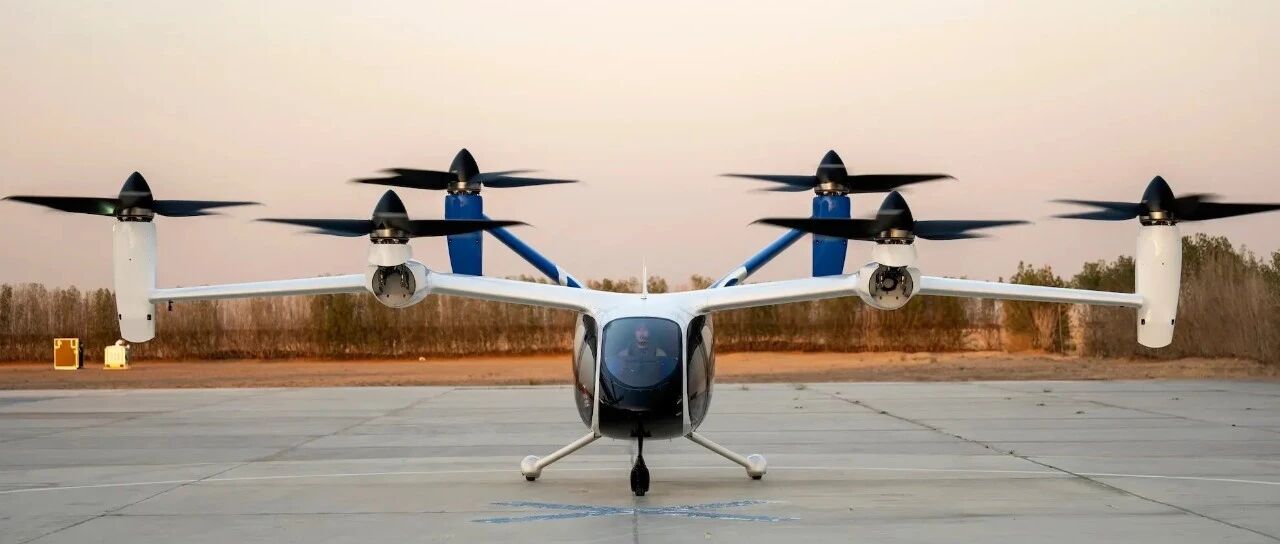
Why BlackRock Just Took an 8.1% Stake in Archer Aviation Stock
Yahoo Finance· 2026-02-05 12:50
Core Viewpoint - Archer Aviation's stock has decreased by 26% since its debut on the New York Stock Exchange in September 2021, indicating a shift in investor sentiment from retail enthusiasm to a more cautious outlook [1] Group 1: BlackRock's Investment - BlackRock has increased its ownership stake in Archer to 8.1%, signaling a significant investment in the eVTOL company [2] - The 13G filing indicates that BlackRock's acquisition of shares is a passive investment, not intended to influence Archer's operations [3][4] Group 2: Investment Appeal of Archer Aviation - Archer is viewed as an asymmetric investment, with potential high rewards if it successfully disrupts the aviation and mobility markets, despite risks related to regulatory approvals and capital management [5] - The company has attracted attention from notable partners such as Palantir Technologies, Nvidia, United Airlines, Stellantis, and the U.S. government, indicating strong strategic interest [5] - Archer reported $1.6 billion in liquidity at the end of the third quarter, supported by investments from its partners, which reduces execution risk as the company prepares for commercial deployment [6]


JOBY's Q3 Earnings Coming Up: Time to Buy, Sell or Hold the Stock?
ZACKS· 2025-11-04 14:11
Core Insights - Joby Aviation (JOBY) is set to report its third-quarter 2025 results on November 5, with a consensus estimate of a loss of 18 cents per share and revenues of $2.42 million [1][2] - The revenue estimate shows a significant increase from the previous year's figure of $0.03 million, while the loss per share has improved from 21 cents in the same quarter last year [2][4] - For the full year 2025, the revenue estimate is $9.64 million, a substantial rise from $0.14 million reported a year ago, with a projected loss per share of 88 cents compared to 79 cents last year [4] Financial Performance - The loss estimate for the upcoming quarter has remained stable over the last 60 days, indicating no significant changes in expectations [2] - Joby Aviation's earnings have missed the Zacks Consensus Estimate in two of the last four quarters, with an average miss of 9.6% [4] Market Position - Joby Aviation's stock has underperformed in the market over the past three months, declining in double digits and lagging behind the Zacks Transportation - Airline industry and Archer Aviation (ACHR) [10] - The company's stock is trading at a price-to-book value of 15.55X, which is higher than its industry average and that of Archer Aviation [13] Operational Challenges - High operating expenses, particularly in research and development, are expected to negatively impact the third-quarter results [7][8] - The intensive nature of eVTOL development requires significant capital, posing challenges for Joby Aviation [9] Strategic Developments - Joby Aviation is progressing towards commercial operations, having recently acquired Blade Air Mobility's urban air mobility passenger business, and plans to integrate these services with Uber Technologies by 2026 [17] - The collaboration with Uber has been ongoing since 2019, with previous acquisitions aimed at enhancing urban air mobility capabilities [17] Future Outlook - While Joby Aviation is making strides in the eVTOL sector, challenges related to scalability and public acceptance remain, particularly concerning safety, noise, and affordability [18][19]


Flying Cars Aren't Just Science Fiction Anymore. This Company Is Leading the Charge in eVTOLs -- and Yes, It's Publicly Traded.
The Motley Fool· 2025-08-09 20:05
Core Viewpoint - The concept of flying taxis is becoming a reality, with Joby Aviation leading the charge in developing electric vertical takeoff and landing (eVTOL) aircraft designed for urban transportation [1][2]. Company Overview - Joby Aviation's eVTOL aircraft can carry passengers at speeds exceeding 200 mph, are quieter than helicopters, and produce zero emissions [2]. - The company is progressing through the FAA certification process, which is crucial for commercial operations [2][6]. Strategic Positioning - Joby has established significant partnerships and has a robust cash position, positioning it as a potential leader in the commercial flying taxi market [3][10]. - The company has secured FAA Part 135 certification, allowing it to operate as an air carrier with approved aircraft [7]. Infrastructure Requirements - Successful implementation of Joby's vision requires full FAA certification and the development of necessary infrastructure, including vertiports and charging stations [6]. Financial Performance - Joby generated only $110,000 in revenue over the past 12 months, with a net loss of approximately $596 million [12]. - The company reported a cash burn of $111 million in the first quarter of 2025, highlighting the need for a strong cash position [12][13]. - Joby holds about $813 million in cash and short-term investments, providing some operational runway [13]. Market Valuation - With a market cap near $17 billion, Joby's stock is priced significantly ahead of its current fundamentals, with a price-per-book (P/B) ratio around 20, compared to the S&P 500's median of about 3 [14]. Growth Potential - Joby has secured substantial investments from major partners, including $60 million from Delta Air Lines and $894 million from Toyota, to support its development and certification efforts [10]. - The company is also expanding internationally, with plans to launch aerial taxi services in Dubai by 2026 [11]. Competitive Landscape - Joby faces competition from other companies in the eVTOL space, such as Archer Aviation, which is trading at a lower price-to-book ratio of approximately 5.6 [14].