
SOLARGIGA(00757)

Search documents
阳光能源(00757) - 2025 - 年度业绩
2025-08-22 11:26
[Supplementary Announcement Overview](index=1&type=section&id=%E8%A1%A5%E5%85%85%E5%85%AC%E5%91%8A%E6%A6%82%E8%BF%B0) This section provides an overview of the supplementary announcement, detailing its purpose and the context of the property, plant, and equipment impairment provision [Purpose and Background of the Announcement](index=1&type=section&id=%E5%85%AC%E5%91%8A%E7%9B%AE%E7%9A%84%E4%B8%8E%E8%83%8C%E6%99%AF) This announcement supplements the 2024 annual report, providing additional details on the RMB 107.932 million impairment provision for property, plant, and equipment - This document is a supplementary announcement to the annual report for the year ended December 31, 2024[2](index=2&type=chunk) - The announcement aims to provide additional information on the impairment provision for property, plant, and equipment[3](index=3&type=chunk) FY2024 Impairment Provision for Property, Plant, and Equipment | Metric | Amount (RMB) | | :--- | :--- | | Impairment Provision for Property, Plant, and Equipment (2024) | 107,932,000 | [Details of Impairment Provision for Property, Plant, and Equipment](index=2&type=section&id=%E7%89%A9%E4%B8%9A%E3%80%81%E5%8E%82%E6%88%BF%E5%8F%8A%E8%AE%BE%E5%A4%87%E5%87%8F%E5%80%BC%E6%8B%A8%E5%A4%87%E8%AF%A6%E6%83%85) This section details the impairment provision for property, plant, and equipment, including the reasons for impairment, valuation methods, and independent appraiser information [Analysis of Impairment Reasons](index=2&type=section&id=%E5%87%8F%E5%80%BC%E5%8E%9F%E5%9B%A0%E5%88%86%E6%9E%90) The impairment of the Group's photovoltaic module production equipment is primarily due to rapid changes in the PV industry in 2024, leading to technological obsolescence, decreased market demand, and production plan adjustments - The operating losses and temporary idle status of the subject assets are mainly due to rapid and significant changes in the photovoltaic industry market conditions and technology in 2024[4](index=4&type=chunk) [Technological Obsolescence](index=2&type=section&id=%E6%8A%80%E6%9C%AF%E8%BF%87%E6%97%B6) The subject assets, designed for older solar modules, are technically obsolete as they cannot be upgraded to produce current mainstream high-efficiency N-type modules due to fundamental differences in manufacturing processes - The subject assets are production lines specifically designed for older, outdated solar modules[7](index=7&type=chunk) - In 2024, industry market preference rapidly shifted towards more efficient, larger N-type modules[7](index=7&type=chunk) - Due to fundamental differences in manufacturing processes and equipment specifications, the subject assets cannot be upgraded to produce N-type modules, rendering them technically obsolete[7](index=7&type=chunk) [Decreased Market Demand](index=2&type=section&id=%E5%B8%82%E5%9C%BA%E9%9C%80%E6%B1%82%E4%B8%8B%E9%99%8D) Market shift to N-type modules caused a sharp decline in demand and prices for smaller, outdated modules produced by the subject assets, making their continued operation economically unfeasible - The market shift to N-type modules led to a sharp and significant decline in market demand and selling prices for the smaller, outdated modules produced by the subject assets[7](index=7&type=chunk) - The continued operation of these production lines is no longer economically viable[7](index=7&type=chunk) [Changes in Production Plan](index=2&type=section&id=%E7%94%9F%E4%BA%A7%E8%AE%A1%E5%88%92%E5%8F%98%E6%9B%B4) The Group revised its production plan to focus resources on N-type module production, resulting in the shutdown and temporary idling of obsolete production lines, which triggered the impairment assessment - The Group has revised its production plan to concentrate resources on N-type module production equipment[7](index=7&type=chunk) - Obsolete production lines have been shut down, leading to temporary idling of equipment and triggering an impairment assessment[7](index=7&type=chunk) [Independent Valuer and Valuation Methodology](index=2&type=section&id=%E7%8B%AC%E7%AB%8B%E4%BC%B0%E5%80%BC%E5%B8%88%E5%8F%8A%E4%BC%B0%E5%80%BC%E6%96%B9%E6%B3%95) The impairment assessment for the subject assets used the fair value less costs of disposal method, based on a market approach valuation performed by an independent Chinese qualified valuer, Jinxin Asset Appraisal Firm - The impairment assessment for the subject assets adopted the fair value less costs of disposal method[8](index=8&type=chunk)[11](index=11&type=chunk) - Fair value was assessed using the market approach[8](index=8&type=chunk) [Independent Valuer's Identity and Qualifications](index=2&type=section&id=%E7%8B%AC%E7%AB%8B%E4%BC%B0%E5%80%BC%E5%B8%88%E8%BA%AB%E4%BB%BD%E4%B8%8E%E8%B5%84%E8%B4%A8) The valuation of photovoltaic module production equipment was conducted by Jinxin Asset Appraisal Firm (General Partnership), a Chinese qualified valuer whose registered asset appraisers confirmed independence from the Company and its associates - The valuation was conducted by Jinxin Asset Appraisal Firm (General Partnership)[6](index=6&type=chunk) - The valuer is a Chinese qualified valuer, with the report prepared and signed by registered asset appraisers[6](index=6&type=chunk) - The valuer confirmed independence from the Company and its associates, holding no interests[6](index=6&type=chunk) [Valuation Input Data, Basis, and Assumptions](index=3&type=section&id=%E4%BC%B0%E5%80%BC%E8%BE%93%E5%85%A5%E6%95%B0%E6%8D%AE%E3%80%81%E5%9F%BA%E5%87%86%E5%8F%8A%E5%81%87%E8%AE%BE) Valuation inputs primarily included quotes and recent transaction prices for similar used PV production equipment in China, adjusted by a 30% to 34% premium to reflect differences, resulting in a recoverable amount between 0.5% and 20% of original cost - Primary input data included quotes and recent transaction prices for identical or similar used photovoltaic production equipment in China, obtained from second-hand equipment dealers[10](index=10&type=chunk) - The valuation was performed based on the assets' condition and status as of the valuation date, December 31, 2024[10](index=10&type=chunk) - Adjustments were made to the quotes (premium rates typically ranging from **30% to 34%**) to account for differences between reference assets and subject assets[10](index=10&type=chunk) Recoverable Amount as Percentage of Original Cost for Subject Assets | Metric | Percentage Range | | :--- | :--- | | Recoverable Amount as Percentage of Original Cost | 0.5% to 20% | [Reasons for Adopting Market Approach](index=4&type=section&id=%E9%87%87%E7%94%A8%E5%B8%82%E5%9C%BA%E6%B3%95%E4%B9%8B%E7%90%86%E7%94%B1) The market approach was adopted because the subject assets no longer constitute a cash-generating unit, are not expected to generate future operating cash inflows, and their primary economic benefit is their sale or scrap value - The subject assets no longer constitute a cash-generating unit and are not expected to generate any operating cash inflows in the future[14](index=14&type=chunk) - The primary economic benefit derivable from the assets is their sale or scrap value[14](index=14&type=chunk) - The market approach provides the most direct and reliable estimate of fair value less costs of disposal for the assets in their current condition by referencing observable transaction prices of similar assets[14](index=14&type=chunk) [Board of Directors Information](index=4&type=section&id=%E8%91%A3%E4%BA%8B%E4%BC%9A%E4%BF%A1%E6%81%AF) This section provides information regarding the Board of Directors, including the announcement's effect and a list of current board members [Effectiveness of Announcement and Board Members](index=4&type=section&id=%E5%85%AC%E5%91%8A%E6%95%88%E5%8A%9B%E4%B8%8E%E8%91%A3%E4%BA%8B%E4%BC%9A%E6%88%90%E5%91%98) This supplementary information should be read in conjunction with the annual report and does not affect other information contained therein, concluding with a list of the Company's current Board of Directors - The supplementary information should be read in conjunction with the annual report and does not affect other information contained therein[12](index=12&type=chunk) - The announcement lists the executive directors (Mr. Tan Xin, Mr. Wang Junze) and independent non-executive directors (Dr. Wang Yongquan, Ms. Zhong Weiheng, Ms. Tan Ying)[13](index=13&type=chunk)
阳光能源(00757.HK)拟8月29日举行董事会会议以审批中期业绩
Ge Long Hui· 2025-08-18 09:16
Core Viewpoint - Sunshine Energy (00757.HK) announced that it will hold a meeting on August 29, 2025, to review and approve its unaudited interim results for the six months ending June 30, 2025, and to consider a proposed interim dividend, if deemed appropriate [1] Summary by Relevant Categories - Company Announcement - Sunshine Energy will present its interim results for the six months ending June 30, 2025, during a meeting scheduled for August 29, 2025 [1] - The meeting will also consider the proposal for an interim dividend [1]
阳光能源(00757) - 董事会会议通告
2025-08-18 08:49
香港交易及結算所有限公司及香港聯合交易所有限公司對本公告的內容概不負 責,對其準確性或完整性亦不發表任何聲明,並明確表示,概不對因公告全部或 任何部分內容而產生或因倚賴該等內容而引致的任何損失承擔任何責任。 Solargiga Energy Holdings Limited 陽光能源控股有限公司 (於開曼群島註冊成立的有限公司) (股份代號: 757) 董事會會議通告 陽 光 能 源 控 股 有 限 公 司(「本公司」)董 事 會(「董事會」)謹 此 宣 佈,本 公 司 董 事 會 會 議 將 於 二 零 二 五 年 八 月 二 十 九 日(星 期 五)為 審 議(其 中 包 括)並 批 准(如 認 為 合 適) 本公司及其附屬公司截至二零二五年六月三十日止六個月未經審核之中期業績 及 考 慮 建 議 中 期 股 息(如 有)。 承董事會命 陽光能源控股有限公司 主 席 譚 鑫 香港,二零二五年八月十八日 於 本 公 告 日 期,執 行 董 事 為 譚 鑫 先 生(主 席)及 王 鈞 澤 先 生;而 獨 立 非 執 行 董 事 為 王永權博士、鍾瑋珩女士及譚英女士。 ...
阳光能源(00757) - 截至2025年7月31日之股份发行人的证券变动月报表
2025-08-04 02:01
股份發行人及根據《上市規則》第十九B章上市的香港預託證券發行人的證券變動月報表 截至月份: 2025年7月31日 狀態: 新提交 致:香港交易及結算所有限公司 公司名稱: 陽光能源控股有限公司 呈交日期: 2025年8月4日 I. 法定/註冊股本變動 | 1. 股份分類 | 普通股 | 股份類別 | 不適用 | | | 於香港聯交所上市 (註1) | 是 | | | --- | --- | --- | --- | --- | --- | --- | --- | --- | | 證券代號 (如上市) | 00757 | 說明 | | | | | | | | | | 法定/註冊股份數目 | | | 面值 | | 法定/註冊股本 | | | 上月底結存 | | | 5,000,000,000 | HKD | | 0.1 HKD | | 500,000,000 | | 增加 / 減少 (-) | | | | | | HKD | | | | 本月底結存 | | | 5,000,000,000 | HKD | | 0.1 HKD | | 500,000,000 | 本月底法定/註冊股本總額: HKD 500,000,00 ...
光伏行业:“反内卷”下获新生?
智通财经网· 2025-07-08 13:24
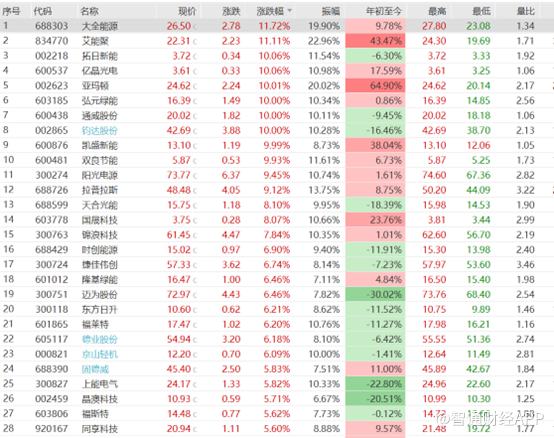
Core Viewpoint - The photovoltaic industry is experiencing a significant surge due to the "anti-involution" trend, which aims to eliminate low-price competition and promote high-quality development [1][5][6]. Group 1: Market Performance - On July 8, the A-share photovoltaic sector saw a broad rally, with stocks like Topray Solar and Tongwei Co. hitting the daily limit, while Daqo New Energy and Aiko Solar rose over 10% [1][2]. - The CSI Photovoltaic Industry Index increased by over 5% in a single day, and the photovoltaic ETF funds also saw gains of around 5% [2]. - In the Hong Kong market, the photovoltaic solar energy index rose by 6.17%, with companies like Shunfeng Clean Energy and Sunshine Energy experiencing significant increases of 30.43% and 15.48%, respectively [3][4]. Group 2: Policy and Industry Response - The surge in the photovoltaic sector is largely attributed to recent government initiatives aimed at curbing "involution" in competition, as highlighted by various government meetings and articles advocating for high-quality development [5][6]. - The Ministry of Industry and Information Technology has emphasized the need to eliminate low-price competition and improve product quality within the photovoltaic industry [5]. Group 3: Demand and Supply Dynamics - Domestic demand for photovoltaic installations surged in May 2025, with a record addition of 92.92 GW, marking a 388.03% year-on-year increase [6][8]. - However, the industry is expected to see a significant decline in installation numbers following the rush to secure policy benefits, indicating a potential return to more sustainable levels [6]. - Exports of photovoltaic components have been lackluster, with a 4% year-on-year decline in the first five months of 2025 compared to the previous year [8][10]. Group 4: Material Supply and Pricing - The price of silicon materials, which significantly impacts the photovoltaic industry, is under pressure due to high inventory levels and low demand, with current production capacity nearing its limits [15][17]. - The average price of domestic polysilicon has decreased to 35 yuan per kilogram, reflecting ongoing challenges in the supply chain [19]. - The industry faces difficulties in achieving "anti-involution" primarily at the silicon material level, while other segments like silicon wafers and modules may see easier adjustments through capacity restrictions [20].


阳光能源(00757) - 2024 - 年度财报
2025-04-28 09:18
Financial Performance - In 2024, the Group's revenue was RMB 3,706,198, a decrease of 48.6% compared to RMB 7,192,853 in 2023[21]. - The gross profit for 2024 was RMB 104,039, down 77.3% from RMB 458,003 in 2023[21]. - The Group reported a loss attributable to owners of the parent of RMB 227,084 in 2024, compared to a profit of RMB 111,906 in 2023[21]. - Current assets decreased to RMB 3,187,190 in 2024 from RMB 4,738,265 in 2023, a decline of 32.7%[21]. - The net assets of the Group were RMB 962,432 in 2024, down from RMB 1,193,109 in 2023[21]. - The Group's revenue decreased by 48.5% from approximately RMB 7,192.9 million in 2023 to approximately RMB 3,706.2 million in 2024 due to reduced external shipment volume and a sharp decline in photovoltaic module prices[142]. - The total external shipment volume of photovoltaic modules decreased from 6,683.1 MW in 2023 to 4,576.2 MW in 2024, reflecting a significant reduction in market activity[135]. - Gross profit fell to approximately RMB104.0 million in 2024, down 77.3% from RMB458.0 million in 2023, with gross profit margin decreasing from 6.4% to 2.8%[147]. - Loss attributable to owners of the parent was approximately RMB227.1 million in 2024, compared to a profit of approximately RMB111.9 million in 2023, mainly due to decreased revenue and gross profit[159]. Market Dynamics - The photovoltaic industry is experiencing a slowdown in new installations, but emerging markets are showing strong demand, providing new growth opportunities[61]. - The photovoltaic industry is recognized as the most cost-effective source of electricity in many regions, driving continued demand growth for photovoltaic products[104]. - Trade protectionism is intensifying in major photovoltaic markets, posing threats to China's foreign trade exports driven by price advantages[77]. - The prices of silicon materials, silicon wafers, cells, and modules have all seen considerable declines, putting pressure on the gross profit margins across various segments[66]. - Emerging markets, particularly in the Middle East and Asia-Pacific, are showing strong demand growth, compensating for the slowdown in traditional markets like the US and Europe[65]. - The photovoltaic industry is expected to see stable growth in 2025 as inventory levels in Europe are digested, with emerging markets in the Middle East and Africa becoming new growth points[188]. Technological Advancements - The Group is committed to enhancing technological reserves and has partnered with West Lake University for research on perovskite technology[39][42]. - The Group's focus on high-efficiency monocrystalline products has positioned it as a leader in the photovoltaic market[116]. - The Group is conducting research on N-type HJT technology, perovskite technology, BIPV products, and offshore floating modules to upgrade mass production technology and expand market sales[139]. - The Group plans to increase R&D and production of multiple varieties of 8-inch semiconductor monocrystalline silicon and 13-15 inch semiconductor monocrystalline silicon by 2025 to meet chip market demand[129]. - The Group has signed an industry-school cooperation agreement with Southeast University to enhance R&D in zero-carbon buildings and BIPV technology, aiming to improve photoelectric conversion efficiency and reduce production costs[126]. Strategic Initiatives - The Group plans to strengthen cooperation with state-owned enterprises and improve its overseas business layout to achieve profit targets in 2025[38][41]. - The Group aims to establish a digital information factory and improve the ERP system to enhance operational efficiency and management levels[46]. - The Group's operational strategy includes a flexible sales and marketing approach to balance inventory levels and sales[141]. - The Group aims to enhance core competitiveness through strategic collaboration and technological innovation, focusing on domestic and international markets[194]. - The international strategy includes a "large customers + localization" dual-drive approach, with a focus on Southeast Asia and Central and Eastern Europe for market expansion[194]. Production Capacity and Efficiency - As of December 2024, the Group's module production capacity was 10.2GW[13]. - The output of the Jinzhou and Jianhu bases showed steady growth, with well-controlled yield and fragmentation rates, contributing to cost reduction and efficiency improvement[40][43]. - The Group aims to optimize its production capacity layout to enhance overall competitiveness and profitability amid improving supply-demand dynamics[103]. - The Group's production lines are capable of producing large-size products (182 mm and 210 mm), which are becoming the mainstream in the market, enhancing shipment volume and gross profit margin potential[139]. - The Group is investing in upgrading existing production capacity and facilities to align with technological advancements and improve production efficiency[130]. Financial Health and Management - The Group's current ratio improved to 1.2 from 1.1 in the previous year, indicating better short-term financial health[174]. - The net debt to equity ratio as of December 31, 2024, was 17.9%, a significant improvement from -59.7% in the previous year, indicating a shift towards a more leveraged position[174]. - The Group reported a net cash inflow from operating activities of approximately RMB 180.9 million in 2024, a significant turnaround from a net cash outflow of RMB 692.1 million in 2023[175]. - Administrative expenses reduced to approximately RMB220.0 million in 2024 from RMB279.0 million in 2023, due to enhanced operational efficiency and cost control measures[149]. - The Group is establishing a comprehensive risk management system to address price fluctuations, policy, and technological risks[194]. Market Expansion and Customer Base - The Group achieved sales of RMB 533 million from overseas orders, successfully entering new markets such as Kenya and Ukraine despite rising trade protectionism[34][36]. - The domestic sales team added 16 new customers, whose orders accounted for 43% of the annual sales volume, contributing to an increased market share of the Group's own brands[33][36]. - The Group's module sales are primarily directed towards large state-owned enterprises and international corporations, enhancing its market presence[121]. - The Group plans to establish localized production bases and R&D centers in target markets to adapt to changing demand structures and effectively respond to trade protection barriers[107]. Environmental and Regulatory Context - In 2024, global clean energy investment exceeded USD 2.0 trillion, about twice the total investment in fossil energy, indicating a strong shift towards energy transition[60]. - By 2030, G20 countries need to significantly enhance their renewable energy capacity, with a target of 9,400 GW, reflecting the urgent need for energy transition[100]. - The photovoltaic industry is expected to experience broader development opportunities due to the deepening of "dual carbon" goals and the acceleration of global energy transition[194].
阳光能源(00757) - 2024 - 年度业绩
2025-03-26 14:34
Financial Performance - For the fiscal year ending December 31, 2024, the company reported total revenue of RMB 3,706,198 thousand, a decrease of 48.6% compared to RMB 7,192,853 thousand in 2023[3] - The gross profit for the same period was RMB 104,039 thousand, down 77.3% from RMB 458,003 thousand in the previous year[3] - The company incurred a net loss attributable to shareholders of RMB 226,996 thousand, compared to a profit of RMB 141,668 thousand in 2023, representing a significant decline[4] - Total revenue from external customers decreased to RMB 3,706,198 thousand in 2024 from RMB 7,192,853 thousand in 2023, representing a decline of approximately 48.6%[18] - The total reported segment loss for the company was RMB (226,996) thousand in 2024 compared to a profit of RMB 141,668 thousand in 2023[13] - The company reported a loss before tax of RMB 232,211,000 for 2024, compared to a profit of RMB 157,130,000 in 2023[30] - The net loss attributable to shareholders was approximately RMB 227.1 million, compared to a net profit of RMB 111.9 million in 2023, primarily due to declines in revenue and gross profit[71] Revenue Breakdown - Revenue from Segment A (Manufacturing and Trading of Photovoltaic Components) dropped to RMB 3,529,839 thousand in 2024 from RMB 7,021,656 thousand in 2023, a decrease of about 49.7%[13] - Revenue from photovoltaic module manufacturing and sales was RMB 3,527,729,000, down 38.8% from RMB 5,779,995,000 in 2023[20] - Revenue from semiconductor manufacturing and sales increased to RMB 46,412,000, up 9.0% from RMB 42,488,000 in 2023[20] - Revenue from photovoltaic power station construction and operation was RMB 129,947,000, slightly up from RMB 128,667,000 in 2023[20] Assets and Liabilities - Total current assets decreased to RMB 3,187,190 thousand from RMB 4,738,265 thousand in 2023, reflecting a reduction of 32.7%[7] - Current liabilities also decreased to RMB 2,748,573 thousand from RMB 4,121,752 thousand, a decline of 33.3%[7] - Non-current assets totaled RMB 795,839 thousand, down from RMB 929,930 thousand in 2023, indicating a decrease of 14.4%[7] - The total value of trade receivables and contract assets was RMB 1,412,672,000 in 2024, with a total loss provision of RMB 48,995,000[39] - The company’s total liabilities decreased from RMB 1,223,923,000 in 2023 to RMB 954,205,000 in 2024, reflecting a reduction of approximately 21.9%[43] Cash Flow and Financing - The company’s cash and cash equivalents decreased to RMB 270,699 thousand from RMB 578,364 thousand, a reduction of 53.3%[7] - The net cash inflow from operating activities in 2024 is approximately RMB 180.9 million, compared to a net cash outflow of RMB 692.1 million in 2023[76] - Financing costs decreased to RMB 59,999,000 in 2024 from RMB 71,118,000 in 2023, indicating improved cost management[29] - The company had no borrowings as of December 31, 2024, compared to RMB 18,000,000 in 2023[35] Operational Efficiency - Employee costs totaled RMB 259,695,000 in 2024, down from RMB 297,375,000 in 2023, reflecting a reduction in salaries and benefits[28] - Administrative expenses for the year were approximately RMB 220.0 million, down from RMB 279.0 million in 2023, attributed to enhanced operational efficiency and cost control measures[66] - The company recorded an impairment loss of approximately RMB 107.9 million on property, plant, and equipment, compared to no impairment in 2023[68] Strategic Focus and Future Plans - The company plans to focus on new product development and market expansion strategies to improve future performance[2] - The company plans to focus on expanding its semiconductor and photovoltaic sectors to drive future growth[20] - The company aims to improve operational efficiency and strictly control costs in response to the oversupply and intense competition in the photovoltaic market[59] - The company is actively engaged in the development, design, construction, operation, and maintenance of photovoltaic power stations, providing comprehensive solutions in the renewable energy sector[47] Market Conditions and Challenges - The photovoltaic industry is facing severe challenges, with sales prices below cost, leading to significant financial declines for many companies in 2024[81] - The Chinese government is promoting market adjustments and encouraging the development of high-efficiency battery technologies to support sustainable growth in the photovoltaic industry[82] - The overseas photovoltaic market is expected to gradually recover and stabilize by 2025, with emerging markets in the Middle East and Africa becoming new growth points[83] Corporate Governance - The company has adopted the standard code of conduct for directors' securities transactions as per the Hong Kong Stock Exchange listing rules, confirming compliance for the financial year ending December 31, 2024[89] - The company continuously reviews and enhances its corporate governance practices, adhering to the corporate governance code outlined in the listing rules for the year ending December 31, 2024[90] - The auditor, Ernst & Young, has verified and agreed with the figures presented in the group's consolidated income statement, comprehensive income statement, and financial position statement for the year[92]
阳光能源(00757) - 2024 - 中期财报
2024-09-23 04:09
Financial Performance - Revenue for the six months ended 30 June 2024 was RMB 1,693,242 thousand, a significant decrease compared to RMB 3,472,597 thousand in the same period of 2023[4] - Gross profit for the six months ended 30 June 2024 was RMB 21,965 thousand, a sharp decline from RMB 233,784 thousand in the same period of 2023[4] - The Group reported a loss of RMB 101,719 thousand for the six months ended 30 June 2024, compared to a profit of RMB 127,146 thousand in the same period of 2023[4] - Basic loss per share attributable to ordinary equity holders of the parent was RMB 3.04 cents for the six months ended 30 June 2024, compared to earnings of RMB 3.01 cents in the same period of 2023[4] - The Group's revenue decreased by 51.2% from approximately RMB3,472.6 million in H1 2023 to approximately RMB1,693.2 million in H1 2024, primarily due to reduced photovoltaic module shipments and a sharp decline in module prices[40] - Gross profit margin dropped to 1.3% in H1 2024 from 6.7% in H1 2023, representing a 5.4 percentage point decrease, mainly due to declining module prices and inventory write-downs[41] - Sales cost decreased from RMB 3,238.8 million in H1 2023 to RMB 1,671.3 million in H1 2024, primarily due to reduced shipments of photovoltaic modules[44] - Gross profit dropped by 90.6% to RMB 22.0 million in H1 2024, with gross margin declining from 6.7% to 1.3% due to sharp price declines and inventory impairment[44] - Loss attributable to owners of the parent was RMB 101.1 million in H1 2024, compared to a profit of RMB 99.9 million in H1 2023, mainly due to decreased revenue and gross profit[47][52] - The Group's loss before tax for the six months ended 30 June 2024 was RMB122,207,000, compared to a profit of RMB121,369,000 in the same period in 2023[118] - The Group reported a basic loss per share of RMB101,147,000 for the six months ended 30 June 2024, compared to a profit of RMB99,909,000 for the same period in 2023[124] Photovoltaic Industry Trends - Global PV demand is expected to increase slightly by 0–12% in 2024, with the number of gigawatt-scale markets expected to reach 39[5] - The PV industry in China has entered a stage of steady growth after a reshuffle, with the market gradually returning to rationality from explosive growth[5] - China's newly installed PV capacity in the first half of 2024 reached 102.5 GW, a year-on-year increase of 30.7%[6] - Cumulative installed solar power generation capacity in China reached approximately 710 million KW by the end of June 2024, a year-on-year increase of 51.6%[6] - China's PV module output is expected to exceed 750 GW in 2024, a year-on-year increase of 50.3%[7] - Global PV module demand is expected to reach 570 GW to 620 GW in 2024, with a growth rate of around 25%[9] - Europe's PV module demand is expected to increase by around 20% in 2024, reaching 97 GW to 115 GW[10] - The US commissioned 251 new solar power units with a total installed capacity of 10,669 MW from January to May 2024, accounting for 74% of total installed capacity[12] - India installed 12,156 MW of photovoltaic systems in the first half of 2024, a significant increase compared to the previous year[13] - The US solar module production capacity increased by 11 GW in the first quarter of 2024, the largest quarterly increase in history[12] - India plans to achieve 337 GW of renewable energy installations from 2026 to 2027, with PV accounting for more than 50%[13] - US solar module capacity increased by 11 GW in Q1 2024, marking the largest quarterly increase in history[14] - US added 251 solar units from January to May 2024, with a total installed capacity of 10,669 MW, accounting for 74% of total new capacity[14] - India installed over 85 GW of solar capacity, with 12,156 MW added in the first half of 2024, a 400% YoY increase[14] - India aims to achieve 337 GW of renewable energy capacity by 2026-2027, with solar accounting for over 50%[14] Group Operations and Production Capacity - The Group's module production capacity reached 9.8GW as of the end of June 2024[3] - Total production capacity of the company's production bases reached 9.8 GW as of June 2024, with 8.0 GW located in Yancheng, Jiangsu[22][24][25] - The company's monocrystalline module products, including N-type and P-type high-efficiency modules, large-format modules, and flexible modules, have become mainstream in the market[23][26] - The company has introduced SHARP's 40-year quality assurance system for photovoltaic products, ensuring stable and reliable product quality[28] - The company's module sales are primarily to large state-owned enterprises and international multinationals, including State Power Investment Corporation and SHARP Corporation[27] - The company is actively expanding its photovoltaic system business, including EPC, BAPV, and BIPV, leveraging national policies promoting green buildings and carbon neutrality[29] - The company's Yancheng production base benefits from local government preferential policies and reduced capital expenditure through plant rentals[24] - The company's products have been recognized with multiple industry awards, including being ranked No. 14 in the 2024 China Photovoltaic Module Enterprises Top 20[21] - The company's module production technology and processes have been refined since 2009, focusing on high-efficiency monocrystalline products[23][26] - The company anticipates broad development prospects for its BIPV business due to the large building volume and potential for distributed photovoltaic generation in China[29] - The Group's photovoltaic system business includes traditional distributed power station EPC, BAPV, and BIPV, with BIPV expected to have broad development prospects due to China's green building policies[30] - The Group has signed an industry-school cooperation agreement with Southeast University to establish a BIPV R&D line, aiming to enhance photoelectric conversion efficiency and lower production costs[31] - The BIPV structural components developed by the Group have obtained over 20 patent authorizations, enhancing market competitiveness and technical strength[32] - The Group's module production lines can produce large-format modules (182mm/210mm) with power exceeding 710W, maintaining a leading position in automation and packaging technology[38] - The Group has completed capacity upgrades and new high-efficiency capacity investments since 2018, significantly improving production efficiency and cost-effectiveness[37] - Large-format modules (182mm/210mm) have become mainstream products, with market share far exceeding smaller sizes, and the Group's production lines are fully capable of manufacturing these sizes[38] - The Group is developing advanced technologies including N-type HJT, perovskite, BIPV, offshore floating modules, and flexible modules to enhance product competitiveness[38] - The Group maintains a strong client base in China and overseas, with increasing market demand expected to stabilize module price declines[39] - Production costs are expected to decrease further due to government policy support and optimized production processes at the Group's main production base[39] - The Group is implementing flexible sales strategies to accelerate inventory turnover and improve operational efficiency[39] Semiconductor Business - The semiconductor business showed growth in H1 2024 due to increased customer orders following market adjustments and destocking[33] - The Group plans to increase R&D and production of 8-inch semiconductor monocrystalline silicon and silicon carbide in 2024 to meet customer demand[33] - The Group's semiconductor business is expected to maintain growth and contribute profits in the long term, driven by the growth of the Chinese semiconductor market[36] Costs and Expenses - Selling and distribution expenses decreased from RMB 60.3 million in H1 2023 to RMB 38.9 million in H1 2024, mainly due to lower photovoltaic module prices affecting warranty obligations[45] - Administrative expenses reduced from RMB 115.8 million in H1 2023 to RMB 102.8 million in H1 2024, driven by improved operational efficiency and cost control[45] - Finance costs decreased by 12.3% from RMB 35.8 million in H1 2023 to RMB 31.4 million in H1 2024, with the company aiming to further reduce costs and diversify financing channels[45] - Research and development costs decreased to RMB9,564,000 in 2024 from RMB21,035,000 in 2023[118] - The cost of inventories sold in 2024 was RMB1,652,733,000, a decrease from RMB2,524,203,000 in 2023[118] - The cost of services rendered in 2024 was RMB18,544,000, significantly lower than RMB714,610,000 in 2023[118] - Staff costs and depreciation included in the cost of inventories sold and services rendered totaled RMB156,869,000 in 2024, compared to RMB154,340,000 in 2023[119] Inventory and Receivables - Inventory turnover days increased to 53 days in H1 2024 from 24 days at the end of 2023, reflecting reduced external shipments of photovoltaic modules[48][53] - Trade receivables turnover days rose to 218 days in H1 2024 from 94 days at the end of 2023, due to delayed settlements by some customers[49][54] - Trade payables turnover days increased to 235 days in H1 2024 from 168 days at the end of 2023, as suppliers extended credit lines and payment terms[50][55] - Inventories as of 30 June 2024 totaled RMB665,978,000, with finished goods accounting for RMB584,244,000[124] - Trade and bills receivables as of 30 June 2024 amounted to RMB1,785,618,000, with trade receivables within 1 year totaling RMB1,590,228,000[126][127] - The Group allows credit periods of 30 to 90 days for customers, with some domestic photovoltaic module sales granted credit periods exceeding 180 days[127] - As of 30 June 2024, no bills receivable were pledged as security, compared to RMB181,813,000 as of 31 December 2023[128] - Accounts receivable for domestic component sales have a credit period of up to 180 days due to the construction cycle of power plants[129] - Contract assets from industrial product sales decreased to RMB 95,122,000 as of June 30, 2024, from RMB 181,947,000 as of December 31, 2023[130] - Prepayments for raw materials increased to RMB 161,076,000 as of June 30, 2024, from RMB 122,363,000 as of December 31, 2023[131] - Pledged deposits decreased to RMB 622,218,000 as of June 30, 2024, from RMB 1,346,754,000 as of December 31, 2023[132] Cash Flow and Financing - Net cash outflow from operating activities was approximately RMB121.7 million in the first half of 2024, compared to RMB314.8 million in the same period of 2023[56] - The Group had 2,555 employees as of 30 June 2024, down from 2,887 employees at the end of 2023[58][62] - The Group upgraded its monocrystalline silicon module production capacity to better compete in the photovoltaic industry and meet growing demand[60][63] - The Group is exposed to foreign currency risk primarily through US Dollar and Euro transactions, but uses natural hedging strategies to mitigate this risk[57][61] - The Directors are confident in the Group's long-term development despite current over-capacity challenges in the photovoltaic module industry[64][66] - No interim dividend was recommended for the six months ended 30 June 2024[65][67] - The company repaid bank loans and other loans amounting to RMB 595,062 thousand in 2024, a decrease from RMB 671,999 thousand in 2023[95] - Proceeds from bank loans and other loans were RMB 452,805 thousand in 2024, down from RMB 517,733 thousand in 2023[95] - Net cash flows used in financing activities totaled RMB 175,827 thousand in 2024, a significant reduction from RMB 439,054 thousand in 2023[95] - The company's cash and cash equivalents decreased by RMB 379,652 thousand in 2024, compared to a decrease of RMB 348,693 thousand in 2023[95] - Total current bank and other borrowings amounted to RMB 1,073,090,000 as of June 30, 2024, down from RMB 1,195,684,000 as of December 31, 2023[134] - Other loans secured by bills receivable decreased to RMB 12,941,000 as of June 30, 2024, from RMB 16,153,000 as of December 31, 2023[136] Corporate Governance and Shareholding - Mr. TAN Wenhua holds a beneficial interest in 556,924,443 shares, representing 16.76% of the company's total shares[69][70] - Mr. TAN Wenhua, through You Hua Investment Corporation, holds an additional 155,320,308 shares, bringing his total interest to 712,244,751 shares, or 21.43% of the company[70][71] - Hiramatsu International Corp. holds 304,261,692 shares, representing 9.15% of the company's total shares[73] - Hanako Hiramatsu is deemed to have an interest in 304,261,692 shares through Hiramatsu International Corp., representing 9.15% of the company[73] - Madam SZE Tan Hung holds a beneficial interest in 218,521,000 shares, representing 6.57% of the company's total shares[73] - Mr. TUNG Ching Sai is deemed to have an interest in 218,521,000 shares through his spouse, Madam SZE Tan Hung, representing 6.57% of the company[73] - The company has complied with the Corporate Governance Code requirements for the six months ended 30 June 2024[75][78] - The company did not have any share schemes during the six months ended 30 June 2024[81] - The company and its subsidiaries did not purchase, redeem, or sell any listed securities during the six months ended 30 June 2024[81] - Dr. Wong Wing Kuen, Albert, resigned as an independent non-executive director of Dexin China Holdings Company Limited on 11 June 2024[82] Tax and Regulatory - Income tax credit of RMB 4.0 million in H1 2024, compared to an expense of RMB 22.4 million in H1 2023, mainly due to recognition of deferred tax assets and reduced assessable profit[46][51] - The statutory tax rate for the Company's subsidiary in Germany is 15%, with no taxable profits reported for the period[122] - Jinzhou Yangguang, a PRC subsidiary, is eligible for a reduced income tax rate of 15% due to its "High and New Technology Enterprise" status[122] - Jiangsu Yueyang and Liaoning Semiconductor are entitled to a reduced income tax rate of 15% for the six months ended 30 June 2024 and 2023, with renewal applications still in progress[123] - Jiangsu Zhiding is eligible for a reduced income tax rate of 15% and enjoys a three-year tax exemption period for its photovoltaic system construction project, with a 50% reduction in corporate income tax for the fourth to sixth profit-making years[123] Related Party Transactions - Sales of goods to entities controlled by directors increased to RMB 1,090,000 in 2024 from RMB 632,000 in 2023, a 72.5% increase[152] - Sales of electricity to entities controlled by directors decreased to RMB 1,051,000 in 2024 from RMB 1,222,000 in 2023, a 14% decrease[152] - Maintenance services income from entities controlled by directors decreased to RMB 385,000 in 2024 from RMB 496,000 in 2023, a 22.4% decrease[152] - Purchase of goods from entities controlled by directors increased to RMB 1,116,000 in 2024 from RMB 693,000 in 2023, a 61% increase[152] - The Group had an outstanding balance due to a director of a subsidiary amounting to RMB 2,155,000 (equivalent to HK$2,365,000) as at the end of the reporting period, with a 5% annual interest rate[159] - Trade and bills receivables from entities controlled by directors decreased to RMB 742,000 in 2024 from RMB 1,019,000 in 2023, a 27.2% decrease[159] - Prepayment, other receivables, and other assets from entities controlled by directors were RMB 2,667,000 in 2024, compared to none in 2023[159] - Trade payables to entities controlled by directors decreased to RMB 18,000 in 2024 from RMB 651,000 in 2023, a 97.2% decrease[159] - Trade and bills receivables from associates of the Group decreased to RMB 15,954,000 in 2024 from RMB 17,954,000 in 2023, an 11.1% decrease[159] - Short-term loan from a director of the Company increased to RMB 2,155,000 in 2024 from RMB 1,672,000 in 2023, a 28.9% increase[159] Assets and Liabilities - Total non-current assets increased to RMB 943,371 thousand as of 30 June 2024, up from RMB 929,930 thousand at 31 December 2023[90] - Total current assets decreased to RMB 3,750,543 thousand as of 30 June 2024, down from RMB 4,738,
阳光能源(00757) - 2024 - 中期业绩
2024-08-27 13:19
Financial Performance - For the six months ended June 30, 2024, the company reported revenue of RMB 1,693,242 thousand, a decrease of 51.2% compared to RMB 3,472,597 thousand in the same period of 2023[1]. - The gross profit for the same period was RMB 21,965 thousand, significantly down from RMB 233,784 thousand in 2023, indicating a decline in profitability[1]. - The company recorded a loss before tax of RMB 105,754 thousand, compared to a profit of RMB 149,534 thousand in the previous year[1]. - The net loss attributable to equity holders of the parent for the period was RMB 101,147 thousand, compared to a profit of RMB 99,909 thousand in 2023[2]. - Basic and diluted loss per share for the period was RMB (3.04), compared to earnings of RMB 3.01 per share in the same period last year[2]. - The total cost of goods sold for the six months ended June 30, 2024, was RMB 1,652,733,000, a decrease of 34.5% from RMB 2,524,203,000 in the prior year[19]. - The gross profit recorded was approximately RMB 22.0 million, with a gross margin of 1.3%, down 90.6% and 5.4 percentage points from RMB 233.8 million and 6.7% in the same period of 2023, mainly due to the sharp decline in module prices and inventory impairment[44]. - The company recorded a net loss attributable to shareholders of approximately RMB 101.1 million, compared to a net profit of approximately RMB 99.9 million in the same period of 2023, primarily due to the decrease in revenue and gross profit[51]. Assets and Liabilities - Total non-current assets as of June 30, 2024, amounted to RMB 943,371 thousand, a slight increase from RMB 929,930 thousand as of December 31, 2023[3]. - Current assets decreased to RMB 3,750,543 thousand from RMB 4,738,265 thousand at the end of 2023, reflecting a reduction in liquidity[3]. - The company's total liabilities decreased from RMB 4,121,752 thousand to RMB 3,301,058 thousand, indicating improved financial stability[3]. - Cash and cash equivalents at the end of the period were RMB 198,666 thousand, down from RMB 600,443 thousand at the end of June 2023[5]. - The company reported a net cash outflow from operating activities of RMB 121,717 thousand, compared to RMB 314,841 thousand in the same period last year[5]. - As of June 30, 2024, trade receivables and contract assets amounted to RMB 1,785,618,000, a decrease from RMB 1,974,652,000 as of December 31, 2023[22]. - The company’s accounts payable increased to RMB 1,831,654,000 as of June 30, 2024, compared to RMB 2,533,356,000 as of December 31, 2023[24]. - The company reported contract assets of RMB 121,546,000 as of June 30, 2024, down from RMB 213,402,000 as of December 31, 2023, a decrease of 43.1%[25]. - The company's accounts payable for property, plant, and equipment increased to RMB 79,058,000 as of June 30, 2024, compared to RMB 75,767,000 as of December 31, 2023, reflecting a growth of 3.4%[29]. - The accounts payable for freight increased to RMB 32,371,000 as of June 30, 2024, from RMB 29,758,000 as of December 31, 2023, indicating a rise of 5.4%[29]. Operational Efficiency and Costs - The company aims to enhance product quality and leverage cost advantages from larger product lines to capture market share, supported by favorable government policies and production environments[1]. - The company is committed to improving operational efficiency and strictly controlling costs in response to the current challenging industry conditions[40]. - Financing costs decreased by 12.3% from approximately RMB 35.8 million in the first half of 2023 to approximately RMB 31.4 million in the first half of 2024, as the company gradually reduces financing costs[49]. - The company aims to strengthen its market share by leveraging its significant production capacity and cost advantages in the photovoltaic module sector[39]. Production and Capacity - The total production capacity for solar modules reached 9.8 GW by the end of June 2024, with the Jiangsu Yancheng production base contributing 8.0 GW[34][35]. - The company continues to expand its production capacity to meet the growing demand for solar products, driven by global energy transition trends[32]. - The company has upgraded its monocrystalline module production capacity to better utilize favorable external production environments and meet the increasing demand for photovoltaic products[61]. - The company has invested in upgrading existing production capacity and facilities since 2018 to enhance production efficiency and reduce costs[39]. Research and Development - The company is conducting multiple research projects on N-type heterojunction technology, perovskite technology, BIPV products, offshore modules, and flexible modules to upgrade mass production technology and expand market sales[1]. - The company has established a research collaboration with Southeast University to enhance BIPV component efficiency and reduce production costs, resulting in over 20 patents granted for BIPV structural components[37]. Market Outlook - The company anticipates continued growth in demand for photovoltaic products driven by technological advancements, cost reductions, and supportive government policies, contributing to a sustainable and high-quality development in the photovoltaic industry[60]. - The company expects the market price decline of photovoltaic modules to stabilize gradually due to increasing downstream installation demand and a slowdown in capacity surplus in the photovoltaic industry[1]. - The company aims to enhance its market share by improving product quality and reducing production costs through efficient capacity layout[35]. Corporate Governance - The board of directors does not recommend the distribution of an interim dividend for the six months ended June 30, 2024, consistent with the previous year[62]. - The company has adopted a standard code of conduct for securities trading by directors, ensuring compliance throughout the reporting period[63]. - The audit committee has reviewed the accounting principles and practices adopted by the company, including the interim performance for the six months ended June 30, 2024[64]. - There have been no purchases, redemptions, or sales of the company's listed securities by the company or its subsidiaries during the reporting period[65]. - The detailed interim report for the six months ended June 30, 2024, will be sent to shareholders and made available on the Hong Kong Stock Exchange and the company's website[66].
阳光能源(00757) - 2023 - 年度财报
2024-04-29 09:12
Financial Performance - Total revenue for 2023 reached RMB 7,192,853, an increase of 4.7% compared to RMB 6,869,362 in 2022[14] - Gross profit for the year was RMB 458,003, representing a gross margin improvement from RMB 271,264 in 2022[14] - The profit attributable to owners of the parent was RMB 111,906, a significant recovery from a loss of RMB 957,163 in the previous year[14] - The basic earnings per share for 2023 was RMB 3.37, compared to RMB 28.80 in 2022[14] - The company recorded a profit from continuing operations of approximately RMB 141.7 million, a significant turnaround from a loss of approximately RMB 134.7 million in 2022[65] - Total comprehensive income for the year was RMB 125,412,000, significantly lower than RMB 1,084,703,000 in the previous year[140] - Profit for the year from continuing operations was RMB 141,668,000, compared to a loss of RMB 134,729,000 in the previous year[132] - The company reported a cash outflow from operations of RMB 1,565,831,000 for the year 2023, compared to a cash inflow of RMB 2,448,812,000 in 2022[188] Production Capacity - The total production capacity of the Group's modules reached 9.8 GW by the end of December 2023[12] - The total production capacity of components reached an annual capacity of 9.8GW[37] - As of December 31, 2023, the module production capacity of the Group was 9.8GW[122] Market and Industry Trends - In 2023, the global installed capacity of renewable energy reached nearly 510GW, with a year-on-year growth of approximately 50%, and solar PV accounted for about 375GW, up by approximately 31.8%[33] - The global PV industry has surpassed hydropower for the first time, becoming the most cost-effective energy source in most countries[49] - The EU's newly installed PV capacity is expected to reach 56GW in 2023, maintaining an annual growth rate of over 40% for three consecutive years[54] - The US solar PV industry is forecasted to install 33GW of new capacity in 2023, with imports from China increasing by nearly 22% to 30.2GW[57] - China's newly installed solar PV capacity reached 216.9GW, a year-on-year increase of 148.12%, equivalent to the total newly installed global solar PV capacity in 2022[82] Asset Management - Current assets decreased to RMB 4,738,265 from RMB 6,732,819 in 2022, reflecting a strategic focus on optimizing asset management[14] - Non-current assets decreased to RMB 929,930 from RMB 1,004,472 in 2022, indicating a shift in asset allocation strategy[14] - The overall net assets of the Group stood at RMB 1,193,109, slightly down from RMB 1,205,698 in 2022, reflecting ongoing adjustments in financial strategy[14] - Total current liabilities were RMB 4,121,752,000, down from RMB 6,117,099,000, reflecting improved financial management[160] Strategic Initiatives - The Group is actively pursuing overseas markets to drive sales growth, enhancing its market presence and customer base[19] - The company plans to enhance product technology innovation by constructing new module laboratories and implementing high-end technologies, which will help reduce costs and improve profitability[44] - The company aims to expand its market share by enhancing brand influence and market channels, particularly in key markets such as China, Europe, the Americas, and India[39] - The Group has optimized supply chain management to reduce costs and improve operational efficiency, ultimately boosting profitability[34] Corporate Governance - The company has established a Remuneration Committee to ensure transparent remuneration policies for directors and senior management[150] - The company is focused on enhancing its corporate governance practices, as evidenced by the establishment of various board committees[150] - The Group acknowledges its responsibilities under the Securities and Futures Ordinance and the Listing Rules for immediate announcement of inside information[192] Research and Development - The Group has obtained 327 national patents and received numerous awards, including being ranked 15th among the Top 20 PRC Photovoltaic Module Companies in 2023[97] - The Group is committed to delivering high-quality PV products and comprehensive after-sales services to drive the advancement of the clean energy industry[45] Gender Diversity - The workforce composition as of December 31, 2023, was 36.7% female and 63.3% male, indicating a commitment to gender diversity[176] - The company plans to continue its commitment to gender diversity and equality within the board and all employees[181]