
DRCB(09889)

Search documents
广东潮阳农商银行违规被罚99万 大股东为东莞农商银行
Zhong Guo Jing Ji Wang· 2024-12-16 07:23
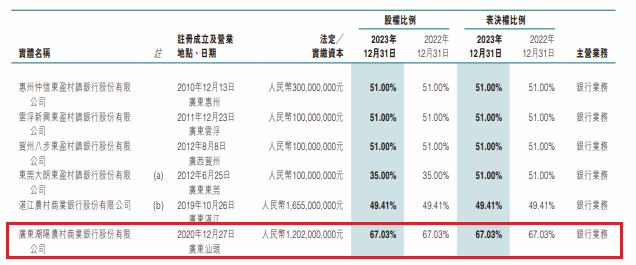
Group 1 - The People's Bank of China (PBOC) Guangdong Branch issued administrative penalties against Guangdong ChaoYang Rural Commercial Bank for violations in various financial management regulations [1] - Guangdong ChaoYang Rural Commercial Bank was fined 992,000 yuan for violations related to anti-money laundering laws and regulations [2] - Chen*Xiong, the former Deputy Manager of Compliance and Risk Management at Guangdong ChaoYang Rural Commercial Bank, was fined 17,000 yuan for similar violations [3] Group 2 - Dongguan Rural Commercial Bank holds a 67.03% stake in Guangdong ChaoYang Rural Commercial Bank, which was established on December 27, 2020 [4]

东莞农商银行(09889) - 2024 - 中期财报
2024-09-11 10:38
Financial Performance - Operating revenue for the six months ended June 30, 2024, was RMB 6,398,182 thousand, a decrease of 11.93% compared to RMB 7,265,200 thousand in the same period of 2023[16]. - Net profit attributable to shareholders for the same period was RMB 3,169,894 thousand, down 11.53% from RMB 3,582,891 thousand year-on-year[16]. - The total operating income for the first half of 2024 was RMB 6.398 billion, a decrease from RMB 7.265 billion in the same period of 2023, representing a decline of 11.93%[113]. - Net profit for the period was RMB 3.38 billion, down RMB 297 million or 8.07% compared to the same period last year[27]. - The group reported a pre-provision profit of RMB 4.36 billion, a decrease of RMB 782 million or 15.21% year-on-year[26]. Asset and Loan Management - As of June 30, 2024, the total assets of Dongguan Rural Commercial Bank reached RMB 737.92 billion, with total deposits of RMB 507.71 billion and total loans of RMB 379.92 billion[10]. - The non-performing loan ratio stood at 1.59%, an increase of 0.36 percentage points compared to the end of the previous year, while the provision coverage ratio decreased by 84.29 percentage points to 224.01%[10]. - The total amount of loans is RMB 379,922,754, with a total NPL amount of RMB 5,967,075[91]. - The total amount of loans classified as normal reached RMB 363.87 billion, accounting for 95.76% of total loans, an increase of RMB 21.04 billion from the end of last year[87]. - The company's non-performing loan balance increased to RMB 5.97 billion, up RMB 1.67 billion from the end of last year, resulting in a non-performing loan ratio of 1.59%[86]. Capital and Equity - The capital adequacy ratio and the Tier 1 capital adequacy ratio were reported at 16.02% and 13.86%, respectively[10]. - As of June 30, 2024, the total equity of the group was RMB 59.91 billion, an increase of RMB 2.42 billion, representing a growth of 4.21% mainly due to the increase in retained earnings[80]. - The company’s retained earnings amounted to RMB 256.49 billion, representing 42.81% of total equity as of June 30, 2024[81]. - The total amount of financial investments was RMB 304.56 billion, accounting for 41.27% of total assets[66]. - The total financial investments of the group amounted to RMB 304.56 billion, an increase of RMB 3.34 billion, representing a growth of 1.11% compared to the end of the previous year[70]. Risk Management - The bank's management discussed the main risks faced during operations and the measures taken to address them in the report[4]. - The bank is actively enhancing risk management measures to address the rising credit risk levels due to a complex external environment[86]. - The bank has established a comprehensive risk management framework, ensuring a balance between risk, capital, and returns[135]. - The bank's liquidity risk management measures include annual liquidity risk preference indicators and limits, as well as regular stress testing to assess resilience against liquidity crises[137]. - The bank has established a unified credit management system for guarantee commitment businesses, including acceptance bills, letters of credit, and guarantees[146]. Governance and Compliance - The bank's corporate governance is overseen by a board of directors and a supervisory board[9]. - The bank's governance structure complies with the requirements of the Company Law of the People's Republic of China and the Hong Kong Stock Exchange[189]. - The internal audit department has focused on risk supervision, applying digital technology to audit key areas such as credit business and risk management[159]. - The bank has established a comprehensive compliance risk management system, with no significant compliance risk events occurring during the reporting period[150]. - The company is subject to regulations under the Securities and Futures Ordinance regarding shareholder control and influence[175]. Shareholder Information - As of June 30, 2024, the total number of shares is approximately 6.889 billion, with domestic shares accounting for 5.740 billion (83.33%) and H-shares 1.148 billion (16.67%)[165]. - The top ten shareholders hold a combined 29.15% of the bank's shares, with the largest domestic shareholder owning 4.05%[169]. - The bank's internal staff shareholders number 3,022, holding 483 million shares, which is 7.01% of the total shares[172]. - The company has a significant concentration of ownership, with the top five shareholders controlling over 50% of the equity[173]. - The company is actively monitoring its major shareholders and their influence on management decisions[175]. Digital Transformation and Innovation - The bank is committed to digital transformation, implementing a new core system and enhancing financial technology capabilities to improve operational efficiency[12]. - The bank is focusing on digital operations to optimize customer online journey experiences and improve service levels through AI applications[129]. - The bank is advancing financial technology innovations, particularly in smart marketing and risk control, to support business development[131]. - The bank has invested a total of RMB 319 million in financial technology during the reporting period, with 380 technology personnel employed[131]. - The bank aims to accelerate digital transformation and optimize processes to ensure stable and sustainable development[163]. Customer Service and Market Position - The bank's customer service hotline is available at (86) 769-961122[9]. - The bank aims to enhance rural economic development and improve the income disparity between urban and rural residents by 2025[7]. - The bank's operational data and financial indicators are summarized in the report, reflecting overall business performance[3]. - The bank has established 497 operating institutions, including 39 primary branches and 199 secondary branches, providing diversified financial services[10]. - The number of retail customers reached 20,112,200, indicating a significant expansion in customer base[122].
东莞农商银行(09889) - 2024 - 中期业绩
2024-08-29 13:27
Financial Performance - The company's net profit for the first half of 2024 reached RMB 18.25 billion, with a dividend distribution of RMB 0.265 per share[3] - The company did not conduct any profit distribution or capital reserve conversion during the mid-term of 2024[3] - The company's financial report for the first half of 2024 was prepared in accordance with International Financial Reporting Standards (IFRS) and reviewed by KPMG[3] - The company's total assets as of June 30, 2024, were not disclosed in the provided content, but the financial data includes consolidated figures from subsidiaries[3] - Total assets of the group reached RMB 737.92 billion as of June 30, 2024[10] - Total deposits amounted to RMB 507.71 billion[10] - Total loans reached RMB 379.92 billion[10] - Non-performing loan ratio increased to 1.59%, up by 0.36 percentage points from the end of the previous year[10] - Provision coverage ratio decreased to 224.01%, down by 84.29 percentage points from the end of the previous year[10] - Capital adequacy ratio and tier-1 capital adequacy ratio stood at 16.02% and 13.86% respectively[10] - The bank's operating income for the first half of 2024 was RMB 6,398.182 million, a decrease of 11.93% compared to the same period in 2023[16] - Net profit attributable to shareholders for the first half of 2024 was RMB 3,169.894 million, a decrease of 11.53% compared to the same period in 2023[16] - Total assets increased by 4.10% to RMB 737.92 billion as of June 30, 2024, compared to RMB 708.85 billion at the end of 2023[17] - Customer loans and advances (excluding accrued interest) grew by 7.00% to RMB 379.92 billion as of June 30, 2024, compared to RMB 355.07 billion at the end of 2023[17] - Customer deposits (excluding accrued interest) increased by 4.23% to RMB 507.71 billion as of June 30, 2024, compared to RMB 487.09 billion at the end of 2023[17] - Net profit decreased by 8.07% to RMB 3.38 billion in the first half of 2024, compared to RMB 3.68 billion in the same period of 2023[26] - Non-performing loan ratio increased to 1.59% as of June 30, 2024, compared to 1.23% at the end of 2023[22] - Provision coverage ratio decreased to 224.01% as of June 30, 2024, compared to 308.30% at the end of 2023[22] - Capital adequacy ratio improved to 16.02% as of June 30, 2024, compared to 15.85% at the end of 2023[20] - Core tier 1 capital adequacy ratio increased to 13.83% as of June 30, 2024, compared to 13.62% at the end of 2023[20] - Net interest margin (annualized) decreased to 1.40% in the first half of 2024, compared to 1.73% in the same period of 2023[18] - Cost-to-income ratio increased to 31.40% in the first half of 2024, compared to 28.86% in the same period of 2023[18] - Revenue for the reporting period was RMB 63.98 billion, a decrease of 11.93% year-on-year[27] - Net profit was RMB 3.38 billion, a decrease of 8.07% year-on-year, primarily due to market interest rate declines and policy-driven financial support for the real economy[27] - Net interest income was RMB 4.70 billion, a decrease of 12.26% year-on-year, influenced by LPR rate cuts and support policies for the real economy[29][30] - Net interest margin decreased to 1.34%, down 0.34 percentage points year-on-year, while net interest yield fell to 1.40%, down 0.33 percentage points[31] - Average yield on interest-earning assets was 3.32%, down 0.39 percentage points year-on-year, driven by lower loan interest rates and bond investment yields[31] - Average cost rate of interest-bearing liabilities was 1.98%, down 0.05 percentage points year-on-year, due to effective deposit cost control measures and utilization of central monetary support tools[31] - Customer loans and advances generated interest income of RMB 7.41 billion, with an average yield of 4.02%, down from 4.63% in the same period last year[33] - Customer deposits contributed interest expense of RMB 4.50 billion, with an average cost rate of 1.84%, down from 1.93% year-on-year[33] - Total interest-earning assets averaged RMB 672.05 billion, with interest income of RMB 11.16 billion, down 2.94% year-on-year[33] - Total interest-bearing liabilities averaged RMB 653.78 billion, with interest expense of RMB 6.46 billion, up 5.20% year-on-year[33] - Interest income decreased by RMB 3.38 billion (2.94%) year-on-year to RMB 11.16 billion, primarily due to a decline in loan yields[35][36] - Customer loans and advances interest income decreased by RMB 617 million (7.69%) to RMB 7.41 billion, with the average yield dropping from 4.63% to 4.02%[36][38] - Financial investments interest income increased by RMB 182 million (6.02%) to RMB 3.21 billion, driven by a RMB 25.81 billion increase in average balance[39] - Interest income from reverse repurchase agreements, placements, and loans to other financial institutions rose by RMB 106 million (47.42%) to RMB 329 million, due to increased investment and higher market interest rates[40][41] - Interest expenses increased by RMB 319 million (5.20%) to RMB 6.46 billion, with customer deposits accounting for 69.71% of total interest expenses[42][43] - The average cost rate for customer deposits decreased from 1.93% to 1.84%, contributing to a RMB 34 million increase in interest expenses[43] - Issued bonds interest expenses increased by RMB 22 million, with the average cost rate rising from 2.50% to 2.58%[43] - Interest expenses from central bank borrowings, reverse repurchase agreements, and other financial institutions increased by RMB 151 million, with the average cost rate dropping from 2.50% to 2.39%[43] - Customer deposit interest expense increased by RMB 0.34 billion, a 0.77% year-on-year growth, driven by deposit scale expansion[46] - Total customer deposit interest expense reached RMB 4.504 billion, with an average cost rate of 1.84% in 2024, compared to 1.93% in 2023[45] - Issued bond interest expense rose to RMB 0.93 billion, up by RMB 0.22 billion year-on-year, with a cost rate increase of 0.08 percentage points[47] - Central bank borrowing interest expense surged by 48.98% to RMB 0.46 billion, due to increased re-lending and MLF scale[48] - Non-interest net income decreased by 11.02% to RMB 1.695 billion, primarily due to a 37.25% drop in fee and commission net income[50][51] - Trading net income increased by 36.07% to RMB 0.849 billion, driven by market interest rate declines and financial asset fair value changes[54] - Financial instrument net income fell by 31.12% to RMB 0.510 billion, mainly due to decreased investment income from asset management plans[55] - Operating expenses decreased by 4.55% to RMB 2.058 billion, with employee costs dropping by 6.88%[56][57] - Employee costs accounted for 70.80% of total operating expenses in 2024, down from 72.57% in 2023[58] - Employee expenses decreased by RMB 1.08 billion, a 6.88% decline compared to the same period last year[59] - Depreciation and amortization remained stable at RMB 208 million, a slight decrease of RMB 9 million[60] - Expected credit loss for customer loans and advances was RMB 899.36 million, down 18.13% year-on-year[60] - Financial investment credit loss reversed by RMB 26.18 million, a significant decrease of RMB 57.73 million compared to last year[62] - Income tax expenses decreased by RMB 244.43 million, a 75.64% drop, with an effective tax rate of 2.28%[63][64] - Total assets increased by RMB 29.07 billion, reaching RMB 737.92 billion, a 4.10% growth driven by loan and financial investment expansion[65] - Net customer loans and advances grew by RMB 24.73 billion, a 7.22% increase, totaling RMB 367.24 billion[67] - Buyback financial assets and placements with banks and other financial institutions increased by 2.78% to RMB 18.06 billion[69] - The proportion of customer loans and advances to total assets rose to 49.77%, up from 48.32% at the end of 2023[66] - Financial investments accounted for 41.27% of total assets, slightly down from 42.49% at the end of 2023[66] - The company's total financial investments amounted to RMB 304.561 billion, an increase of RMB 3.343 billion (1.11%) compared to the end of the previous year[71] - Bonds issued by central and local governments accounted for 79.24% of the total bond holdings, amounting to RMB 216.674 billion[73] - The company's total liabilities reached RMB 678.011 billion, an increase of RMB 26.646 billion (4.09%) from the previous year, primarily driven by growth in customer deposits[75] - Customer deposits totaled RMB 516.393 billion, with personal deposits accounting for 60.46% and corporate deposits accounting for 38.01%[77][78] - The company's shareholder equity increased by RMB 2.421 billion (4.21%) to RMB 59.909 billion, mainly due to growth in retained earnings[81] - The company's largest bond holdings include "21 附息國債 02" with a face value of RMB 9.280 billion and "21 附息國債 09" with a face value of RMB 6.400 billion[74] - The company's liabilities from selling repurchase financial assets and interbank placements decreased by RMB 4.425 billion (11.23%) to RMB 34.978 billion, mainly due to increased borrowing from the central bank[79][80] - Total shareholder equity reached RMB 59.91 billion, with a 4.21% increase compared to the end of 2023[82] - Unrestricted assets used as collateral for repurchase agreements and central bank borrowing amounted to RMB 59.32 billion[84] - Operating cash flow showed a net outflow of RMB 11.76 billion, a 7% decrease in outflow compared to the same period last year[85][86] - Investment cash flow turned to a net inflow of RMB 3.60 billion, a significant improvement from a net outflow of RMB 5.24 billion in the previous year[85][86] - Non-performing loans (NPL) increased to RMB 5.97 billion, with the NPL ratio rising to 1.59% from 1.23% at the end of 2023[87][88] - Normal loans increased by RMB 21.04 billion, accounting for 95.76% of total loans, up from 96.55% at the end of 2023[88][89] - The migration rate for normal loans was 3.15%, while the migration rate for substandard loans surged to 169.08%[89] - Corporate fixed-asset loans saw an increase in NPL by RMB 782 million, and corporate working capital loans increased by RMB 456 million[89] - Personal consumer loans experienced an increase in NPL by RMB 207 million[89] - The company's retained earnings stood at RMB 256.49 billion, reflecting a 5.48% increase compared to the end of 2023[82][83] - Total loans amounted to RMB 379.92 billion, with a non-performing loan (NPL) ratio of 1.59%, up from 1.23% at the end of 2023[90] - Corporate loans (excluding bill discounts) had an NPL ratio of 1.71%, an increase of 0.48 percentage points from the previous year[91] - Personal loans had an NPL ratio of 1.83%, up by 0.30 percentage points compared to the end of 2023[91] - Manufacturing sector NPLs reached RMB 1.21 billion, with an NPL ratio of 2.01%, an increase of RMB 0.32 billion from the previous year[93] - Wholesale and retail sector NPLs stood at RMB 1.18 billion, with an NPL ratio of 3.37%, an increase of RMB 1.14 billion from the previous year[93] - The hotel and catering industry had the highest NPL ratio at 22.83%, with NPLs amounting to RMB 736.6 million[92] - Real estate sector NPLs were minimal at RMB 52,000, with an NPL ratio of 0.00%[92] - Bill discounting loans totaled RMB 34.76 billion, accounting for 9.15% of total loans[90] - The construction sector had an NPL ratio of 0.07%, with NPLs amounting to RMB 15.79 million[92] - The transportation, storage, and postal sector had an NPL ratio of 0.24%, with NPLs of RMB 14.95 million[92] - Total loans amounted to RMB 379.92 billion, with non-performing loans (NPL) ratio at 1.59%, up from 1.23% at the end of 2023[94] - Mortgage loans accounted for 48.72% of total loans, with an NPL ratio of 2.10%, up from 1.59% at the end of 2023[94] - Loans in the Dongguan region accounted for 81.30% of total loans, maintaining a dominant position in the company's loan distribution[95] - The top ten single borrowers' loans totaled RMB 14.85 billion, accounting for 3.91% of total loans and 22.36% of the company's net capital[97] - Overdue loans increased to RMB 12.37 billion, representing 3.26% of total loans, up from 1.78% at the end of 2023[99] - Loans overdue within 3 months increased to RMB 8.01 billion, up from RMB 2.55 billion at the end of 2023[100] - Restructured loans increased to RMB 70 million, accounting for 0.02% of total loans, up from 0.01% at the end of 2023[102] - The single largest borrower's loan accounted for 4.42% of the company's net capital, below the regulatory limit of 10%[98] - The company's loan distribution remains concentrated in the Dongguan region, with RMB 308.87 billion in loans, representing 81.30% of total loans[95] - The company's loan portfolio is diversified across industries, with the largest exposure to the leasing and business services sector, accounting for 0.77% of total loans[97] - The company's non-performing loan balance increased to RMB 5.967 billion, up by RMB 1.667 billion from the previous year-end, with a non-performing loan ratio of 1.59%, an increase of 0.36%[104] - The company resolved RMB 1.754 billion in non-performing loans during the first half of 2024, including cash recovery of RMB 361 million, debt restructuring of RMB 2 million, write-offs of RMB 1.311 billion, and quality upgrades of RMB 81 million[104] - The company's capital adequacy ratio, Tier 1 capital adequacy ratio, and core Tier 1 capital adequacy ratio were 16.02%, 13.86%, and 13.83% respectively, all meeting regulatory requirements[107] - The company's core Tier 1 capital increased to RMB 57.932 billion, up from RMB 55.706 billion at the end of 2023[109] - The company's total risk-weighted assets amounted to RMB 414.542 billion, with credit risk-weighted assets accounting for RMB 378.967 billion[109] - The company's leverage ratio decreased slightly to 7.55% from 7.64% at the end of 2023[112] - The company's corporate banking business contributed 47.25% of total operating income, amounting to RMB 3.023 billion[114] - The company's retail banking business accounted for 35.96% of total operating income, with RMB 2.300 billion in revenue[114] - The company's off-balance sheet items included credit letters, guarantees, and unused credit card limits, with balances of RMB 3.93 billion, RMB 34.97 billion, and RMB 83.13 billion respectively[115] - Total financial guarantees and credit commitments decreased by 14.09% to RMB 20,536,407 thousand as of June 30, 2024, compared to RMB 23,904,678 thousand at the end of 2023[116] - Personal deposits increased by 5.51% to RMB 306.951 billion, and personal loans grew by 2.92% to RMB 126.999 billion as of the reporting period[121] - Corporate deposits rose by 3.34% to RMB 192.980 billion, and corporate loans (including bill discounts) increased by 9.17% to RMB 252.924 billion[124] - Manufacturing and related industry loans grew by 12.07% to RMB 68.033 billion, supporting the local economy[126] - International business settlement volume reached USD 3.910 billion, and client foreign exchange settlement amounted to USD 2.190 billion during the reporting period[127] - Small and micro enterprise
东莞农商银行(09889) - 2023 - 年度财报
2024-04-26 14:05
Financial Performance - The net profit for 2023 is projected to be RMB 5.06 billion, with a proposed cash dividend of RMB 0.265 per share[3]. - The company plans to allocate 10% of the net profit, amounting to RMB 5.06 billion, to statutory surplus reserves[3]. - The group achieved operating income of RMB 13.26 billion and net profit of RMB 5.35 billion, with a capital adequacy ratio of 15.85% and a non-performing loan ratio of 1.23%[9]. - The company's operating income for 2023 reached RMB 13,260,162 thousand, a slight increase of 0.18% compared to RMB 13,235,957 thousand in 2022[19]. - Pre-tax profit decreased by 17.73% to RMB 5,169,736 thousand from RMB 6,284,062 thousand in the previous year[19]. - Net profit for 2023 was RMB 5,345,816 thousand, down 12.11% from RMB 6,082,525 thousand in 2022[19]. - Total assets increased by 7.78% to RMB 708,853,592 thousand from RMB 657,689,972 thousand in 2022[21]. - The total liabilities increased by 7.87% to RMB 651,365,055 thousand compared to RMB 603,870,043 thousand in 2022[21]. - The equity attributable to shareholders rose by 6.89% to RMB 54,649,387 thousand from RMB 51,127,714 thousand in the previous year[21]. Risk Management - The board of directors confirmed that there are no significant risks affecting the company's future development strategy and operational goals[3]. - The report includes a detailed description of the main risks faced by the company and the measures taken to address them[3]. - The bank emphasizes risk management and has implemented a digital risk management system to mitigate various risks effectively[15]. - The bank has established a comprehensive risk management framework, ensuring risk, capital, and return are balanced[140]. - The bank has implemented a credit risk warning system that enhances risk monitoring and management throughout the lending process[142]. - The bank's non-performing loan ratio is controlled within the management target, indicating overall credit risk is manageable as of the end of 2023[142]. Digital Transformation - The bank plans to enhance its digital transformation and data governance as a key strategic initiative for the upcoming year[10]. - The bank has accelerated its digital transformation with a focus on "solidifying foundations and seizing opportunities," and has been selected as a pilot institution for digital transformation and data governance in the province[134]. - The bank's digital transformation focuses on implementing a new generation core system to enhance financial technology innovation and improve risk control capabilities[170]. - The bank has completed 29 data empowerment projects and developed 84 self-researched data analysis models during the reporting period[135]. Customer Service and Community Support - The company aims to enhance customer service and internal operational efficiency in 2024, focusing on innovation and talent as key resources[167]. - The bank has established business cooperation with 556 primary villages and 2,195 village groups, achieving a coverage rate of 98.96% for village clients[172]. - The company actively supported rural revitalization, donating to 20 villages and communities for infrastructure projects, including road upgrades and community kindergarten construction[177]. - The company has established the Dongguan Rural Commercial Bank Education Public Welfare Foundation to enhance public school teaching environments since 2019[177]. Loan and Deposit Growth - Total deposits amounted to RMB 487.10 billion, while total loans reached RMB 355.07 billion, maintaining a leading position in the local industry[9]. - The total amount of customer loans and advances reached RMB 355,073,342 thousand, reflecting a growth of 6.95% from RMB 331,997,701 thousand in the previous year[21]. - Customer deposits reached RMB 495.74 billion, an increase of RMB 30.06 billion or 6.44% compared to RMB 465.69 billion in the previous year[80]. - The total amount of outstanding loans for small and micro enterprises reached RMB 163.657 billion, with a net increase of RMB 7.501 billion, representing a growth rate of 22.75%[121]. Environmental and Social Responsibility - The company intends to increase green loan support, particularly for energy-saving and environmental protection projects, contributing to sustainable development[168]. - The bank has established an ESG management framework to ensure long-term sustainable development[181]. - The bank has implemented strict environmental and social risk management processes to prevent greenwashing and ensure compliance with environmental standards[179]. - The bank actively supports green industries by implementing preferential policies and rapid approvals for green environmental enterprises[178]. Governance and Compliance - The governance structure includes diverse stakeholders, ensuring a balanced and coordinated approach to management[16]. - The internal audit system is independent and vertical, with the board responsible for its effectiveness, enhancing governance and risk management[164]. - The bank has enhanced its compliance risk management framework, ensuring no major compliance risk incidents occurred during the reporting period[156]. Future Outlook - The company plans to promote urban-rural coordinated development by enhancing consumer loan services and supporting housing projects for local residents[168]. - The company is committed to fulfilling its social responsibility by actively engaging in financial poverty alleviation and supporting rural revitalization initiatives[196]. - The company plans to implement a "high-quality development project" in rural areas as a key focus for the upcoming period[198].
东莞农商银行(09889) - 2023 - 年度业绩
2024-03-26 13:51
Financial Performance - Dongguan Rural Commercial Bank reported a net profit of RMB 5.06 billion for the year 2023, with a proposed cash dividend of RMB 0.265 per share[3]. - The bank plans to allocate 10% of its net profit, amounting to RMB 5.06 billion, to statutory surplus reserves and general reserves[3]. - The group achieved operating income of RMB 13.26 billion and net profit of RMB 5.35 billion, with a capital adequacy ratio of 15.85%[9]. - Operating revenue for 2023 reached RMB 13,260,162 thousand, a slight increase of 0.18% compared to RMB 13,235,957 thousand in 2022[19]. - Net profit attributable to shareholders decreased by 12.99% to RMB 5,161,283 thousand compared to RMB 5,931,681 thousand in 2022[19]. - The pre-tax profit for the reporting period was RMB 5.17 billion, while the net profit was RMB 5.35 billion, reflecting a decrease of 12.11% year-on-year[30]. Asset and Liability Management - Total assets of the group exceeded RMB 700 billion, reaching RMB 708.85 billion[9]. - Total deposits amounted to RMB 487.10 billion, while total loans reached RMB 355.07 billion, maintaining a leading position in the local industry[9]. - The capital adequacy ratio was reported at 15.85%, while the Tier 1 capital adequacy ratio was 13.65%[13]. - Total liabilities amounted to RMB 651.37 billion, an increase of RMB 47.50 billion, or 7.87%, primarily driven by growth in customer deposits and borrowings from the central bank[78]. - Customer deposits totaled RMB 495.74 billion, with a year-on-year increase of RMB 30.55 billion, or 6.56%[80]. Risk Management - The bank's governance structure includes a board of directors and supervisory board, ensuring compliance with corporate governance standards[5]. - The bank has established a solid risk management framework, emphasizing a balance between growth and risk prevention[15]. - The company has implemented a risk-driven management model to optimize risk management mechanisms and strengthen high-risk credit management[168]. - The bank has established a comprehensive risk management framework, with clear responsibilities assigned to the board, supervisory committee, and executive management[140]. - The bank's overall credit risk is manageable, with the non-performing loan ratio maintained within control targets[142]. Digital Transformation and Innovation - The bank plans to enhance digital transformation and data governance, with a focus on upgrading core systems as a key initiative[9]. - The bank's financial technology investment totaled RMB 525.8 million during the reporting period, with 327 technology personnel employed[136]. - The bank aims to enhance its digital infrastructure and data governance to improve data quality and management capabilities[134]. - The bank is focusing on expanding its digital financial services and integrating online and offline business operations[136]. - The bank has launched 29 data empowerment projects and developed 84 self-researched data analysis models during the reporting period[135]. Customer Service and Community Engagement - The bank emphasizes a customer-centric and market-oriented operational philosophy to enhance operational efficiency and customer service capabilities[9]. - The bank conducted 222 consumer education activities in 2023, reaching 442,000 consumers and disseminating online information to nearly 625,000 consumers[175]. - The bank received 1,316 customer complaints in 2023, achieving a 100% resolution rate[175]. - The bank has established business cooperation with 556 primary village communities and 2,195 village groups, achieving a coverage rate of 98.96% for village community clients[171]. - The bank's initiatives in digital empowerment are aimed at creating a new benchmark for rural development, aligning with the national rural revitalization strategy[192]. Strategic Outlook and Future Plans - The bank's future outlook remains optimistic, with expectations for continued growth and stability in its operations[3]. - In 2024, the bank aims to continue supporting the real economy and rural revitalization, aligning with Guangdong Province's "1310" deployment[10]. - The bank aims to enhance customer service and internal operational efficiency in 2024, focusing on innovation and talent as key resources for development[166]. - The bank's strategic plan for 2021-2023 is being closely monitored to ensure alignment with internal and external environments, facilitating effective execution of development strategies[160]. - The bank is committed to enhancing financial services for specialized and innovative enterprises, increasing green loan support for energy-saving and environmental protection projects[167]. Environmental and Social Responsibility - The bank has implemented strict environmental and social risk management, ensuring compliance with environmental standards and limiting credit to non-compliant enterprises[178]. - The bank's green credit balance reached RMB 13.047 billion by the end of the reporting period, an increase of RMB 3.124 billion, or 31.48% from the beginning of the year[177]. - The bank actively participated in poverty alleviation and rural revitalization, providing donations to 20 villages and communities for infrastructure projects[176]. - The bank's ESG management framework was established to integrate social responsibility management with its development strategy and corporate culture[180]. - The bank's efforts in promoting inclusive financial services are part of its commitment to support the rural economy and enhance the quality of life for villagers[195].
东莞农商银行(09889) - 2023 - 中期财报
2023-09-11 09:02
Financial Performance - The bank reported a dividend distribution of RMB 1.99 billion for the year ending December 31, 2022, at RMB 2.90 per 10 shares (tax included) [3]. - The company reported a net profit of RMB 500 million for the first half of 2023, representing a year-on-year increase of 15% [7]. - Operating income for the first half of 2023 reached RMB 7,265,200 thousand, a slight increase of 0.73% compared to RMB 7,212,689 thousand in the same period of 2022 [19]. - Net profit attributable to shareholders was RMB 3,582,891 thousand, reflecting a growth of 1.20% from RMB 3,540,384 thousand year-on-year [19]. - The net profit for the first half of 2023 was RMB 3.68 billion, an increase of RMB 0.33 billion or 0.91% year-on-year [28]. - The bank's total assets reached RMB 100 billion, an increase of 10% compared to the previous year [8]. - Total assets as of June 30, 2023, amounted to RMB 686,211,937 thousand, representing a 4.34% increase from RMB 657,689,972 thousand at the end of 2022 [19]. - The bank's total liabilities reached RMB 630,630,349 thousand, up 4.43% from RMB 603,870,043 thousand at the end of 2022 [19]. - The total equity of the group was RMB 55.58 billion, an increase of RMB 1.76 billion or 3.27% from RMB 53.82 billion at the end of 2022 [85]. Risk Management - The bank has not identified any significant risks that could adversely affect its future development strategy and operational goals during the reporting period [3]. - The bank's management emphasizes a comprehensive risk management system based on compliance and risk control [5]. - The company has established a comprehensive risk management system to effectively prevent and mitigate various risks [15]. - The bank has implemented standardized credit risk management policies and procedures, continuously improving its credit risk management system [145]. - The bank's liquidity risk management strategies include maintaining a balance between profitability and liquidity, ensuring operational safety [146]. - The bank has established a comprehensive large exposure risk management framework, ensuring compliance with regulatory requirements for large credit exposures [160]. - The bank's liquidity risk management indicators consistently met regulatory standards throughout the reporting period [147]. Strategic Initiatives - The bank's strategic plan includes the "1+12348" development framework aimed at high-quality growth through digitalization and group integration [5]. - The bank's "133" project focuses on promoting high-quality agriculture, livable rural areas, and farmer prosperity as part of its rural revitalization strategy [5]. - Future strategies focus on high-quality development, emphasizing customer-centricity, market orientation, and profitability, with a push towards digital transformation and group operations [11]. - The bank is actively supporting the "Hundred Counties, Thousand Towns, and Ten Thousand Villages" high-quality development project, aiming to enhance financial services for the real economy [169]. - The bank is committed to product service innovation, focusing on customer needs and enhancing the online and standardized improvement of personal and small micro-loan products [171]. Digital Transformation - The company focuses on digital transformation, aiming to create a smart digital bank through technology-driven value creation [15]. - The bank has implemented 66 digital transformation pilot projects in 2023 to enhance data management and business capabilities [128]. - The bank's technology investment totaled RMB 158.52 million during the reporting period, with a workforce of 695 technology personnel [140]. - The bank's digital transformation strategy includes 53 pilot projects, enhancing data governance and operational capabilities [140]. Customer Base and Services - User base expanded to 1.2 million active customers, reflecting a growth of 20% year-on-year [8]. - Retail customer base reached 20.19 million, an increase of 205,200 customers or 1.03% from the beginning of the year [130]. - The bank's personal deposit balance was RMB 288.342 billion, representing a year-on-year growth of 6.77% [129]. - The bank's small and micro enterprise loans (under RMB 10 million) totaled RMB 37.737 billion, growing by 14.45% since the beginning of the year [126]. Loan and Deposit Growth - Customer loans and advances (excluding accrued interest) totaled RMB 355,061,579 thousand, an increase of 6.95% from RMB 331,997,701 thousand at the end of 2022 [19]. - The loan-to-deposit ratio was 73.13%, an increase of 0.76 percentage points from the end of the previous year [26]. - The group's total loans amounted to RMB 355.06 billion, an increase of RMB 23.06 billion or 6.95% from the end of the previous year [27]. - Customer deposits reached RMB 493.67 billion as of June 30, 2023, an increase of RMB 28.00 billion or 6.00% from RMB 465.69 billion at the end of 2022 [80]. Non-Performing Loans - The non-performing loan ratio improved to 1.5%, down from 1.8% in the previous period [7]. - The non-performing loan ratio stood at 0.86%, a decrease of 0.04 percentage points compared to the end of the previous year, while the provision coverage ratio increased by 24.51 percentage points to 398.34% [10]. - The total amount of normal loans was RMB 346.169 billion, accounting for 97.50% of total loans, an increase of RMB 2.154 billion compared to the end of the previous year [93]. - The non-performing loan ratio for inclusive small and micro enterprise loans was 1.34%, well below the group's overall non-performing loan ratio [136]. Governance and Compliance - The company has established a governance mechanism that includes a core leadership committee, a shareholders' meeting, a board of directors, a supervisory board, and an executive management team to enhance governance and risk control [182]. - The bank has implemented a compliance culture enhancement program to improve employee awareness of compliance responsibilities [158]. - The bank has established a clear governance structure with defined responsibilities and a multi-level internal control system to ensure compliance and orderly operations [165]. Community and Environmental Initiatives - The bank's community support initiatives included donations of RMB 2 million to improve living conditions in 16 villages and communities [178]. - The bank's green credit balance reached RMB 11.064 billion, an increase of RMB 1.141 billion, representing a growth rate of 11.50% [179]. - The bank has invested RMB 9.319 billion in green bonds, supporting various environmental projects [179]. - The bank's consumer rights protection center conducted 727 consumer protection reviews, providing 69 risk mitigation suggestions with a 100% adoption rate [176].
东莞农商银行(09889) - 2023 - 中期业绩
2023-08-29 14:00
Financial Performance - Dongguan Rural Commercial Bank reported an interim unaudited consolidated performance for the six months ended June 30, 2023[1]. - The company reported a net profit of RMB 1.2 billion for the first half of 2023, representing a year-on-year increase of 15%[5]. - Operating income for the first half of 2023 reached RMB 7,265,200 thousand, a 0.73% increase compared to RMB 7,212,689 thousand in the same period of 2022[19]. - Pre-tax profit for the first half of 2023 was RMB 3,998,415 thousand, reflecting a 1.03% increase from RMB 3,957,731 thousand in the previous year[19]. - Net profit attributable to shareholders for the first half of 2023 was RMB 3,582,891 thousand, up by 1.20% from RMB 3,540,384 thousand in the same period of 2022[19]. - The group achieved a net profit of RMB 3.68 billion for the first half of 2023, an increase of RMB 0.33 billion or 0.91% year-on-year[28][29]. Assets and Liabilities - Total assets reached RMB 150 billion, up 10% compared to the same period last year[6]. - As of June 30, 2023, the total assets of Dongguan Rural Commercial Bank reached RMB 686.212 billion, with total deposits of RMB 485.890 billion and total loans of RMB 355.062 billion[10]. - Total liabilities as of June 30, 2023, were RMB 630,630,349 thousand, which is a 4.43% increase from RMB 603,870,043 thousand at the end of 2022[19]. - Total equity attributable to shareholders increased to RMB 52,830,635 thousand, up by 3.33% from RMB 51,127,714 thousand at the end of 2022[19]. Risk Management - The report includes a detailed description of the main risks faced by the bank and the measures taken to address them[3]. - The bank's strategic focus includes enhancing rural revitalization financial services and expanding its market presence through innovative financial products[9]. - The bank has implemented a "133" project for rural revitalization financial services, enhancing its competitive edge in the market[14]. - The bank's governance structure is designed to ensure a balanced shareholder representation, including state-owned, private, foreign, and individual investors[16]. - The bank has established a comprehensive risk management framework, ensuring full coverage and control of various business risks[144]. Digital Transformation and Technology - The company is focusing on digital transformation, with a budget allocation of RMB 200 million for technology upgrades[5]. - The bank's technology investment amounted to RMB 158.5152 million during the reporting period, with a total of 695 technology personnel[140]. - The bank has identified 66 pilot projects for digital transformation in 2023, aiming to enhance data management and business capabilities[128]. - The bank's online banking platform has been upgraded to improve customer experience and operational efficiency[140]. Customer and Market Expansion - User base expanded to 5 million active customers, a growth of 20% year-on-year[5]. - The bank aims for high-quality development, focusing on five core businesses: retail finance, corporate finance, microfinance, interbank finance, and digital finance, to enhance its market position[11]. - Market expansion efforts include entering two new provinces by Q4 2023[6]. - The bank's retail customer base reached 20.19 million, an increase of 205,200 or 1.03% from the beginning of the year[130]. Shareholder and Capital Structure - The total number of shares issued by the company is approximately 6.889 billion, with domestic shares accounting for about 5.740 billion (83.33%) and H-shares approximately 1.148 billion (16.67%)[183]. - The top ten shareholders hold a combined total of 30.11% of the company's shares, with the largest domestic shareholder, Guangdong Yuefeng Investment Co., Ltd., owning 4.34%[186]. - The company has not experienced any changes in share capital during the reporting period, and no new shares were issued[185]. - The bank has no shareholders holding 5% or more of the shares, excluding Hong Kong Central Clearing (Agent) Co., Ltd., as of June 30, 2023[193]. Awards and Recognition - Dongguan Rural Commercial Bank has received multiple awards, including the "Dongguan Government Quality Award" and "National Benchmark Bank" recognition from the China Banking and Insurance Regulatory Commission[10]. - In the "Forbes 2023 Global 2000" list, Dongguan Rural Commercial Bank was ranked 1,208th, improving by 70 places from the previous year[10]. - The bank was ranked 38th in the "2023 China Banking Industry Top 100" list based on core Tier 1 capital net indicators, and 5th among rural commercial banks in China[10]. Community and Social Responsibility - The bank donated RMB 2 million to support community improvement projects, enhancing the living environment for residents in 16 villages and communities[178]. - The bank organized 165 financial knowledge education activities, reaching 190,800 consumers, and published 56 online educational messages, impacting 531,400 consumers[176]. - The bank's consumer complaint resolution rate reached 100%, handling a total of 594 complaints in the first half of the year[176].
东莞农商银行(09889) - 2022 - 年度财报
2023-04-24 12:14
Financial Performance - The bank plans to allocate 10% of its audited net profit for 2022, amounting to RMB 586 million, to statutory surplus reserves[6]. - A cash dividend of RMB 0.29 per share (before tax) is proposed, pending approval at the 2022 annual general meeting[6]. - The bank's financial report for 2022 has been audited by KPMG and received a standard unqualified opinion[6]. - Operating income for 2022 was RMB 13,235,957 thousand, representing a year-on-year increase of 1.84%[28]. - Pre-tax profit reached RMB 6,284,062 thousand, up 4.92% compared to the previous year[28]. - Net profit for 2022 was RMB 6,082,525 thousand, reflecting a growth of 6.66% year-on-year[28]. - Total assets as of the end of 2022 amounted to RMB 657,689,972 thousand, an increase of 10.84% from the previous year[30]. - Customer loans and advances totaled RMB 331,997,701 thousand, marking an 11.37% increase year-on-year[30]. - The average return on total assets for 2022 was 0.97%, a decrease of 0.03 percentage points from the previous year[31]. - The average return on equity was 11.72%, down 1.15 percentage points compared to 2021[31]. - The net interest margin for 2022 was 1.89%, a slight decrease of 0.01 percentage points from the previous year[31]. - The cost-to-income ratio increased to 34.78%, up 0.60 percentage points year-on-year[31]. - Earnings per share for 2022 was RMB 0.86, a decrease of 7.53% compared to the previous year[29]. Risk Management - The bank has not identified any significant risks that could adversely affect its future development strategy and operational goals[6]. - The report includes a detailed description of the main risks faced by the bank and the measures taken to address them[6]. - The company has established a comprehensive risk management system based on compliance and risk control[12]. - The company has a robust governance structure with a diverse equity composition, ensuring effective management and stability[25]. - The company has established a comprehensive risk management framework, ensuring risk tolerance aligns with capital adequacy levels[144]. - The bank's liquidity risk management strategy effectively maintained liquidity risk within acceptable limits, with no significant liquidity risk events reported during the period[146]. - The bank's total credit risk was well-controlled, with the non-performing loan ratio maintained within management targets[145]. Strategic Initiatives - The company aims to enhance rural revitalization through the "133" project, focusing on high-quality agriculture, livable rural areas, and farmer prosperity[10]. - The "1+12348" strategic plan targets high-quality development by leveraging digitalization and group operations, with a focus on technology, talent, and capital as key drivers[10]. - The company is committed to a regional group operation strategy, focusing on the Guangdong-Hong Kong-Macao Greater Bay Area, with a new operational framework[12]. - The company is actively pursuing new product development and technological advancements to enhance its service offerings[12]. - The company plans to expand its market presence through strategic partnerships and potential acquisitions[12]. - The bank's management is focused on digital transformation and group development, aiming to enhance core competitiveness and achieve high-quality growth[128]. Customer Engagement and Services - The company reported a significant increase in user engagement, extending financial services to the entire industrial chain, supply chain, and value chain[12]. - The company aims to build a regional modern agricultural commercial bank group, focusing on high-quality development led by strong party governance[23]. - The company focuses on core customer groups, including modern agriculture, advanced manufacturing, and small and micro enterprises, to create a vibrant customer ecosystem[24]. - The company has established partnerships with 597 grassroots party organizations in villages, achieving a 100% coverage rate for party-building initiatives[192]. - The bank's rural financial service center has deployed nearly 4,000 financial service personnel to enhance financial service accessibility in rural areas[191]. Loan and Asset Quality - Non-performing loan ratio stood at 0.90% with a provision coverage ratio of 373.83%, reflecting strong asset quality and stable risk management[15]. - Loans to the manufacturing sector reached RMB 48.3 billion, an increase of 22.84% year-on-year, highlighting the commitment to support the real economy[16]. - Loans for rural revitalization exceeded RMB 66.7 billion, up 18.51% from the beginning of the year, demonstrating a focus on agricultural finance[16]. - The total amount of loans and advances as of December 31, 2022, was RMB 331.99 billion, with a non-performing loan (NPL) amount of RMB 2.87 billion, resulting in an NPL ratio of 0.90%[102]. - The total amount of mortgage loans was RMB 170.43 billion, with an NPL ratio of 0.83%[104]. - The total amount of guaranteed loans was RMB 84.45 billion, with an NPL ratio of 0.53%[104]. Digital Transformation - The bank's digital transformation strategy aims to create a "smart digital bank" with a focus on organizational innovation and data governance[168]. - The bank has launched 16 data empowerment projects and developed 20 self-researched machine learning algorithm models, marking a significant innovation breakthrough[129]. - The bank's smart customer service systems have improved operational efficiency in marketing, risk warning, and overdue collection[169]. - The bank has built a data governance framework and completed the planning for a data middle platform to enhance operational efficiency[168]. - The bank's new organizational structure for digital transformation includes a dedicated data management team to standardize and professionalize data management[168]. Community and Social Responsibility - The company has donated RMB 10.3612 million to support educational initiatives as part of its poverty alleviation efforts[184]. - The total amount allocated for relief assistance reached RMB 9.613 million, actively participating in rural revitalization projects[184]. - The company conducted 1,513 consumer protection education activities, reaching 2.1788 million consumers in 2022[183]. - The bank organized nearly 4,000 personnel to conduct over 600 volunteer activities in rural areas, promoting financial literacy and support[180].
东莞农商银行(09889) - 2022 - 年度业绩
2023-03-29 14:38
Financial Performance - Dongguan Rural Commercial Bank reported a net profit of RMB 5.86 billion for the year 2022, with a proposed cash dividend of RMB 0.29 per share[5]. - The bank plans to allocate 10% of its net profit, amounting to RMB 5.86 billion, to statutory surplus reserves and general reserves[5]. - Total assets of the group reached RMB 657.69 billion, with total deposits at RMB 459.16 billion and total loans at RMB 331.99 billion, maintaining industry leadership in the region[14]. - Net profit for the group was RMB 6.083 billion, representing a growth of 6.66%, with ROA and ROE at 0.97% and 11.72% respectively, indicating stable operational efficiency and improving profitability[14]. - Operating income for 2022 was RMB 13,235,957 thousand, an increase of 1.84% compared to RMB 12,996,314 thousand in 2021[27]. - Net profit for 2022 reached RMB 6,082,525 thousand, reflecting a growth of 6.66% from RMB 5,702,920 thousand in 2021[27]. - The average return on total assets for 2022 was 0.97%, down from 1.00% in 2021[30]. - The net interest margin for 2022 was 1.89%, slightly decreased from 1.90% in 2021[30]. - The cost-to-income ratio for 2022 was 34.78%, an increase from 34.18% in 2021[30]. Risk Management - The bank's management has emphasized the importance of risk management and has detailed the main risks faced during operations in the management discussion section[5]. - The board of directors has not identified any significant risks that could adversely affect the bank's future development strategy and operational goals[5]. - The company is committed to compliance and risk control as part of its comprehensive risk management framework[9]. - The company has implemented a comprehensive risk management system, ensuring asset quality remains at a high level while promoting sustainable business development[24]. - The bank's non-performing loan ratio stood at 0.90%, with a provision coverage ratio of 373.83%, reflecting strong asset quality and manageable overall risk[14]. - The bank's non-performing loan ratio was controlled within the management target, indicating effective credit risk management[144]. - The company has implemented strict asset quality assessments in response to external economic pressures, including U.S. tightening policies and the Russia-Ukraine conflict[96]. Digital Transformation - The bank aims to enhance digital transformation by improving data analysis, precision marketing, and intelligent risk control capabilities, aiming to create a smart digital banking experience[16]. - The bank's digital transformation strategy aims to create a "smart digital bank," with a focus on organizational innovation and data governance[167]. - The bank has increased the efficiency of account opening for corporate and individual customers by 62% and 38% respectively[168]. - The company is accelerating its digital transformation through financial technology innovations, aiming to create a "smart digital bank"[24]. - The bank has built a digital ecosystem by integrating various online financial services to meet diverse customer needs[167]. Customer Service and Market Strategy - The company aims to strengthen its core competitiveness through a "four pillars and eight columns" system, focusing on customer management, core business, risk management, and organizational management[9]. - The company is committed to providing comprehensive financial services to strategic emerging industries and small and micro enterprises, aiming to alleviate financing difficulties[15]. - The company aims to enhance financial services through digital and intelligent means, focusing on product innovation and marketing[198]. - The company has established a governance mechanism that includes a core leadership committee, shareholder meetings, a strategic decision-making board, and a supervisory board to enhance risk management and decision-making processes[187]. - The bank's retail customer base reached 19.99 million, an increase of 420,200 customers or 2.15% year-on-year[131]. Loans and Financing - Loans to the manufacturing sector exceeded RMB 48.3 billion, an increase of 22.84% from the beginning of the year, highlighting the bank's commitment to supporting the real economy[15]. - Loans for rural revitalization exceeded RMB 66.7 billion, up 18.51% year-to-date, demonstrating the bank's focus on agricultural finance[15]. - The total amount of customer loans and advances was RMB 331.99 billion, reflecting an increase of 33.88 billion or 11.37%[78]. - The total amount of personal loans was RMB 114.43 billion, with an NPL balance of RMB 1.49 billion, resulting in an NPL ratio of 1.30%[103]. - The balance of loans for modern agriculture reached RMB 667.34 billion, accounting for 23.71% of the bank's general loans[129]. Governance and Compliance - The bank has established a governance structure that balances diverse stakeholder interests, ensuring stability and professionalism in management[24]. - The bank's internal audit system is led directly by the chairman, with a focus on independent and objective auditing practices[165]. - The bank has implemented a dual main audit mechanism combining business and data audits, enhancing the application of big data in auditing[166]. - No significant compliance risk events occurred during the reporting period, indicating effective compliance risk management practices[157]. - The bank has established a multi-level internal control organizational structure to ensure compliance and orderly operations[164]. Community and Social Responsibility - The company has donated RMB 10.3612 million to support educational initiatives as part of its poverty alleviation efforts, contributing to rural revitalization[183]. - The company conducted 1,513 consumer protection education activities in 2022, reaching 2.1788 million consumers, enhancing public awareness of fraud prevention[182]. - The bank's rural revitalization initiative achieved a coverage rate of 96.49% for household registration, with 349,500 households registered by the end of 2022[179]. - The company has actively supported the construction of demonstration villages with a total of RMB 9.613 million allocated for relief and assistance projects[183]. - The company has established a comprehensive risk management process for environmental and social risks, implementing strict credit approval processes for high-pollution industries[185].
东莞农商银行(09889) - 2022 - 中期财报
2022-09-09 09:00
Financial Performance - Operating income for the six months ended June 30, 2022, was RMB 7,212,689 thousand, an increase of 11.17% compared to RMB 6,487,923 thousand for the same period in 2021[19]. - Pre-tax profit for the same period was RMB 3,957,731 thousand, reflecting a growth of 14.04% from RMB 3,470,478 thousand in the previous year[19]. - Net profit reached RMB 3,642,068 thousand, up 12.88% from RMB 3,226,495 thousand year-on-year[19]. - The net profit attributable to shareholders was RMB 3,540,384 thousand, representing a 12.67% increase compared to RMB 3,142,240 thousand in the prior year[19]. - The basic earnings per share for the six months ended June 30, 2022, was RMB 0.51, down 7.27% from RMB 0.55 in the same period of 2021[20]. - The diluted earnings per share also stood at RMB 0.51, reflecting the same percentage decrease as the basic earnings per share[20]. - The net asset per share attributable to shareholders increased to RMB 7.09 from RMB 6.58, marking a 7.75% rise[20]. - The group achieved operating income of RMB 7.213 billion, an increase of 11.17% year-on-year[43]. - Net profit reached RMB 3.642 billion, reflecting a year-on-year growth of 12.88%[43]. - Non-interest income increased by 46.17% year-on-year, driven by the development of intermediary business and bond trading[43]. Asset and Liability Management - As of June 30, 2022, the total assets of Dongguan Rural Commercial Bank reached RMB 628.577 billion[11]. - Total deposits amounted to RMB 445.533 billion, while the total loans reached RMB 316.883 billion[11]. - The registered capital of the bank is RMB 6.888 billion[10]. - Total assets reached RMB 628.58 billion, an increase of RMB 35.22 billion or 5.94% compared to the end of last year[29]. - Total liabilities of the group reached RMB 577.05 billion, an increase of RMB 33.67 billion or 6.20% compared to the previous year, primarily driven by growth in customer deposits[93]. - Customer deposits amounted to RMB 451.32 billion, with a year-on-year increase of RMB 31.35 billion or 7.44%, accounting for 58.21% of total deposits[96]. - The group’s total equity reached RMB 51.53 billion, an increase of RMB 1.55 billion or 3.10% from the previous year, mainly due to an increase in undistributed profits[98]. Risk Management - The bank has implemented a risk management system that integrates risk culture with business and management practices[14]. - The company has established a comprehensive risk management system to ensure sustainable business development and mitigate various risks[16]. - The group maintained a controllable overall credit risk, with the non-performing loan ratio within the management target as of June 30, 2022[142]. - The liquidity risk management strategy ensures that major liquidity risk regulatory indicators meet the standards every month during the reporting period[143]. - The bank has implemented a comprehensive compliance risk management framework to mitigate legal and regulatory risks, ensuring adherence to laws and internal policies[151]. Strategic Initiatives - The bank's strategic plan for 2021-2023 focuses on high-quality development led by party building, aiming to establish a regional modern rural commercial bank group[5]. - The bank's "1+12348" strategic plan emphasizes digitalization and group development as key drivers for growth[5]. - The bank's core strategy includes a focus on digitalization and group development to achieve comprehensive customer coverage and service[14]. - The bank aims to build a modern rural commercial bank group with a strategic layout of "1+12348," focusing on digital transformation and group operations[14]. - The company is committed to improving risk management capabilities, focusing on credit risk prevention and enhancing liquidity risk management[167]. Customer and Market Engagement - The bank focuses on serving the agricultural sector, rural areas, and small and micro enterprises, aligning with the "Three Rural" strategy[7]. - The cumulative visits to rural households reached nearly 140,000, with 330,000 households registered, covering over 90% of rural families in Dongguan[32]. - The retail financial business achieved a cumulative credit card issuance of 606,700 cards, with consumer finance and credit card asset scale reaching RMB 23.635 billion[38]. - The number of personal mobile banking users reached 3.7404 million, up 11.17% from the end of last year[41]. - Customer satisfaction reached 99% based on nearly 2.06 million customer service evaluations[175]. Corporate Governance and Compliance - The bank's management has assured the accuracy and completeness of the financial report, taking legal responsibility for its content[3]. - The bank maintained a robust internal control structure, achieving no major economic cases or criminal incidents during the reporting period[158]. - The bank's strategic objectives were generally met, with ongoing monitoring of the execution of its three-year development plan (2021-2023) to ensure alignment with internal and external environments[156]. - The company emphasizes the importance of internal audit independence and effectiveness, with the board of directors ultimately responsible for these aspects[159]. Environmental, Social, and Governance (ESG) Initiatives - The company emphasizes the integration of ESG principles into its operations, aiming to support rural revitalization and promote sustainable development[168]. - The bank's ESG management framework was established to enhance the quality of ESG information disclosure and fulfill social responsibility[179]. - The total amount allocated for public welfare and charity assistance reached RMB 7.613 million by the end of June 2022[175]. Shareholder Information - As of June 30, 2022, the total number of shares outstanding is approximately 6.889 billion, with domestic shares accounting for about 5.740 billion (83.33%) and H shares approximately 1.148 billion (16.67%)[181]. - The number of domestic shareholders is 57,595, with 83 institutional shareholders holding about 1.362 billion shares (19.77%) and 57,512 individual shareholders holding approximately 4.379 billion shares (63.56%)[184]. - The top ten shareholders collectively hold 30.11% of the total shares, with the largest domestic shareholder, Guangdong Yuefeng Investment Co., Ltd., holding 4.34%[185]. - No new shares were issued during the reporting period[183].