
Lockheed Martin(LMT)

Search documents
Is LMT Expanding F-35 Capabilities to Strengthen Air Dominance?
ZACKS· 2026-03-12 16:00
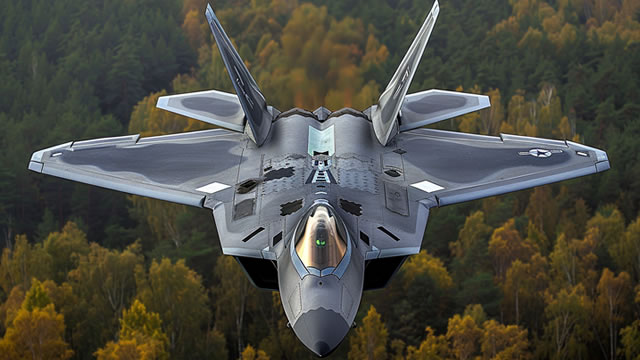
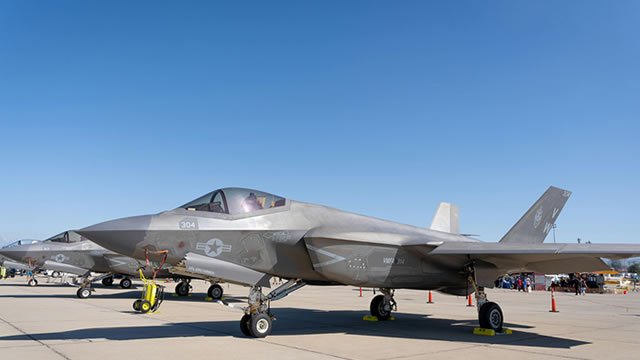
Core Insights - Lockheed Martin Corporation (LMT) is solidifying its position in advanced combat aircraft through the F-35 Lightning II program, which is crucial for maintaining air superiority and enhancing coordination across multiple domains [1][4] Group 1: F-35 Program Developments - The F-35 is designed to function beyond a traditional fighter jet, equipped with advanced sensors and secure communication systems that enable real-time data sharing among military platforms, enhancing situational awareness and decision-making [2] - LMT is expanding the F-35's capabilities by integrating advanced weapons such as the Joint Air-to-Surface Standoff Missile (JASSM) and the Long Range Anti-Ship Missile (LRASM), which will improve its long-range precision strike capabilities against land and maritime targets [3][8] - Recently, LMT secured a $700.4 million contract for long-lead materials and components for future F-35 production lots, supporting ongoing global demand and upgrades [4][8] Group 2: Market Position and Performance - LMT shares have increased by 38.8% over the past year, outperforming the industry growth of 34.7% [7] - The company's shares are currently trading at a relative discount, with a forward 12-month Price/Earnings ratio of 21.41X compared to the industry's average of 33.05X [9] - The Zacks Consensus Estimate for LMT's earnings for 2026 and 2027 has shown positive movement over the past 60 days, indicating favorable growth expectations [10]


Lockheed Martin vs. L3Harris: Which Defense Giant Belongs in Your Portfolio?
247Wallst· 2026-03-12 11:19
Core Insights - Lockheed Martin and L3Harris Technologies are both benefiting from increased U.S. government defense spending, but they have different business models and financial performances [1] Financial Performance - Lockheed Martin reported a Q4 2025 operating profit of $535 million in its Missiles & Fire Control segment, recovering from an $804 million loss in Q4 2024, with F-35 deliveries increasing by 74% to 191 units [1] - L3Harris achieved record Q4 orders of $27.5 billion with a 1.3x book-to-bill ratio and organic revenue growth of 5% across all segments, including a 10% growth in its Aerojet Rocketdyne segment [1] - Lockheed Martin's FY2025 revenue was $75.05 billion, while L3Harris reported $21.87 billion [1] - Lockheed's free cash flow for FY2025 was $6.91 billion compared to L3Harris's $2.74 billion [1] Growth Projections - Lockheed Martin is guiding for FY2026 revenue between $77.5 billion and $80.0 billion, while L3Harris expects revenue between $23.0 billion and $23.5 billion [1] - Lockheed's segment operating profit is projected to grow by approximately 25% in 2026 [1] Business Strategies - Lockheed Martin is focusing on scale and long-term government contracts, having invested over $3.5 billion in production capacity and next-generation technologies in 2025 [1] - L3Harris is reorganizing its structure into three segments for 2026 and is divesting a majority stake in its Space Technology disposal group, aiming for a leaner and more focused operation [1] Valuation Analysis - Lockheed Martin is trading at a forward P/E of 22x, while L3Harris is at 31x, indicating that Lockheed is the cheaper stock based on earnings power [1] - Over the past year, L3Harris has seen a stock price increase of approximately 74%, compared to Lockheed's 42% [1]


Six Stocks That Could Soar in an Era of Regional Instability
Yahoo Finance· 2026-03-12 09:00
Group 1: Geopolitical Impact on Oil and Defense Sectors - Occidental Petroleum (OXY) is positioned as a key beneficiary amid geopolitical tensions, with its assets located far from conflict zones, providing a "safe" production environment [1][7][10] - The closure of the Strait of Hormuz has led to skyrocketing shipping costs and oil prices, with Brent crude surpassing $100 per barrel, indicating a significant disruption in global oil supply [4][3] - The ongoing conflict has resulted in a substantial financial burden for the U.S., estimated at $1 billion per day, affecting global trade dynamics and pricing in futures contracts [5][6] Group 2: Company-Specific Developments - OXY's recent earnings report shows a production of 1,481 Mboed, exceeding guidance, and a robust organic reserve replacement ratio of 107%, indicating strong operational performance [8] - The company has strategically reduced its debt to $15 billion following the $9.7 billion sale of OxyChem, allowing for increased production capacity without over-leveraging [9] - Lockheed Martin (LMT) is experiencing unprecedented demand for its defense products, with plans to triple PAC-3 missile production and a record backlog of $194 billion, reflecting a shift in military procurement strategies [20][23] Group 3: Fertilizer and Rare Earth Materials - CF Industries, as the largest producer of nitrogen fertilizers, is capitalizing on the disruption in Middle Eastern supply lines, leading to increased urea prices from $475 to over $700 per ton [25][28] - MP Materials operates the only scaled rare earth mine in the U.S. and is expanding its production capabilities, positioning itself as a critical supplier for high-tech and military applications [30][32] - REalloys is addressing the metallization bottleneck in defense manufacturing, with a partnership to secure 80% of production from a rare earth processing facility, crucial for U.S. defense needs [11][14]


Lockheed Martin's Sikorsky, Robinson Launch Autonomous Cargo Helicopter - Lockheed Martin (NYSE:LMT)
Benzinga· 2026-03-10 17:49
Group 1: R66 Turbinetruck Overview - The R66 Turbinetruck integrates Robinson Unmanned's cargo UAS airframe with Sikorsky's Matrix autonomy system, marking it as the 21st aircraft enabled by Matrix [1] - The Matrix system has accumulated over 1,000 flight hours across various platforms, ranging from small drones to strategic airlift cargo planes [1] - The aircraft design omits the cockpit and crew stations, featuring a high-volume fuselage, cargo floor, and a nose-mounted clamshell door for efficient loading of palletized freight [1] Group 2: MATRIX Autonomy Functionality - The Matrix system allows operators to input mission goals via a tablet, which then auto-generates a flight plan [2] - Navigation is managed through cameras, sensors, and algorithms, eliminating the need for a pilot [2] - The architecture of the Matrix platform is shared with Sikorsky's fully autonomous S-70UAS U-Hawk [2] Group 3: Lockheed Martin (LMT) Market Insights - President Donald Trump has proposed a supplemental budget request aimed at increasing munitions production, which is significant for defense investors [3] - Lockheed Martin currently holds a record backlog of nearly $200 billion, indicating strong demand for its products [3] - At the time of publication, Lockheed Martin shares were down 1.03% at $657.33, according to Benzinga Pro data [3]
Sikorsky Collaborates with Robinson Helicopter Company to Integrate MATRIX™ Autonomy into Robinson R66 TURBINETRUCK
Globenewswire· 2026-03-10 15:00
Core Viewpoint - The R66 TURBINETRUCK is an innovative autonomous cargo helicopter developed by Sikorsky and Robinson Helicopter Company, designed for both commercial and defense missions, utilizing Sikorsky's MATRIX™ autonomy system [1][2]. Company Overview - Sikorsky, a Lockheed Martin company, is focused on advancing autonomous aviation technologies, with the R66 TURBINETRUCK being the 21st aircraft to utilize the MATRIX system, which has accumulated over 1,000 flight hours of operational data [2][3]. - Robinson Helicopter Company has over 50 years of experience in making helicopter missions accessible and reliable, with a commitment to developing scalable unmanned systems [6][9]. Product Features - The R66 TURBINETRUCK is designed for internal and external cargo operations in contested environments, featuring a high-volume fuselage and rapid loading capabilities [7]. - It offers a modular open architecture approach, allowing customers to easily swap mission software and adapt to various mission requirements [7]. - Built on a cost-effective airframe, the TURBINETRUCK aims to reduce total ownership costs and risks for operators in both civil and defense sectors [7]. Strategic Importance - The TURBINETRUCK is particularly suited for remote-site resupply, contested logistics, and disaster relief operations, addressing emerging needs in both defense and commercial markets [4][3].

Missile Demand Is Surging, Private Equity Wants A Piece - Boeing (NYSE:BA), Lockheed Martin (NYSE:LMT)
Benzinga· 2026-03-09 17:18
Core Insights - The ongoing conflict in Iran is driving high demand for U.S. air and missile defense systems, creating investment opportunities in the defense sector [1] - Private equity firms are expected to pursue defense-related deals, particularly in businesses that enhance missile production and replenishment capabilities [1] Group 1: Investment Opportunities in Munitions - Missile defense programs such as PAC-3 MSE, THAAD, and Standard Missile-3 present significant supply chain investment opportunities [2] - Companies producing propulsion systems, advanced electronics, and composite materials are likely to see increased demand as production ramps up [2] Group 2: Tier 2 and Tier 3 Suppliers - Many relevant businesses operate at Tier 2 or Tier 3 levels, supplying components to prime contractors and benefiting from long-term agreements and high barriers to entry [3] - The cruise missile sector also offers investment potential, particularly in subsystems like propulsion components and guidance electronics [3] Group 3: Capital Support and Incremental Demand - Capital support in the defense supply chain can help suppliers meet the rising demand from replenishment orders [4] - Additional investment opportunities exist in suppliers of inertial sensors, printed circuit boards, and wiring harnesses [4] Group 4: Drone Production Landscape - The supplier landscape for drone production is more accessible to private equity, with a clear demand signal for maintenance and repair services [5] - Investors who can navigate regulatory complexities and develop expertise in government contracting will find attractive opportunities in the current environment [5]

LMT Stock Surges 43.6% in 3 Month: Time to Hold or Book Profits?
ZACKS· 2026-03-09 16:11
Core Insights - Lockheed Martin's shares have increased by 43.6% over the past three months, significantly outperforming the Zacks Aerospace-Defense industry's growth of 12.3% [1][7] - The company has secured several major defense contracts, contributing to its strong order backlog and overall growth [4][20] Performance Comparison - Other defense stocks, such as RTX Corporation and Northrop Grumman, have also seen gains of 20.1% and 36.2%, respectively, during the same period [2] - Lockheed Martin's performance has raised questions among investors regarding the timing for potential stock additions [3] Advantages for Lockheed Martin - The company has a broad range of product offerings that enable it to secure significant defense contracts, including a contract for 18 space vehicles valued at over $1 billion and a $233 million contract for IRST21 Block II systems [4] - The F-35 program is a crucial growth driver, accounting for approximately 27% of Lockheed Martin's total consolidated net sales in 2025 [5][20] - Lockheed Martin is ramping up production of the upgraded S-92A+ helicopter, which is expected to enhance aircraft sales and strengthen its position in the global heavy-lift helicopter market [9][20] Challenges Faced - The company reported a $950 million loss on a classified program and additional losses in various helicopter programs, indicating potential financial pressures [10][21] - Lockheed Martin's total debt to capital ratio stands at 76.35%, significantly higher than the industry average of 51.29% [15] Earnings Estimates - The Zacks Consensus Estimate for Lockheed Martin's 2026 earnings per share (EPS) has increased by 1.12% over the past 60 days, with a long-term earnings growth rate projected at 18.57% [11] - The company has consistently beaten earnings estimates in the past four quarters, with an average surprise of 14.01% [13] Valuation - Lockheed Martin's forward 12-month price-to-sales (P/S) ratio is 1.96X, which is a discount compared to the industry's average of 2.78X, suggesting a favorable valuation for investors [17]
Lockheed Martin stock: prepares for windfall as Iran war continues
Invezz· 2026-03-09 13:48
Core Insights - Lockheed Martin is poised to benefit significantly from the ongoing war in Iran, with increased defense spending expected to boost its revenues and stock price [1][1][1] Group 1: Financial Performance - Lockheed Martin's stock price has surged, currently trading at $671, down slightly from its all-time high of $692, and is approximately 66% above its lowest point in 2025 [1][1][1] - The company's revenue increased by 4% in Q1 to $18 billion, with net earnings rising to $1.7 billion [1][1][1] - The backlog of orders surged to over $173 billion, representing about two years of sales [1][1][1] Group 2: Market Demand and Growth Drivers - President Trump has indicated a request for $1.5 trillion in defense spending for the year, up from $1 trillion, with a significant portion allocated to defense contractors like Lockheed Martin [1][1][1] - The Pentagon is expected to request $50 billion from Congress to fund the ongoing war in Iran, primarily for replenishing equipment used in the Middle East [1][1][1] - Demand for military equipment is expected to rise due to destruction in the Middle East, particularly in countries like Saudi Arabia, Qatar, and Kuwait [1][1][1] Group 3: Business Segments - Lockheed Martin's aeronautics business generated over $7 billion in sales, an increase from $6.8 billion in the same period in 2024 [1][1][1] - The missiles and fire control segment reported $3.3 billion in revenue, while rotary & missile systems revenue rose to $4.3 billion [1][1][1] Group 4: Technical Analysis - The stock has shown a bullish trend, rebounding after forming a double-bottom pattern and surpassing key resistance levels [1][1][1] - The long-term forecast for Lockheed Martin's stock price is bullish, with a target of $1,000, although there is a potential for a retreat to test support at $600 [1][1][1] Group 5: Challenges - The company faces rising operational costs due to increasing commodity prices amid the war [1][1][1] - Lockheed Martin's forward price-to-earnings ratio stands at 22.45, higher than the sector median of 20 and its five-year average of 17, indicating potential overvaluation [1][1][1]

Lockheed Martin Goes Full Throttle On Weapons Production— Commits To 4X Output After Trump Meeting
Yahoo Finance· 2026-03-09 12:31
Core Insights - Lockheed Martin Corporation has announced a commitment to quadruple its munitions production, influenced by a meeting with former President Donald Trump and defense industry leaders [1][2] - The expansion of munitions production had already begun three months prior to the meeting, with production facilities already in progress [3] - The decision to accelerate production aligns with the current geopolitical climate, as the U.S. is engaged in active conflict with Iran [4] Company Developments - Lockheed Martin is collaborating with Secretary of War Pete Hegseth and Deputy Secretary Stephen Feinberg on the production expansion [1] - The company has expressed urgency in enhancing the U.S. military's capabilities with high-quality munitions [2][3] - Lockheed Martin is also aligning with Trump's directives, including the removal of Anthropic's Claude AI tools, indicating a close relationship with the current administration [5] Market Performance - Lockheed Martin has a market capitalization of $154.56 billion, with a 52-week trading range of $410.11 to $692.00 [6] - The stock closed at $671.77, reflecting a 2.56% increase on Friday and a year-to-date rise of 35.15% [6]
航空航天与国防:廉价无人机来袭,防御成本高昂 -伊朗的密集攻击凸显美国需提升拦截能力-Aerospace & Defense-Flyby Cheap Drones, Costly Defenses – Iran's Barrage Highlights Need for Expanded U.S. Interceptor Capabilities
2026-03-09 05:18
Summary of Key Points from the Conference Call Industry Overview - **Industry**: Aerospace & Defense - **Region**: North America - **Current Context**: The ongoing conflict involving Iran has highlighted the need for enhanced U.S. interceptor capabilities due to the significant missile and drone threats posed by Iran [1][2]. Core Insights and Arguments - **Iran's Military Actions**: Iran has launched approximately 750 missiles and around 2,000 drones targeting military and civilian infrastructures, emphasizing the urgency for a comprehensive U.S. defense strategy [1][2]. - **Cost Disparity**: The U.S. THAAD interceptors cost about $13 million each, while Iranian missiles range from $1-2 million and drones cost between $20,000 to $55,000, creating a challenging economic situation for U.S. defense expenditures [2][10]. - **Dwindling U.S. Supplies**: The U.S. faces a limited supply of interceptors, with production rates hampered by supply chain issues, necessitating an increase in production of existing systems and the development of new technologies [2][11]. - **Declining Iranian Missile Launch Rate**: Although Iran has a substantial stockpile of missiles, the launch rate has decreased significantly, with reports indicating an 86% decline since the conflict began, likely due to U.S. and Israeli countermeasures [3][7]. - **Emergence of Shahed Drones**: Iran's use of the Shahed drone, a low-cost, one-way attack drone, poses a new threat despite its low accuracy rate. These drones are inexpensive to produce and have been deployed extensively in the conflict [8][9]. Opportunities and Risks - **Increased Demand for Interceptors**: The conflict has underscored the need for accelerated production of interceptors and missiles, presenting opportunities for defense contractors like Lockheed Martin, RTX, and Northrop Grumman [11][12]. - **Technological Innovation Required**: To counter the drone threat effectively, there is a need for innovation in defense technologies, including directed energy systems and AI for fire control management [12]. - **Potential for New Market Entrants**: The evolving landscape may provide opportunities for both established defense primes and new disruptors in the market, particularly in developing cost-effective counter-drone technologies [12]. Additional Important Insights - **Presidential Engagement**: President Trump is scheduled to meet with executives from major defense companies, indicating a high-level focus on addressing the current defense challenges [2]. - **Long-term Production Challenges**: Even with agreements to increase production, it will take years to ramp up, highlighting the urgency for immediate technological advancements and production capabilities [11][12]. This summary encapsulates the critical points discussed in the conference call, focusing on the implications for the aerospace and defense industry in light of current geopolitical tensions.


