
PepsiCo(PEP)

Search documents
Engie inks sector-first biomethane supply deal with PepsiCo UK
Reuters· 2026-01-21 07:47
Core Insights - Engie has secured a 10-year contract to supply biomethane to PepsiCo UK, marking a significant milestone as the first such agreement between a biomethane producer and a food industry player in Britain [1] Company Summary - Engie, a French utility company, is expanding its portfolio in the renewable energy sector by entering into a long-term supply agreement for biomethane [1] Industry Summary - The deal signifies a growing trend in the food industry towards sustainable energy sources, highlighting the increasing importance of biomethane in reducing carbon footprints [1]



PepsiCo (PEP) Upgraded to Overweight by JPMorgan After Initiatives to Boost Shareholder Returns
Yahoo Finance· 2026-01-20 19:43
Core Viewpoint - PepsiCo, Inc. (NASDAQ:PEP) is currently considered one of the most active blue chip stocks to buy, with JPMorgan upgrading its rating from Neutral to Overweight and raising the price target to $164 from $151, following the company's initiatives to enhance shareholder returns and early guidance for 2026 [1][2]. Group 1: Strategic Initiatives - Analyst Andrea Teixeira noted that PepsiCo's strategic plan is expected to drive high single-digit total shareholder return (TSR) in 2026, with the stock trading at a significant discount compared to reputable competitors [2]. - JPMorgan emphasized that while there have been no major changes in PepsiCo's business objectives, the company is set to achieve higher productivity targets and improved top-line growth, which provides a positive outlook [3]. Group 2: Business Integration and Performance - The integration of Siete and Poppi in the latter half of the year, along with enhanced distribution for Alani Nu, is anticipated to improve PepsiCo's organic top-line performance [3]. - PepsiCo is recognized as a leading multinational company in the food, snack, and beverage sectors, indicating its strong market presence [3].
The 3 Most Reliable Dividend Stocks to Buy for Years to Come
Yahoo Finance· 2026-01-20 00:30
Core Viewpoint - In a volatile market, dividend stocks are preferred by investors seeking reliable income, with companies that have stable business models consistently paying dividends [1] Group 1: AbbVie (ABBV) - AbbVie is valued at $383 billion and focuses on immunology, oncology, neuroscience, eye care, and aesthetics, leading to strong cash flows and reliable earnings [2] - AbbVie has a 54-year track record of paying and increasing dividends, qualifying as a Dividend King [2] - The company offers a forward yield of 3.2%, significantly higher than the healthcare average of 1.6%, with a sustainable payout ratio of 43.5% [3] - In Q3, AbbVie reported net revenues of $15.7 billion, a 9.1% year-over-year increase, with its immunology portfolio generating $6.8 billion [4] - The adjusted EPS guidance for full-year 2025 has been raised to a range of $10.61 to $10.65, and a 5.5% dividend increase for 2026 has been announced [4] - AbbVie stock has a consensus rating of "Moderate Buy," with a mean target price of $245.52, indicating a potential upside of 14.2% [5] Group 2: PepsiCo (PEP) - PepsiCo is valued at $200 billion and is a global leader in food and beverages, known for its popular snacks and drinks [6] - The company has a consistent demand for its products, leading to stable cash generation and a long history of increasing dividends for 53 years, also qualifying as a Dividend King [6]

Snacking Headwinds Persist: Can PepsiCo's Beverages Carry the Load?
ZACKS· 2026-01-19 19:10
Core Insights - PepsiCo, Inc. is facing ongoing challenges in its core snacking business, particularly in North America, where volume declines are impacting overall food operations due to weak consumer demand and health-conscious trends [1][2] Group 1: Financial Performance - In Q3 2025, organic revenues for PepsiCo Foods North America (PFNA) declined by 3%, while reported revenues remained flat year over year [2] - The Zacks Consensus Estimate for PepsiCo's 2025 earnings per share (EPS) indicates a year-over-year decrease of 0.5%, while the 2026 EPS shows a growth of 5.4% [14] - PepsiCo shares have increased by 3.3% over the past six months, slightly outperforming the industry growth of 3% [12] Group 2: Strategic Initiatives - The company is focusing on its permissible snack portfolio, which features cleaner ingredients and functional benefits, to counteract volume declines in PFNA [3][9] - PepsiCo is committed to innovation, particularly in the functional hydration category, with products like Propel and the relaunch of Muscle Milk, aiming to capture new market segments [4] - The beverage unit is providing stability, with the Beverages North America (PBNA) segment achieving 2% organic revenue growth, driven by gains in Pepsi Zero Sugar [4][9] Group 3: Competitive Landscape - Key competitors include The Coca-Cola Company and Monster Beverage Corp., both of which are navigating market volatility through diversified portfolios and innovation [6][7][8] - Coca-Cola's strategy emphasizes a broad range of beverage categories, while Monster Beverage focuses on energy drinks and health-oriented products [7][8] Group 4: Market Positioning - PepsiCo is strategically repositioning its beverage portfolio to align with health and wellness trends, with brands like Mountain Dew and poppi gaining market share [5] - The company is investing in healthier snack offerings to bolster growth and adapt to changing consumer preferences [5]
Pepsi killed a popular cola flavor, Coca-Cola does not offer
Yahoo Finance· 2026-01-19 18:07
Group 1 - PepsiCo plans to cut about 20% of its snacks, sodas, and other products to address pressure from an activist investor and to respond to slower sales growth [1][6] - The company has not yet specified which products will be discontinued, but it has already removed some items, including Nitro Pepsi and Pepsi Peach, without prior notice [2][3][5] - The discontinuation of products like Nitro Pepsi and Pepsi Peach reflects a broader strategy to streamline offerings and focus on more successful items [4][6] Group 2 - The cuts are part of a restructuring effort that aims to use savings from discontinued products to enhance marketing and consumer value [6] - PepsiCo's approach to product discontinuation has shifted, moving away from previous practices of notifying consumers about product removals [3][5] - The company is expected to start implementing these cuts in 2026, indicating a significant shift in its product strategy [1][6]
PepsiCo: A Blue-Chip Dividend Aristocrat And Dividend King Ripe For Picking
Seeking Alpha· 2026-01-19 14:30
Group 1 - The article does not provide any relevant content regarding the company or industry [1]
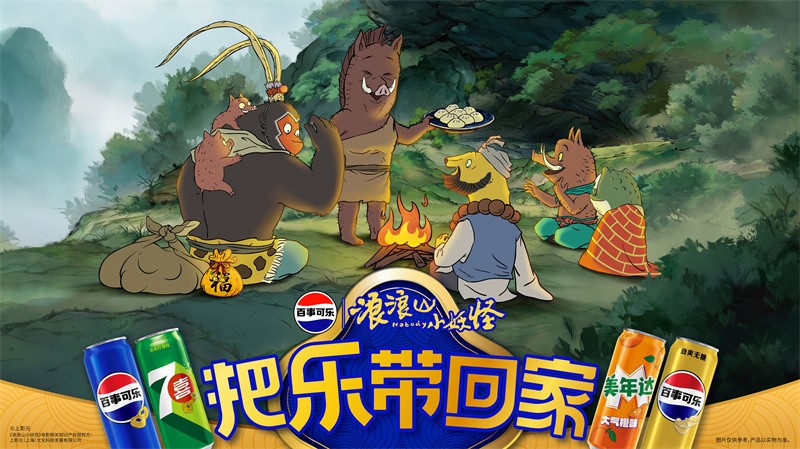
十五年长情陪伴,百事“把乐带回家”联动现象级动画IP《浪浪山小妖怪》,以平凡微光照亮新春归途
Zhong Guo Shi Pin Wang· 2026-01-19 10:34
Core Insights - The collaboration between Pepsi and the animated IP "Wang Wang Mountain Little Monsters" aims to redefine the narrative of the brand's "Bringing Joy Home" campaign, marking a new phase in its 15-year journey [1][4][12] Group 1: Brand Narrative and Emotional Connection - The campaign reflects a shift in public sentiment, where the definition of "joy" has evolved from external achievements to finding peace and stability in everyday life [3][4] - The meaning of "home" has transformed from a ceremonial return to a place of emotional comfort and acceptance, emphasizing the importance of ordinary connections [3][4] - Over the past 15 years, the "Bringing Joy Home" campaign has grown from a simple New Year greeting to a cultural symbol embedded in family traditions, resonating with the emotional pulse of the nation [4][12] Group 2: Engagement Strategies - Pepsi has created an immersive emotional experience through various channels, including limited edition packaging and themed products that resonate with consumers' identities [5][7] - The campaign extends into real-life settings by establishing themed experience spaces in key cultural and commercial locations, allowing the brand's message to permeate everyday life [7][9] - The new year special "Wang Wang Mountain Little Monsters: Bringing Joy Home" film conveys the essence of joy derived from unconditional acceptance by family, aligning with the brand's emotional core for this year's campaign [9][12] Group 3: Cultural and Market Implications - The partnership with "Wang Wang Mountain Little Monsters" signifies Pepsi's commitment to engaging with contemporary narratives around family and joy, reflecting a deep empathy for ordinary lives [12] - The campaign serves as a bridge between generations, fostering understanding and resonance through relatable stories of everyday workers and their experiences [12] - The 15-year milestone represents both a significant achievement and a new beginning for Pepsi, reinforcing its role as a companion during the Chinese New Year and its ongoing commitment to emotional engagement with consumers [12]
How much to invest in Pepsi for $1,000 in annual dividends (2026)
Yahoo Finance· 2026-01-18 18:47
Core Viewpoint - PepsiCo has maintained uninterrupted dividend payments for over 50 years, making it a reliable income generator for investors seeking steady cash flow [1] Group 1: Financial Performance - As of January 16, PepsiCo trades at $146.60 per share with an annual dividend of $5.69, resulting in a yield of approximately 3.9%, significantly higher than the S&P 500's yield of 1.13% [1] - To earn $1,000 in annual dividends from PepsiCo, an investment of about $25,800 is required to own approximately 176 shares at the current price [2] Group 2: Growth Challenges - PepsiCo acknowledges a serious growth problem, particularly in its North America food business, which includes Frito-Lay, facing volume declines and margin pressure [3] - Recent quarters have shown volume declines for Frito-Lay North America as the company moved away from deep promotional strategies and encountered service-level issues due to system transitions [4] Group 3: Management Changes - In November 2025, PepsiCo appointed Steve Schmitt as the new CFO, marking a shift from the company's usual practice of promoting from within [5] - Schmitt's background in finance across various industries is seen as a fresh perspective for the company [6] - The company has set ambitious targets for 2026, issuing preliminary expectations in early December rather than waiting for the traditional February guidance period [6][7] Group 4: Strategic Initiatives - PepsiCo's transformation plan focuses on three key moves, with significant investments aimed at enhancing affordability, particularly in Frito-Lay North America [9]
Costco Switches Food Court Back to Coke After Decade With Pepsi
Yahoo Finance· 2026-01-17 19:21
Core Viewpoint - Costco Wholesale Corporation has ended its partnership with PepsiCo and returned to Coca-Cola for its food courts, marking a significant shift after a decade-long relationship [1][2]. Group 1: Partnership Transition - The transition back to Coca-Cola began in late 2025 and was completed in early 2026 [1]. - Costco had been exclusively partnered with Pepsi since 2013, initially switching to Pepsi as a cost-saving measure to maintain the price of its popular hot dog and soda combo at $1.50 [2]. Group 2: Reasons for the Switch - The reasons for the switch back to Coca-Cola have not been officially disclosed, but customer preference and Coca-Cola's renewed commitment to quality and partnership with Costco are suggested factors [2]. Group 3: Market Performance - Costco has outperformed the market over the past 20 years by 7.13% on an annualized basis, achieving an average annual return of 16.0% [3]. - The current market capitalization of Costco Wholesale is $426.19 billion [3].


In war on sugar, PepsiCo and Coca-Cola could be the first targets
Yahoo Finance· 2026-01-17 15:37
Core Insights - The affordability of sugary drinks is increasing in many countries, which poses a challenge for public health and presents a market opportunity for investors [1][2] - The World Health Organization (WHO) is advocating for higher taxes on sugary beverages, alcohol, and tobacco to curb consumption and generate revenue [3][9] Group 1: Market Dynamics - In 2024, sugary drinks were more affordable in 62 countries compared to 2022, while beer affordability increased in 56 countries during the same period [2][8] - The WHO's "3 by 35" campaign aims to raise prices of sugary drinks and beer by 50% over the next decade, potentially generating $1 trillion by 2035 [3][8] Group 2: Impact on Major Companies - Companies like PepsiCo and Coca-Cola may face increased scrutiny and potential market share shifts as governments implement sugar taxes [6] - The effectiveness of local taxes in cities like Philadelphia and San Francisco has shown a decrease in consumption, indicating that tax policies can significantly impact sales for these companies [7]