SoftBank(SFTBY)

Search documents
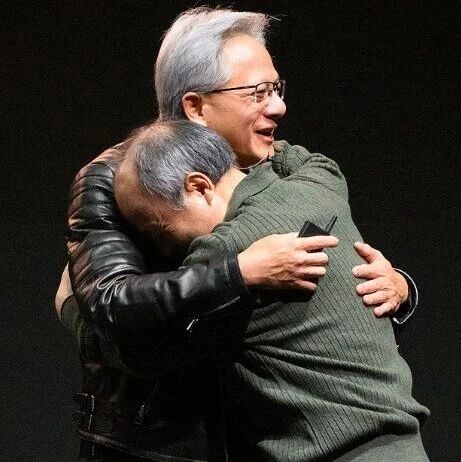
孙正义撤了,上次这么干,抱着黄仁勋痛哭
创业家· 2025-11-14 10:20
Group 1 - The article highlights Masayoshi Son's extreme investment style, emphasizing his recent decision to sell all of SoftBank's $5.8 billion Nvidia shares to invest in AI, including a planned $30 billion investment in OpenAI and participation in a $1 trillion AI manufacturing center project in Arizona [3][18]. - SoftBank sold all 32.1 million shares of Nvidia at an exit price of approximately $181.58 per share, which is only 14% lower than Nvidia's historical peak of $212.19 [3][18]. - This marks SoftBank's second complete exit from Nvidia, with the first exit in 2019 resulting in significant losses, as the shares sold then are now worth over $150 billion [3][19]. Group 2 - Son's career has been characterized by extreme bets, from losing $70 billion during the dot-com bubble to the legendary investment in Alibaba, which turned $20 million into $150 billion by 2020 [9][10]. - The article discusses the painful lessons from the WeWork investment, where Son ignored internal opposition and set a valuation of $47 billion, leading to a loss of $11.5 billion in equity and an additional $2.2 billion in debt [14][15][16]. - The recent Nvidia exit raises questions about whether Son sees risks that others do not, reflecting the uncertainty that investors currently face [19].


软银集团押注AI,对OpenAI出资比例将达11%
日经中文网· 2025-11-14 08:00
Core Viewpoint - SoftBank Group is increasing its investment in OpenAI, aiming to become a "platform provider" that generates revenue through AI infrastructure, despite the lack of a clear path to profitability in AI-related businesses [2][4]. Investment Strategy - SoftBank Group plans to invest an additional $22.5 billion in OpenAI in December, bringing its total investment to $34.7 billion, making it the largest shareholder with an approximate 11% stake [5]. - The investment has already yielded significant returns, with SoftBank reporting an investment gain of 21.567 trillion yen from its investments in OpenAI during the April to September period [4]. Collaboration and Future Plans - SoftBank is collaborating with OpenAI on the "Stargate" project, which involves building large data centers across the U.S., and is also supporting OpenAI in semiconductor and energy supply [4][7]. - The company is also planning to acquire semiconductor firms and establish its own power supply system to support AI development [7]. Market Position and Competition - OpenAI is preparing for an IPO, with its valuation potentially reaching $1 trillion, which could further increase the value of SoftBank's holdings [5]. - Despite the optimistic outlook, there are concerns about OpenAI's ability to maintain its leading position in the face of competition from companies like Google, Amazon, and emerging Chinese firms [9]. Leadership Vision - SoftBank's CEO Masayoshi Son believes that the global AI market, estimated at around 600 trillion yen, will be shared among a few key players, with SoftBank and OpenAI positioned at the core [7]. - The company is also investing in robotics, having announced an 800 billion yen acquisition of ABB's robotics business, which is seen as a strategic move to enhance its capabilities in AI and robotics integration [7].
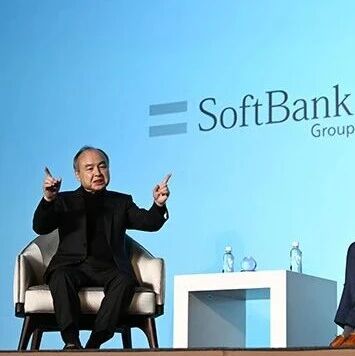
软银清仓英伟达,套现58亿美元,孙正义AI战略调整
Sou Hu Cai Jing· 2025-11-14 05:30
Core Insights - SoftBank sold its last shares of Nvidia in October 2024 for $5.83 billion, indicating a strategic shift rather than a simple cash-out [1][3] - The company reported a net profit of 2.502 trillion yen for Q2 2024, significantly exceeding market expectations [1] Financial Performance - The Vision Fund generated 2.755 trillion yen in profits during the same quarter, becoming a key contributor to SoftBank's financial success [3] - The sale of Nvidia shares involved offloading 32.1 million shares, with the cash proceeds earmarked for larger investments [3] Strategic Moves - SoftBank plans to invest $22.5 billion in OpenAI through its second Vision Fund, part of a broader goal to invest approximately $30 billion in the AI sector [3][5] - The company has already seen returns of 2.157 trillion yen from its early investments in OpenAI, highlighting the success of this strategy [5] Future Projects - Plans include building a $1 trillion AI manufacturing center in Arizona, showcasing ambitious growth targets [5] - There are rumors of a potential acquisition of chip design company Ampere Computing for around $6.5 billion, which would contrast with the Nvidia sale [5] Technological Initiatives - SoftBank aims to deploy 1 billion AIAgents across its operations, which are expected to enhance efficiency through automation [6] - These AIAgents will possess self-learning capabilities, potentially transforming customer service, data analysis, and operational optimization [6] Market Reaction - SoftBank's stock surged 78% in the three months ending September 2024, marking its best quarterly performance since December 2005 [6] - There are mixed sentiments on Wall Street regarding SoftBank's valuation, with concerns about transitioning from a low-cost AI exposure to a high-risk valuation model [6] Long-term Outlook - The sale of Nvidia shares is viewed as a strategic move to consolidate liquidity for future investments in AI infrastructure and projects [7][9] - The success of SoftBank's ambitious plans will depend on effective execution and overcoming challenges related to funding, technology implementation, and regulatory compliance [9][10]
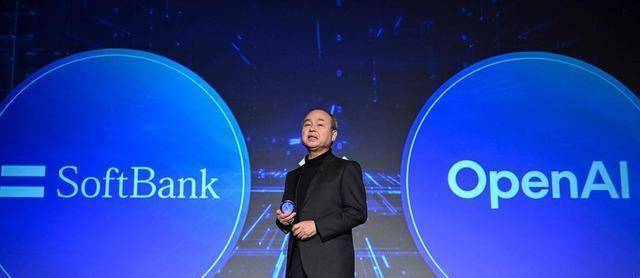
软银清仓英伟达套现58亿美元 豪赌OpenAI背后的战略转向
Xin Lang Zheng Quan· 2025-11-14 02:27
Core Insights - SoftBank Group has sold all its shares in NVIDIA for $5.83 billion, marking its second exit from the company, and is now focusing on a $30 billion investment in OpenAI, indicating a strategic shift in its approach to the AI industry [1][2][3] Investment Strategy - SoftBank's relationship with NVIDIA has been tumultuous, having initially invested $4 billion in 2017 but selling all shares in 2019 for $7 billion, missing out on NVIDIA's market cap growth from $100 billion to $4 trillion [3] - The recent sale of NVIDIA shares is part of SoftBank's asset monetization strategy, with CFO Yoshimoto stating that the timing of the sale is not indicative of an AI bubble [3][4] Focus on OpenAI - SoftBank's total investment in OpenAI has reached $30 billion, with a recent commitment of $22.5 billion for the second round of financing, reflecting a strong belief in the potential of AI [4] - OpenAI's valuation has surged to over $50 billion, up from $30 billion just months prior, showcasing the rapid growth in the AI sector [4] Financial Pressure - To fund its investments, SoftBank is actively seeking to raise $1.5 to $2 billion in the dollar bond market and €500 million in euro-denominated bonds, highlighting the financial strain from its large-scale investments [5][6] - As of now, SoftBank has raised at least $24 billion through loans and bonds, with a significant bond issuance in April 2023 being one of the largest in Japan's history [5] Market Concerns - There is growing concern in the market regarding a potential AI investment bubble, as evidenced by widening yield spreads on bonds issued by major tech companies [7][8] - Analysts have noted that while there are fears of an AI bubble, the demand for AI infrastructure is expected to outstrip supply until at least 2026, suggesting that the current investment climate may not be purely speculative [7][8] Strategic Realignment - SoftBank is shifting its investment strategy from diversified tech investments to concentrated bets on key AI companies, as evidenced by its recent acquisitions and sales [9][10] - The company is also integrating resources to support its ambitious AI investments, including plans for a $1 trillion AI manufacturing center in Arizona [10][11]
软银集团股价下跌9%
Mei Ri Jing Ji Xin Wen· 2025-11-14 01:13
每经AI快讯,11月14日,软银集团股价下跌9%。 (责任编辑:王治强 HF013) 【免责声明】本文仅代表作者本人观点,与和讯网无关。和讯网站对文中陈述、观点判断保持中立,不对所包含内容 的准确性、可靠性或完整性提供任何明示或暗示的保证。请读者仅作参考,并请自行承担全部责任。邮箱: news_center@staff.hexun.com 每日经济新闻 ...
日韩股市大跌,软银重挫
第一财经· 2025-11-14 01:07
Market Overview - Japanese and South Korean stock markets opened lower on November 14, with the Nikkei 225 index down by 1.3% and the KOSPI index down by 2.74% [1] - By 08:12, the Nikkei 225 index had declined by over 2%, indicating a worsening market sentiment [1] Company Specifics - SoftBank Group experienced a significant drop, falling over 9% during the early trading session [1]

黑天鹅,突袭!
券商中国· 2025-11-14 01:04
亚太市场开盘集体杀跌! 有机构今早发布点评认为,这可能是对前天亚特兰大联储主席博斯蒂克宣布辞职引发独立性担忧的集体反击。 然而,这只会激起特朗普政府更强硬的行动。 博斯蒂克周三突然宣布,将于2026年2月28日任期届满时退休。按照规定,现年59岁的博斯蒂克原本还有资格 连任一届,继续担任主席直至65岁强制退休。他在货币政策上的立场倾向"鹰派",主张防范通胀上升,敦促他 的同事们对降低利率保持谨慎,并警惕关税的潜在影响。 亚太市场的对冲 那么,亚太市场是否存在对冲之机? 11月14日,日经225指数低开1.3%,韩国首尔综指低开2.6%。随后,日经225指数日内跌幅扩大至2%,软银跌 9%。 虚拟币亦是全线杀跌。XBIT Wallet数据显示,BTC比特币一度跌落至98990.7美元,24小时跌幅达接近3%;以 太坊大跌近6%,至3200美元附近;狗狗币大跌近4%。分析认为,市场杀跌的主因是美联储官员集体反击。 "黑天鹅"突袭 昨晚,美国市场股债汇三杀可能是亚太市场今早崩跌的主因。而引发美国资本市场巨震的"黑天鹅"正是美联储 官员的集体反击。在就业数据明显走弱、通胀尚无较大压力的情况下,几位联储官员纷纷放鹰,坚 ...

日经225指数日内跌幅扩大至2%
Zheng Quan Shi Bao Wang· 2025-11-14 00:12
人民财讯11月14日电,日经225指数日内跌幅扩大至2%,软银集团股价下跌9%。 ...
A Beloved Tokyo Penguin’s End Presages a Payments Giant
MINT· 2025-11-13 21:02
Core Viewpoint - JR East is retiring the iconic Suica penguin mascot as part of a broader rebranding strategy to transform from a traditional railway company into a fintech leader, aiming to modernize its payment platform and compete in the cashless transaction market [1][3][12] Company Strategy - The retirement of the Suica penguin is part of a "Suica Renaissance," which aims to evolve the transit card into a comprehensive mobile payments platform, offering peer-to-peer transactions and banking services [3][12] - JR East plans to invest nearly $17 billion in mergers and acquisitions by 2032 to enhance its fintech capabilities [12] Market Competition - JR East faces significant competition from SoftBank's PayPay, which has rapidly gained 71 million users and dominates the cashless transaction market with its QR code system [5][7] - PayPay's strategy includes substantial cashback programs and zero transaction fees for merchants, allowing it to innovate quickly and attract users [6][7] Historical Context - Suica was a pioneering technology when launched in 2001, utilizing Sony's Felica technology to facilitate rapid transactions in Tokyo's busy train stations [8] - Despite its initial success, JR East struggled to expand Suica's use beyond train stations due to competing standards in Japan's railway industry [9] Challenges and Limitations - The design of Suica as a charge card with a small upper limit has hindered its ability to compete with more flexible QR code systems, which have evolved into full-fledged digital wallets [10] - JR East needs to streamline its multiple apps and logins to improve user experience and capitalize on its existing user base [11]

孙正义,清空英伟达
盐财经· 2025-11-13 15:59
Core Viewpoint - SoftBank Group has completely liquidated its holdings in NVIDIA, cashing out approximately $5.8 billion (around 41.5 billion RMB), leading to a significant drop in NVIDIA's stock price and market capitalization [4][10]. Group 1: SoftBank's Investment Journey - A year ago, Masayoshi Son expressed regret over selling NVIDIA shares, highlighting a missed opportunity [8]. - In 2016, SoftBank acquired ARM for $32 billion and attempted to buy NVIDIA, but the proposal was rejected by NVIDIA's CEO Jensen Huang [9]. - SoftBank initially bought NVIDIA shares in 2017 for $4 billion, becoming one of its largest shareholders, but sold them two years later for $7 billion due to the need to lock in returns [9]. Group 2: Recent Developments and Financial Performance - SoftBank's investment in NVIDIA surged to $3 billion by March 2023, capitalizing on NVIDIA's stock performance, which had increased over tenfold in a year [10][12]. - The decision to sell all NVIDIA shares in October 2023 surprised the market, as it was seen as a strategic exit at a high point [10]. - SoftBank's Vision Fund reported a significant profit, with a net profit of 2.5 trillion yen (approximately $16 billion) in Q2, driven by investments including OpenAI [12]. Group 3: AI Bubble Concerns - There are growing concerns about a potential AI bubble, with significant market corrections anticipated in the near future [5][16]. - Major financial figures, including Jamie Dimon, have warned about the risks associated with inflated asset prices in the AI sector [16]. - The AI investment landscape has seen a surge, with venture capital investments reaching $160 billion in the first three quarters of 2023, raising questions about sustainability [17][18].