Workflow
Thor Industries(THO)
icon
Search documents
THOR Industries Announces Strategic Partnership to Optimize Diesel Class A Motorhome Production with Focus on Quality and Customer Experience
Prnewswire· 2025-05-05 20:30
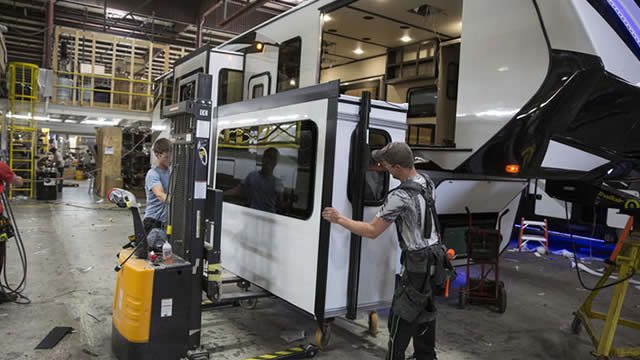
Core Insights - THOR Industries announced a strategic partnership between Jayco and Tiffin Motorhomes to transition the production of Class A diesel motorhomes for the Entegra Coach brand from Jayco to Tiffin [1][4] - This partnership aims to enhance production capacity for Jayco while maintaining the quality expected by Entegra customers [1][2] Group 1: Company Strategy - The integration of Entegra Coach into Tiffin is intended to optimize production capabilities across THOR's family of companies, particularly as the Class A diesel market evolves [3] - Tiffin's expertise in high-end craftsmanship and customer-first design aligns with the standards expected by Entegra Coach customers [2][3] Group 2: Production and Services - Jayco will continue to produce Model Year 2026 Entegra Coach diesel Class A motorhomes until the end of 2025, including models like Cornerstone, Anthem, Aspire, and Reatta [4] - Tiffin will begin manufacturing successor products in 2026, incorporating select Entegra Coach product names and design elements into its Model Year 2027 Class A lineup, which will be marketed exclusively as Tiffin products [4] - All Entegra Coach Class C, Class B, and gas Class A motorhomes will still be produced, serviced, and warrantied by Jayco [5]

Some Names I've Bought During Tariff Mayhem
Seeking Alpha· 2025-04-16 14:48
Core Insights - The current macroeconomic environment is characterized by high levels of uncertainty, making it challenging to formulate rational expectations for future growth [1] Group 1: Analyst Background - The analyst has extensive experience in the hedge fund industry, having worked as a Portfolio Manager, Domestic Equity Analyst, and Trader since the mid-90s [1] - The analyst managed a domestic Long/Short Equity product with gross assets that peaked over 1 billion dollars [1] - The investment philosophy is fundamentally driven, focusing on value investments for long positions and catalyst-oriented short investments, complemented by technical analysis for risk management [1] Group 2: Investment Focus - The analyst aims to write about unconventional investments and overlooked securities, indicating a focus on niche opportunities [1] - The analyst is also involved in the analysis and investment of Cryptoassets, suggesting a diversification in investment strategies [1]
THOR Announces Strategic Realignment of Heartland Recreational Vehicle Company
Globenewswire· 2025-03-19 20:30
Core Viewpoint - THOR Industries, Inc. is undergoing a strategic organizational restructuring to optimize its enterprise structure and strengthen its brand portfolio, integrating Heartland Recreational Vehicles under Jayco, Inc. to enhance operational efficiencies and streamline business processes [1][2]. Group 1: Restructuring Details - The restructuring aims to rationalize brands and right-size product lineups in response to current market conditions and customer demands, particularly in the context of significant dealer consolidation in the U.S. RV market [2]. - Heartland's integration under Jayco is expected to leverage Jayco's operational excellence and customer service, potentially maximizing the performance of Heartland's brands [2][3]. - Certain private label brands from Heartland will be transferred to Dutchmen Manufacturing, which is expected to improve operating leverage and maintain strong margins [4]. Group 2: Strategic Benefits - The restructuring is anticipated to yield strategic benefits such as improved synergies across brands, reduced operating costs, enhanced customer service capabilities, and a more efficient distribution strategy, all contributing to improved margins for THOR companies [5]. - The transition will focus on ensuring a seamless integration process for employees, dealers, and customers, maintaining high standards of service and product quality for current Heartland owners and dealers [6]. Group 3: Leadership Insights - Bob Martin, President and CEO of THOR, highlighted the restructuring as a commitment to long-term growth and efficiency in the RV industry, reflecting the company's dedication to adapting to an evolving marketplace [2][6]. - Ken Walters, President of Jayco, emphasized the importance of maintaining excellence in products and customer relationships as Heartland is integrated into the Jayco family [3].
Why Thor Industries Stock Lost Nearly 14% of Its Value This Week
The Motley Fool· 2025-03-07 23:00
Core Viewpoint - Thor Industries, the largest RV maker globally, experienced a significant decline in stock value following disappointing financial results, with shares dropping nearly 14% over the past week [1] Financial Performance - For Q2 of fiscal 2025, Thor reported net sales of just over $2 billion, reflecting a nearly 9% year-over-year decline [2] - The company posted a GAAP net loss of $551,000 ($0.01 per share), contrasting with a profit of $7.2 million in the same quarter of fiscal 2024 [2] - Analysts had anticipated earnings of $0.08 per share, but net sales exceeded their expectations of $1.97 billion [3] Guidance and Market Conditions - Thor cited the challenging economic environment as a headwind, with CEO Bob Martin emphasizing a focus on controllable factors such as product offerings and dealer relationships [4] - The company revised its full fiscal year guidance, projecting net sales between $9 billion and $9.5 billion, down from a previous estimate of $9.8 billion, and lowered per-share earnings estimates to a range of $3.30 to $4.00 from $4.00 to $5.00 [4] Market Outlook - Despite the disappointing results, Thor remains a significant player in the RV market, with ongoing consumer interest in travel experiences suggesting potential for future growth [5]
Thor Q2 Earnings Miss Expectations, Revenues Decline Y/Y
ZACKS· 2025-03-06 17:10
Core Insights - Thor Industries, Inc. reported a loss of 1 cent per share for Q2 fiscal 2025, contrasting with the Zacks Consensus Estimate of earnings of 7 cents and down from earnings of 40 cents per share in the same quarter of fiscal 2024 [1] - The company achieved revenues of $2.02 billion for the fiscal second quarter, exceeding the Zacks Consensus Estimate of $1.97 billion, but representing an 8.6% decline year over year [1] Segmental Results - **North American Towable RVs**: Revenues reached $828.3 million, up 13.3% year over year due to increased unit shipments, surpassing the estimate of $624 million [2] - **North American Motorized RVs**: Revenues totaled $446.3 million, down 21.8% year over year due to decreased unit shipments, yet exceeding the estimate of $405.6 million [4] - **European RVs**: Revenues were $612.5 million, down 21.7% year over year, missing the estimate of $827.5 million [5] Financial Performance - Gross profit for the company totaled $91.6 million, reflecting a 70% increase year over year, with pretax income rising to $28.2 million from $661,000 in the prior year [3] - As of January 31, 2025, the company had cash and cash equivalents of $373.8 million and long-term debt of $1 billion, with an operating cash inflow of $30.8 million compared to an outflow of $103.9 million in the same quarter of 2024 [6] Fiscal 2025 Guidance - Thor revised its fiscal 2025 consolidated net sales guidance to a range of $9-$9.5 billion, down from $9-$9.8 billion, and adjusted the gross profit margin expectation to 13.8-14.5% from 14.7-15.2% [7] - The expected EPS range was also lowered to $3.30-$4 from the previous $4-$5 [7]
Should Value Investors Buy Thor Industries (THO) Stock?
ZACKS· 2025-03-06 15:45
Core Viewpoint - The article emphasizes the importance of value investing and highlights Thor Industries (THO) as a strong candidate for value investors due to its favorable valuation metrics and earnings outlook [2][4][9]. Valuation Metrics - Thor Industries has a P/E ratio of 17.41, which is slightly below the industry average of 17.46. Over the past year, THO's Forward P/E has fluctuated between 13.10 and 22.18, with a median of 15.92 [4]. - The company has a PEG ratio of 0.93, compared to the industry average of 1.04. THO's PEG has ranged from 0.93 to 1.07 in the past year, with a median of 1 [5]. - THO's P/B ratio stands at 1.25, significantly lower than the industry average of 1.97. The P/B ratio has varied between 1.18 and 1.75 over the past 52 weeks, with a median of 1.35 [6]. - The P/S ratio for THO is 0.46, compared to the industry's average of 0.79, indicating a more favorable valuation based on sales [7]. - The P/CF ratio for Thor Industries is 9.99, which is much lower than the industry average of 15.15. This ratio has ranged from 8.52 to 12.21 in the past year, with a median of 10.06 [8]. Investment Outlook - The combination of these valuation metrics suggests that Thor Industries is likely undervalued at present, making it an attractive option for value investors [9].

Thor Industries (THO) Reports Q2 Earnings: What Key Metrics Have to Say
ZACKS· 2025-03-05 15:30
Core Insights - Thor Industries reported revenue of $2.02 billion for the quarter ended January 2025, reflecting an 8.6% decline year-over-year, with an EPS of -$0.01 compared to $0.40 in the same quarter last year [1] - The revenue exceeded the Zacks Consensus Estimate of $1.97 billion by 2.34%, while the EPS fell short of the consensus estimate of $0.07 by 114.29% [1] Financial Performance Metrics - Total unit sales for recreational vehicles reached 40,981, surpassing the three-analyst average estimate of 36,524 [4] - European recreational vehicle unit sales were 9,442, below the average estimate of 10,799 [4] - North American towable unit sales were 28,013, exceeding the average estimate of 22,587 [4] - Net sales for recreational vehicles in Europe were $612.47 million, falling short of the average estimate of $730.31 million, representing a year-over-year decline of 21.7% [4] - Total North American net sales for recreational vehicles were $1.27 billion, exceeding the average estimate of $1.10 billion, but reflecting a 2.1% decline year-over-year [4] - Net sales for North American towable recreational vehicles were $828.27 million, surpassing the average estimate of $664.70 million, with a year-over-year increase of 13.3% [4] - Total net sales for recreational vehicles were $1.89 billion, slightly above the average estimate of $1.83 billion, but down 9.4% from the previous year [4] - North American motorized recreational vehicle net sales were $446.30 million, exceeding the average estimate of $431.70 million, with a year-over-year decline of 21.8% [4] - Intercompany eliminations reported a net sales figure of -$54.58 million, worse than the average estimate of -$42.45 million, reflecting a 27.4% increase year-over-year [4] - Other net sales were $185.65 million, above the average estimate of $170.45 million, with an 11.5% year-over-year increase [4] Stock Performance - Thor Industries' shares have returned -6.4% over the past month, compared to a -4.1% change in the Zacks S&P 500 composite [3] - The stock currently holds a Zacks Rank 3 (Hold), indicating potential performance in line with the broader market in the near term [3]

Thor Industries (THO) Reports Q2 Loss, Tops Revenue Estimates
ZACKS· 2025-03-05 13:45
Core Viewpoint - Thor Industries reported a quarterly loss of $0.01 per share, missing the Zacks Consensus Estimate of $0.07, and down from earnings of $0.40 per share a year ago, indicating a significant earnings surprise of -114.29% [1] Financial Performance - The company posted revenues of $2.02 billion for the quarter ended January 2025, surpassing the Zacks Consensus Estimate by 2.34%, but down from $2.21 billion in the same quarter last year [2] - Over the last four quarters, Thor Industries has surpassed consensus EPS estimates two times and topped consensus revenue estimates three times [2] Stock Performance - Thor Industries shares have lost about 0.5% since the beginning of the year, while the S&P 500 has declined by -1.8% [3] - The current Zacks Rank for Thor Industries is 3 (Hold), indicating expected performance in line with the market in the near future [6] Earnings Outlook - The current consensus EPS estimate for the coming quarter is $2.14 on revenues of $2.7 billion, and for the current fiscal year, it is $4.47 on revenues of $9.39 billion [7] - The estimate revisions trend for Thor Industries is mixed, and future changes in estimates will be closely monitored [6][7] Industry Context - The Building Products - Mobile Homes and RV Builders industry is currently in the top 18% of Zacks industries, suggesting a favorable outlook compared to the bottom 50% [8] - Winnebago Industries, a competitor in the same industry, is expected to report a significant decline in earnings, with a projected EPS of $0.23, down 75.3% year-over-year [9]
Thor Industries(THO) - 2025 Q2 - Quarterly Report
2025-03-05 11:33
North American Market Performance - THOR's North American market share for travel trailers and fifth wheels was approximately 39.0%, and for motorhomes, it was approximately 47.2% as of December 31, 2024[79]. - North American RV backlog increased by $289,604, or 15.2%, to $2,198,493 as of January 31, 2025, compared to $1,908,889 a year earlier[82]. - North American RV independent dealer inventory decreased by 1.8% to approximately 86,200 units as of January 31, 2025, from approximately 87,800 units a year prior[81]. - Total North American wholesale unit shipments for 2024 were 333,733, an increase of 6.6% from 313,174 in 2023[83]. - North American towable units retail registrations decreased by 6.4% to 315,179 in 2024 from 336,601 in 2023[84]. - THOR's North American wholesale RV shipments for towable units increased by 14.5% to 116,913 in 2024, while motorized units decreased by 24.8% to 16,099[86]. - The RVIA projects a total of approximately 350,100 wholesale unit shipments for 2025, representing a 4.9% increase from 2024[83]. - The company anticipates long-term growth in the North American RV industry driven by consumer interest in the RV lifestyle[89]. Economic Factors and Challenges - Economic factors such as inflation, interest rates, and consumer confidence are expected to impact retail sales in fiscal 2025[88]. - The company is closely monitoring potential increases in raw material and labor costs, which could negatively impact profit margins[90]. European Market Performance - European RV backlog decreased by $1,102,292, or 40.1%, to $1,644,015 as of January 31, 2025, compared to $2,746,307 as of January 31, 2024[96]. - Independent dealer inventory of European RV products increased by 3.6% to approximately 25,700 units as of January 31, 2025, compared to approximately 24,800 units as of January 31, 2024[95]. - Total European unit registrations for motorcaravans and campervans increased by 7.3% to 138,743 in 2024 from 129,269 in 2023[97]. - Total European unit registrations for caravans decreased by 2.3% to 46,628 in 2024 from 47,740 in 2023[97]. - European net sales for recreational vehicles decreased by $169,829, or 21.7%, to $612,465 for the three months ended January 31, 2025, compared to $782,294 for the same period in 2024[109]. - European unit sales decreased by 27.8% to 9,442 units for the three months ended January 31, 2025, compared to 13,080 units for the same period in 2024[110]. - Gross profit for European recreational vehicles decreased by $38,396, or 32.2%, to $80,929 for the three months ended January 31, 2025, compared to $119,325 for the same period in 2024[110]. - The company anticipates a long-term positive outlook for European RV retail sales as more consumers seek RVs for lifestyle independence and outdoor exploration[102]. Financial Performance - Consolidated net sales for the three months ended January 31, 2025 decreased by $189,262, or 8.6%, compared to the same period in 2024[113]. - Consolidated gross profit for the three months ended January 31, 2025 decreased by $25,650, or 9.5%, with a gross profit margin of 12.1% compared to 12.3% in the prior year[114]. - Selling, general and administrative expenses decreased by $13,903, or 6.3%, primarily due to lower sales commissions and incentive compensation[115]. - Income (loss) before income taxes decreased by $8,494, or 123.2%, primarily driven by the decrease in consolidated net sales[117]. - The effective income tax rate for the three months ended January 31, 2025 was (93.1)%, compared to 22.7% in the prior year, influenced by the jurisdictional mix of earnings[118]. North American Towable Segment - North American Towable net sales increased by 13.3% to $828,266, driven by a 27.6% increase in unit shipments[123]. - The cost of products sold for North American Towable increased to $736,620, or 88.9% of net sales, but the percentage decreased from 92.6% in the prior year[125]. - North American Towable gross profit increased by $37,749, attributed to higher net sales and improved gross profit percentage[127]. - North American Towable income before income taxes increased by $27,491, reflecting the rise in net sales and improved cost structure[129]. - Order backlog for North American Towable increased by $237,556, or 28.4%, from the previous year[112]. North American Motorized Segment - North American Motorized net sales decreased by 21.8% to $446,298,000 for the three months ended January 31, 2025, compared to $570,424,000 for the same period in 2024[131]. - Total unit shipments for North American Motorized decreased by 20.5% to 3,526 units, down from 4,438 units in the prior-year quarter[131]. - North American Motorized cost of products sold decreased by $98,146,000 to $411,557,000, representing 92.2% of net sales[133]. - North American Motorized gross profit decreased by $25,980,000 due to lower net sales and increased cost of products sold[135]. - North American Motorized income before income taxes decreased by $22,162,000, attributed to lower net sales and increased expenses[137]. European Recreational Vehicle Segment - European Recreational Vehicle net sales decreased by 21.7% to $612,465,000 for the three months ended January 31, 2025, compared to $782,294,000 for the same period in 2024[139]. - Total unit shipments for European Recreational Vehicles decreased by 27.8% to 9,442 units, down from 13,080 units in the prior-year quarter[139]. - The overall net price per unit for European Recreational Vehicles increased by 6.1%, despite a 2.8% decrease due to foreign currency impacts[140]. - European Recreational Vehicle cost of products sold decreased by $131,433,000 to $531,536,000, representing 86.8% of net sales[143]. - European Recreational Vehicle gross profit decreased by $38,396,000, primarily due to decreased net sales and increased manufacturing overhead[145]. Consolidated Financial Overview - Consolidated net sales for the six months ended January 31, 2025 decreased by $547,237, or 11.6%, compared to the same period in 2024[153]. - Total North American recreational vehicle sales decreased by $279,455, or 9.4%, with North American motorized sales dropping by $330,077, or 25.8%[149]. - Gross profit for the six months ended January 31, 2025 decreased by $102,140, with a gross profit margin of 12.7% compared to 13.4% in the prior year[154]. - Selling, general and administrative expenses increased by $8,398, or 1.9%, despite a decrease in net sales[155]. - Income (loss) before income taxes decreased by $82,232, or 103.5%, primarily due to the decline in consolidated net sales[156]. - The effective income tax rate for the six months ended January 31, 2025 was (43.7)%, compared to 24.0% in the prior year, influenced by the jurisdictional mix of earnings[157]. Currency and Interest Rate Impact - Approximately 29.3% of consolidated net sales were transacted in currencies other than the U.S. dollar, with significant exposure to Euro sales[153]. - A hypothetical 10% change in the Euro/U.S. Dollar exchange rate would change the company's Euro-denominated debt balance by approximately $36,538[206]. - A one-percentage-point increase in interest rates would result in an estimated $5,030 reduction in income before income taxes over a one-year period[207]. Capital Expenditures and Cash Flow - Net cash provided by operating activities for the six months ended January 31, 2025, was $61,582, compared to a net cash used of $44,200 for the same period in 2024[194]. - Cash and cash equivalents decreased by $127,497 from $501,316 on July 31, 2024, to $373,819 as of January 31, 2025, primarily due to cash used in financing activities of $167,005[188]. - Net working capital at January 31, 2025, was $1,050,077, down from $1,083,005 at July 31, 2024[189]. - Capital expenditures for the six months ended January 31, 2025, were $51,538, primarily for production building additions and improvements[189]. - The company plans to spend approximately $125,000 on committed capital projects for the remainder of fiscal 2025, with two-thirds allocated to North America and one-third to Europe[192]. Dividend and Corporate Costs - The company increased its quarterly dividend from $0.48 to $0.50 per share in October 2024, following a previous increase from $0.45 to $0.48 in October 2023[200]. - Net cash used in financing activities for the six months ended January 31, 2025, was $167,005, primarily for term-loan payments of $85,000 and dividend payments totaling $53,153[198]. - Corporate costs in selling, general and administrative expenses increased by $16,304, primarily due to employee separation costs and deferred compensation expenses[159]. Pricing Trends - The overall net price per unit in the travel trailer product line decreased by 17.8% due to a shift towards more moderately-priced units compared to the prior-year period[164]. - North American Towable net sales increased by 3.0%, driven by a 15.9% increase in unit shipments, despite a 12.9% decrease in net price per unit[163]. - The overall net price per unit in the European Recreational Vehicle segment increased by 9.3%, with a constant-currency increase of 9.6% attributed to product mix and selling price increases[181].
Thor Industries(THO) - 2025 Q2 - Quarterly Results
2025-03-05 11:31
Financial Performance - Consolidated net sales for Q2 fiscal 2025 were $2.02 billion, down 8.6% from $2.21 billion in Q2 fiscal 2024[8]. - Net loss attributable to THOR Industries was $(0.6) million, resulting in a diluted loss per share of $(0.01), compared to a net income of $7.2 million and earnings per share of $0.13 in the prior year[9]. - EBITDA for Q2 fiscal 2025 was $76.3 million, down from $103.2 million in Q2 fiscal 2024[10]. - Consolidated net sales for the first half of fiscal 2025 were $4.16 billion, down from $4.71 billion in the prior year, reflecting a decrease in gross profit margin from 13.4% to 12.7%[33]. - Net income for the three months ended January 31, 2025, was a loss of $3,089,000 compared to a profit of $5,326,000 in the same period last year[38]. - Adjusted EBITDA for the six months ended January 31, 2025, was $194,797,000, down from $275,604,000 in the prior year, reflecting a decrease of about 29.3%[38]. - EBITDA for the three months ended January 31, 2025, was $76,344,000, down from $103,242,000, a decrease of approximately 26.0%[38]. Sales and Market Trends - North American Towable RV net sales increased 13.3% to $828.3 million, driven by a 27.6% increase in unit shipments[11]. - North American Motorized RV net sales decreased 21.8% to $446.3 million, primarily due to a 20.5% reduction in unit shipments[12]. - European RV net sales decreased 21.7% to $612.5 million, with a 27.8% decline in unit shipments[13]. - The order backlog for North American Towable RVs increased by 28.4% to $1.07 billion, while the backlog for European RVs decreased by 40.1% to $1.64 billion[11][13]. Guidance and Projections - The company revised its full-year fiscal 2025 guidance, projecting consolidated net sales between $9.0 billion and $9.5 billion[6]. - The company expects consolidated net sales for fiscal 2025 to be in the range of $9.0 billion to $9.5 billion, narrowing from a previous range of $9.0 billion to $9.8 billion[29]. - The updated gross profit margin guidance for fiscal 2025 is now projected to be between 13.8% and 14.5%, down from the previous range of 14.7% to 15.2%[29]. - Diluted earnings per share are now expected to be in the range of $3.30 to $4.00, revised from $4.00 to $5.00[29]. Operational Efficiency and Strategy - Management emphasized a strategic focus on deepening dealer relationships and aligning production with retail demand to optimize inventory levels[16][17]. - The company generated cash from operations of approximately $30.8 million in the second quarter, totaling $61.6 million for the fiscal year-to-date, improving cash flow by over $100 million compared to the first half of the previous year[19]. - Capital expenditures for the first half of fiscal 2025 were approximately $51.5 million, with a focus on time-sensitive investments[20]. - The company reduced total indebtedness by approximately $90.5 million and returned $53.2 million to shareholders through dividends[20]. Liquidity and Financial Position - As of January 31, 2025, the company had liquidity of approximately $1.23 billion, including $373.8 million in cash and $855.0 million available under its credit facility[19]. - Cash and cash equivalents decreased to $373,819,000 from $501,316,000 year-over-year, representing a decline of approximately 25.4%[35]. - Total current assets decreased to $2,524,469,000 from $2,650,027,000, a reduction of approximately 4.7%[35]. - Long-term debt decreased to $1,003,395,000 from $1,101,265,000, indicating a reduction of about 8.9%[35]. - Stockholders' equity decreased to $3,953,495,000 from $4,074,053,000, a decline of approximately 3.0%[35]. - Inventories increased slightly to $1,379,419,000 from $1,366,638,000, reflecting a growth of about 0.9%[35]. Market Outlook - The company remains cautious about the market outlook despite an upward revision in the RVIA's forecast for 2025, citing concerns over consumer confidence and tariff impacts[24]. - European RV gross profit margin decreased to 13.2% of net sales in Q2 fiscal 2025, down from 15.3% in the prior-year period, primarily due to increased manufacturing overhead costs[23]. - The company reported a net expense related to certain contingent liabilities of $0 for the six months ended January 31, 2025, compared to an income of $14,200,000 in the prior year[38]. - The company considers Adjusted EBITDA a meaningful measure for evaluating ongoing operating trends, despite it not being a GAAP measure[39].