Chipotle

Search documents
X @Bloomberg
Bloomberg· 2025-09-11 03:53
Chipotle is venturing into Asia for the first time, with plans to open locations in South Korea and Singapore in 2026. It’s the American chain’s latest foray into international markets after announcing earlier this year that it would open in Mexico, its first entry into Latin America. Read more: https://t.co/ldDb0q41AT📷️: Angus Mordant/Bloomberg ...
X @Bloomberg
Bloomberg· 2025-09-10 19:40
Chipotle is expanding to Asia for the first time, with plans to open in Singapore and South Korea in 2026 https://t.co/erosR0y0d6 ...
X @Tesla Owners Silicon Valley
Tesla Owners Silicon Valley· 2025-09-07 19:59
Got Chipotle and using Actual Smart summon for my Model 𝕏 to come to me. https://t.co/DtqH1e2cUr ...

Prediction: Buying Cava Group Stock Today Could Set You Up for Life
The Motley Fool· 2025-09-04 07:15
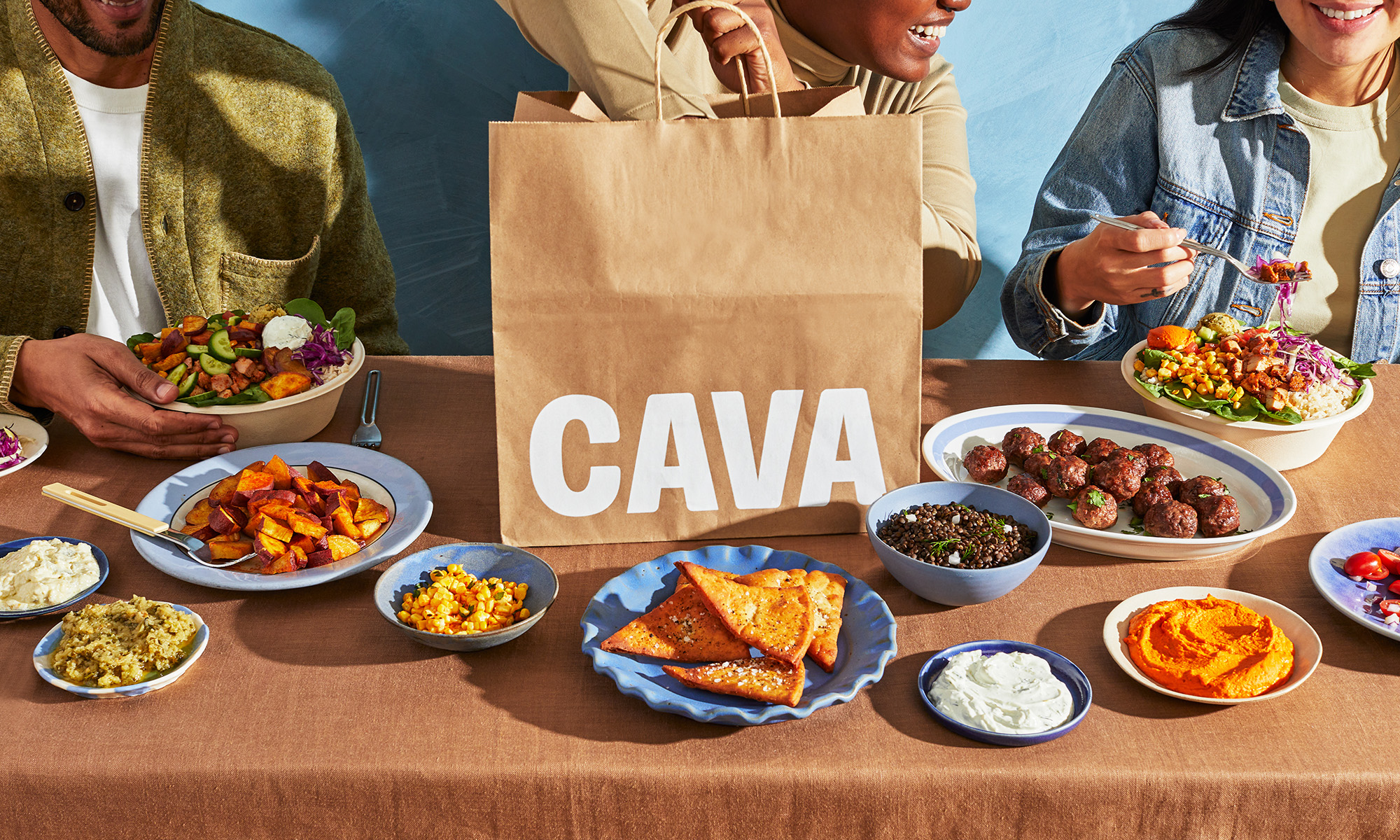
Core Viewpoint - Cava Group (CAVA) is positioned as a promising long-term investment opportunity in the fast-casual restaurant sector, leveraging the growing popularity of Mediterranean cuisine and aiming for significant expansion [2][4][14] Company Overview - Cava Group operates in the competitive restaurant industry, with a current market capitalization of approximately $7.7 billion, significantly smaller than competitors like Chipotle ($56 billion) and McDonald's ($224 billion) [6][7] - The company has expanded to 398 locations as of the end of Q2 fiscal 2025, with a goal of reaching 1,000 locations by 2032 [8][7] Market Trends - There is a growing consumer focus on healthy eating, particularly the Mediterranean diet, which benefits Cava's business model [5] - Cava's strategy is influenced by the success of Chipotle, which has established a market for fast-casual healthy dining, allowing Cava to face less direct competition [5] Financial Performance - In the first 28 weeks of fiscal 2025, Cava reported over $612 million in revenue, marking a 24% increase from the same period in fiscal 2024, alongside a 17% increase in the number of restaurants [9] - Same-restaurant sales increased by 11% in fiscal Q1 but dropped to 2% in Q2, with a forecasted increase of 4% to 6% for the year, outperforming Chipotle's expected flat sales [10] - Cava's net income for the first 28 weeks was over $44 million, reflecting a 31% year-over-year increase, while operating expenses grew at a rate lower than revenue [11] Stock Performance - Cava's stock has seen a significant decline of about 60% since its peak in December, with a current P/E ratio of 56, raising questions about its valuation [12][13] - Despite the pullback, the valuation is comparable to Chipotle's earlier years, suggesting potential for future growth as Cava continues to expand [14]


X @Decrypt
Decrypt· 2025-08-22 19:15
Industry Trend - The food delivery industry is exploring drone technology for faster deliveries [1] Company Initiatives - Chipotle is starting a drone delivery test with Zipline in Rowlett, Texas [1]
X @Decrypt
Decrypt· 2025-08-22 17:12
Chipotle Launches 'Zipotle' Drone Deliveries in Texas► https://t.co/LcLHwul8qQ https://t.co/LcLHwul8qQ ...
Chipotle to team up with drone delivery companies
NBC News· 2025-08-22 15:49
Your burrito bowl may soon be delivered by air. Yeah, Chipotle is teaming up with drone delivery company Zipline to fly orders to customers. The service is only available in the Dallas area for now.And Chipotle says customers can download the Zipline app and place their order. Employees will put your food into a zipping point where the drone will pick it up and it will gently place the order at the destination. ...

Workday Signs Definitive Agreement to Acquire Paradox, the AI Company Redefining the Frontline Candidate Experience
Prnewswire· 2025-08-21 20:01
Core Insights - Workday has entered into a definitive agreement to acquire Paradox, enhancing its AI-powered talent acquisition capabilities for various types of workers [1][5] - The acquisition aims to streamline the hiring process, particularly for high-volume frontline industries, which employ nearly 3 billion workers globally [1][3] - Paradox's AI-driven candidate experience agent is designed to improve candidate engagement and accelerate hiring processes, achieving employee conversion rates over 70% and reducing time-to-hire to as low as three and a half days [4][6] Company Overview - Workday is an AI platform that manages people, money, and agents, serving over 11,000 organizations globally, including more than 65% of the Fortune 500 [8] - Paradox, launched in 2016, specializes in conversational recruiting through its AI assistant, Olivia, and has been recognized as one of the fastest-growing companies in HR Tech [9] Strategic Implications - The acquisition positions Workday as a leader in high-volume, frontline hiring, which encompasses 70% of jobs worldwide, and integrates a pioneering AI product team into its operations [6] - Workday's comprehensive platform will unify various capabilities, including AI-driven talent discovery and streamlined hiring processes, to enhance the overall talent journey for organizations [5][6] Expected Outcomes - The transaction is anticipated to close in the third quarter of Workday's fiscal year 2026, subject to regulatory approvals [7] - Workday's partnership with Paradox has already demonstrated significant improvements, such as reducing time-to-hire by 75% and doubling applicant flow for clients like Chipotle [6][7]


Chipotle teams up with Zipline to test drone delivery
CNBC Television· 2025-08-21 18:45
Partnership & Innovation - Chipotle partners with Zipline to launch drone delivery service in Dallas, targeting zero emissions [1] - The program starts with an early access program via the Zipline app, with broader launch plans in the coming weeks [1] - The partnership aims to provide faster, fresher food delivery [4] Target Audience & Market Opportunity - Chipotle anticipates the drone delivery test will appeal to younger consumers, representing a significant growth opportunity [2] - Younger consumers are more inclined towards delivery services and are open to trying new technologies like drone delivery [3] Operational Efficiency & Expansion - The entire Chipotle menu will be available for drone delivery [4] - Drone delivery offers a better product experience, is environmentally friendly, and potentially less expensive [4] - Drones can expand Chipotle's delivery radius, allowing one restaurant to serve more customers [5] - Expansion plans will be based on learnings from the initial test [5]
Can $1,000 in Portillo's Stock Turn Into $5,000 by 2030?
The Motley Fool· 2025-08-21 01:48
Company Overview - Portillo's stock has experienced a decline, currently trading near all-time lows after an initial surge post-IPO in October 2021 [1][4] - The company has a loyal customer base in Chicago and is attempting to expand nationwide [2] Growth Potential - At a current price of approximately $7.60 per share, an investment of $1,000 would purchase 131 shares, with a target price of $38 per share representing a fivefold increase [4] - The company's P/E ratio is around 18, significantly lower than Chipotle's 39, suggesting potential for multiple expansion [5] Financial Projections - Portillo's has revised its 2025 revenue growth projection down to 5% to 7%, from a previous estimate of 10% to 12% [6] - The slowdown in financial growth may reduce the likelihood of achieving a higher P/E ratio, impacting investor sentiment [6] Expansion Plans - Despite the slowdown, Portillo's plans to add 12 new locations in the second half of the year, increasing from the current 95 restaurants [7] - The addition of only one location in the first half raises concerns about the feasibility of the expansion plan and the potential for a more significant slowdown than anticipated [8]