Kinder Morgan

Search documents
Why This 4.3% AI Energy Dividend Looks Safer Than Ever
Forbes· 2025-09-25 15:20
Economic Outlook - Unemployment has reached 4.3%, the highest since early 2021, indicating a potential recession as employers are pulling back on hiring [3][4] - Automation, particularly AI, is replacing white-collar jobs, which may impact consumer spending in a service-driven economy [4] Energy Demand and AI - The demand for electricity in the U.S. is surging due to AI, with records set for energy consumption in July as data centers operate continuously [5] - Texas is a key player in the AI and energy boom, attracting major tech companies due to its favorable tax environment and abundant energy resources [5][6] Infrastructure and Pipelines - The Electric Reliability Council of Texas (ERCOT) projects a need for 139 gigawatts (GW) of new electricity by 2030, a 62% increase in five years [6] - New data centers are primarily reliant on gas-fired power plants, which benefits pipeline companies as demand for natural gas rises [7] Regulatory Environment - Federal policies are currently supportive of drilling and pipeline infrastructure, favoring the expansion of energy capacity [8] - Kinder Morgan (KMI) stands to benefit from this environment, with faster approvals and lower legal costs for pipeline projects [9] Kinder Morgan's Financial Outlook - Kinder Morgan operates 79,000 miles of pipelines, handling about 40% of U.S. natural gas production, positioning it well for increased demand from AI [9] - The company has consistently increased its dividend since 2018, with expectations of $5 billion in distributable cash flow for 2025 against $2.6 billion in dividend obligations [10][11] - With dividends requiring just over half of its cash flow, Kinder Morgan is well-positioned for potential payout hikes, making its 4.3% yield appear safe in the current economic climate [11]


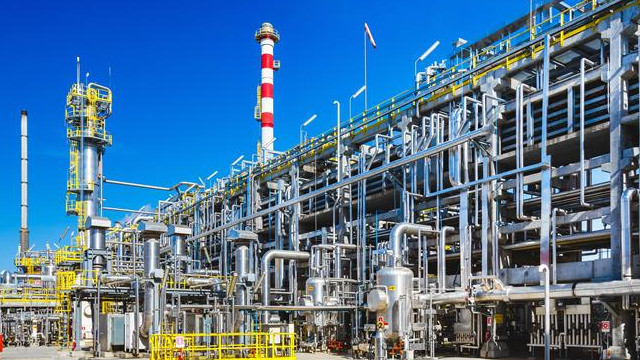
AI Infrastructure: Williams Is Beating Kinder Morgan In The Race To Power Data Centers
Seeking Alpha· 2025-09-24 11:05
Group 1 - Samuel Smith has extensive experience as a lead analyst and Vice President at various dividend stock research firms, and he also runs a dividend investing YouTube channel [1] - Samuel holds a B.S. in Civil Engineering & Mathematics from the United States Military Academy and a Master's in Engineering from Texas A&M, focusing on applied mathematics and machine learning [1] - Samuel leads the High Yield Investor investing group, collaborating with Jussi Askola and Paul R. Drake to balance safety, growth, yield, and value [2] Group 2 - High Yield Investor offers real-money core, retirement, and international portfolios, along with regular trade alerts and educational content [2] - The service includes an active chat room for like-minded investors, fostering community engagement and knowledge sharing [2]

West Texas Gas Falls to 14-Month Low as Negative Prices Persist
Insurance Journal· 2025-09-18 15:51
Core Insights - Natural gas cash prices in West Texas have fallen to their lowest level in nearly 14 months, driven by expectations of pipeline maintenance that will limit fuel movement [1] - The Waha hub in the Permian region experienced negative prices, recovering slightly from a multi-month low, with prices dropping to around negative $3.03 per million British thermal units, the lowest since November 2024 [2] - Increased production in the Permian region, coupled with insufficient pipeline capacity, has left gas drillers vulnerable to market fluctuations [3] Industry Dynamics - US liquefied natural gas exports have reached record highs, but pipeline outages create bottlenecks that can lead to oversupply in the region [4] - The decline in prices in West Texas is attributed to lower seasonal demand and strong production, resulting in producers effectively paying buyers to take gas off their hands [5]
Kinder Morgan (KMI) Ascends While Market Falls: Some Facts to Note
ZACKS· 2025-09-17 22:50
Company Performance - Kinder Morgan (KMI) shares increased by 1.32% to $27.57, outperforming the S&P 500's 0.1% loss on the same day [1] - Over the past month, KMI's shares appreciated by 3.07%, underperforming the Oils-Energy sector's gain of 3.89% but outperforming the S&P 500's gain of 2.57% [1] Upcoming Earnings - KMI is expected to report an EPS of $0.29, reflecting a 16% growth year-over-year [2] - Revenue is anticipated to be $4.17 billion, indicating a 12.66% increase compared to the same quarter last year [2] Full-Year Estimates - Zacks Consensus Estimates project KMI's earnings at $1.27 per share and revenue at $17.03 billion, representing year-over-year changes of +10.43% and +12.78%, respectively [3] - Recent changes in analyst estimates for KMI are important as they reflect short-term business trends, with positive revisions indicating a favorable business outlook [3] Valuation Metrics - KMI has a Forward P/E ratio of 21.48, which is higher than the industry average of 16.73, suggesting that KMI is trading at a premium [6] - The company has a PEG ratio of 3.19, which aligns with the industry average for the Oil and Gas - Production and Pipelines sector [7] Industry Ranking - The Oil and Gas - Production and Pipelines industry, part of the Oils-Energy sector, holds a Zacks Industry Rank of 103, placing it in the top 42% of over 250 industries [8] - Research indicates that the top 50% rated industries outperform the bottom half by a factor of 2 to 1 [8]
Kinder Morgan (KMI) Shares Cross Below 200 DMA
Nasdaq· 2025-09-15 20:41
Core Viewpoint - Kinder Morgan Inc. shares have crossed below their 200-day moving average, indicating a potential bearish trend in the stock's performance [1][2]. Price Performance - On Monday, Kinder Morgan Inc. shares traded as low as $18.03, down approximately 1.6% for the day [1]. - The 52-week range for KMI shares is between a low of $15.775 and a high of $20.20, with the last trade recorded at $18.06 [3]. Technical Analysis - The 200-day moving average for Kinder Morgan Inc. is $18.16, which the shares have recently fallen below [1][2]. - The data regarding KMI's moving average was sourced from TechnicalAnalysisChannel.com [3].

Kinder Morgan, Inc. (KMI) Presents At Barclays 39th Annual CEO Energy-Power Conference 2025 Transcript
Seeking Alpha· 2025-09-03 16:51
Core Viewpoint - The company has increased its natural gas demand forecast, projecting a growth of 28 billion cubic feet (Bcf) per day from 2025 to 2030, up from a previous estimate of 20 Bcf per day [1]. Summary by Relevant Sections - **Natural Gas Demand Growth** The company has revised its natural gas demand forecast upward, now estimating an increase of 28 Bcf per day over the next five years, compared to the earlier forecast of 20 Bcf per day [1]. Historically, the company relied on WoodMac for demand forecasts but has started publishing its own due to diverging projections [1]. WoodMac's current forecast stands at 22 Bcf per day, indicating a significant difference from the company's new estimate [1].

Kinder Morgan(KMI) - 2025 FY - Earnings Call Transcript
2025-09-03 15:22
Financial Data and Key Metrics Changes - Kinder Morgan has increased its natural gas demand forecast from 20 Bcf per day to 28 Bcf per day for the period between 2025 and 2030, indicating a significant upward revision in expectations for natural gas infrastructure demand growth [3][5][10] - The company’s backlog has grown from $3 billion to $9.3 billion, reflecting a substantial increase in project opportunities [26] Business Line Data and Key Metrics Changes - Kinder Morgan's natural gas segment constitutes 65% of its portfolio, with refined products making up 26% and CO2 energy transition accounting for 9% [36] - The company expects to transport 11 Bcf per day of LNG feed gas by 2027, supported by ongoing investments in gathering and processing capacity in the Haynesville region [15][17] Market Data and Key Metrics Changes - The demand for LNG is projected to grow significantly, with Kinder Morgan estimating a potential increase to 19 Bcf per day in LNG demand by the fourth quarter [17] - The company anticipates that the power sector will see increased demand due to factors such as data center growth and population migration, which will further drive natural gas infrastructure needs [6][10] Company Strategy and Development Direction - Kinder Morgan is focusing on expanding its natural gas infrastructure to meet the growing demand for LNG and power generation, with strategic projects like Trident and Texas Access aimed at enhancing capacity [12][20] - The company is committed to maintaining a balance between growth and financial stability, with a target debt to EBITDA ratio of 3.5 to 4.5 times [54][56] Management's Comments on Operating Environment and Future Outlook - Management expressed optimism about the current environment for natural gas infrastructure, citing it as the best opportunity set seen in their career [10] - The administration's support for LNG export growth is seen as a positive driver for future demand, with expectations of exceeding current growth forecasts [6][10] Other Important Information - Kinder Morgan's CO2 segment is expected to benefit from recent tax incentives for EOR activities, although challenges remain in the RNG business due to fluctuating prices [47][52] - The company maintains a flexible capital allocation strategy, with plans to grow dividends modestly while pursuing expansion opportunities [56] Q&A Session Summary Question: What is Kinder Morgan's outlook for natural gas demand? - Kinder Morgan has increased its forecast for natural gas demand growth to 28 Bcf per day, driven by LNG export growth and power generation needs [3][5] Question: How does the Trident project fit into Kinder Morgan's strategy? - The Trident project is crucial for moving gas to LNG facilities and is backed by significant LNG demand, with potential for future expansions [12][14] Question: What are the competitive advantages in the power generation sector? - Kinder Morgan's extensive natural gas system and long-term operational focus provide a competitive edge in securing power generation projects [24][25] Question: How does Kinder Morgan manage commodity price exposure? - Approximately 64% of Kinder Morgan's EBITDA comes from take-or-pay contracts, minimizing the impact of commodity price fluctuations [43][44] Question: What are Kinder Morgan's capital allocation priorities? - The company plans to maintain a run rate CapEx of $2.5 billion, funded by internally generated cash flow, while balancing growth and shareholder returns [53][56]
Kinder Morgan(KMI) - 2025 FY - Earnings Call Transcript
2025-09-03 15:20
Financial Data and Key Metrics Changes - Kinder Morgan has increased its natural gas demand forecast from 20 Bcf per day to 28 Bcf per day growth between 2025 and 2030, indicating a significant upward revision in expectations [2][4] - The company projects LNG export growth to contribute 20 Bcf per day to this demand, which is higher than Wood Mackenzie's forecast of 15 Bcf per day [4] Business Line Data and Key Metrics Changes - Kinder Morgan's natural gas segment constitutes 65% of its portfolio, with refined products at 26% and CO2 energy transition at 9%, reflecting a strong focus on natural gas infrastructure [33] - The company expects to transport 11 Bcf per day of LNG feed gas by 2027, supported by ongoing project authorizations [14] Market Data and Key Metrics Changes - The demand for natural gas is expected to grow significantly due to factors such as population migration and the establishment of new industries, including data centers and manufacturing plants [6][8] - Projections indicate that LNG demand will reach 19 Bcf per day in the fourth quarter, highlighting a robust market outlook [16] Company Strategy and Development Direction - Kinder Morgan is focusing on expanding its natural gas infrastructure, particularly through projects like Trident, which is designed to meet increasing LNG feed gas demand [11][12] - The company has a backlog of projects valued at $9.3 billion, with approximately 50% associated with power generation, indicating a strategic emphasis on this area [24] Management's Comments on Operating Environment and Future Outlook - Management expressed confidence in the current opportunity set for natural gas infrastructure, describing it as the best seen in their career [9] - The administration's support for LNG exports is seen as a positive driver for demand growth, with expectations of continued strength in the natural gas market [5][48] Other Important Information - Kinder Morgan's CO2 segment is expected to benefit from new tax incentives for enhanced oil recovery (EOR) activities, although challenges remain in the renewable natural gas (RNG) sector [43][48] - The company maintains a debt to EBITDA ratio of 3.9 times, within its target range, allowing for flexibility in capital allocation for future projects [51] Q&A Session Summary Question: What is Kinder Morgan's outlook on LNG feed gas and market share? - Kinder Morgan has a significant gathering and processing position in the Haynesville and expects to grow by about 10 Bcf per day to meet demand forecasts [15] Question: How does Kinder Morgan view its capital allocation priorities? - The company plans to maintain a capital expenditure run rate of approximately $2.5 billion, funded by internally generated cash flow, while balancing growth and shareholder returns [49][50]
Wall Street Bulls Look Optimistic About Kinder Morgan (KMI): Should You Buy?
ZACKS· 2025-09-02 14:30
Core Viewpoint - The article discusses the reliability of brokerage recommendations, particularly focusing on Kinder Morgan (KMI), and emphasizes the importance of using these recommendations in conjunction with other research tools like the Zacks Rank [1][5][10]. Brokerage Recommendations for Kinder Morgan - Kinder Morgan has an average brokerage recommendation (ABR) of 1.95, indicating a consensus between Strong Buy and Buy, based on recommendations from 20 brokerage firms [2]. - Out of the 20 recommendations, 10 are classified as Strong Buy and 1 as Buy, representing 50% and 5% of the total recommendations respectively [2]. Limitations of Brokerage Recommendations - The article highlights that relying solely on brokerage recommendations may not be wise, as studies show limited success in guiding investors to stocks with the best price increase potential [5]. - Brokerage firms often exhibit a positive bias in their ratings due to vested interests, leading to a disproportionate number of favorable ratings compared to negative ones [6][10]. Comparison with Zacks Rank - The Zacks Rank is presented as a more reliable indicator of a stock's near-term price performance, based on earnings estimate revisions rather than brokerage recommendations [8][11]. - Unlike the ABR, which is based solely on brokerage recommendations, the Zacks Rank is a quantitative model that reflects timely changes in earnings estimates [9][12]. Current Earnings Estimates for Kinder Morgan - The Zacks Consensus Estimate for Kinder Morgan's earnings for the current year remains unchanged at $1.27, suggesting stability in analysts' views regarding the company's earnings prospects [13]. - The Zacks Rank for Kinder Morgan is currently 3 (Hold), indicating a cautious approach despite the Buy-equivalent ABR [14].
3 Midstream Stocks That Can Sail Through Energy Volatility
ZACKS· 2025-08-15 14:41
Core Insights - The pandemic initially caused significant uncertainties, leading to a historic drop in crude oil prices, which fell to negative $36.98 per barrel on April 20, 2020, but prices rebounded to $123.64 per barrel by March 8, 2022, due to vaccine rollouts and economic recovery [2]. Midstream Business Resilience - Midstream energy companies like Kinder Morgan, MPLX, and The Williams Companies are less vulnerable to commodity price volatility compared to oil and gas producers, as they generate stable fee-based revenues from long-term contracts [3][4]. - The midstream business model is characterized by lower risk exposure to oil and gas prices and volume fluctuations, making it more resilient during price volatility [4]. Company-Specific Insights - **Kinder Morgan (KMI)**: Operates a vast network of 79,000 miles of oil and gas pipelines, primarily earning revenue from take-or-pay contracts, which provide stable cash flows [5][8]. - **MPLX**: Focuses on transporting crude oil and refined products, securing stable cash flows through long-term contracts with shippers [6][8]. - **The Williams Companies (WMB)**: Engages in transporting, storing, gathering, and processing natural gas and natural gas liquids, well-positioned to meet the growing demand for clean energy [6][7].