
NXP

Search documents
NXP Semiconductors N.V. (NXPI) JPMorgan 53rd Annual Global Technology, Media and Communications Conference (Transcript)
Seeking Alpha· 2025-05-13 16:31
Core Insights - NXP Semiconductors is undergoing a leadership transition as Kurt Sievers announces his retirement, with Rafael Sotomayor set to assume the CEO role in late October [2][3] - The company has experienced significant transformation over the past 30 years, particularly under Sievers' leadership during the last five years as CEO [3][4] - NXP was originally a division of Philips Electronics, became private in 2006, and went public in 2010, marking a notable evolution in its corporate structure [4] Company Overview - Kurt Sievers has been with NXP for 30 years, reflecting on the company's journey from a division of Philips to its current status [4] - The company has been recognized for its positive transformation and growth trajectory during Sievers' tenure [3][4] - The leadership team includes key figures such as Rafael Sotomayor, who has been with NXP for 10 years, and Bill Betts, the CFO [2][3]



NXP Semiconductors (NXPI) FY Conference Transcript
2025-05-13 13:50
Summary of NXP Semiconductors (NXPI) FY Conference Call Company Overview - **Company**: NXP Semiconductors (NXPI) - **Event**: FY Conference Call on May 13, 2025 - **Key Speakers**: Kurt Sievers (CEO), Rafael Sotomayor (President), Bill Betz (CFO), Jeff Palmer (SVP of Investor Relations) [2][3] Core Points and Arguments Company Transformation and Leadership Transition - Kurt Sievers reflected on his 30-year career, noting that since the IPO in 2010, NXP has tripled its revenue and more than doubled its operating margin, now solidly above 30% [5] - The company has focused on financial discipline and strategic portfolio management, particularly in edge computing for automotive and industrial sectors [6] - Rafael Sotomayor will succeed Kurt Sievers as CEO in October 2025, with a seamless transition planned [9] Market Recovery and Demand Trends - NXP is experiencing early signs of cyclical recovery after a downturn that began in 2022, with increased orders and a higher backlog from distribution customers [14][15] - The company is cautious about interpreting demand increases as purely cyclical, noting uncertainties related to tariffs and inventory management [19][23] Tariff and Manufacturing Strategy - Current tariffs have not materially impacted NXP's P&L, but there is uncertainty regarding their effects on customers [17][18] - NXP's hybrid manufacturing strategy focuses on consolidating 200mm fabs while expanding into 300mm manufacturing, which is expected to generate $4 billion in annual revenue and improve gross margins by 200 basis points [24][25] China Market Strategy - NXP's "China for China" strategy aims to increase local manufacturing and R&D investment in response to the growing importance of the Chinese market in automotive and industrial sectors [27][28] - Approximately 17-18% of NXP's total revenue is linked to China, with a third of that already manufactured locally [30][32] System-Level Solutions and Market Position - NXP is shifting towards providing system-level solutions in industrial and IoT markets, addressing the increasing complexity of customer needs [36][38] - The company has seen significant market share growth in emerging categories like battery energy storage and EV chargers, achieving up to 90% market share in some areas [40][41] Automotive Segment Insights - The automotive segment is projected to be flat year-over-year for the first half of 2025, with growth drivers such as software-defined vehicles and connectivity technologies continuing to gain traction [60][62] - NXP expects significant revenue impacts from its S32 software-defined vehicle platform by 2028, aided by the acquisition of TT Tech, which enhances its system solutions capabilities [67] Additional Important Content - NXP emphasizes the importance of edge AI solutions for industrial and automotive customers, driven by privacy and latency concerns [56][57] - The company is investing in developing its own machine learning processing units (MPUs) to maintain control over its technology and adapt to market shifts towards generative AI [52][54] This summary encapsulates the key points discussed during the NXP Semiconductors FY Conference Call, highlighting the company's strategic direction, market dynamics, and leadership transition.
NXP Unveils Third-Generation Imaging Radar Processors for Level 2+ to 4 Autonomous Driving
Globenewswire· 2025-05-08 07:00
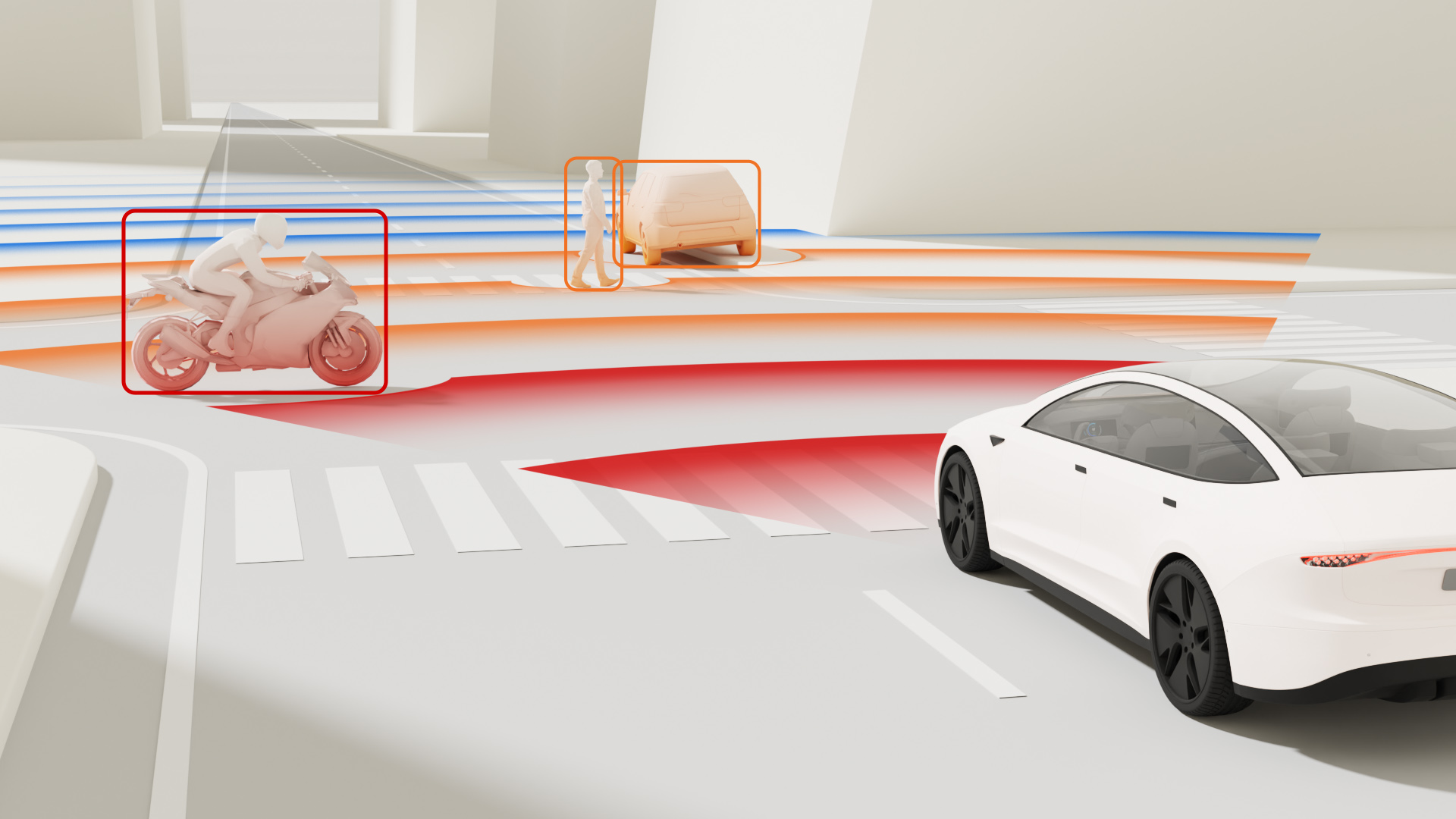
Core Insights - NXP Semiconductors has launched its new S32R47 imaging radar processors, which utilize 16 nm FinFET technology and offer up to twice the processing power compared to the previous generation [1][12][14] - The S32R47 family is designed to meet the requirements for Level 2+ to Level 4 autonomous driving, enhancing radar performance for advanced autonomy features [2][13] Product Features - The S32R47 can process three times more antenna channels in real-time than current production solutions, improving imaging radar resolution, sensitivity, and dynamic range [3][14] - It integrates a high-performance multi-core radar processing system, resulting in denser point cloud output and enhanced algorithms for next-generation Advanced Driver Assistance Systems (ADAS) [5][14] - The solution achieves comparable or better performance with up to 89% fewer antenna channels than alternative solutions, addressing integration challenges while reducing system cost, size, and power consumption [14] Market Context - By 2029, approximately 40% of vehicles on the road are expected to feature driving automation Level 2+ and Level 3, with a growing number of Level 4 vehicles, indicating a significant market opportunity for advanced radar technologies [2] - NXP's radar portfolio is already sampling to leading customers and is aimed at next-generation OEM platforms, showcasing its commitment to meeting the diverse needs of automotive manufacturers [7][14] Company Overview - NXP Semiconductors reported revenue of $12.61 billion in 2024 and operates in over 30 countries, positioning itself as a trusted partner in innovative solutions across various markets, including automotive [8]
NXP Announces Availability of Proxy Materials for the Annual General Meeting of Shareholders to Be Held on June 11, 2025
Globenewswire· 2025-05-02 20:10
Core Points - NXP Semiconductors N.V. will hold its annual meeting of shareholders on June 11, 2025, at 08:45 a.m. CET in Amsterdam, Netherlands [1] - The company has filed its definitive proxy statement and annual report with the U.S. Securities and Exchange Commission, and these materials will be available online [2] - Shareholders can request paper copies of the proxy materials by contacting the company directly [3] Company Overview - NXP Semiconductors N.V. is a trusted partner for innovative solutions in various markets, including automotive, industrial & IoT, mobile, and communications infrastructure [4] - The company reported revenue of $12.61 billion in 2024, indicating a strong financial performance [4] - NXP operates in more than 30 countries, emphasizing its global presence and market reach [4]
NXP(NXPI) - 2025 Q1 - Earnings Call Transcript
2025-04-29 17:09
Financial Data and Key Metrics Changes - Q1 revenue was $2,840 million, a decrease of 9% year on year, but slightly above the midpoint of guidance [6][20] - Non-GAAP operating margin for Q1 was 31.9%, down 260 basis points year on year, but 40 basis points above the midpoint of guidance [7][21] - Non-GAAP earnings per share for Q1 was $2.64, which was $0.05 better than the midpoint of guidance [19][20] - Total debt at the end of Q1 was $11,730 million, up $871 million sequentially [22] - Ending cash balance was $3,990 million, up $696 million sequentially [22] Business Line Data and Key Metrics Changes - Mobile and communication infrastructure markets performed slightly above expectations, while automotive and industrial IoT markets were slightly below expectations [6][7] - Automotive revenue is expected to be flat year on year in Q2, with low single-digit growth compared to Q1 [11] - Industrial and IoT is expected to decline in the mid-teens year on year but increase in the mid-single digits sequentially [11] - Communication infrastructure is expected to decline in the high 20% range year on year, remaining flat sequentially [12] Market Data and Key Metrics Changes - Distribution inventory was in line with guidance at nine weeks, below the long-term target of eleven weeks [7] - The automotive market is showing signs of stabilization, with a flat year-on-year performance expected in Q2 after five quarters of decline [38] - Positive trends include improving distribution customer backlog levels and stabilized order signals from direct customers [9][10] Company Strategy and Development Direction - The company announced the intention to acquire Kinara for $37 million, focusing on AI-powered edge-based systems [12][13] - The acquisition is expected to be accretive to the financial model by 2028 and will enhance the company's position in the industrial and IoT markets [15] - The company is focusing on managing controllable factors to drive profitability amid uncertain macroeconomic conditions influenced by tariffs [15][27] Management's Comments on Operating Environment and Future Outlook - Management expressed cautious optimism about navigating challenging market conditions, influenced by tariffs and uncertain demand [15][27] - The direct impact of current tariffs is considered immaterial, but the indirect impact remains uncertain [8][46] - Management emphasized the importance of maintaining inventory levels and avoiding pull-ins from customers to manage supply effectively [72] Other Important Information - The company plans to redeem a $500 million tranche of debt due in May from its current cash balance [26] - The transition of CEO leadership is planned for October, with Rafael being promoted to President [16][18] Q&A Session Summary Question: Impact of acquisitions on competition from China - Management indicated that acquisitions like Kinara, Aviva, and TT Tech are offensive strategies to differentiate in the automotive and industrial sectors [31][33] Question: Status of automotive inventory digestion - Management noted that the automotive sector is expected to be flat year on year in Q2, marking a turning point after five quarters of decline [38] Question: Company's perception in the context of tariffs - Management clarified that the direct impact of tariffs is immaterial, and the company is viewed as a European entity with a strong manufacturing presence in China [48][50] Question: Insights on the industrial sector - Management stated that the consumer IoT segment is performing better than the core industrial segment, with specific design wins contributing to growth [53] Question: Progress on the China for China strategy - Management reported that 30% of the revenue from the China for China business is currently sourced in China, with plans to increase this percentage [60][62] Question: Operating expenses and revenue targets - Management discussed ongoing restructuring to accommodate new acquisitions and maintain operating expenses at targeted levels [63][89] Question: Seasonal trends and Q3 expectations - Management refrained from providing specific guidance for Q3 due to uncertainties related to tariffs and customer behavior [92][93]
NXP(NXPI) - 2025 Q1 - Earnings Call Presentation
2025-04-29 15:16
Financial Performance & Strategy - NXP aims for high single-digit organic revenue growth, gross margin expansion above 60%, and returning 100% of excess free cash flow to owners[10] - NXP targets to double non-GAAP EPS by 2030+ through strategies like S32 SDV, intelligent edge systems, and hybrid manufacturing[11] - NXP's capital return policy focuses on returning all excess non-GAAP free cash flow to shareholders[89] - From 2018 to 2024, NXP's cumulative capital return was $19.5 billion, representing 109% of non-GAAP free cash flow, with a 25% compound annual growth rate (CAGR)[91] Market & Growth Drivers - The total semiconductor market is projected to reach $1.3 trillion, driven by macro trends like cloud AI and intelligent systems at the edge[16] - Automotive and Industrial sectors are expected to lead growth at the intelligent edge[17] - NXP anticipates revenue growth in the next 3 years (2024A-2027E) with core businesses growing at ~3% CAGR and accelerated growth areas at 15-25% CAGR, targeting ~$16.0 billion in revenue by 2027E[37] - Automotive revenue is projected to grow at 8-12% CAGR from 2024E to 2027E, reaching ~$9.5 billion, driven by megatrends like SDVs, xEVs, and ADAS[40, 43] - Industrial & IoT revenue is expected to grow at 8-12% CAGR from 2024 to 2027, reaching ~$3.1 billion, fueled by AI, low-power energy management, and automation[46, 49] Q1 2025 Results & Q2 2025 Guidance - NXP's Q1 2025 revenue was $2.835 billion, a 9% decrease quarter-over-quarter and year-over-year[76] - NXP projects Q2 2025 revenue between $2.8 billion and $3.0 billion, representing a -10% to -4% year-over-year change[102]
NXP(NXPI) - 2025 Q1 - Earnings Call Transcript
2025-04-29 12:00
Financial Data and Key Metrics Changes - NXP reported Q1 revenue of $2,840 million, a decrease of 9% year on year, but slightly above the midpoint of guidance [6][20] - Non-GAAP operating margin for Q1 was 31.9%, down 260 basis points year on year, but 40 basis points above the midpoint of guidance [7][21] - Non-GAAP earnings per share for Q1 was $2.64, which was $0.05 better than the midpoint of guidance [20] - Total debt at the end of Q1 was $11,730 million, up $871 million sequentially, while cash balance was $3,990 million, up $696 million sequentially [22] Business Line Data and Key Metrics Changes - Revenue trends in mobile and communication infrastructure markets were slightly above expectations, while automotive and industrial IoT markets were slightly below expectations [6][7] - Automotive revenue is expected to be flat year on year in Q2, while industrial and IoT is expected to decline in the mid-teens percentage range year on year [11][12] - Mobile is expected to decline in the mid-single digit percentage range on both a year-on-year and sequential basis [12] Market Data and Key Metrics Changes - Distribution inventory was in line with guidance at nine weeks, below the long-term target of eleven weeks [7] - The automotive market is showing signs of stabilization, with a flat year-on-year performance expected in Q2, marking the first time after five quarters of declines [38] Company Strategy and Development Direction - NXP announced the intention to acquire Kinara for $37 million, aiming to enhance its position in AI-powered edge-based systems [12][13] - The company is focusing on managing its direct control areas to drive profitability and earnings amidst uncertain macroeconomic conditions influenced by tariffs [15][27] - The upcoming CEO transition is not expected to change the long-term financial model and capital allocation strategy [27] Management's Comments on Operating Environment and Future Outlook - Management expressed cautious optimism about navigating through challenging market conditions, influenced by tariffs and uncertain demand [15][27] - The company is not seeing abnormal customer order pull-ins or push-outs related to tariffs, indicating a stable order environment [8][47] - Management highlighted the importance of customer engagement and the need for a clear understanding of customer plans amidst tariff uncertainties [48] Other Important Information - NXP's cash conversion cycle was 141 days, with cash flow from operations at $565 million and non-GAAP free cash flow at $427 million [23] - The company repurchased $3 million of its shares and paid $258 million in cash dividends during Q1 [22] Q&A Session Summary Question: How do recent acquisitions relate to competition from China in the MCU world? - Management indicated that the acquisitions are primarily offensive to differentiate NXP's offerings in the automotive and industrial sectors, while also addressing competition from China [31][35] Question: What is the current status of automotive inventory digestion? - Management noted that the automotive market is stabilizing, with flat year-on-year performance expected in Q2, and some Tier 1 customers are still digesting excess inventory [38][39] Question: How is NXP viewed by customers and governments regarding tariffs? - Management clarified that NXP is seen as a European company with a strong local manufacturing network in China, which positions it favorably amidst tariff uncertainties [48][50] Question: What is the outlook for the industrial business? - Management stated that the industrial IoT segment is performing well, particularly in China, but cautioned that NXP's performance may not be indicative of the broader industry [53] Question: Can you elaborate on the China for China strategy? - Management explained that the strategy includes a focus on local manufacturing and product development tailored for Chinese customers, with 30% of China revenue currently sourced domestically [60][62] Question: What are the expectations for operating expenses in the second half of the year? - Management indicated confidence in reaching the target of 23% operating expenses as a percentage of revenue in the second half, driven by restructuring efforts and acquisitions [63][65]
NXP (NXPI) Reports Q1 Earnings: What Key Metrics Have to Say
ZACKS· 2025-04-28 23:00
Core Insights - NXP Semiconductors reported a revenue of $2.84 billion for Q1 2025, reflecting a year-over-year decline of 9.3% and an EPS of $2.64, down from $3.24 a year ago [1] - The revenue exceeded the Zacks Consensus Estimate of $2.83 billion by 0.30%, while the EPS surpassed the consensus estimate of $2.59 by 1.93% [1] Revenue Breakdown - Automotive revenue was $1.67 billion, slightly below the average estimate of $1.69 billion, marking a year-over-year decline of 7.2% [4] - Communications Infrastructure & Other revenue reached $315 million, exceeding the average estimate of $302.16 million, but showing a significant year-over-year decline of 21.1% [4] - Industrial & IoT revenue was $508 million, slightly below the average estimate of $512.51 million, with a year-over-year decline of 11.5% [4] - Mobile revenue was $338 million, surpassing the average estimate of $325.45 million, but still reflecting a year-over-year decline of 3.2% [4] Stock Performance - NXP shares have returned +1.9% over the past month, contrasting with a -4.3% change in the Zacks S&P 500 composite [3] - The stock currently holds a Zacks Rank 2 (Buy), indicating potential for outperformance in the near term [3]

NXP Semiconductors (NXPI) Q1 Earnings and Revenues Top Estimates
ZACKS· 2025-04-28 22:31
Group 1: Earnings Performance - NXP Semiconductors reported quarterly earnings of $2.64 per share, exceeding the Zacks Consensus Estimate of $2.59 per share, but down from $3.24 per share a year ago, representing an earnings surprise of 1.93% [1] - The company posted revenues of $2.84 billion for the quarter ended March 2025, surpassing the Zacks Consensus Estimate by 0.30%, compared to $3.13 billion in revenues a year ago [2] - Over the last four quarters, NXP has surpassed consensus EPS estimates three times and topped consensus revenue estimates three times [2] Group 2: Stock Performance and Outlook - NXP shares have declined approximately 6.9% since the beginning of the year, while the S&P 500 has seen a decline of 6.1% [3] - The company's earnings outlook is crucial for investors, as it includes current consensus earnings expectations for upcoming quarters and any recent changes to these expectations [4] - The current consensus EPS estimate for the upcoming quarter is $2.67 on revenues of $2.86 billion, and for the current fiscal year, it is $11.64 on revenues of $11.93 billion [7] Group 3: Industry Context - The Semiconductor - Analog and Mixed industry, to which NXP belongs, is currently ranked in the top 29% of over 250 Zacks industries, indicating a favorable outlook [8] - Empirical research shows a strong correlation between near-term stock movements and trends in earnings estimate revisions, suggesting that tracking these revisions can be beneficial for investors [5] - The favorable estimate revisions trend for NXP has resulted in a Zacks Rank 2 (Buy) for the stock, indicating expectations of outperforming the market in the near future [6]

NXP(NXPI) - 2025 Q1 - Quarterly Results
2025-04-28 20:16
Financial Performance - NXP reported Q1 2025 revenue of $2.84 billion, down 9% year-on-year, aligning with the midpoint of guidance[2][5]. - NXP Semiconductors reported revenue of $2.835 billion for the three months ended March 30, 2025, a decrease of 8.8% compared to $3.111 billion in the previous quarter and a decrease of 9.3% from $3.126 billion in the same quarter last year[22]. - The automotive segment generated $1.67 billion in revenue, down 7% year-on-year[7]. - Non-GAAP diluted EPS for Q1 2025 was $2.64, a decrease of 19% compared to Q1 2024[5][6]. - NXP reported a net income of $497 million for the three months ended March 30, 2025, a decrease of 29% compared to $705 million for the same period in 2024[24]. - The company reported a GAAP net income of $497 million for the three months ended March 30, 2025, compared to $505 million in the previous quarter and $644 million in the same quarter last year[30]. - Non-GAAP net income attributable to stockholders was $673 million, compared to $817 million in the same quarter last year, reflecting a decline of 17.6%[25]. - NXP's diluted GAAP net income per share was $1.92, down from $2.47 in the same quarter last year[26]. Margins and Profitability - GAAP gross margin was 55.0%, while non-GAAP gross margin was 56.1%[5][6]. - Gross profit for the same period was $1.560 billion, resulting in a gross margin of approximately 55.1%, down from 54% in the previous quarter and 57% in the same quarter last year[22]. - Operating income for the quarter was $723 million, reflecting an operating margin of 25.5%, compared to $675 million and 21.7% in the previous quarter[22]. - The company reported a non-GAAP operating income of $904 million, with a non-GAAP operating margin of 31.9%[25]. - The adjusted EBITDA (Non-GAAP) for the latest quarter was $1,073 million, down from $1,240 million in the previous quarter and $1,252 million a year ago[30]. - The trailing twelve-month adjusted EBITDA (Non-GAAP) totaled $4,885 million, a decrease from $5,064 million in the previous period and $5,395 million a year ago[30]. Cash Flow and Capital Management - Cash flow from operations was $565 million, resulting in non-GAAP free cash flow of $427 million, with capital return of $561 million[5][8]. - Non-GAAP free cash flow for the three months ended March 30, 2025, was $427 million, an increase from $292 million in the previous quarter but a decrease from $627 million in the same quarter last year[31]. - The trailing twelve-month non-GAAP free cash flow was $1,889 million, down from $2,089 million in the previous period and $2,933 million a year ago[31]. - The company's non-GAAP free cash flow as a percentage of revenue was 15% for the latest quarter, down from 17% in the previous quarter and 22% a year ago[31]. - Net cash provided by operating activities was $565 million for the latest quarter, compared to $391 million in the previous quarter and $851 million a year ago[31]. Assets and Liabilities - Total current assets increased to $8.025 billion as of March 30, 2025, up from $7.305 billion at the end of the previous quarter[23]. - Cash and cash equivalents rose to $3.988 billion, compared to $3.292 billion at the end of the previous quarter[23]. - Total liabilities increased to $15.503 billion, up from $14.854 billion at the end of the previous quarter[23]. - NXP's total equity stood at $9.677 billion, an increase from $9.531 billion at the end of the previous quarter[23]. Strategic Initiatives - NXP announced the acquisition of Kinara Inc. for $307 million to enhance edge intelligence solutions[8]. - The company secured a €1 billion loan from the European Investment Bank to support R&D investments[8]. - NXP introduced the S32K5 family of automotive microcontrollers, the first 16nm FinFET MCU with embedded MRAM[8]. - The company plans to execute additional share repurchases totaling $90 million post-Q1 2025[5]. Future Outlook and Risks - NXP's guidance for Q2 2025 projects total revenue between $2.8 billion and $3.0 billion, reflecting a year-on-year decline of 4% to 10%[10][12]. - NXP's forward-looking statements highlight potential risks including market demand fluctuations and supply chain disruptions due to geopolitical tensions[20]. Conference Call - The company plans to host a conference call on April 29, 2025, to discuss the first quarter 2025 results in detail[17].