
Vanguard

Search documents
IYR: Sell Your REIT ETFs
Seeking Alpha· 2025-11-21 17:50
Core Insights - The article discusses the launch and evolution of the 420 Investor service, which focuses on cannabis stocks and has transitioned to Seeking Alpha in 2023 [1] - Alan Brochstein, a prominent figure in cannabis investment, has been involved in the industry since 2013 and provides extensive coverage of cannabis stocks through various formats [1] Group 1: Company Overview - 420 Investor was established in 2013, coinciding with Colorado's legalization of cannabis for adult use [1] - The service includes model portfolios, videos, and written materials aimed at educating investors about cannabis stocks [1] - Alan Brochstein is the managing partner of New Cannabis Ventures, which has been providing financial information in the cannabis sector since 2015 [1] Group 2: Investment Features - The investing group closely monitors 20 cannabis stocks, providing timely investment news, earnings report previews, and post-report analyses [1] - Additional features of the group include a model portfolio, 10 weekly videos with chart analysis, three weekly summary pieces, a monthly newsletter, and a chat function for investor inquiries [1] Group 3: Market Context - The article mentions several large REIT ETFs that are tracked, including the iShares U.S. Real Estate ETF (IYR), Real Estate Select Sector SPDR® Fund ETF (XLRE), and Vanguard Real Estate [1]


3 Dividend ETFs to Buy and Hold Through 2030
247Wallst· 2025-11-21 16:53
Core Insights - The article suggests that for long-term investment in dividend ETFs, iShares Select Dividend ETF, Amplify CWP Enhanced Dividend Income ETF, and Vanguard Dividend Appreciation Index Fund ETF are recommended options [1] Group 1 - iShares Select Dividend ETF (NASDAQ:DVY) is highlighted as a strong choice for investors seeking reliable dividend income [1] - Amplify CWP Enhanced Dividend Income ETF (NYSEARCA:DIVO) is mentioned as another viable option for long-term dividend investment [1] - Vanguard Dividend Appreciation Index Fund ETF (NYSEARCA:VIG) is also recommended for those looking to invest in dividend-paying ETFs [1]

December Rate Cut Back On The Radar As Fed Officials Signal Dovish Tilt - Invesco QQQ Trust, Series 1 (NASDAQ:QQQ), ETF (ARCA:VOO)
Benzinga· 2025-11-21 15:49
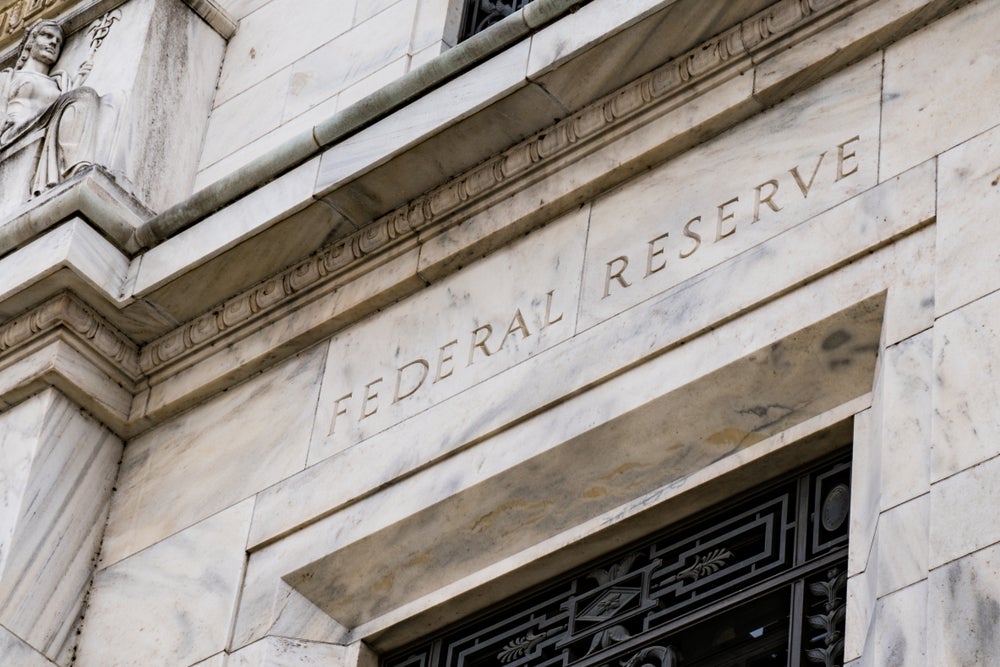
Core Viewpoint - The Federal Reserve has shifted to a more dovish stance on monetary policy, leading to increased expectations for a rate cut in December, with a 74% chance of a 25-basis-point reduction as per the CME FedWatch tool, up from 25% the previous day [1]. Group 1: Federal Reserve Officials' Comments - New York Fed President John Williams and Governor Stephen Miran have downplayed inflation concerns and highlighted a weakening labor market, suggesting that recent inflationary fears may be overstated [2]. - Williams noted that the risks to employment have increased due to a cooling labor market, while the risks of inflation have lessened, indicating potential for further adjustments to the federal funds rate [3]. - Miran expressed strong support for a 25-basis-point cut in December, citing recent job data as evidence for the need for a reduction and suggesting that much of the inflation data is outdated [5]. Group 2: Market Reactions - Following the dovish comments from Fed officials, Wall Street experienced a slight recovery, with the S&P 500 up 0.2% after a previous decline of 1.6% [6]. - The Nasdaq 100 showed signs of stabilization after a 2.2% drop, while bond and currency markets reacted modestly, with the U.S. dollar slightly lower and Treasury yields declining [7].
3 Vanguard ETFs Every Investor Should Consider
The Motley Fool· 2025-11-21 09:30
Core Insights - The article emphasizes the effectiveness of low-cost exchange-traded funds (ETFs) for long-term wealth creation through broad diversification and compounding returns over time [1][12] Vanguard's Position - Vanguard is recognized as a pioneer in index fund investing and maintains a cost leadership position in ETF management, benefiting from scale advantages and a unique ownership structure that incentivizes minimizing expenses [2] Vanguard S&P 500 ETF (VOO) - The Vanguard S&P 500 ETF tracks the S&P 500 index, providing exposure to approximately 500 large U.S. companies with a low expense ratio of 0.03%, resulting in minimal annual fees for investors [3][5] - The fund has delivered average annual returns of about 14.5% over the past decade, making it a recommended core holding for long-term portfolios [3][5] Vanguard Growth ETF (VUG) - The Vanguard Growth ETF focuses on large-cap growth companies, charging an annual expense of 0.04% and yielding approximately 0.4% in dividends, with average annual returns of around 17.4% over the past 10 years [6][8] - This fund is suitable for investors comfortable with growth stock volatility, primarily investing in technology and consumer discretionary sectors [8] Vanguard Information Technology ETF (VGT) - The Vanguard Information Technology ETF provides concentrated exposure to U.S. technology companies, charging an annual fee of 0.09% and yielding roughly 0.4%, with average annual returns of approximately 23% over the past decade [9][11] - The fund's focus on technology creates both opportunities and risks, as it can significantly outperform during tech market rallies but may also amplify losses during corrections [11] Portfolio Construction - Combining these three Vanguard funds allows for diversified exposure to different market segments while maintaining low costs, with the S&P 500 fund offering broad market participation, the growth fund focusing on reinvestment, and the technology fund providing sector-specific access [12][13]

VBR: $58B Small-Cap Value ETF Delivering Above Average Returns
Seeking Alpha· 2025-11-21 03:15
Core Insights - The Vanguard Small-Cap Value ETF (VBR) has attracted over $58 billion in assets under management and has delivered above-average returns over the last five and ten years, making it a solid investment option for investors seeking low-cost and well-diversified choices [1] Group 1 - The Sunday Investor focuses exclusively on U.S. Equity ETFs and has a strong analytical background, holding a Certificate of Advanced Investment Advice from the Canadian Securities Institute [1] - The Sunday Investor has developed a proprietary ETF Rankings system that evaluates nearly 1,000 ETFs based on various factors including costs, liquidity, risk, size, value, dividends, growth, quality, momentum, and sentiment, resulting in a composite score from 1-10 [1] - The Sunday Investor is actively engaged in the comments section of articles, encouraging interaction and feedback from readers [1]

Vanguard S&P 500 ETF Offers Lower Costs Than SPDR SPY -- But Should You Care?
The Motley Fool· 2025-11-21 01:00
Core Insights - Vanguard's VOO and SPDR's SPY are two of the largest index funds, both aiming to mirror the S&P 500 Index, with differences primarily in costs and yield rather than portfolio content or risk [1][2] Cost & Size Comparison - SPY has an expense ratio of 0.09% while VOO has a lower expense ratio of 0.03%, making VOO more affordable for long-term investors [3][4] - As of November 19, 2025, both funds have a 1-year return of 12.3% and a dividend yield of 1.1% [3] - SPY manages $683.1 billion in assets under management (AUM), while VOO has a significantly larger AUM of $1.5 trillion [3] Performance & Risk Metrics - Over a five-year period, SPY experienced a maximum drawdown of 24.5%, while VOO had a slightly higher drawdown of 25.5% [5] - Both funds grew an initial investment of $1,000 to $1,823 over five years, indicating identical performance in terms of growth [5] Portfolio Composition - VOO holds 505 stocks with sector allocations of 36% technology, 13% financial services, and 11% consumer cyclical, featuring top positions in NVIDIA, Apple, and Microsoft [6] - SPY closely mirrors VOO with 503 holdings and similar sector allocations, also including major positions in Netflix, NVIDIA, and Apple [7] Investment Considerations - The primary distinction for investors is the lower management fee of VOO compared to SPY, which has more than double the AUM [8][12] - Both funds are considered excellent long-term investments, with performance closely matching the underlying S&P 500 index [13]

Vanguard VGIT vs iShares IEI: Understanding the Stability Behind Each Strategy
Yahoo Finance· 2025-11-20 18:32
Core Insights - Both iShares 3-7 Year Treasury Bond ETF (IEI) and Vanguard Intermediate-Term Treasury ETF (VGIT) provide exposure to U.S. Treasury bonds with moderate interest rate risk, but they differ in cost, yield, and portfolio focus [2][7] Cost and Size Comparison - VGIT has a lower expense ratio of 0.03% compared to IEI's 0.15%, making it more affordable for investors [3] - As of October 31, 2025, VGIT offers a yield of 3.8%, while IEI provides a yield of 3.4% [3] Performance and Risk Analysis - Over the past five years, VGIT experienced a maximum drawdown of -15.52%, while IEI had a drawdown of -14.21% [4] - An investment of $1,000 would have grown to $861 in VGIT and $901 in IEI over the same period [4] Portfolio Composition - IEI focuses on U.S. Treasury bonds with maturities between three and seven years, holding 82 positions as of November 3, 2025 [5] - VGIT invests in U.S. Treasury bonds with maturities ranging from three to ten years, with 76 holdings and an ESG screen applied [6] Investment Strategy and Appeal - VGIT is positioned as a low-cost, broad option that captures more yield, appealing to investors seeking a dependable long-term bond anchor [8] - IEI offers a more contained level of rate sensitivity with a focus on a narrower maturity range, appealing to investors who prefer a precise bond holding [9][10]
2 Vanguard ETFs to Buy Before 2026
247Wallst· 2025-11-20 14:42
Core Insights - Vanguard is highlighted as one of the best exchange-traded fund (ETF) providers in the industry [1] Company Overview - Vanguard stands out among various ETF providers, indicating its strong position and reputation in the market [1]

Why it's easier now to help job-changing Americans hang on to their savings
Yahoo Finance· 2025-11-20 14:33
Tucked inside its quarterly report on the status of retirement savings accounts, Fidelity Investments mentioned its success to date with its automatic rollover service that employees can tap to transfer tiny retirement savings from one employer to the next. More than 9,200 Fidelity 401(k) plans have adopted auto portability, an automatic rollover service launched three years ago for employees transferring small retirement savings from one employer to another. That's up from roughly 6,000 plans a year ago. ...
'Tie yourself to the mast': Godfather of financial independence JL Collins tells Hasan Minhaj how to build wealth
Yahoo Finance· 2025-11-20 14:01
Core Insights - The article discusses the principles of the FIRE (Financial Independence, Retire Early) movement, emphasizing the importance of financial freedom and the concept of "f--k you money" as a means to achieve it [1][6]. Group 1: Financial Principles - The first rule of financial success is to spend less than one earns, which is often misconstrued as being cheap [2][6]. - The second rule is to invest surplus income in low-cost index funds, specifically recommending VTSAX by Vanguard for its reliability over time [8][10]. - The third rule is to avoid debt, including mortgages and car loans, to maximize investment potential [13][14]. Group 2: Investment Strategy - Collins highlights the importance of long-term investment strategies, noting that while high-growth stocks like FAANG have performed well, they come with unpredictability [9][10]. - Historical market crashes are normal and should be viewed as opportunities to buy at lower prices, as emphasized by Collins [11][12]. - The power of compounding returns is significant, with even conservative estimates yielding substantial wealth over time [10]. Group 3: Financial Education and Tools - The article suggests that beginners can benefit from money management tools and apps like Acorns, which facilitate automatic investing [16][17]. - Personalized financial advice can enhance investment returns, with reports indicating a 3% increase in net returns for those who work with financial advisors [21].