China

Search documents
Why Rare Earths Are so important in Trump's trade war with #china #politics
Bloomberg Television· 2025-06-20 18:47
Rare Earth Metals Market Concentration - 92% of the world's rare earth magnets come from China [1] - Rare earth metals are found in trace amounts in the earth's crust, a few parts per million [1] Supply Chain Dominance - China has built a complete and cost-effective supply chain for rare earth magnets, from mining to final product [2] - This makes it difficult for other countries to compete in the neodymium market [2] Key Metals - Neodymium is a key rare earth metal used in permanent magnets for wind turbines and electric car motors [1][2]


Iran Won't Close Strait of Hormuz, Schork Says
Bloomberg Television· 2025-06-20 14:04
LISA: THANK YOU SO MUCH. JOINING US IS STEPHEN SHORCK. HOW LONG DO YOU THINK THAT THEY WILL LAST.IT WILL DEPEND ON FURTHER ESCALATION AND HOW LONG THE HOSTILITIES. WE ARE LOOKING AT A SITUATION OF A WAIT AND SEE. THE MARKET HAS PRICED IN GREATER VOLATILITY.WHAT WE SAW BEFORE LAST THURSDAY WAS A MARKET SWITCHING INTO THE BRENT AND WTI BEGINNING IN 2026 HAD SWITCHED TO A MARKET WHERE PRICES FOR JANUARY WERE CHEAPER THAN FEBRUARY AND SO FORTH. THIS IS A CLASSIC FUNDAMENTAL TELLTALE THAT THE MARKET IS PRICING I ...

2025年全球经济展望报告–六月刊(英文)
Sou Hu Cai Jing· 2025-06-18 09:37
Global Economic Outlook - Global economic growth is expected to slow to 2.3% in 2025, the lowest rate since 2008, excluding global recession years [1][55] - Growth in advanced economies is projected to decline to 1.2%, with significant impacts from trade policies in the US and Eurozone [2][55] - Emerging market and developing economies (EMDEs) are forecasted to grow at 3.8%, with China at 4.5% and India at 6.3%, although many countries are underperforming relative to expectations [2][55] Trade and Inflation - Global trade growth is anticipated to drop to 1.8% in 2025, with commodity prices expected to decline by 10% [2][67] - Global inflation is projected at 2.9% in 2025, with core inflation remaining high due to persistent service price pressures [2][68] Regional Economic Prospects - East Asia and Pacific growth is expected to slow to 4.5%, with risks from trade tensions and geopolitical conflicts [4][56] - Europe and Central Asia are projected to grow at 2.4%, affected by tightening monetary policies and ongoing geopolitical risks [4][56] - Latin America and the Caribbean are forecasted to have the lowest growth among EMDE regions at 2.3%, hindered by high trade barriers [5][56] - The Middle East and North Africa are expected to grow at 2.7%, with oil-exporting countries mitigating price drops through increased production [6][56] - South Asia is projected to grow at 5.8%, driven by India, while facing challenges from political and economic issues in neighboring countries [6][56] - Sub-Saharan Africa is expected to grow at 3.7%, with Nigeria and South Africa showing weak growth due to reliance on commodity exports [7][56] Risks and Policy Recommendations - Major risks include escalating trade barriers, tightening global financial conditions, geopolitical conflicts, and extreme weather events [8][54] - Policy recommendations emphasize global cooperation to rebuild trade relations, restore fiscal order, and accelerate job creation [9][10][11]

Ray Dalio on Why the U.S. Must Restructure Global Trade Deals
Principles by Ray Dalio· 2025-06-17 18:34
Trade Restructuring - Trade restructuring with major powers like the EU and China, and smaller ones like Vietnam, is necessary [1] - Trade imbalances contribute to debt and are unsustainable [2] - Trade restructuring could contribute to tax revenues [2] Economic Security - Dependence on imports, particularly from China, poses a security risk [2] - Increased self-sufficiency is essential in the current global landscape [2]
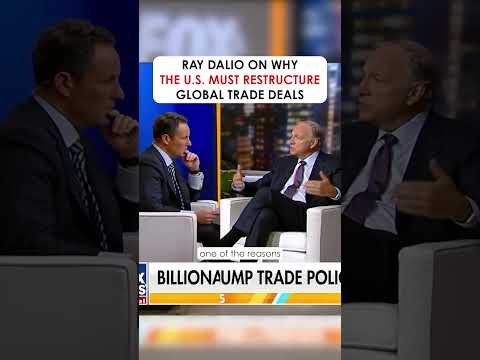
Oil Markets: China Demand to Peak Earlier Than Expected, IEA Says
Bloomberg Television· 2025-06-17 09:37
The latest forecasts from the IEA this morning. What are they saying, particularly about China, the demand from the world's second largest economy. Yeah, they're bringing forward their estimate for when they think Chinese crude oil demand is going to peak.So they're saying oil demand peaking in China in about 2027. So that's earlier. And then in general, 2030, global crude oil demand peaking.And this has been a discussion in the oil market going back and forth because you'll have countries like those in OPE ...
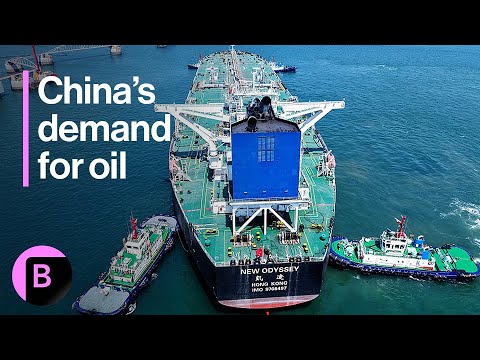
Fmr. U.S. Ambassador Nicholas Burns on the role China is playing in conflict between Israel and Iran
CNBC Television· 2025-06-16 20:56
Well, let's talk more trade and rising geopolitical tensions. Joining me now is Ambassador Nicholas Burns, former US Ambassador to China. He's currently co-chair of the Aspen Strategy Group and a professor at the Harvard Kennedy School.Ambassador, thanks for joining me. So, we just heard from Megan Cassal. The president is not seeking deescalation between Israel and Iran.At the same time, the US seems to be getting a lot of its goals addressed through some unusually aggressive means in Iran right now. What' ...

None of Iran’s four neighbors wants it to have nuclear weapons, says China Beige Book's Qazi
CNBC Television· 2025-06-16 11:48
All right, joining us right now to talk more about Israel and Iran, specifically the impact for China and the energy markets, is Shazad Kazzy, the COO of the China Beige Book. And Shazad, this is a little different than what we usually bring you on to talk about. Geopolitics obviously flaring up in a big way.You're here to tell us what that means for for China, the other big superpower in the world. Yeah, I think the the key thing for China is first of all, they've already come out and said that they are op ...
Gundlach says India is a long term investment opportunity
Bloomberg Television· 2025-06-14 05:30
Investment Strategy - Long-term investment themes are recommended during uncertain periods [2] - Investing in India is suggested due to its similar profile to China 35 years ago, highlighting potential for significant growth [2] - The recommendation is to invest and hold for the long term, potentially for future generations, to avoid selling during market downturns [3] India's Potential - India possesses a similar demographic outlook to China, including a large population and growing labor force [2] - India faces challenges such as a gummed-up legal system and corruption, but these are considered fixable [2] - India benefits from the potential relocation of supply chains and manufacturing [2] Global Economic Perspective - The report questions whether the economic issues are specific to the United States or a global problem [1] - The possibility of mitigating risk by investing in regions like Europe or Japan is raised, suggesting limited protection [1]

RBC's Helima Croft talks state of crude oil markets amid escalating Middle East conflicts
CNBC Television· 2025-06-13 21:08
Geopolitical Risk & Oil Supply - Approximately one-fifth (20%) of global oil consumption passes through the Strait of Hormuz, making it a critical choke point [2] - Historically, disruptions to maritime traffic in the Strait of Hormuz have occurred, including attacks on tankers during the Iran-Iraq war [3][4] - Escalating conflict could lead to disruptions in traffic, potentially causing insurance costs for tankers to spike [7] - Iran may disrupt energy supplies to internationalize the cost of the conflict, potentially targeting energy facilities [9] China's Role - About one-third of the oil passing through the Strait of Hormuz is now going to China, marking a shift in global oil flows [6] - China's reliance on Iranian oil, especially for teapot refineries, raises questions about Iran's response to the conflict [7] - China is incentivized to de-risk the situation, but its influence over Iran is uncertain [10] Potential for Regional Instability - Iranian-backed militias in Iraq pose a risk to Iraqi oil infrastructure, particularly near Basra, where Iraq produces approximately 44 million barrels a day (44%) [11][12] - Proxies like the Houthis, retaining ballistic missile capabilities, could initiate cross-border attacks [13]
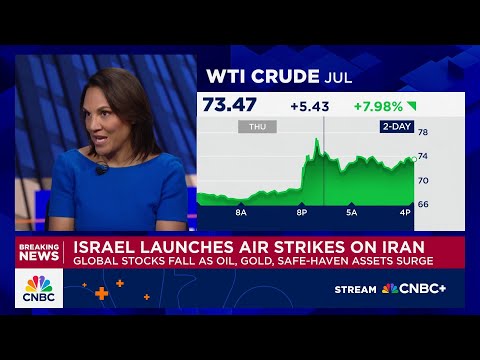
Not a whole lot Iran can do to respond to Israel, says Again Capital's John Kilduff
CNBC Television· 2025-06-13 13:59
Market Impact of Geopolitical Events - Initial market reaction to Israel's military strikes against Iran was muted, suggesting a degree of resilience or disbelief in significant escalation [1][2] - The market's calm response is attributed to the perception that Iran's military capabilities have been degraded, limiting its ability to retaliate effectively [2] - However, the potential for asymmetric responses from Iran, such as attacks on oil infrastructure or through proxies like the Houthis, remains a concern [3][4] Geopolitical Considerations - Saudi Arabia is wary of a regional conflagration and had previously discouraged attacks, indicating a desire for regional stability [4] - China and Russia, as significant buyers of Iranian oil, have a vested interest in preventing disruptions to oil shipments, particularly through the Strait of Hormuz [5][6] - China's economy, being heavily industrial, is particularly vulnerable to disruptions in oil supplies and higher prices [6] Oil Price Outlook - The worst of the price surge is likely over for now, with expectations of a return to a price range around $60 per barrel for WTI, fluctuating $5 above or below [8] - Downward pressure on oil prices is expected to resume, contingent on factors like summer driving demand in the United States, which is currently looking soft [8]