
Berry Global

Search documents
Amcor completes combination with Berry Global; Positioned to significantly enhance value for customers and shareholders
Prnewswire· 2025-04-30 20:06
Core Insights - Amcor has successfully completed its all-stock combination with Berry Global, enhancing its position as a global leader in consumer and healthcare packaging solutions [2][3][4] - The merger is expected to deliver significant synergies, with an estimated $650 million in total synergies by the end of fiscal year 2028, leading to an adjusted EPS accretion of approximately 12% in fiscal year 2026 [1][4] - The company anticipates annual cash flow exceeding $3 billion by fiscal year 2028, providing substantial capacity for organic reinvestment, value-accretive M&A, and shareholder returns through dividends and share repurchases [1][4] Financial Projections - Amcor expects to achieve $260 million in pre-tax synergies in fiscal 2026, contributing to the overall EPS growth [4] - By the end of fiscal 2028, total pre-tax synergy benefits are projected to reach approximately $650 million, along with an additional $280 million in one-time cash benefits from working capital improvements [4] - The expected annual cash flow of over $3 billion by fiscal 2028 will enhance the company's ability to invest in growth and return value to shareholders [1][4] Strategic Positioning - The merger allows Amcor to refine its portfolio, enhance average growth rates, margins, and cash generation, positioning the company to meet evolving customer and consumer needs [2][3][5] - Amcor's CEO emphasized the importance of leveraging the combined company's global footprint and enhanced innovation capabilities to drive consistent growth and improve margins [4][5] - The integration of Amcor and Berry Global is expected to create a stronger company with a broader offering for customers, ultimately driving long-term value creation for shareholders [4][5]



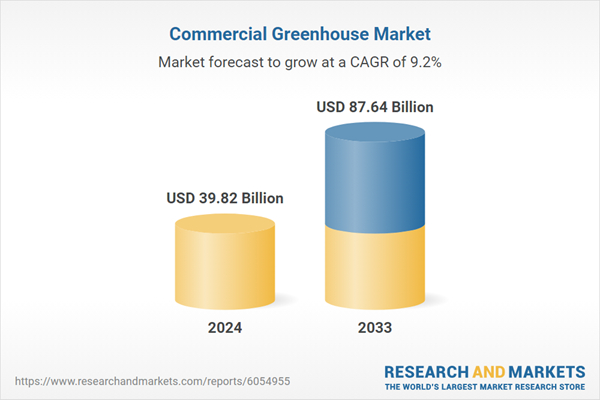
Commercial Greenhouse Market to Double in Size by 2033: Hydroponics, Aeroponics, and AI Shape the Future of Greenhouse Farming
Globenewswire· 2025-03-25 09:25
Market Overview - The Commercial Greenhouse market is projected to grow from US$ 39.82 billion in 2024 to US$ 87.64 billion by 2033, with a compound annual growth rate (CAGR) of 9.16% from 2025 to 2033 [2][16]. Growth Drivers - Key factors driving market growth include rapid technological advancements, government initiatives, increasing global food production demand, concerns about food security, urbanization, and loss of arable land [2][6][7][8]. - Innovations such as energy-efficient LED grow lights, computerized climate control systems, and precision agriculture are transforming greenhouse farming, enhancing crop quality and yields while reducing labor and resource usage [6][9]. Food Security Concerns - The market is expanding due to heightened concerns about food security exacerbated by population growth, resource depletion, and climate change, making commercial greenhouses a viable solution for stable food production [7][8]. Technological Integration - The integration of advanced technologies like hydroponics, aeroponics, and artificial intelligence (AI) is enhancing productivity and enabling real-time data analysis and monitoring in greenhouses [6][9]. Regional Insights - The United States, United Kingdom, India, and Saudi Arabia are notable markets for commercial greenhouses, driven by local demand for sustainably produced food and government support for greenhouse farming [12][13][14][15]. Challenges - High initial investment costs for setting up commercial greenhouses pose a barrier for small and medium-sized farms, which may struggle to compete with larger, well-funded companies [10][12][13][14][15].
Liquid Masterbatches Market Size is Expected to Reach USD 21.28 Billion by 2033, Growing at a CAGR of 6.23% : Market Strides
Globenewswire· 2025-03-20 12:40
Core Insights - The global liquid masterbatches market is projected to grow from USD 12.34 billion in 2024 to USD 21.28 billion by 2033, with a CAGR of 6.23% during the forecast period [1] Market Dynamics - Increasing demand for high-quality plastic products is a key driver, particularly in packaging, automotive, and consumer goods sectors, where liquid masterbatches enhance material performance [3] - The availability of raw materials poses challenges, affecting production costs and supply stability due to price fluctuations and regulatory pressures [4] Regional Analysis - Asia-Pacific is the dominant region in the liquid masterbatches market, driven by rapid industrialization and a growing demand for high-performance materials [5] Product Segmentation - Additive liquid masterbatches lead the market due to their ability to enhance polymer performance with properties like UV resistance and flame retardancy [6][7] - Black liquid masterbatches hold the largest market share, particularly in automotive and packaging applications [10] Competitive Landscape - Key players in the market include Clariant AG, BASF SE, and PolyOne Corporation, among others [10] Recent Developments - Clariant AG launched a new range of liquid masterbatches designed for biodegradable polymers in February 2025, addressing the demand for sustainable packaging solutions [9]
