
RXO

Search documents
Trucking and logistics stocks drop on release of AI freight scaling tool
CNBC· 2026-02-12 18:14
Core Insights - The trucking and logistics sector is experiencing a decline in stock prices due to concerns that new AI tools could significantly reduce demand for their services [1][2]. Group 1: Market Reaction - Shares of major trucking companies such as C.H. Robinson and RXO fell over 20% on Thursday, while J.B. Hunt Transportation Services dropped approximately 9%, XPO lost nearly 7.9%, and Expeditors International of Washington decreased by about 16.5% [3]. - The market is witnessing a rotation as investors reassess traditional businesses in light of rapid advancements in AI technology [2]. Group 2: AI Developments - Algorhythm Holdings has introduced a new tool, SemiCab, which reportedly allows trucking operators to scale freight volumes by 300% to 400% without increasing headcount [5]. - The SemiCab platform claims to reduce "empty freight miles" by over 70%, addressing a significant inefficiency where trucks drive empty nearly one out of every three miles, resulting in over $1 trillion in lost freight spending annually [5][6]. Group 3: Industry Perspectives - Analyst Daniel Moore from Baird noted an emerging debate around open-source automation agents that could help smaller operators compete by automating routine tasks [4]. - Despite the current market jitters, Moore maintained an outperform rating on C.H. Robinson and Expeditors, emphasizing that automation is not a new concept in the industry [4]. Group 4: Regulatory Impact - The trucking industry is also monitoring a recent ruling by U.S. Transportation Secretary Sean P. Duffy, which prohibits "unqualified foreign drivers" from obtaining commercial driving licenses [7]. - This ruling aims to enhance safety by ensuring that foreign drivers undergo necessary consular and interagency screening before being licensed [8].


RXO Prices $400 Million Senior Notes Offering
Businesswire· 2026-02-11 22:41
Core Viewpoint - RXO, Inc. has priced its offering of $400 million aggregate principal amount of 6.375% Senior Notes due 2031, indicating a strategic move to raise capital through debt issuance [1] Group 1: Financial Details - The offering consists of 6.375% Senior Notes due 2031, which will be guaranteed on a senior unsecured basis by the domestic subsidiaries of the company [1] - The company plans to utilize the net proceeds from the offering for repurposing, although specific details on the intended use are not provided [1]


RXO (NYSE:RXO) 2026 Conference Transcript
2026-02-10 19:22
Summary of RXO Conference Call Industry Overview - The discussion primarily revolves around the trucking industry, specifically focusing on truckload supply and demand dynamics, regulatory impacts, and the integration of AI technologies in operations [1][2][3]. Key Points on Supply and Demand - **Supply Dynamics**: There has been a notable reduction in trucking supply due to regulatory changes, including non-domiciled commercial driver's licenses (CDLs) and English Language Proficiency (ELP) requirements. Estimates suggest a potential supply reduction of 20%-25% [4][5]. - **Tender Rejections**: Tender rejections have increased from mid-single digits to double digits, indicating a tightening supply despite soft demand. Recent weather events have exacerbated this trend [2][6]. - **Demand Catalysts**: Positive indicators from home building and ISM reports suggest potential demand recovery, which could strengthen the market if supply remains constrained [3][6]. Company-Specific Insights - **Capacity Management**: RXO has a stringent vetting process for carrier capacity, which is crucial for maintaining service quality, especially in a tightening market [9][10]. - **Acquisition of Coyote**: The integration of Coyote has expanded RXO's presence in private fleets, which helps stabilize margins through contract rates [10][22]. - **Contractual vs. Spot Opportunities**: While spot opportunities have increased, they have not compensated for declines in contractual gross profit per load. The company is focusing on stabilizing its business post-acquisition [12][27]. Financial Performance and Projections - **Gross Profit Trends**: RXO experienced a contraction in contractual gross profit per load, with December figures being 30% below the five-year average, excluding COVID highs [50]. - **Pipeline Growth**: The late-stage pipeline for brokerage is up more than 50% year-over-year, indicating potential for future revenue growth [27][47]. - **Cost Management**: RXO has successfully reduced costs by over $155 million, positioning itself for improved operating leverage as the market recovers [49]. Technology and AI Initiatives - **AI Investments**: RXO is investing in AI technologies to enhance productivity, service, and profitability. Key initiatives include agentic and generative AI applications aimed at improving operational efficiency [31][33]. - **Productivity Gains**: The company has reported a 19% increase in productivity over the last 12 months, with a two-year stack increase of 38% [32]. Market Outlook - **Long-Term Growth**: The brokerage segment is expected to grow from low 20% market share to potentially 30-40% in the coming years, driven by the aggregation of trucking capacity and the shift towards more stable service offerings [41][42]. - **Volatility as Opportunity**: Increased volatility in the market is seen as beneficial for brokers like RXO, as it creates more opportunities for service [45]. Conclusion - RXO is strategically positioned to navigate the current market dynamics through effective supply management, technological investments, and a focus on long-term growth. The company is preparing for potential demand recovery while ensuring operational efficiency and cost-effectiveness [52].
RXO Launches $400 Million Senior Notes Offering
Businesswire· 2026-02-10 13:32
Core Viewpoint - RXO, Inc. is proposing to issue $400 million aggregate principal amount of senior notes due 2031 in a private offering exempt from the registration requirements of the Securities Act of 1933 [1] Group 1: Financial Details - The proposed senior notes will be guaranteed on a senior unsecured basis by the domestic subsidiaries of the Company that are guarantors under the Company's asset-based lending facility [1]

RXO Inc (NYSE: RXO) Price Target and Analyst Ratings Update
Financial Modeling Prep· 2026-02-10 01:10
Core Viewpoint - RXO Inc (NYSE: RXO) is currently facing mixed market expectations, with various research firms adjusting their price targets and ratings, indicating potential downside from its current stock price [1][4]. Group 1: Price Targets and Ratings - Stephens has set a price target of $15 for RXO, suggesting a potential downside from the current stock price of $16 [1][4]. - The consensus rating for RXO from nineteen research firms is "Hold," with an average twelve-month target price of approximately $16.07, closely aligning with the current stock price [2][4]. - Citigroup has lowered its price target from $16 to $15 while maintaining a "neutral" rating, and Truist Financial has reduced its target from $20 to $18 but still recommends a "buy" [3]. Group 2: Stock Performance and Market Capitalization - RXO's stock price has fluctuated between $15.76 and $17.40 recently, with a one-year high of $22.17 and a low of $10.43 [3]. - The company's market capitalization is approximately $2.64 billion, with a trading volume of 2,392,948 shares on the NYSE [3].
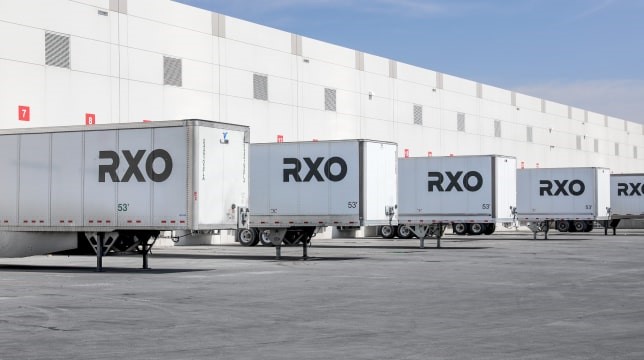
RXO(RXO) - 2025 Q4 - Annual Report
2026-02-09 21:46
Industry Competition and Economic Factors - The transportation services industry is highly competitive, with factors such as competition from other companies and economic downturns potentially harming revenue and profit margins [70]. - Economic recessions can lead to reduced demand for transportation services, negatively impacting rates and margins [71]. - A reduction in overall freight volume can limit growth opportunities, and customer financial distress may increase working capital needs [73]. - Changes in U.S. trade policy and tariffs could adversely affect global transportation volumes and customer demand [73]. Operational Challenges - Seasonal fluctuations in customer demand require adjustments in workforce and operations, with failure to meet expectations potentially harming customer relationships [80]. - The company relies on third-party carriers for operations, and any disruptions in these relationships could adversely affect service delivery and financial results [81]. - Labor disputes and negotiations can disrupt operations and negatively impact revenue and profitability [89]. - The company may experience difficulties in managing growth, including higher-than-expected expenses and operational strains from entering new markets [112]. Financial Risks and Debt - The company had $408 million in outstanding debt and finance leases as of December 31, 2025, primarily consisting of $355 million in unsecured notes [100]. - The top five customers accounted for approximately 23% of the company's consolidated total revenue for the year ended December 31, 2025, with the largest customer representing about 11.4% [115]. - A 1% increase or decrease in the interest rate on borrowings under variable-rate debt would not have a material impact on the company's annual interest expense [206]. - The company’s long-term debt consists of both fixed-rate and variable-rate instruments, exposing it to interest rate risk [206]. Technology and Cybersecurity - The company must continuously enhance its information technology systems to meet customer demands and maintain competitive service levels [90]. - The company faces risks related to cybersecurity attacks, which could result in service interruptions and loss of revenues [93]. - The company relies on third-party services, which may expose it to data security incidents that could harm its reputation and financial results [97]. - The company’s information technology systems are crucial for its operations, and failures could lead to transaction errors and loss of sales [94]. - The company is expanding its use of AI technologies, which may introduce new risks and increase operating expenses [98]. Goodwill and Acquisitions - As of December 31, 2025, the company had $1.1 billion of goodwill on its Consolidated Balance Sheets, which represents the excess of cost over the fair value of net assets acquired in business combinations [117]. - The company may incur impairment charges if its goodwill becomes impaired, which would negatively impact its operating results [117]. - Future acquisitions may not be accretive to earnings or meet operational expectations, posing risks to the company's financial condition [118]. - The company may not realize all anticipated benefits from future divestitures, which could lead to significant charges related to goodwill and other intangible assets [119]. Stock and Market Considerations - The company registered for resale 28.5 million shares of its common stock, representing approximately 17.4% of its outstanding shares as of December 31, 2025, which could adversely impact the market price of its common stock [120]. - The company’s amended and restated certificate of incorporation includes provisions that may deter hostile takeovers, potentially affecting the trading price of its common stock [124]. Cost Management - Fuel expenses are a significant cost for independent contractors and third-party carriers, and fluctuations in fuel prices can materially affect profitability [75]. - The company includes fuel price adjustment clauses in many customer contracts, allowing it to pass on fluctuations in diesel fuel prices, which mitigates the impact of a hypothetical 10% change in fuel prices on financial performance [205]. - The company is implementing various cost and revenue initiatives, including advanced pricing analytics and a digital brokerage platform, to increase profitability [111]. Workforce and Employee Relations - The company’s ability to attract and retain qualified employees is critical for maintaining its competitive position and meeting customer expectations [109]. - The company incurred additional risks related to litigation and regulatory compliance, which could result in significant expenditures and impact operations [104].
RXO Inc. (NYSE:RXO) Faces Financial Challenges Amid Industry Competition
Financial Modeling Prep· 2026-02-09 05:00
Core Viewpoint - RXO Inc. is facing significant financial challenges, including an operating loss and margin pressures, while maintaining a Neutral rating from UBS with a revised price target indicating potential stability in its stock value [1][5]. Financial Performance - In Q4 2025, RXO reported an operating loss of $42 million and nearly negative EBITDA, highlighting the difficulties in covering operating expenses [2][5]. - For Q1 2026, RXO anticipates EBITDA to range between $5 million and $12 million, which is insufficient to cover interest expenses, raising concerns about debt management [3][5]. Market Activity - RXO's stock has shown volatility, with a recent price increase of $0.32, or approximately 1.93%, and trading between a low of $15.03 and a high of $17.42 during the trading day [4]. - Over the past year, the stock peaked at $22.17 and reached a low of $10.42, with a market capitalization of approximately $2.77 billion and a trading volume of 6.24 million shares [4].
RXO Margin Squeeze Signals A Recovery In Trucking, But The Name Is Still Overpriced
Seeking Alpha· 2026-02-06 21:55
Group 1 - The results are challenging due to a margin squeeze between contracted operations and increasing upstream rates [1] - The investment approach focuses on operational aspects and long-term earnings power rather than market-driven dynamics [1] - The majority of recommendations will be holds, indicating a cautious stance in a bullish market [1] Group 2 - There is no current or planned investment position in the companies mentioned, ensuring an unbiased analysis [2] - The article reflects the author's personal opinions without any compensation from the companies discussed [2] - Seeking Alpha emphasizes that past performance does not guarantee future results and that opinions may not represent the platform as a whole [3]

RXO(RXO) - 2025 Q4 - Earnings Call Transcript
2026-02-06 14:02
Financial Data and Key Metrics Changes - The company reported total revenue of $1.5 billion for Q4 2025, with a gross margin of 14.8% and adjusted EBITDA of $17 million, reflecting a decline in brokerage gross margin due to increased transportation costs and soft demand [15][16] - Adjusted loss per share was $0.07, and a $12 million goodwill impairment was noted related to restructuring within the managed transportation business [15][16] - For the full year, total revenue was $5.7 billion, with an adjusted EBITDA of $109 million and an adjusted EBITDA margin of 1.9% [18] Business Line Data and Key Metrics Changes - Brokerage revenue was $1.1 billion, down 14% year-over-year, representing 72% of total revenue, with a gross margin of 11.9%, which declined 160 basis points sequentially and 130 basis points year-over-year [15][16] - Complementary services revenue was $431 million, flat year-over-year, with a gross margin of 20.2%, down 110 basis points sequentially and 90 basis points year-over-year [16][17] - Managed transportation generated $133 million in revenue, down 6% year-over-year, while last-mile business revenue grew by 3% year-over-year, totaling $298 million [17] Market Data and Key Metrics Changes - Overall brokerage volume declined by 4% year-over-year, with truckload volume down 12% and less-than-truckload (LTL) volume up 31% [25][26] - The company noted that tender rejections and load-to-truck ratios reached the highest levels of the year in December, indicating tightening market conditions [6][31] - The regulatory changes have led to significant supply-side dynamics, impacting the truckload market and contributing to a structural change in the industry [31][36] Company Strategy and Development Direction - The company is focused on optimizing its cost structure and gross profit per load while expanding its carrier base and growing stable sources of EBITDA [3][4] - RXO aims to leverage its technology platform and customer relationships to drive growth, particularly in managed transportation and LTL [10][12] - The company is investing in AI capabilities to enhance operational efficiency and improve service delivery [10][29] Management's Comments on Operating Environment and Future Outlook - Management expressed optimism about the potential for a demand recovery, citing positive macroeconomic indicators and a strong late-stage sales pipeline [24][36] - The company anticipates continued soft demand in the first quarter of 2026, with expected adjusted EBITDA between $5 million and $12 million [22][35] - Management highlighted the importance of maintaining strong customer relationships and the potential for significant earnings power during a market recovery [70][80] Other Important Information - The company finalized a new $450 million asset-based lending facility, which replaces its previous $600 million revolver, providing better pricing and flexibility [20][21] - The company achieved an adjusted free cash flow conversion of 43% for the year, indicating strong cash generation despite market challenges [19][60] Q&A Session Summary Question: Can you unpack the 50% increase in the late-stage brokerage pipeline? - Management noted that the increase reflects strong customer relationships and a return to growth mode following the integration of Coyote, with bids typically implemented in the second quarter [39][40] Question: How is AI helping with SMB outreach? - Management highlighted significant progress in AI capabilities, improving productivity and margin opportunities, with a 19% increase in productivity year-over-year [41][42] Question: How do company actions and market dynamics interact in 2026? - Management indicated that while positive macro developments are noted, company-specific initiatives are expected to drive growth and resume historical outperformance [46][47] Question: What impact has winter weather had on Q1? - Management quantified the impact of winter weather on EBITDA at approximately $2 million, affecting both brokerage and last-mile operations [50][52] Question: What are the expectations for spot volumes and EBITDA in the coming quarters? - Management noted that spot volumes are up year-over-year, and for every dollar of gross margin improvement, it translates to significant EBITDA potential [56][57] Question: What is the outlook for managed transportation earnings contribution? - Management emphasized that managed transportation provides synergy across the organization, contributing positively to overall earnings [64][65] Question: How does the company define truckload outperformance? - Management defined outperformance in terms of volume, pricing, and EBITDA, with expectations for improved gross profit per load driving significant earnings power [68][70]
RXO(RXO) - 2025 Q4 - Earnings Call Transcript
2026-02-06 14:02
Financial Data and Key Metrics Changes - In Q4 2025, total revenue was $1.5 billion, with a gross margin of 14.8% and adjusted EBITDA of $17 million, resulting in an adjusted EBITDA margin of 1.2% [15][18] - Adjusted loss per share was $0.07, and there was a $12 million goodwill impairment related to restructuring within the managed transportation business [15][18] - For the full year, total revenue was $5.7 billion, with a gross margin of 16.2% and adjusted EBITDA of $109 million, yielding an adjusted EBITDA margin of 1.9% [18] Business Line Data and Key Metrics Changes - Brokerage revenue was $1.1 billion, down 14% year-over-year, representing 72% of total revenue, with a gross margin of 11.9%, which declined 160 basis points sequentially and 130 basis points year-over-year [15][16] - Complementary services revenue was $431 million, flat year-over-year, with a gross margin of 20.2%, down 110 basis points sequentially and 90 basis points year-over-year [16][17] - Last-mile business generated $298 million in revenue, up 3% year-over-year, while managed transportation revenue was $133 million, down 6% year-over-year [17] Market Data and Key Metrics Changes - Overall brokerage volume declined by 4% year-over-year, with truckload volume down 12% and less-than-truckload (LTL) volume up 31% [25][26] - The tightening of the full truckload market was driven by regulatory developments and capacity exits, leading to a significant increase in industry buy rates [16][31] - Tender rejections and load-to-truck ratios reached the highest levels of the year in December, indicating a tightening market [5][31] Company Strategy and Development Direction - The company is focused on optimizing its cost structure and gross profit per load while expanding its carrier base and growing stable sources of EBITDA [3][4] - RXO aims to leverage its technology platform and customer relationships to drive growth, particularly in managed transportation and LTL [10][11] - The company is investing in AI capabilities to enhance operational efficiency and improve service delivery [10][29] Management's Comments on Operating Environment and Future Outlook - Management expressed optimism about the potential for a demand recovery, citing positive macroeconomic indicators and a strong late-stage sales pipeline [24][36] - The company anticipates continued soft demand in the first quarter of 2026, with expected adjusted EBITDA between $5 million and $12 million [22][35] - Management highlighted the importance of ongoing regulatory changes that could lead to a more favorable freight rate environment in the long term [36] Other Important Information - The company finalized a new $450 million asset-based lending facility, which replaces its previous $600 million revolver, providing better pricing and flexibility [20][21] - Adjusted free cash flow conversion was 43% for the year, with a target range of 40%-60% over the long term [19][22] Q&A Session Summary Question: What drove the 50% increase in the late-stage brokerage pipeline? - The increase is attributed to the focus on returning to growth mode post-Coyote integration, with a mix of existing and new enterprise customers [39] Question: How is AI helping with SMB outreach? - AI initiatives are driving productivity improvements, with a 19% increase in productivity year-over-year, and are expected to enhance margins [41][43] Question: How do company actions and market dynamics interact in 2026? - The company is confident in its ability to execute on its late-stage pipeline and resume historical outperformance, independent of market recovery [47] Question: What impact did winter weather have in Q1? - Winter weather resulted in an estimated $2 million negative EBITDA impact due to operational disruptions [50][52] Question: How is the company positioned for EBITDA improvement? - The company expects significant EBITDA improvement as gross profit per load recovers, with every dollar increase translating to over $1 million in annualized EBITDA [56][70]