
Toyota

Search documents
Toyota Fuels US Workforce With $14 Billion Battery Plant - Toyota Motor (NYSE:TM)
Benzinga· 2025-11-12 18:55
Core Insights - Toyota Motor Corporation has commenced production at its first battery plant outside Japan, located in Liberty, North Carolina, marking a significant expansion in its U.S. operations [1][5]. Investment Plans - The company plans to invest up to $10 billion over the next five years to enhance U.S. manufacturing and future mobility initiatives, bringing its total U.S. investment to nearly $60 billion since entering the market [2][3]. Economic Impact - The Liberty plant, with an investment of nearly $14 billion, is expected to create up to 5,100 jobs, significantly impacting the Piedmont Triad region known for its manufacturing and transportation ties [4]. Facility Details - The 1,850-acre facility will produce lithium-ion battery packs for various vehicle types, with plans to operate 14 production lines and achieve an annual output of 30 GWh by 2030 [7]. Supported Models - Batteries produced at the North Carolina facility will support models such as the Camry HEV, Corolla Cross HEV, RAV4 HEV, and a new three-row electric SUV planned for U.S. production [8]. Community Engagement - The Toyota USA Foundation has pledged $2.7 million to expand its Driving Possibilities program in two North Carolina school districts, reflecting the company's commitment to workforce development and STEM education [9]. Market Reaction - Following the announcement, Toyota's shares increased by 0.82%, trading at $207.68 [10].


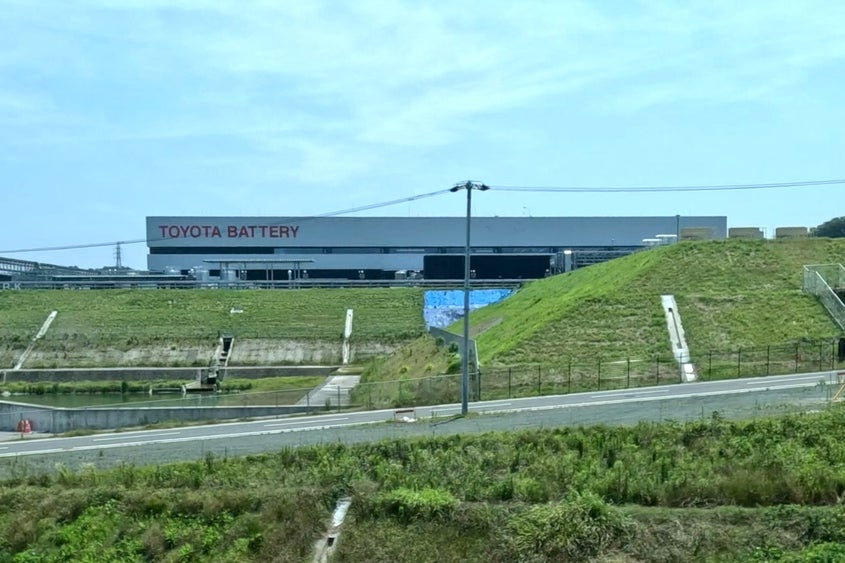
Toyota to open North Carolina battery plant, confirms $10B investment in the U.S.
Youtube· 2025-11-12 17:01
Core Insights - Toyota is making a significant investment of $10 billion in the U.S. market, focusing on electric vehicle (EV) and hybrid production, as well as battery production [1][6] - The company is starting battery production at a new facility in Liberty, North Carolina, which will create an additional 2,500 jobs, increasing total employment at the site to 5,100 [2][3] - Toyota currently holds a dominant position in the hybrid market, accounting for 51% of hybrid sales in the U.S., and aims to increase local production to reduce reliance on imports [3] Investment Strategy - Despite a general trend of automakers scaling back EV investments in the U.S., Toyota is proceeding with its plans, indicating confidence in the market [2][5] - The investment will enhance Toyota's production capabilities, particularly for models like the RAV4 hybrid, which will utilize batteries produced at the new facility [3][6] - The company is also looking to benefit from clearer tariff rates established through trade agreements with Japan, which may further incentivize local production [5][7] Competitive Landscape - Toyota's investment comes at a time when competitors like General Motors are reassessing their own spending on battery and EV production in the U.S. [4] - The recent market dynamics show that Toyota and General Motors have been trading in tandem, reflecting a shift in the competitive landscape [4]

Toyota opens new U.S. battery plant, confirms $10 billion in new investments
CNBC· 2025-11-12 16:10
Core Viewpoint - Toyota Motor has initiated production at a new $13.9 billion battery plant in North Carolina and plans to invest up to $10 billion more in the U.S. over the next five years, marking a significant moment in the company's history [1][2]. Group 1: Investment and Production - The new battery plant is Toyota's first in-house facility outside of Japan, announced in December 2021 as part of the Biden administration's initiative to increase domestic battery production for electric and hybrid vehicles [2]. - The company has confirmed an increase in investment, although specific details were not disclosed, with the CEO describing it as a pivotal moment for Toyota [2]. - The announcement follows a statement from President Donald Trump regarding a $10 billion investment by Toyota in the U.S., indicating a potential alignment with governmental policies [3]. Group 2: Market Conditions and Sales Performance - Market conditions for electric vehicles (EVs) have deteriorated, while demand for hybrids has surged, benefiting Toyota, which holds over 51% market share in U.S. hybrid sales through Q3 of this year [3]. - Toyota's U.S. sales increased by 9.9% to over 1.3 million vehicles sold through the third quarter of this year, reflecting a positive sales trend amid changing market dynamics [4]. Group 3: Industry Challenges - The automotive industry, including Toyota, is facing challenges in production planning due to regulatory changes affecting EVs and tariffs imposed on new vehicles and parts [4].

X @The Wall Street Journal
The Wall Street Journal· 2025-11-12 16:08
Toyota, a longtime hybrid car and truck promoter, is making one of the industry’s biggest bets on green transportation and opening a $14 billion battery plant in North Carolina https://t.co/HVvjEm093p ...
Toyota opens US battery plant, confirms up to $10 billion investment plan
Reuters· 2025-11-12 15:01
Core Points - Toyota Motor has commenced production at its $13.9 billion battery plant located in North Carolina [1] - The company has confirmed plans to invest up to $10 billion over the next five years in the United States [1]
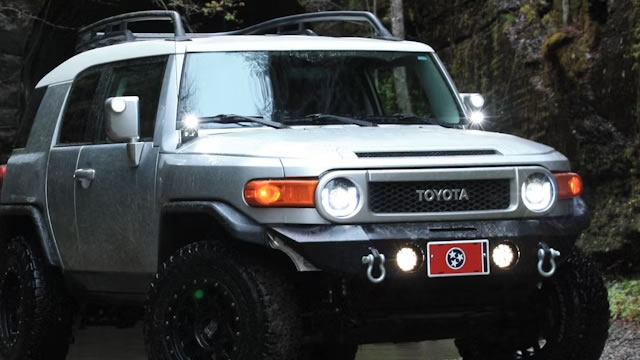
Toyota Doubles Down on Hybrids in the U.S. With $14-Billion Battery Push
WSJ· 2025-11-12 15:00
Core Insights - A new plant in North Carolina is being established to increase the production and sales of hybrid cars and trucks in the American market [1] Industry Summary - The initiative reflects a growing trend in the automotive industry towards hybrid vehicles, aiming to meet rising consumer demand for more fuel-efficient options [1] - The establishment of the plant is part of a broader strategy to enhance the company's competitive position in the hybrid vehicle segment [1]
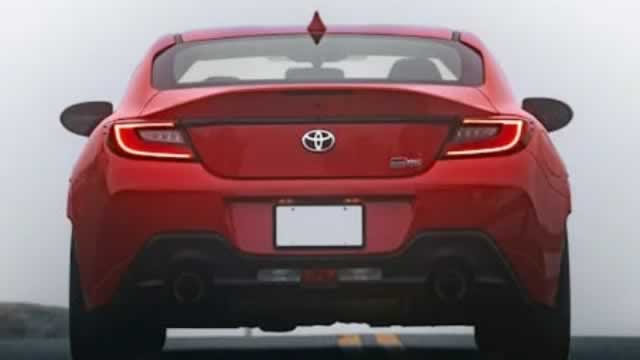
Toyota Charges into U.S. Battery Manufacturing
Prnewswire· 2025-11-12 15:00
Core Insights - Toyota has commenced production at its new battery plant in Liberty, North Carolina, marking a significant step in its global vehicle electrification strategy [1][2] - The facility represents a nearly $14 billion investment and is expected to create up to 5,100 jobs in the U.S. [1][3] - An additional investment of up to $10 billion over the next five years will bring Toyota's total U.S. investment to nearly $60 billion [1][2] Investment and Economic Impact - The new plant is Toyota's first battery manufacturing facility outside Japan and will serve as a hub for lithium-ion battery production [3][4] - The facility spans 1,850 acres and has the capacity to produce 30 GWh of batteries annually [3] - The investment is anticipated to have a substantial economic impact on the Piedmont Triad region of North Carolina [2][3] Job Creation and Community Development - The establishment of the plant will create over 5,000 new jobs for North Carolinians [4][5] - The facility will include amenities for employees, such as on-site childcare, a pharmacy, a medical clinic, and a fitness center [4] - Toyota is committed to workforce development through educational initiatives, including a $2.7 million grant to local schools [6][8] Product Focus and Future Plans - Batteries produced at the North Carolina plant will power various Toyota hybrid and electric vehicle models, including the Camry HEV and a new all-electric 3-row BEV [4][9] - Additional production lines are expected to launch by 2030, expanding the plant's capabilities [4] Commitment to Sustainability and Innovation - Toyota has sold over 6.6 million electrified vehicles in the U.S. since 2000, demonstrating its commitment to reducing carbon emissions [9] - The company emphasizes building where it sells, aligning with its sustainability philosophy [9][10]

This California-Based Company Could Be a High-Potential eVTOL Play Right Now
The Motley Fool· 2025-11-12 02:23
Business Model - Joby Aviation's business model focuses on providing transportation services rather than selling eVTOL aircraft to third parties, which allows for potentially greater upside through recurring revenues [2][5] - The company plans to operate under a vertically integrated model, manufacturing, owning, and operating its aircraft while offering an app-based aerial ridesharing service [4][5] Partnerships and Collaborations - Joby has a long-term partnership with Uber Technologies, having acquired Uber's Elevate planning unit and received a $75 million investment from Uber [6] - The company also acquired Blade's passenger business, integrating it into the Uber app for future eVTOL travel [6] - Joby collaborates with Toyota, which has committed to investing $894 million and is working with Joby's engineers on manufacturing solutions [9] Manufacturing Strategy - Unlike competitors like Archer Aviation and Vertical Aerospace, which rely on external partners for key components, Joby operates its own powertrain and electronics manufacturing facility [8] - This in-house manufacturing approach is part of Joby's strategy to maintain control over its technology and certification process [10] Certification Progress - Joby is ahead of competitors in the FAA certification process, being 77% complete on its side and 55% complete on the FAA side, with plans to begin certification flights early next year [11] - Archer is reported to be behind Joby in the certification process, indicating a potential advantage for Joby in terms of regulatory approval [11] Investment Potential - The combination of greater upside potential and relatively less risk due to Joby's progress in certification makes it an attractive stock for investors interested in the eVTOL sector [12]

Martinrea International Inc. Reports Third Quarter Results and Declares Dividend
Globenewswire· 2025-11-11 22:01
Core Viewpoint - Martinrea International Inc. reported strong performance in Q3 2025, with improved operating margins and positive financial results despite challenges from tariffs and production disruptions at key customers [3][4]. Financial Performance - Total sales for Q3 2025 were $1,190.8 million, a decrease of 3.8% from $1,237.5 million in Q3 2024 [9][14]. - Adjusted Operating Income was $65.0 million, with an Adjusted Operating Income Margin of 5.5%, up 20 basis points year over year [4][36]. - Free Cash Flow for Q3 2025 was $44.5 million, impacted by delayed collections due to a cybersecurity incident [4][36]. - Net Income for Q3 2025 was $35.8 million, a significant increase of 152.6% compared to $14.2 million in Q3 2024 [36][41]. Sales Breakdown - North America sales decreased by $47.8 million (5.0%) to $912.5 million, primarily due to lower OEM production volumes and a decrease in tooling sales [15][19]. - Europe sales decreased by $2.9 million (1.2%) to $247.6 million, affected by lower OEM production volumes and tooling sales [16][22]. - Sales in the Rest of the World increased by $1.2 million (3.7%) to $34.9 million, driven by higher production volumes with General Motors and Mercedes [17][24]. Gross Margin - Gross margin for Q3 2025 was $170.0 million, representing 14.3% of total sales, an increase from 13.2% in Q3 2024 [26][27]. - The gross margin percentage for the nine months ended September 30, 2025, was 13.9%, up from 13.4% in the same period of 2024 [27]. New Business and Future Outlook - The company secured new business worth approximately $30 million in annualized sales, contributing to a total of $170 million in new business awards over the last four quarters [3][4]. - Martinrea maintains its 2025 outlook, projecting total sales between $4.8 billion and $5.1 billion, with an Adjusted Operating Income Margin of 5.3% to 5.8% [3][4].
Martinrea International Inc. Reports Third Quarter Results and Declares Dividend
Globenewswire· 2025-11-11 22:01
Core Viewpoint - Martinrea International Inc. reported strong performance in Q3 2025, with improved operating income margins and positive results despite challenges from tariffs and production disruptions at key customers [3][4]. Financial Performance - Total sales for Q3 2025 were $1,190.8 million, a decrease of $46.7 million or 3.8% compared to Q3 2024 [4][15]. - Adjusted Operating Income for Q3 2025 was $65.0 million, with an Adjusted Operating Income Margin of 5.5%, up 20 basis points year over year [4][36]. - Free Cash Flow for Q3 2025 was $44.5 million, impacted by delayed collections due to a cybersecurity incident [4][36]. - Net Income for Q3 2025 was $35.8 million, a significant increase of 152.6% from $14.2 million in Q3 2024 [4][36]. Business Developments - The company secured new business worth approximately $30 million in annualized sales, contributing to a total of $170 million in new business awards over the last four quarters [3][4]. - Martinrea expects to finalize agreements on tariff relief with customers before year-end, which will cover most of its exposure [3][4]. Segment Performance - North America sales decreased by $47.8 million or 5.0% to $912.5 million in Q3 2025, primarily due to lower OEM production volumes and a decrease in tooling sales [15][16]. - Europe sales decreased by $2.9 million or 1.2% to $247.6 million, affected by lower OEM production volumes and tooling sales [18][23]. - Sales in the Rest of the World increased by $1.2 million or 3.7% to $34.9 million, driven by higher production volumes with General Motors and Mercedes [19][24]. Gross Margin Analysis - Gross margin for Q3 2025 was $169.97 million, representing 14.3% of total sales, an increase from 13.2% in Q3 2024 [26][27]. - The gross margin percentage for the nine months ended September 30, 2025, was 13.9%, up from 13.4% in the same period of 2024 [27][29]. Dividend Declaration - The Board of Directors declared a quarterly cash dividend of $0.05 per share, payable to shareholders of record on December 31, 2025 [42].
