BYD

Search documents
China's BYD makes gains in Spain with low EV prices, fast expansion
Reuters· 2025-09-22 05:07
Core Point - Javier Hernandez chose a plug-in hybrid vehicle from China's BYD due to its price being nearly 10,000 euros cheaper than European competitors [1] Company Summary - BYD is positioned competitively in the automotive market, particularly in the plug-in hybrid segment, by offering lower prices compared to European brands [1]
Warren Buffett's Berkshire Hathaway exits China's BYD, filing shows
Reuters· 2025-09-22 04:48
Warren Buffett's Berkshire Hathaway has fully exited Chinese automaker BYD , a filing showed, ending a 17-year investment that grew over 20-fold in value in that period. ...


全球竞争、电动汽车自动化趋势、供应链转型-Investor Presentation-Global Competition, EVAutomation Trends, Supply Chain Transformation
2025-09-22 01:00
Summary of Key Points from the Investor Presentation Industry Overview - **Industry Focus**: The presentation centers on the **autos and auto parts industries** in Japan, highlighting global competition, trends in electric vehicles (EVs) and automation, and supply chain transformations [1][2][3]. Core Insights - **Competition**: - There is **intensifying competition** within China, with Chinese OEMs expanding into overseas markets such as ASEAN, Europe, and South America [8][11]. - The competitive landscape in the US is also changing due to **US tariffs**, which are impacting market dynamics [8][11]. - **Electrification Trends**: - The penetration of **New Energy Vehicles (NEVs)** is increasing in China, with vehicles equipped with **Navigation on Autopilot (NOA)**, equivalent to Level 2+, becoming mainstream [8][11]. - Despite a temporary plateau in EV adoption in the US due to easing environmental regulations, the trend towards electrification and intelligent technologies remains strong [8][11]. - **Collaboration and Cost Management**: - There is a growing likelihood of **collaboration among OEMs** to manage development costs associated with electrification and intelligent technologies [8][11]. - The ability to pass on uncontrollable cost increases to OEMs is a critical consideration for the industry [8][11]. Risks and Challenges - **Emerging Local Competitors**: Local Chinese firms are emerging in advanced technology areas, posing a risk to established players [8][11]. - **Cost Burden**: The auto parts industry faces risks related to the cost burden of electrification, which may impact profitability [12][120]. Market Dynamics - **Sales and Market Share**: - Japanese OEMs are experiencing a significant decline in sales, with local Chinese companies gaining traction in advanced technology fields [120]. - The easing of US environmental regulations is delaying the decline in internal combustion engine (ICE) demand, affecting market dynamics [120]. Company-Specific Insights - **Valuation and Price Targets**: - Price targets and ratings for major Japanese OEMs were discussed, with Honda rated as Overweight (OW) with a price target of ¥2,000, indicating a 20% upside [12]. - Other companies like Nissan, Subaru, and Mazda have varying ratings and price targets reflecting their market positions and challenges [12]. Conclusion - The presentation emphasizes the need for Japanese OEMs to adapt to the rapidly changing competitive landscape, particularly in light of the expansion of Chinese manufacturers and the ongoing shift towards electrification and advanced technologies [8][11][120].
比亚迪_智能驾驶_新智能手机产品推动未来增长;研发投入增加,数据中心业务存在潜在上行空间
2025-09-22 01:00
Summary of BYDE (0285.HK) Conference Call Company Overview - **Company**: BYDE (0285.HK) - **Industry**: Technology and Automotive Key Points and Arguments Revenue Growth Expectations - BYDE's revenue for 2H25 is expected to grow by **35% HoH** due to improved seasonality and the smart driving trend, alongside a new smartphone product cycle [1][2] - The company is expanding into AI data centers, which may diversify its end markets in the long run [1] Market Conditions - The global smartphone shipment increased by **1% YoY** in 1H25, while the China market declined by **6.5% YoY** [1] - BYD's vehicle shipment increased by **33% YoY** in 1H25, with July and August showing slight growth of **0.56% YoY** and **0.15% YoY**, respectively [1] Financial Performance and Projections - Net income estimates for BYDE have been reduced by **11%/24%/26%** for 2025E/26E/27E due to lower revenue and gross margin (GM) expectations [2] - The gross margin is projected to expand to **9.7% by 2027E** from **6.9% in 1H25** [2][6] - Automotive electronics are expected to contribute **25% of total revenue by 2027E**, down from a previous estimate of **29%** [2] R&D and Operational Expenses - R&D expenses are anticipated to grow at a **30% CAGR** to **Rmb8.9bn (US$1.3bn)**, maintaining a ratio of **3.8%** similar to 2022-23 levels [2] - The operating expense (opex) ratio is expected to increase slightly in 2026E/27E due to higher R&D expenses [2] Earnings Revision - The earnings revision reflects a slower end market growth and the time required for the AI data center expansion to offset impacts [2] - Despite the earnings cut, BYDE is expected to achieve a **net income CAGR of +26%** from 2025E to 2027E [6] Valuation and Price Target - The target price has been lowered by **3.5% to HK$53.08**, implying a **2026E P/E of 17.1x** [11] - The new target price reflects a positive view on BYDE's product mix upgrade and is in line with peers [11][15] Risks - Key risks include customer concentration in the automotive business, slower-than-expected ramp-up of automotive products, and increased competition [16] Additional Important Information - BYDE's strategy focuses on leading customers like Apple and expanding product lines, which is expected to drive up dollar content per vehicle [2] - The company is maintaining a **Buy** rating despite the earnings revisions, indicating confidence in its long-term growth strategy [11][19]

中国智能驾驶芯片_自我们首次覆盖以来的常见问题与投资者反馈-China Smart Driving Chips_ FAQs and investor feedback since our initiation
2025-09-22 01:00
Summary of China Smart Driving Chips Conference Call Industry Overview - **Industry**: China Smart Driving Chips - **Key Companies**: Horizon Robotics (Outperform), Black Sesame (Underperform) [1][2] Core Insights and Arguments Market Potential - **Total Addressable Market (TAM)**: Expected to reach USD 15.4 billion by 2030, with a 40% CAGR from 2025 to 2030 [2] - **Penetration Rates**: Anticipated that L2++ (Urban NOA) penetration will reach 65% by 2030, while L2+ (Highway NOA) will plateau in the low 20s [2][18] OEM In-House Development - **Market Share**: Third-party vendors expected to retain over 60% market share by 2030 due to economies of scale [3][26] - **In-House Viability**: In-house solutions become cost-effective only when annual shipments exceed 1.5 million units; few OEMs can achieve this [3][30] Competition Landscape - **Horizon Robotics**: Stands out with a hardware-software integrated model, delivering performance comparable to NVIDIA at lower costs [4][38] - **Momenta**: Potential challenger but 2-3 years behind Horizon in chip development [4][43] - **Qualcomm**: Slow commercialization progress and limited mass production capabilities hinder its competitiveness [42] Financial Projections - **Horizon Robotics Valuation**: Projected annual shipment of J6P to reach 7.1 million units by 2030, corresponding to a 38% market share in outsourced L2+ & Above segment [5][52] - **Gross Margin**: Expected to decline from 77% in 2024 to 57% in 2030 due to changes in revenue mix [57] Additional Important Insights Consumer Preferences - **Smart Driving Features**: Over 70% of Chinese consumers consider smart driving functions important in vehicle purchasing decisions [12][14] - **Importance Increase**: From 2023 to 2024, smart driving features gained the most importance among factors influencing EV purchases [14] Risks and Catalysts - **Geopolitical Risks**: Concerns about the stability of partnerships with foundries like TSMC; however, short-term production is not expected to be affected [60] - **Investment Implications**: Horizon Robotics is positioned for growth due to its integrated solutions and strong R&D capabilities [7][8] OEM Strategies - **BYD's Position**: Struggling with L2+ promotion but expected to invest more in L2++ solutions to enhance user experience [22] - **In-House vs. Outsourcing**: OEMs like NIO, Xpeng, and Li Auto may focus on in-house development for strategic goals, but economic viability remains a concern [30][37] Conclusion The China Smart Driving Chip sector presents significant growth opportunities, particularly for Horizon Robotics, which is well-positioned to capitalize on the increasing demand for advanced driving features. The competitive landscape is evolving, with both in-house and third-party solutions coexisting, but the latter is expected to dominate the market due to scalability and cost advantages.
Electric Vehicle Manufacturer BYD Cuts Out the Middleman, Starts Its Own Shipping Fleet. And the Results Are Obvious.
Yahoo Finance· 2025-09-21 17:45
Core Insights - BYD has strategically developed its own fleet of roll-on, roll-off cargo ships to enhance its vehicle export capabilities, addressing shipping challenges exacerbated by the pandemic [1][2] - The company aims to sell half of its vehicles outside China by 2030, focusing on increasing exports to Europe and Latin America, while currently not targeting the North American market [3][4] - BYD's overseas sales have significantly increased, with 464,266 units sold in the first half of the year, accounting for 22% of its total global sales of over 2.1 million vehicles [5][6] Sales Performance - In the first half of the year, BYD's foreign sales generated 135 billion yuan ($19 billion), contributing 36% to the company's total revenue of 371 billion yuan ($52 billion) [6] - The company has achieved notable sales success in various international markets, including Hong Kong and Thailand, where it outperformed competitors like Tesla and Xpeng [7][8] - BYD's fleet now includes at least seven large ships specifically designed for vehicle transportation, facilitating its global expansion efforts [8]
Porsche delays new electric car after demand slump
Yahoo Finance· 2025-09-20 05:00
Core Insights - Porsche has delayed the launch of its new electric vehicle (EV) due to weak demand, shifting focus back to petrol and diesel engines [1][2] - Volkswagen, Porsche's parent company, anticipates a €5.1 billion hit to its operating profit this financial year due to these delays [2][5] - The automotive industry is undergoing significant changes, prompting Porsche to realign its product strategy [3][6] Company-Specific Summary - Porsche's new EV series launch has been scrapped, with existing combustion engine models remaining available for a longer period [1][4] - The company is recalibrating for long-term success despite short-term financial impacts, with a revised forecast for operating profit margins for 2025 now between 2% to 3% [6] - Volkswagen plans to write down the value of its shares in Porsche by €3 billion following the luxury carmaker's revised long-term plans [5] Industry Context - European car manufacturers are facing challenges from competition with Chinese EV makers like BYD and financial impacts from import tariffs [7] - The automotive industry is described as operating in a "highly volatile environment," with calls from industry leaders for the EU to relax stringent emission targets [8] - The EU's plan to ban the sale of new petrol and diesel cars by 2035 is viewed as unachievable by carmakers [9]
BYD or TTWO: Which Is the Better Value Stock Right Now?
ZACKS· 2025-09-19 16:41
Group 1 - Boyd Gaming (BYD) has a Zacks Rank of 1 (Strong Buy), indicating a positive earnings outlook, while Take-Two Interactive (TTWO) has a Zacks Rank of 3 (Hold) [3][7] - Value investors typically assess various traditional metrics to identify undervalued stocks, including P/E ratio, P/S ratio, earnings yield, and cash flow per share [4] - BYD has a forward P/E ratio of 12.08, significantly lower than TTWO's forward P/E of 88.27, suggesting BYD may be undervalued [5] Group 2 - The PEG ratio for BYD is 2.36, while TTWO's PEG ratio is 2.58, indicating BYD's expected earnings growth is more favorable relative to its valuation [5] - BYD's P/B ratio is 4.79 compared to TTWO's P/B of 13.23, further supporting the notion that BYD is undervalued [6] - Based on the valuation metrics, BYD holds a Value grade of A, while TTWO has a Value grade of D, reinforcing BYD's position as the superior value option [6][7]


Faraday Future Intelligent Electric (NasdaqCM:FFAI) Conference Transcript
2025-09-18 21:02
Summary of Faraday Future Intelligent Electric Conference Call Company Overview - **Company Name**: Faraday Future Intelligent Electric Inc. - **Ticker**: FFIE - **Founded**: 2014 by YT Jia - **Headquarters**: California - **Investment**: Approximately $3.5 billion invested, primarily in R&D and CapEx [3][2] - **Patents**: Over 600 patent files globally [3] - **Manufacturing Facility**: Located in Hanford, California, covering 1.1 million square feet with an investment of $300 million, capable of producing over 10,000 vehicles annually [3] Product Strategy - **Dual-Brand Strategy**: - **First Brand**: Faraday Future, targeting high-end premium market ($100,000 to $300,000), competing with brands like Ferrari and Rolls-Royce [3][4] - **Second Brand**: Faraday X, aimed at mass-market with price range of $20,000 to $80,000 [4][10] - **Current Products**: - **FF 91**: Launched, features include 0 to 60 mph in 2.3 seconds, 400 miles range, 1,050 horsepower, and advanced user experience with a 27-inch ultra-wide screen [5][6] - **FX Super One**: Upcoming product, positioned as a full-size SUV, expected to be priced around half of the Cadillac Escalade [5][25] Market Positioning - **Market Opportunity**: - The luxury electric vehicle market is seen as a "blue ocean" with limited competition for high-end electric vehicles [4] - The mass-market segment is expected to capture significant market share, with a potential of selling 150,000 vehicles annually [12] - **Competitive Landscape**: - Tesla dominates the U.S. electric vehicle market with a 90% share, while local Chinese brands are gaining traction in their home market [11][12] Strategic Advantages - **Cost Efficiency**: - By partnering with Chinese OEMs, Faraday Future can avoid high tariffs on complete vehicles (200% vs. 25% for parts) [13] - Established software and operational capabilities reduce development time and costs [14][20] - **Brand Recognition**: - Faraday Future has an established brand presence, unlike many Chinese competitors [14][15] Financial Performance - **Market Capitalization**: Approximately $250 million, with significant upside potential compared to competitors like Lucid Motors [19] - **Cash Burn**: Less than $80 million last year, with expectations for a slight increase this year due to efficient business model [20] Future Plans - **Production and Launch**: - FX Super One is expected to ramp up production with over 10,000 paid reservations already received [16][18] - Initial launch in the UAE planned for November, serving as a test market before U.S. launch [31][32] - **Marketing Strategy**: - Active promotional events in major U.S. cities to build brand awareness and customer engagement [29][30] Investor Value Proposition - **Unique Positioning**: Established brand, significant prior investment, and a smart, efficient business model [35] - **Market Potential**: Low valuation compared to peers, presenting an attractive investment opportunity in the EV sector [35]

NN, Inc. Advances Momentum with Continuation of its Joint Venture Partnership
Globenewswire· 2025-09-18 20:05
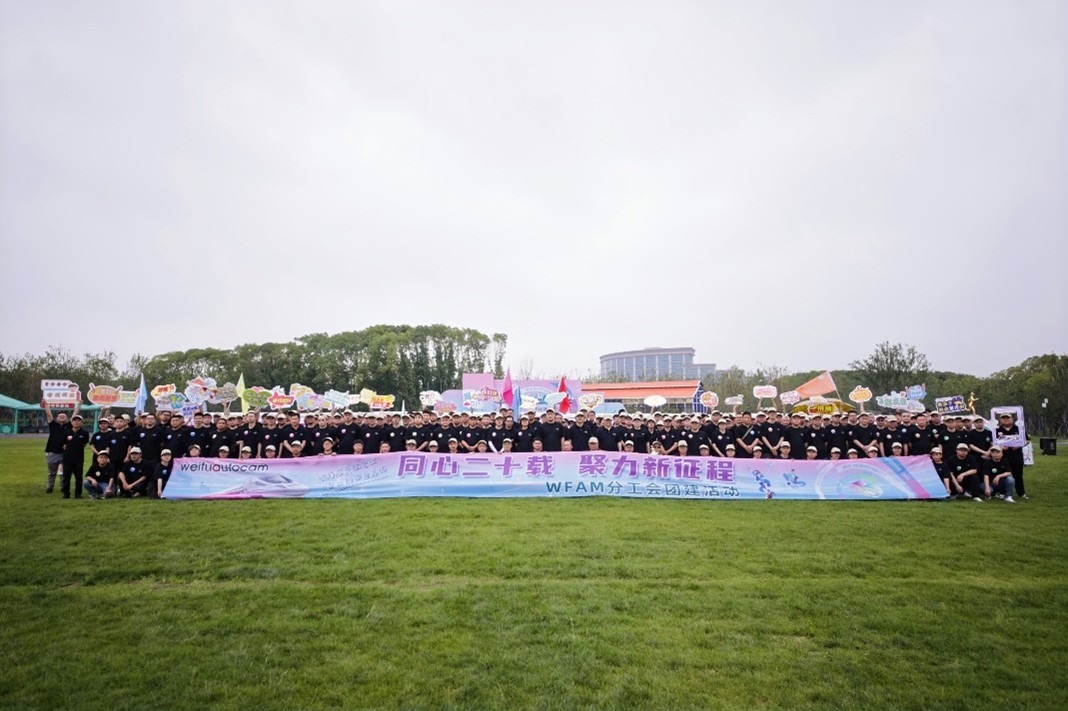
Core Viewpoint - NN, Inc. has received approval from the Chinese government to continue its Joint Venture with Weifu in Wuxi, China, extending a successful 20-year partnership that has significantly contributed to the automotive market [1][2]. Company Overview - NN, Inc. is a global diversified industrial company that specializes in engineering and manufacturing high-precision components and assemblies for various markets [6]. - The company has a strong presence in China, with over $200 million in profitable sales across its three businesses, making it the largest global automotive market for NN [2][4]. Joint Venture Details - The Joint Venture, known as Wuxi Weifu Autocam, has achieved consistent growth, currently generating approximately $130 million in annual sales [2][3]. - The JV supplies high-end automotive parts for both local consumption and key export markets, playing a crucial role in the largest auto market globally, which sees about 29 million passenger vehicles sold annually [2]. Operational Insights - The Joint Venture is currently expanding due to increased business, having outgrown its existing facilities, and employs over 550 people across three shifts [3]. - NN, Inc. holds a 49% stake in the Joint Venture, while Weifu owns 51%, with key executives from NN serving on the Board of Directors [4]. Market Position - The Joint Venture is a key supplier to major automotive OEMs in China, including BYD, highlighting its importance in the local automotive supply chain [2].