Xpeng

Search documents
中国 “大众自动驾驶”-加速进入大众市场
2025-03-25 06:36
Summary of the Conference Call on Autonomous Driving in China Industry Overview - The autonomous driving (AD) sector in China is moving towards mainstream adoption, with significant advancements in technology and increased competition among electric vehicle (EV) manufacturers [2][16] - BYD has launched "God's Eye," an advanced smart-driving system, which will be integrated into its mass-market EVs, enhancing the adoption of autonomous driving features [2][16] - Other competitors like Tesla, Xpeng, Li Auto, and Geely are also enhancing their smart driving capabilities, leading to rising sector share prices [2][18] Key Points and Arguments - **Market Dynamics**: The introduction of advanced autonomous driving features is expected to drive up stock prices, but increased competition may lead to price cuts and margin pressures, accelerating industry consolidation [2][30] - **Consumer Trends**: Consumer acceptance of autonomous driving is rising, with 86% of China's auto market comprising vehicles priced below RMB300,000. BYD and Tesla dominate the market segments below RMB300,000 [22][23] - **Penetration Rates**: The estimated penetration rate of higher-level autonomous driving functions in China's EV market is approximately 11%, rising to 17% when including Tesla [24][26] - **Future Projections**: The EV penetration rate in China is projected to reach 60% in 2025, 69% in 2026, and 99% by 2030, which will significantly impact the adoption of smart driving features [24] Investment Opportunities - **Preferred Automakers**: EV makers with strong autonomous driving capabilities and robust product cycles are best positioned to benefit from the market dynamics [3][20] - **Supply Chain Opportunities**: The smart driving supply chain presents multiple growth opportunities for component makers, as many EV manufacturers rely on tech suppliers for software, AI chips, and sensors [4][39] - **Initiations of Coverage**: HSBC Qianhai Securities has initiated coverage on Desay and Tuopu, both key players in the supply chain, with Buy ratings due to their strong positioning in the autonomous driving market [5][45] Additional Insights - **Consumer Preferences**: The proportion of intelligent features influencing buying decisions has increased from 12% in 2022 to 14% in 2023, indicating a growing trend towards smart vehicles [50][58] - **Pricing Strategies**: As autonomous driving features become commoditized, consumer willingness to pay for these features has declined, particularly in Tier-1 cities [51][60] - **Technological Advancements**: The shift towards AI-based algorithms and increased computing power among key players like Huawei, Xpeng, and Li Auto is crucial for the development of autonomous driving technology [65][69] Risks and Challenges - **Market Risks**: Potential risks include lower-than-expected consumer adoption, regulatory tightening, and global trade tensions affecting China's smart EV technology exports [35][36] - **Sustainability Concerns**: Questions remain regarding the long-term business model sustainability for autonomous driving component suppliers, despite their growth opportunities [39][40] This summary encapsulates the key insights and developments in the autonomous driving sector in China, highlighting the competitive landscape, investment opportunities, and potential risks.



Investor Presentation_ 中国汽车行业概览
2025-03-23 15:39
Summary of China Autos Overview Industry Overview - The report focuses on the **China automotive industry**, particularly the **passenger vehicle (PV)** and **new energy vehicle (NEV)** segments [11][15]. - The overall industry view is categorized as **In-Line** by Morgan Stanley [3]. Key Forecasts - **Passenger Vehicle Sales**: Estimated at **28.3 million units** in 2025, reflecting a **3% year-over-year (YoY)** growth [11][15]. - **New Energy Vehicle Sales**: Projected at **14.9 million units** in 2025, indicating a **21% YoY** increase [11][15]. - **Wholesale NEV penetration** is expected to recover to **46%** in February 2025 [22]. Market Dynamics - The **NEV market** is expected to see a significant increase in penetration, with **PHEVs (including EREVs)** accounting for approximately **40%** of NEV sales [28]. - The **L2+ autonomous driving penetration** forecast has been raised to **25%** in 2025, up from a previous estimate of **15%** [17][19]. Competitive Landscape - The report highlights **intensifying competition** in the China EV market, with local brands gaining market share from foreign brands [37][43]. - **Tech heavyweights** are entering the market, partnering with local OEMs to develop smart EVs and autonomous driving solutions [40][39]. Export and Trade Barriers - **Asia and Europe** accounted for over **70%** of China's vehicle exports in 2024 [48]. - Recent trade barriers have been raised, including a **102.5% tariff on Chinese EVs** in the USA and increased tariffs in the EU [50]. Company Insights - **BYD** is expanding its offshore production capacity with plans for new facilities in **Thailand, Brazil, Uzbekistan, Hungary, Indonesia, and Turkey** [54]. - The report indicates that **local brands** continue to gain share from foreign brands, with **BYD** leading in NEV market share [34][43]. Pricing and Discounts - Retail discounts and price cuts in the automotive sector have stabilized but remain steep, indicating ongoing competitive pressures [25]. Conclusion - The China automotive industry is poised for growth, particularly in the NEV segment, despite challenges from trade barriers and increasing competition. Local brands are expected to continue gaining market share, supported by strategic partnerships and technological advancements.
Baidu Shares Rise 12.6% in 6 Months: Time to Buy the Stock?
ZACKS· 2025-03-06 15:55
Core Insights - Baidu, Inc. has experienced a 12.6% increase in shares over the past six months, outperforming the Zacks Computer and Technology sector's growth of 9.3, as it transitions from an Internet-centric business to an AI-focused technology leader [1] Financial Performance - In Q4 2024, Baidu's total revenues slightly declined by 2% year-over-year to RMB34.1 billion ($4.68 billion), while Baidu Core revenues increased by 1% to RMB27.7 billion ($3.8 billion) [2] - The AI Cloud business showed significant growth, achieving a 26% year-over-year increase in Q4 2024, which helped mitigate a 7% decline in the traditional online marketing business [3] Strategic Developments - Baidu's ERNIE foundation model handled approximately 1.65 billion API calls daily in December 2024, with external API calls growing by 178% quarter-over-quarter [6] - The company plans to open-source its upcoming ERNIE 4.5 series and make ERNIE Bot free for users to enhance market awareness and adoption [7] - AI-enabled features in Baidu Wenku reached 94 million monthly active users in December 2024, marking a 216% year-over-year increase [8] Autonomous Driving Initiatives - Baidu's Apollo Go service provided over 1.1 million rides in Q4 2024, a 36% increase year-over-year, and surpassed nine million total rides in January 2025 [9] - The company has secured permits for autonomous driving testing in Hong Kong, expanding its market presence [10] Competitive Landscape - Baidu faces competition in the AI cloud market from Alibaba and Tencent, which have strong enterprise relationships and financial resources [11] - The autonomous driving sector is becoming increasingly competitive with emerging players like Xpeng and WeRide [11] Valuation Metrics - Baidu's current forward 12-month P/S ratio is 1.65x, significantly lower than the Zacks Internet - Services industry average of 5.57x, indicating a discounted valuation [12] Financial Position - As of December 31, 2024, Baidu held RMB139.1 billion ($19.06 billion) in cash and equivalents, and has repurchased over $1 billion in shares since the beginning of 2024 [15] - The Zacks Consensus Estimate for 2025 revenues is $18.73 billion, reflecting a year-over-year decline of 1.31%, while earnings estimates have increased by 3.9% over the past 30 days [16] Future Outlook - Baidu is positioned to benefit from continued AI adoption and autonomous driving expansion, with expectations for gradual improvement in its advertising business and strong momentum in the AI Cloud sector [19] - The current stock price may represent an attractive entry point for long-term investors, given the company's technology leadership and strategic focus on high-growth areas [20]



Chinese EV startup Xpeng delivers over 30,000 cars for a fourth straight month
CNBC· 2025-03-03 08:45
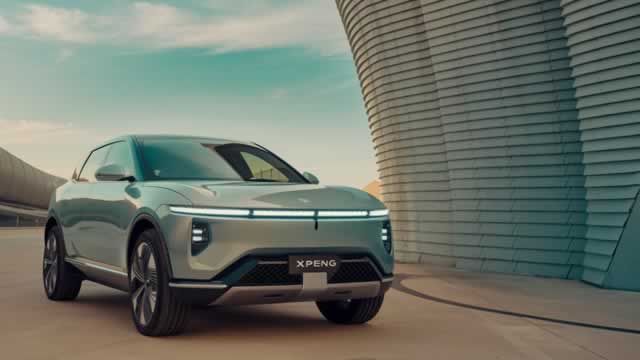
Group 1 - Xpeng delivered over 30,000 cars for the fourth consecutive month in February, totaling 30,453 vehicles, with more than 15,000 units being the lower-priced Mona model [1][2] - Deliveries of the Mona M03 have consistently exceeded 15,000 units per month since December, indicating strong market demand [2] - The P7+ electric sedan has also seen robust demand, surpassing 30,000 deliveries within three months of its launch in November [2] Group 2 - The January to February period is typically a seasonally weak time for Chinese car sales due to the Lunar New Year holiday [3] - The local auto market is highly competitive, with traditional automakers and new entrants actively reducing prices and introducing vehicles with advanced technology features [3] - Analysts from Nomura suggest that Xpeng's upcoming vehicle launches could help maintain its delivery momentum [2]