
Astria Therapeutics

Search documents
Astria Therapeutics(ATXS) - 2025 Q1 - Quarterly Report
2025-05-13 20:01
Clinical Development - Navenibart is in clinical development for hereditary angioedema (HAE) and has received Fast Track and Orphan Drug designations from the FDA [80]. - The Phase 3 trial of navenibart, ALPHA-ORBIT, involves up to 135 adults and 10 adolescents, with top-line results expected in early 2027 [81]. - STAR-0310 is in early clinical development, with a Phase 1a trial initiated in January 2025, and early proof-of-concept results anticipated in Q3 2025 [87]. - Initial proof-of-concept data for navenibart from the ALPHA-STAR trial showed a 91% reduction in monthly attack rate and 50% of patients being attack-free at 3 months [86]. - The ongoing ALPHA-SOLAR trial will provide long-term safety and efficacy data for navenibart, with initial results expected in mid-2025 [84]. Financial Performance - The company reported net losses of $33.7 million for Q1 2025, compared to $19.9 million for Q1 2024, with an accumulated deficit of $708.5 million as of March 31, 2025 [90]. - Research and development expenses for navenibart were $11.8 million for Q1 2025, up from $7.1 million in Q1 2024, while STAR-0310 expenses were $7.4 million compared to $3.0 million in the same period [95]. - Research and development expenses increased by $12.1 million to $27.8 million for the three months ended March 31, 2025, representing a 77% increase compared to the same period in 2024 [106]. - General and administrative expenses rose by $0.8 million to $9.2 million for the three months ended March 31, 2025, an increase of 9% from the previous year [106]. - Net loss for the three months ended March 31, 2025, was $33.7 million, compared to a net loss of $19.9 million for the same period in 2024, reflecting an increase of $13.8 million [105]. - Net cash used in operating activities was $34.0 million for the three months ended March 31, 2025, compared to $19.1 million for the same period in 2024 [114]. - The company incurred an accumulated deficit of $708.5 million as of March 31, 2025, primarily due to ongoing research and development activities [119]. - Other income, net decreased by $0.9 million to $3.3 million for the three months ended March 31, 2025, a decrease of 22% from the previous year [107]. Funding and Capital Requirements - As of March 31, 2025, the company had $295.1 million in cash and equivalents, expected to fund operations into mid-2027 [91]. - The company plans to seek additional funding to support the development and commercialization of navenibart and STAR-0310 due to significant capital requirements [91]. - The company expects to need substantial additional funding to complete the development and commercialization of its product candidates, including navenibart and STAR-0310 [111]. - The company raised an aggregate of $839.2 million through equity financings since inception, including private placements and registered offerings [108]. - The company expects to finance its cash needs through equity offerings, debt financings, collaborations, strategic alliances, and licensing arrangements, with no committed external source of funds currently available [122]. - If the company raises funds through collaborations or licensing arrangements, it may have to relinquish valuable rights to its technologies or grant licenses on unfavorable terms [123]. Regulatory and Commercialization Risks - The company faces uncertainty regarding the outcome, timing, and costs of seeking regulatory approvals for its product candidates, which could impact commercialization activities [125]. - The company has potential obligations under its license agreement with Ichnos for STAR-0310, which includes milestone payments and tiered royalties contingent upon development and regulatory approval milestones [127]. - The company has incurred costs related to preparing, filing, and prosecuting patent applications, as well as maintaining and protecting its intellectual property rights [125]. - The company anticipates that its commercial revenues will not be generated for several years, if at all, necessitating reliance on additional financing [121]. - The company has no assurance that it will achieve commercial success with its product candidates, including navenibart and STAR-0310 [121]. Operational Considerations - The company anticipates an increase in general and administrative expenses as it continues to grow and develop its product pipeline [100]. - The company’s headcount growth and associated costs will be a factor in its future financial performance [125]. - The company’s agreements with CROs and third-party manufacturers are generally cancelable with prior notice, and its non-cancelable obligations under these agreements are not considered material [126]. - As of March 31, 2025, the company has material contractual obligations including a sublease requiring monthly payments of $0.1 million from September 1, 2024, until November 30, 2028, and milestone payments of $2.2 million and $2.0 million for clinical trials of navenibart and STAR-0310, respectively, which were met during the three months ended March 31, 2025 [124].

Astria Therapeutics (ATXS) 2025 Conference Transcript
2025-05-07 15:30
Summary of Astria Therapeutics Conference Call Company Overview - **Company**: Astria Therapeutics (ATXS) - **Focus**: Development of first-choice products for allergic and immunologic diseases, particularly hereditary angioedema (HAE) [5][6] Key Products and Pipeline - **Lead Program**: Nivenabart - **Type**: Monoclonal antibody inhibitor of plasma calacrine - **Efficacy**: Demonstrated over 90% attack rate reduction in phase 1b/2 trial with dosing options of every three months or six months [6][12][17] - **Market Potential**: Expected market size for HAE to reach approximately $5.4 billion by 2030, driven by earlier diagnosis, increased use of preventative therapies, and geographic expansion [12] - **Competitive Advantage**: Aims to be a first-choice option due to its favorable dosing schedule and efficacy profile compared to existing treatments like TEXYRO, which requires bi-weekly dosing [19][13] - **Second Program**: STAR310 - **Type**: Monoclonal antibody antagonist of the OX40 receptor - **Current Status**: In phase 1a trial with initial results expected in Q3 [8][59] - **Mechanism**: Designed to avoid safety issues seen in previous OX40 programs, aiming for a differentiated profile in treating atopic dermatitis [61][62] Market Landscape and Competitive Analysis - **HAE Market**: Competitive with several existing therapies, but Nivenabart's unique dosing schedule and efficacy could position it as a market leader [9][14] - **Patient Willingness to Switch**: Evidence suggests patients are open to switching to new therapies that offer better efficacy and tolerability [15][16] - **Regulatory Strategy**: Phase 3 trial designed to test both dosing regimens (every three and six months) globally, with a focus on patient experience [30][66] Clinical Trial Insights - **Phase 1b/2 Trial Results**: Showed significant reductions in attack rates and severity of attacks, with a favorable safety profile [17][28] - **Phase 3 Trial Design**: Single trial to support both dosing regimens, with a primary endpoint of attack rate reduction at six months [29][30] - **Long-term Data**: Upcoming data from the Alpha Solar trial expected to provide insights into long-term safety and efficacy [24][67] Financial Position and Future Milestones - **Cash Position**: Strong cash reserves expected to last until mid-2027, covering key milestones for Nivenabart [66] - **Upcoming Milestones**: - Mid-year: Alpha Solar long-term extension data for Nivenabart - Q3: Phase 1a data for STAR310 [67] Conclusion - Astria Therapeutics is positioned to make significant strides in the treatment of hereditary angioedema and atopic dermatitis with its innovative therapies, Nivenabart and STAR310. The company is focused on delivering compelling clinical data and navigating a competitive landscape to establish itself as a leader in these therapeutic areas.
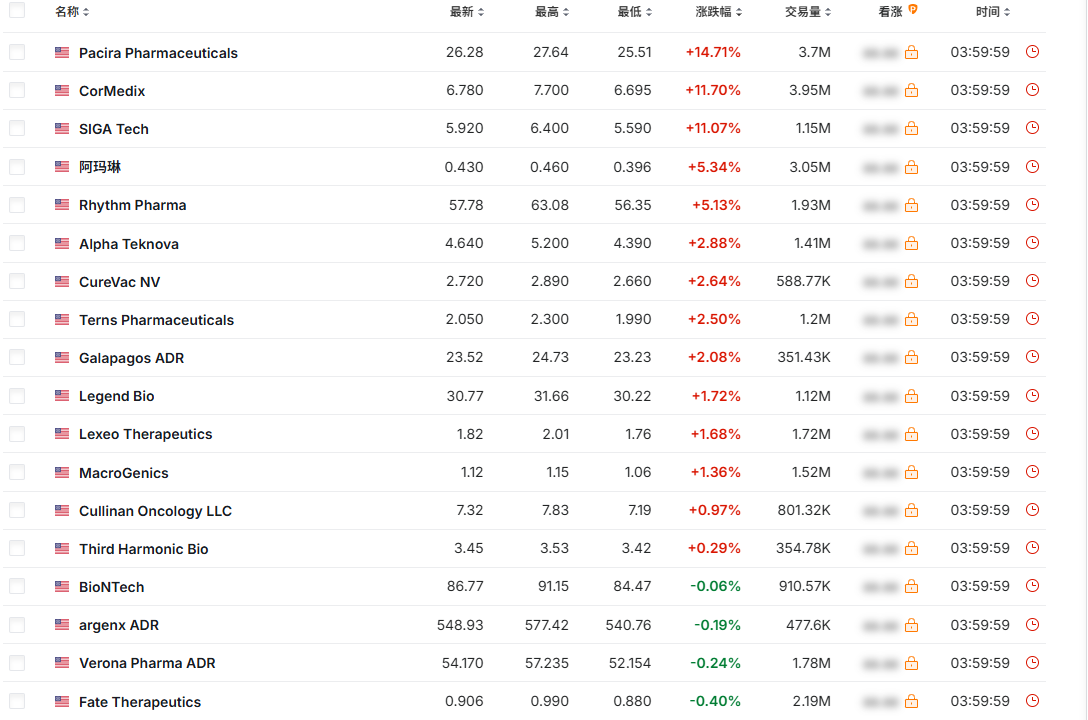
纳斯达克生物科技指数收跌3.24%
news flash· 2025-04-08 20:48
SIGA Tech则收涨11.07%,CorMedix涨11.70%,Pacira Pharmaceuticals涨14.71%。 | D 名称 ÷ | | 最新 ⇒ | 醫學 → | 磨促 ⇒ | 涨跌幅 ⇒ | 交易量 | 看涨 P | 时间 ÷ | | --- | --- | --- | --- | --- | --- | --- | --- | --- | | ■ | 트 Pacira Pharmaceuticals | 26.28 | 27.64 | 25.51 | +14.71% | 3.7M | ■日 | 03:59:59 0 | | D | | | | | | | | | | | = CorMedix | 6.780 | 7.700 | 6.695 | +11.70% | 3.95M | 印刷台 | 03:59:59 0 | | D | SIGA Tech | 5.920 | 6.400 | 5.590 | +11.07% | 1.15M | ■■合 | 03:28:20 G | | L | 三 阿玛琳 | 0.430 | 0.460 | 0.396 | +5.34% | 3.05M | 图图 ...

Astria Therapeutics(ATXS) - 2024 Q4 - Annual Report
2025-03-11 20:01
Clinical Development and Trials - Navenibart is in clinical development for hereditary angioedema (HAE) and aims to be a best-in-class monoclonal antibody with long-acting, effective attack prevention [25]. - In the Phase 1b/2 trial (ALPHA-STAR), navenibart demonstrated a 91% reduction in monthly attack rate and a 96% reduction in moderate and severe attacks over six months [28]. - The Phase 3 trial (ALPHA-ORBIT) for navenibart began in February 2025, with top-line results expected in early 2027, evaluating up to 135 adults and 10 adolescents [27]. - The ALPHA-SOLAR trial is ongoing to assess long-term safety and efficacy of navenibart, with initial data expected in mid-2025 [33]. - The Phase 1a clinical trial of navenibart involved 41 healthy subjects, with no serious adverse events reported and a low risk of injection pain [45]. - A total of 29 patients were enrolled in the ALPHA-STAR trial to accelerate data collection for potential regulatory filings [47]. - The FDA granted IND clearance for STAR-0310 for the treatment of AD in December 2024, with a Phase 1a clinical trial initiated in January 2025 [58]. - STAR-0310 is being developed for moderate-to-severe AD, with competitive factors including safety, efficacy, and pricing [69]. Market Potential and Competitive Landscape - The global HAE therapy market was estimated at $2.8 billion in 2023 and is projected to grow to $5.4 billion by 2030, driven by earlier diagnoses and increased treatment adoption [42]. - STAR-0310, a monoclonal antibody OX40 antagonist, is being developed for atopic dermatitis (AD) and other allergic diseases, with a potential market growth from $7 billion in 2022 to $26 billion by 2030 [55]. - The competitive landscape for HAE treatments includes four FDA-approved therapies for long-term prevention, with navenibart expected to compete directly with TAKHZYRO [67]. - CSL Behring's garadacimab has completed Phase 3 development for preventative treatment of HAE and is approved in the EU, Australia, and the UK under the brand name ANDEMBRY [68]. - Ionis Pharmaceuticals' donidalorsen has completed Phase 3 development for preventative treatment with a PDUFA date set for August 21, 2025 [68]. - KalVista's sebetralstat for on-demand treatment of HAE has completed Phase 3 development with a PDUFA date set for June 17, 2025 [68]. Regulatory Designations and Compliance - Navenibart received Fast Track and Orphan Drug designations from the FDA, and Orphan Medicinal Product Designation from the European Commission for HAE treatment [26]. - The FDA requires sponsors to conduct adequate and well-controlled human clinical trials to establish the safety and efficacy of proposed drug products [93]. - The FDA's regulations require that pharmaceutical products be manufactured in compliance with cGMPs, which include specific requirements for facilities and processes [124]. - The FDA may impose clinical holds on trials if there are safety concerns, which can delay or suspend the trial until issues are resolved [95]. - The FDA requires that clinical trial results be registered and disclosed on clinicaltrials.gov, with potential delays in result disclosure [115]. Drug Development and Approval Process - The IND process requires a 30-day waiting period after submission before clinical trials can commence, allowing the FDA to review the application for safety and quality [94]. - Clinical trials are divided into four phases, with Phase 3 trials typically required for marketing approval, focusing on evaluating the drug's effectiveness and safety in a larger patient population [107]. - The FDA aims to review 90% of New Molecular Entity (NME) applications within ten months of acceptance for filing, and priority review applications within six months [133]. - The FDA may grant accelerated approval for drugs that provide meaningful therapeutic advantages for serious conditions based on surrogate endpoints [150]. - A Complete Response Letter (CRL) indicates that an application will not be approved in its current form and outlines deficiencies that must be addressed [143]. Intellectual Property and Exclusivity - The company has five patent families directed to navenibart, with expiration dates ranging from 2042 to 2045 depending on the application [75][78][79]. - Orphan drug designation provides seven years of exclusivity for drugs treating rare diseases, with specific conditions for approval [179]. - Patent term restoration allows for up to five years of extension for patents lost during development and FDA review [184]. - Pediatric exclusivity can extend regulatory exclusivity by six months if a pediatric study is completed [181]. Company Operations and Workforce - As of December 31, 2024, the company had 78 full-time employees, with 45 engaged in research and development [87]. - The company relies on third-party manufacturers for the production of navenibart and STAR-0310, ensuring compliance with cGMPs [86].
Astria Therapeutics(ATXS) - 2024 Q4 - Annual Results
2025-03-11 12:07
Financial Performance - Net loss for 2024 was $94,260,000, up from $72,891,000 in 2023, indicating a 29.2% increase in losses[16] - The net loss for Q4 2024 was $25.6 million, compared to a net loss of $31.4 million in Q4 2023, reflecting a 18% improvement[10] - The operating loss for Q4 2024 was $29.6 million, a decrease of 13% from $34.2 million in Q4 2023[9] - Net loss per share attributable to common shareholders improved to $(1.68) in 2024 from $(2.42) in 2023[16] - The net loss per share for Q4 2024 was $0.44, down from $0.86 per share in Q4 2023, representing a 49% reduction[11] Cash and Investments - As of December 31, 2024, Astria had cash, cash equivalents, and short-term investments of $328.1 million, up from $246.5 million as of December 31, 2023, indicating a 33% increase year-over-year[6] - Cash and cash equivalents decreased to $59,820,000 in 2024 from $175,530,000 in 2023, a decline of 66.0%[18] - Net cash used in operating activities was $(81,212,000) in 2024, compared to $(68,445,000) in 2023, representing a 18.5% increase in cash outflow[20] - Net cash provided by financing activities rose to $157,202,000 in 2024 from $88,398,000 in 2023, an increase of 77.8%[20] Operating Expenses - Total operating expenses for 2024 increased to $111,558,000 from $83,030,000 in 2023, representing a 34.5% increase[16] - Research and development expenses for Q4 2024 were $20.2 million, a 73% increase from $11.7 million in Q4 2023, driven by external expenses for clinical trials[7] - Research and development expenses rose significantly to $77,106,000 in 2024, compared to $42,127,000 in 2023, marking a 83.1% increase[16] - General and administrative expenses for Q4 2024 were $9.4 million, up 29% from $7.3 million in Q4 2023, attributed to stock-based compensation and company growth[8] Assets and Liabilities - Total assets increased to $342,363,000 in 2024, up from $254,666,000 in 2023, reflecting a growth of 34.3%[18] - Total stockholders' equity increased to $319,263,000 in 2024, up from $243,116,000 in 2023, a growth of 31.3%[18] - Total liabilities increased to $23,100,000 in 2024 from $11,550,000 in 2023, a rise of 99.0%[18] Clinical Trials - The ALPHA-ORBIT Phase 3 trial of navenibart commenced in February 2025, with top-line results expected in early 2027, involving up to 135 adult and 10 adolescent patients[3] - Initial efficacy and safety data from the ALPHA-SOLAR long-term extension trial of navenibart are expected in mid-2025[1] - The Phase 1a trial of STAR-0310 is ongoing, with initial results anticipated in Q3 2025, aiming to demonstrate its differentiated profile[2]
Astria Therapeutics(ATXS) - 2024 Q3 - Quarterly Report
2024-11-13 21:01
Financial Performance - The company reported net losses of $68.6 million for the nine months ended September 30, 2024, compared to $41.5 million for the same period in 2023[65]. - The company has an accumulated deficit of $649.2 million as of September 30, 2024, and has not generated any product revenues[65]. - Net loss for the nine months ended September 30, 2024, was $68.63 million, an increase of $27.15 million or 65% compared to a net loss of $41.48 million in the prior year[74]. - Other income, net increased by $6.0 million to $13.3 million for the nine months ended September 30, 2024, a 82% increase from $7.3 million in the same period of 2023[77]. - For the nine months ended September 30, 2024, net cash used in operating activities was $63.9 million, compared to $38.2 million for the same period in 2023[83]. - Net cash used in investing activities was $188.1 million for the nine months ended September 30, 2024, primarily due to purchases of short-term investments totaling $3.5 billion[83]. - Net cash provided by financing activities was $157.2 million for the nine months ended September 30, 2024, driven by net proceeds from the February 2024 Financing and ATM Programs[85]. Cash and Funding - As of September 30, 2024, the company had $344.3 million in cash, cash equivalents, and short-term investments, expected to fund operations into mid-2027[65]. - The gross proceeds from the October 2023 Financing were $64.0 million, and from the February 2024 Financing were $125.0 million[64]. - Existing cash, cash equivalents, and short-term investments are expected to fund operations into mid-2027, covering ongoing clinical trials and development activities[86]. - The company expects to finance future cash needs through equity offerings, debt financings, and collaborations, with no committed external sources of funds[88]. - The company sold 1,504,619 shares under the 2024 ATM Program for gross proceeds of $15.6 million in the three months ended September 30, 2024[81]. Research and Development - Research and development expenses increased by $26.5 million to $56.9 million for the nine months ended September 30, 2024, representing an 87% increase compared to the same period in 2023[75]. - Research and development expenses for the three months ended September 30, 2024, were $20.5 million, a 54% increase from $13.3 million in the same period of 2023[72]. - The company expects to incur significant research and development expenses in 2024 related to clinical trials for navenibart and STAR-0310, with higher expenses anticipated over the next several quarters[72]. Clinical Trials and Product Development - Navenibart achieved a 92% reduction in monthly attack rate and a 96% reduction in moderate and severe attacks in Cohort 1 after 6 months of follow-up[57]. - In Cohort 2, a 600 mg dose followed by a 300 mg dose resulted in a 96% reduction in monthly attack rate and 67% of patients were attack-free after 6 months[59]. - The company plans to initiate a Phase 1a clinical trial for STAR-0310 in healthy subjects in Q1 2025, with initial results expected in Q3 2025[63]. - The company aims to start a Phase 3 pivotal trial for Navenibart in Q1 2025, with top-line results expected by year-end 2026[59]. - STAR-0310 exhibited a long mean half-life of 26 days in preclinical studies, compared to 10-14 days for typical non-half-life extended IgG antibodies[60]. - Navenibart has received Fast Track and Orphan Drug designations from the FDA for the treatment of hereditary angioedema[57]. Operating Expenses - General and administrative expenses rose by $6.6 million to $25.0 million for the nine months ended September 30, 2024, a 36% increase from the prior year[77]. - General and administrative expenses for the three months ended September 30, 2024, increased by $1.6 million to $8.5 million, a 23% increase from the prior year[72]. - Total operating expenses for the nine months ended September 30, 2024, were $81.97 million, up $33.14 million or 68% from $48.83 million in the same period of 2023[74]. - Total operating expenses for the three months ended September 30, 2024, were $29.01 million, up $8.78 million or 43% from $20.24 million in the same period of 2023[71]. Internal Controls - The company has not made any changes to its internal control over financial reporting that materially affected its financial reporting during the nine months ended September 30, 2024[92].
Astria Therapeutics(ATXS) - 2024 Q2 - Quarterly Report
2024-08-12 20:01
Financial Performance - The company reported net losses of $44.1 million for the six months ended June 30, 2024, compared to $23.8 million for the same period in 2023, with an accumulated deficit of $624.6 million[72]. - Total operating expenses for the six months ended June 30, 2024, were $52.95 million, an increase of 85% from $28.6 million in the same period in 2023[82]. - The net loss for the six months ended June 30, 2024, was $44.1 million, compared to a net loss of $23.8 million for the same period in 2023, representing an increase of 85%[82]. - General and administrative expenses rose by 44% to $16.5 million for the six months ended June 30, 2024, from $11.5 million in the same period in 2023[85]. - Net cash used in operating activities was $35.9 million for the six months ended June 30, 2024, compared to $23.9 million for the same period in 2023[93]. - As of June 30, 2024, the company had an accumulated deficit of $624.6 million, indicating ongoing operating losses since inception[96]. Cash and Financing - As of June 30, 2024, the company had $354.7 million in cash, cash equivalents, and short-term investments, expected to fund operations into mid-2027[72]. - The gross proceeds from the October 2023 Financing were $64.0 million, and from the February 2024 Financing were $125.0 million[71]. - The company raised an aggregate of $823.4 million through equity financings from inception through June 30, 2024[86]. - The October 2023 Financing raised gross proceeds of $64.0 million, with net proceeds of $59.5 million[88]. - In February 2024, the company closed a financing round, selling 10,340,000 shares for gross proceeds of $125.0 million and net proceeds of $117.2 million[89]. - The company sold 2,945,806 shares under the 2021 ATM Program for gross proceeds of $20.6 million and net proceeds of $20.0 million in the six months ended June 30, 2024[90]. - Net cash provided by financing activities was $141.9 million for the six months ended June 30, 2024, mainly from net proceeds of $117.2 million from the February 2024 Financing[95]. - The company expects existing cash and short-term investments to fund operations into mid-2027, including activities related to the navenibart program and STAR-0310 OX40 program[96]. - The company may need to seek additional funds sooner than planned due to uncertainties in research and development[98]. Research and Development - Navenibart achieved a 92% reduction in monthly attack rate and a 96% reduction in moderate and severe attacks in the 450 mg dose cohort after 6 months of follow-up[65]. - In the 600 mg dose cohort, there was a 96% reduction in monthly attack rate and 100% of patients were attack-free in the first month after dosing[67]. - The company plans to initiate a Phase 3 pivotal trial for Navenibart in Q1 2025, with top-line results expected by year-end 2026[67]. - STAR-0310 demonstrated a long mean half-life of 26 days in preclinical studies, compared to 10-14 days for typical non-half-life extended IgG antibodies[68]. - The company anticipates submitting an IND for STAR-0310 by year-end 2024 and initiating a Phase 1a clinical trial in Q1 2025[70]. - The company expects to incur significant research and development expenses in 2024 related to navenibart and STAR-0310, with higher expenses anticipated in upcoming quarters[80]. - The company plans to report additional data from the ALPHA-STAR trial in Q4 2024 and initial data from the ALPHA-SOLAR trial in mid-2025[67]. Other Financial Information - Research and development expenses increased by 128% to $20.7 million for the three months ended June 30, 2024, compared to $9.1 million for the same period in 2023[80]. - Other income, net increased by 83% to $4.6 million for the three months ended June 30, 2024, from $2.5 million in the same period in 2023[81]. - Material cash requirements as of June 30, 2024, are primarily related to sublease agreements for office space[99]. - The company has not generated any product revenues and relies on public offerings and private placements for financing[72]. - The company has not made any changes in internal control over financial reporting that materially affected its financial reporting during the six months ended June 30, 2024[102]. - The company has filed various certifications pursuant to the Sarbanes-Oxley Act of 2002, including those from the principal executive and financial officers[105]. - The report includes Inline XBRL documents for detailed financial data presentation[105]. - The Chief Financial Officer, Noah C. Clauser, signed the report on August 12, 2024, confirming its accuracy[106].
Astria Therapeutics(ATXS) - 2024 Q1 - Quarterly Report
2024-05-09 20:01
Clinical Trial Results - STAR-0215 achieved a 92% reduction in monthly attack rate and a 96% reduction in moderate and severe attacks in Cohort 1 after 6 months of follow-up[79]. - STAR-0215 demonstrated a 96% reduction in monthly attack rate and 98% reduction in moderate and severe attacks in Cohort 2, with 100% of patients being attack-free in the first month after dosing[80]. - STAR-0215 has received Fast Track designation from the FDA for the treatment of hereditary angioedema[78]. - The company plans to initiate a pivotal Phase 3 trial for STAR-0215 in Q1 2025, with top-line results expected by year-end 2026[81]. - STAR-0310 is anticipated to enter Phase 1a clinical trials in Q1 2025, with initial results expected in Q3 2025[85]. - The company plans to expand enrollment in the ALPHA-STAR trial to a total of up to 28 patients to accelerate data collection for STAR-0215[81]. - The company anticipates initiating a Phase 3 pivotal trial for STAR-0215 in Q1 2025 and submitting an IND for STAR-0310 by year-end 2024[102]. Financial Performance - The company reported net losses of $19.9 million for the three months ended March 31, 2024, compared to $11.2 million for the same period in 2023, resulting in an accumulated deficit of $600.5 million[87]. - Research and development expenses totaled $15.7 million for the three months ended March 31, 2024, significantly higher than $8.0 million for the same period in 2023[92]. - General and administrative expenses rose by $2.9 million to $8.4 million for the three months ended March 31, 2024, an increase of 54% year-over-year[102]. - Total operating expenses for the three months ended March 31, 2024, were $24.2 million, up $10.7 million from $13.5 million in the same period of 2023[99]. - Net loss for the three months ended March 31, 2024, was $19.9 million, compared to a net loss of $11.2 million for the same period in 2023, reflecting an increase of $8.7 million[99]. - Other income, net increased by $1.9 million to $4.2 million for the three months ended March 31, 2024, an increase of 83% year-over-year[103]. - Net cash used in operating activities was $19.1 million for the three months ended March 31, 2024, compared to $13.3 million for the same period in 2023[111]. - Net cash provided by financing activities was $141.8 million for the three months ended March 31, 2024, primarily from the February 2024 Financing[114]. Cash Position and Funding - As of March 31, 2024, the company had $369.9 million in cash, cash equivalents, and short-term investments, expected to fund operations into mid-2027[88]. - The company raised an aggregate of $823.3 million through equity financings from inception through March 31, 2024[105]. - The company expects its existing cash, cash equivalents, and short-term investments to fund operations into mid-2027[117]. - Future funding requirements will depend on clinical trial progress, collaboration agreements, and regulatory approval outcomes[117]. - The company does not have any committed external sources of funds and may rely on equity offerings, debt financings, and collaborations for financing[119]. - If additional funds are not raised when needed, the company may have to delay or terminate product development efforts[120]. - Material cash requirements as of March 31, 2024, are primarily related to sublease agreements for office space[121]. Commercialization and Market Competition - The costs of commercialization activities for product candidates that receive marketing approval will be significant and may not be fully covered by collaborators[117]. - The company acknowledges that product candidates may not achieve commercial success, impacting future revenues[118]. - The company’s ability to compete against other approved products will be critical for the success of STAR-0215 and STAR-0310[117]. - The license agreement with Ichnos includes potential milestone payments and tiered royalties contingent upon product development and regulatory milestones[122]. - The company may face dilution of stockholders' ownership interests if additional capital is raised through equity sales[119].
Astria Therapeutics(ATXS) - 2023 Q4 - Annual Report
2024-03-03 16:00
Clinical Development - STAR-0215 is in clinical development for hereditary angioedema (HAE) and has the potential to be a best-in-class monoclonal antibody with administration every three or six months[26]. - The Phase 1a clinical trial of STAR-0215 demonstrated a favorable safety profile, with no serious adverse events and an estimated half-life of up to 109 days[28]. - Initial results from the Phase 1b/2 trial (ALPHA-STAR) are expected in Q1 2024, which will include safety, tolerability, pharmacokinetics, pharmacodynamics, and HAE attack-rate reduction data[30]. - The company plans to initiate a Phase 1a clinical trial for STAR-0310 in healthy subjects in Q1 2025, with initial results expected in Q3 2025[33]. - The Phase 1b trial for STAR-0310 in patients with AD is planned for the second half of 2025, with results expected in Q2 2026[33]. - Initial proof-of-concept data for STAR-0215 in HAE patients is expected in Q1 2024, with a Phase 3 pivotal trial anticipated to start in Q1 2025 if results are positive[40]. - The company plans to submit an IND for STAR-0310 by the end of 2024 and initiate a Phase 1a clinical trial in Q1 2025[51]. - The company has completed process and formulation development for STAR-0215 and is set to start process characterization and subsequent validation, ensuring sufficient material for clinical needs[74]. - The company has initiated cell line, process, and formulation development for STAR-0310, expanding its product pipeline[74]. - The company acknowledges that clinical trials may not yield results predictive of future success, and setbacks in late-stage trials are possible[213]. - Clinical trials for STAR-0215 are expected to be longer due to the dosing schedule of every three months or potentially less frequently[218]. - STAR-0310 clinical trials will be larger and more expensive compared to STAR-0215 due to its indication for a non-rare disease[218]. - Risks of clinical development include failure to demonstrate efficacy, insufficient patient enrollment, and potential regulatory disapproval[218]. - Delays in clinical trials could harm the commercial prospects of product candidates and delay revenue generation[218]. - Adverse events during trials could lead to significant delays or failure to obtain regulatory approval[218]. - The company faces heightened risks in drug development for rare diseases due to smaller patient populations[218]. Market Potential - The global market for HAE therapy is strong and growing, with an unmet medical need for effective treatments[27]. - The HAE treatment market was estimated to be over $2 billion in 2022 and is projected to grow to $4.5 billion by 2027, driven by earlier diagnoses and increased treatment adoption[37]. - The moderate-to-severe AD treatment market was approximately $7 billion in 2022 and is expected to grow to $26 billion by 2030 due to increased drug treatment rates and new therapies[48]. - Market research indicates strong interest from U.S. physicians and HAE patients for a product with the potential profile of STAR-0215[38]. - The competitive landscape for HAE and AD treatments is significant, with many companies developing alternative therapies that may impact market share[56][60]. Product Development - STAR-0310, a preclinical product candidate for atopic dermatitis (AD), is anticipated to submit an investigational new drug application (IND) by year-end 2024[33]. - STAR-0310 is being developed as a potential best-in-class treatment for AD, utilizing YTE half-life extension technology for infrequent dosing[43]. - STAR-0310 aims to address the unmet need for safe and effective therapies for moderate and severe AD patients, targeting multiple T cell pathways[46]. - STAR-0310 has shown potential for better efficacy compared to existing biologics, with preclinical studies indicating lower antibody-dependent cellular cytotoxicity[47]. - The company is exploring STAR-0310 for additional allergic and immunological indications, including asthma and chronic urticaria[52]. - The company is developing a drug device combination product for STAR-0215, indicating ongoing innovation in product offerings[74]. Regulatory Environment - STAR-0215 has received Fast Track designation from the FDA for the treatment of HAE, indicating its potential significance in addressing this condition[27]. - Regulatory processes for drug approval require substantial time and financial resources, including compliance with FDA regulations and obtaining necessary approvals[78]. - The FDA aims to review 90% of applications for New Molecular Entities (NMEs) within ten months of acceptance for filing, and 90% of priority review applications within six months[118]. - The FDA requires at least two adequate and well-controlled clinical trials to establish the effectiveness of a new product, although a single trial may suffice under certain circumstances[121]. - The FDA's acceptance of foreign clinical trial data for U.S. marketing approval is contingent upon compliance with GCP regulations and validation through on-site inspections if necessary[101]. - The FDA issues either a Complete Response Letter (CRL) or an approval letter after evaluating drug applications, determining that the drug is effective and its benefits outweigh risks[122]. - The FDA strictly regulates marketing and promotion of approved products, allowing promotion only for approved indications[140]. - Manufacturers must maintain compliance with regulatory requirements post-approval, or risk withdrawal of approval[139]. Intellectual Property - STAR-0215 and STAR-0310 have patent protections that could extend until 2042 and 2044 respectively, assuming all maintenance fees are paid[65][67]. - The patent term for STAR-0215 and STAR-0310 may be extended under the Hatch-Waxman Act, potentially adding up to five years beyond the original patent expiration[70][71]. - The company has in-licensed multiple patent families related to its product candidates, enhancing its intellectual property portfolio[68]. - Patent term restoration under the Hatch-Waxman Act allows for a limited extension of up to five years for patents lost during product development and FDA review, but cannot exceed a total of 14 years from the product's approval date[150]. Financial Considerations - Significant investment and access to commercial manufacturing capacity will be required for the development and commercialization of STAR-0215 and STAR-0310[207]. - The application user fee for federal fiscal year 2024 is approximately $4.05 million, with an annual program fee of $416,734 per eligible prescription product[116]. - The U.S. government is focusing on pharmaceutical pricing transparency and reducing costs under Medicare and Medicaid[189]. - The IRA caps Medicare out-of-pocket drug costs at $4,000 in 2024 and $2,000 in 2025, shifting some costs to drug manufacturers[194]. Workforce and Culture - As of December 31, 2023, the company employed 59 full-time employees, with 33 primarily engaged in research and development activities, including 14 with Ph.D. degrees[75]. - The company aims to attract, retain, and motivate employees through market-based cash compensation and equity incentive plans, which consist solely of stock options[76]. - The company emphasizes creating an inclusive environment where diversity is valued, considering its workforce as one of its biggest assets[77].
Astria Therapeutics(ATXS) - 2023 Q3 - Earnings Call Transcript
2023-11-13 18:45
Financial Data and Key Metrics Changes - As of September 30, 2023, the company had $188.8 million in cash, cash equivalents, and short-term investments, with a recent $64 million underwritten offering completed in October 2023, expected to support operations into 2026 [26][27]. Business Line Data and Key Metrics Changes - The STAR-0215 program is positioned as a first-choice preventative treatment for Hereditary Angioedema (HAE), with promising Phase 1a data indicating potential for dosing every three to six months [5][6]. - STAR-0310, an anti-OX40 antibody, is being developed for atopic dermatitis, with plans for an IND submission by the end of 2024 and Phase 1a initiation expected in Q1 2025 [6][20]. Market Data and Key Metrics Changes - The atopic dermatitis market is projected to reach $26 billion by 2030, with STAR-0310 expected to be a significant player following Dupixent [20]. Company Strategy and Development Direction - The company aims to develop first-choice products that improve health outcomes for patients with allergic and immunological diseases, focusing on strong efficacy, low treatment burden, and favorable safety profiles [6][18]. - The development strategy prioritizes a three-month dosing regimen for STAR-0215, followed by a six-month option, based on market research indicating high interest from patients and healthcare providers [16][18]. Management's Comments on Operating Environment and Future Outlook - Management expressed optimism about the potential of STAR-0215 to normalize the lives of HAE patients, with compelling data supporting its best-in-class profile [18]. - The company is looking to accelerate timelines for clinical trials and is actively engaging with the community to raise awareness and support for its programs [29][49]. Other Important Information - The ALPHA-STAR trial for STAR-0215 is progressing well, with initial proof-of-concept results expected in Q1 2024, and plans for a pivotal Phase 3 trial in Q1 2025 [15][27]. Q&A Session Summary Question: Can you talk about the accelerated timeline for Phase 1b data in HAE patients? - The timeline was accelerated due to achieving target enrollment in cohorts 1 and 2, allowing for an earlier interim analysis trigger [30]. Question: Will the Phase 3 design be similar to ASL targeting prekallikrein? - The Phase 3 trial is anticipated to be placebo-controlled, with a similar treatment period to other Phase 3 studies, focusing on changes from baseline and monthly attack rates [31]. Question: What data are you looking for in the upcoming ALPHA-STAR interim analysis? - The analysis will focus on changes from baseline on various efficacy parameters to inform the effectiveness of the drug [32]. Question: What do you consider a win in terms of reduction in HAE attack rates for the upcoming data readout? - A high proportion of patients being attack-free for predefined periods of time would be considered a significant win [38]. Question: Why is there less interest from doctors and patients for six-month dosing than three-month? - There may be perceptions of reduced efficacy with longer dosing intervals, and concerns about injection site pain associated with current formulations [40]. Question: What are you hearing from payers regarding the competitive landscape? - Payers are focused on efficacy, and the company aims to develop a treatment that provides comparable efficacy while enhancing patient compliance [45]. Question: Will the Phase 3 trial have a placebo arm, and will that impact enrollment? - It is expected that having a placebo arm will impact enrollment, but the company is working to mitigate this through strong proof-of-concept data and community support [49]. Question: What are the rate-limiting steps for accelerating the Phase 3 trial? - Key factors include analyzing data, obtaining regulatory input, and ensuring CMC processes do not impact timelines [51].