Freddie Mac

Search documents
Trump’s 50-year mortgage would save you about $119 a month while doubling the interest you pay over the long run, UBS estimates
Fortune· 2025-11-12 13:14
Core Insights - The Trump administration's proposal for a 50-year mortgage aims to enhance housing affordability but may lead to significantly higher interest payments over the loan's life [1][3][5] Mortgage Analysis - A UBS analysis indicates that extending the mortgage term from 30 to 50 years could lower monthly payments on a median-priced home by approximately $119, but would double the total interest paid over the loan's duration [2][3][5] - The average borrower could incur an additional $389,000 in interest over the life of a 50-year mortgage compared to a 30-year mortgage [5] Financial Implications - For a median-priced home valued at $420,000, a 12% down payment would result in a loan amount of $369,600, with a standard 30-year mortgage at a 6.33% interest rate leading to a monthly payment of $2,295 [6] - The proposed 50-year mortgage would have a higher interest rate of 6.83%, but would reduce the monthly payment to $2,176, increasing the average consumer's buying power by nearly $23,000 [7] Structural Challenges - The viability of the 50-year mortgage is complicated by the current conservatorship of Fannie Mae and Freddie Mac, which may affect the purchase and securitization of these longer-term loans [8] - Amending the Dodd-Frank Act to classify 50-year mortgages as qualifying loans may be challenging, potentially resulting in higher interest rates compared to 30-year loans [8] Housing Market Conditions - The housing market is experiencing significant inefficiencies, with affordability at its lowest since the mid-1980s and a structural shortage of 7 million homes in the U.S. [10] - UBS suggests that direct government investment in housing infrastructure, particularly through the use of manufactured wall panels, could be a viable solution to improve housing conditions [9][11] Political Reception - President Trump has downplayed the significance of the 50-year mortgage proposal, indicating it may not be a priority amid concerns from his voter base [12]


Mortgage and refinance interest rates today, November 12, 2025: Steady, near 2025 lows
Yahoo Finance· 2025-11-12 11:00
Core Insights - Mortgage rates are currently stable, with the average 30-year fixed rate at 6.16% and the 15-year fixed rate at 5.61%, showing a lack of momentum for significant decreases [1][15][17] Current Mortgage Rates - The national average mortgage rates are as follows: - 30-year fixed: 6.16% - 20-year fixed: 6.04% - 15-year fixed: 5.61% - 5/1 ARM: 6.54% - 7/1 ARM: 6.51% - 30-year VA: 5.61% - 15-year VA: 5.35% - 5/1 VA: 5.57% [4] Refinance Rates - Today's mortgage refinance rates are generally higher than purchase rates, with the following averages: - 30-year fixed: 6.33% - 20-year fixed: 6.30% - 15-year fixed: 5.82% - 5/1 ARM: 6.63% - 7/1 ARM: 6.95% - 30-year VA: 5.97% - 15-year VA: 5.77% - 5/1 VA: 5.42% [5] Market Trends - Mortgage rates are expected to remain within a tight range in the coming months, with the Federal Reserve contemplating a potential cut to short-term interest rates, though this is unlikely to lead to significant decreases in mortgage rates [17] Historical Context - Mortgage rates have shown fluctuations but have generally trended lower since the government shutdown, with current rates being below those from a year ago according to Freddie Mac data [18]
SA Asks: Should Fannie, Freddie take equity stakes in tech companies?
Seeking Alpha· 2025-11-11 20:00
Last week, Federal Housing Finance Authority Director Bill Pulte said government-sponsored financing entities Fannie Mae (OTCQB:FNMA) and Freddie Mac (OTCQB:FMCC) were looking at taking equity stakes in tech companies. “We have some of the biggest technology and public companies offering ...
The 50-year mortgage would cost you nearly $400k more than the standard, AP analysis says
Fortune· 2025-11-11 19:19
Core Viewpoint - The White House is considering a 50-year mortgage to address the home affordability crisis, but this proposal has faced criticism for not addressing fundamental issues in the housing market, such as supply shortages and high interest rates [1][8]. Mortgage Structure and Financial Implications - A 50-year mortgage would lower monthly payments compared to a 30-year mortgage, with an example showing a payment of $2,022 for a 50-year mortgage versus $2,288 for a 30-year mortgage based on an average home price of $415,200 and a 10% down payment [4][5]. - However, borrowers would pay approximately $389,000 more in interest over the life of a 50-year mortgage compared to a 30-year mortgage, significantly slowing equity accumulation [6][7]. Housing Market Challenges - The introduction of a 50-year mortgage does not address the critical issue of housing supply, which remains a significant barrier to affordability [8]. - Rising costs of construction materials and labor shortages, exacerbated by tariffs and immigration policies, further complicate the housing supply situation [9]. Demographic Considerations - The average age of first-time homebuyers is around 40 years, making a 50-year mortgage challenging to underwrite, as it would extend the loan term beyond the average life expectancy of 79 years [12][13]. Legislative and Regulatory Context - Current regulations under the Dodd-Frank Act prevent Fannie Mae and Freddie Mac from insuring mortgages longer than 30 years, meaning a 50-year mortgage would be classified as a "non-qualifying mortgage," complicating its marketability [17].
Housing affordability is so strained that Trump is considering a 50-year mortgage. Here are 11 things to know
Fastcompany· 2025-11-11 18:15
Core Insights - The announcement by FHFA Director Bill Pulte indicates that Fannie Mae and Freddie Mac will remain in conservatorship, alleviating concerns about rising mortgage rates due to potential exits from conservatorship [3] - A new 50-year mortgage option is being considered to help improve housing affordability, with the government planning to sell up to 5% of shares back to the public [3] Mortgage Rate Implications - A 50-year mortgage is expected to carry a higher interest rate, estimated to be 42 to 57 basis points above the standard 30-year fixed mortgage rate [7][8] - The average 30-year fixed mortgage rate was reported at 6.22%, suggesting a potential 50-year mortgage rate between 6.64% and 6.79% [8] Monthly Payment Analysis - The primary advantage of a 50-year mortgage is lower monthly payments, with a $400,000 mortgage at 6.22% resulting in a monthly payment of approximately $2,455 for a 30-year term, compared to about $2,297 for a 50-year term, yielding a savings of roughly $158 per month [9][10] Long-term Financial Considerations - Borrowers using a 50-year mortgage would pay significantly more in total interest, with an estimated total interest payment of around $980,000 compared to $483,000 for a 30-year mortgage [14] - The slower pace of principal repayment in a 50-year mortgage means homeowners build equity much more slowly, with only about 9% of the balance paid off after 10 years compared to 20% for a 30-year mortgage [16] Market Demand and Public Sentiment - The introduction of a 50-year mortgage could create some additional housing demand, but it is unlikely to be substantial due to the current housing market conditions [19] - Early polling indicates that public sentiment towards the 50-year mortgage is largely unfavorable, which may hinder its implementation [20]
Trump proposes 50-year mortgage, but some say homeowner savings would be minimal
CNBC· 2025-11-10 17:48
Core Viewpoint - The Trump administration is exploring a 50-year mortgage option to enhance home affordability, which could lower monthly payments but may have significant trade-offs regarding equity and interest costs [2][4]. Mortgage Structure and Impact - A 50-year mortgage could reduce monthly payments from $2,056 on a 30-year loan to $1,823, saving homeowners $233 monthly based on a median home price of $415,200 and a 20% down payment at a 6.3% interest rate [3]. - Homeowners would build equity more slowly due to smaller principal payments, and the total interest paid would increase by 40% compared to shorter-term loans [4]. Regulatory Considerations - Currently, a 50-year mortgage does not qualify under the Dodd-Frank Act, which protects investors if loans default. Changes to this policy could take up to a year and require congressional approval [5]. - Fannie Mae and Freddie Mac could potentially create a secondary market for 50-year mortgages, but lenders may be hesitant to originate these loans without qualified mortgage policy changes [6]. Market Dynamics - The average rate for a 50-year mortgage is expected to be higher than that of a 30-year mortgage due to lack of investor demand and absence of a secondary market for such loans [9][10]. - The proposed mortgage structure may resemble an interest-only loan, as few homeowners are likely to retain a property for 50 years, and home price appreciation has been declining [10]. Affordability Challenges - Experts argue that the 50-year mortgage is not the optimal solution for housing affordability, suggesting that reversing tariff-induced inflation would be more effective [11]. - The future of Fannie Mae and Freddie Mac may hinge on their continued government conservatorship, which could complicate the introduction of a 50-year mortgage product [12][13]. Housing Supply Issues - The Trump administration has identified a significant undersupply of approximately 4 million homes, impacting affordability, and is urging builders to increase housing supply despite builders citing high costs as a barrier [14][15].
Could Crypto-Backed Mortgages Put The U.S. Housing Market At Risk?
CNBC· 2025-11-10 17:01
It's no secret that buying a house is expensive. The average sales price for a US home has hovered around $400,000 since the end of 2021 for most people looking to cover the cost, that means taking out a loan, and that means letting a bank pour over your financial details, your salary, bank balances, retirement accounts, all to determine how much you can afford and how risky it is to lend you the money. And if you're among the 15% of Americans who invest in digital assets, you haven't been able to include t ...

The Trump administration wants to allow crypto-backed mortgages. Here's why
CNBC· 2025-11-10 15:40
Core Insights - The average sales price for U.S. homes has remained around $400,000 since the end of 2021, leading many homebuyers to seek mortgages to cover these costs [1] - A new directive from the Federal Housing Finance Agency (FHFA) mandates that mortgage giants Fannie Mae and Freddie Mac develop proposals to consider cryptocurrency as an asset in mortgage risk assessments [2][3] - The FHFA's director, Bill Pulte, emphasized that this directive aligns with the vision to position the U.S. as a leader in the cryptocurrency space [3] Mortgage Assessment Changes - Traditionally, mortgage lenders have excluded crypto assets from their risk assessments, focusing instead on conventional assets like stocks and bonds [4] - The inclusion of cryptocurrencies in mortgage assessments may present challenges in risk evaluation, but lenders are accustomed to assessing various asset risks [4] - Senator Cynthia Lummis has shown support for the FHFA's directive, proposing legislation to formalize the inclusion of crypto in mortgage underwriting [4] Criticism and Concerns - The directive has faced criticism, with some arguing that allowing crypto-backed loans could introduce additional stress to the housing market [5] - A group of Democratic senators expressed concerns over the volatility of cryptocurrencies compared to traditional assets, questioning the FHFA's decision-making process [6] - The senators requested further information on the implications of the directive for the housing market and the potential risks involved [6]
Move over, 30-year mortgage. The Trump White House is working on a 50-year option to break the housing market gridlock
Fortune· 2025-11-09 17:12
Core Viewpoint - The Trump administration is proposing a 50-year fixed-rate mortgage to enhance homeownership accessibility for Americans facing high housing costs and affordability issues [1][3]. Group 1: Mortgage Proposal - The proposed 50-year mortgage aims to lower monthly payments by extending the amortization period, with estimates showing a monthly payment of $2,572 for a 50-year mortgage on a $400,000 home at a 6.575% interest rate [6]. - The initiative is compared to the 30-year mortgage policies from the New Deal era, highlighting its potential impact on homeownership [2]. Group 2: Current Housing Market Challenges - The average U.S. household currently spends about 39% of its monthly income on mortgage repayments, significantly above long-term affordability benchmarks [3]. - The "lock-in effect" has led to a stagnation in the housing market, as many homeowners are reluctant to sell due to low interest rates secured prior to 2022 [4]. - The average age of first-time homebuyers has risen to 40 years, indicating a growing challenge for younger Americans to enter the housing market [8]. Group 3: Market Reactions and Alternatives - Adjustable-rate mortgages have gained popularity, now accounting for over 10% of mortgage applications, the highest level since 2021 [5]. - Critics of the 50-year mortgage warn that it may increase total interest paid and slow equity buildup, potentially trapping borrowers in long-term debt [7]. Group 4: Fannie Mae and Freddie Mac Developments - The proposal coincides with discussions about Fannie Mae and Freddie Mac potentially taking equity stakes in private-sector companies, similar to a previous deal with Intel [10][11]. - The administration emphasizes a focus on ensuring homeownership opportunities for young people as part of a broader strategy to address economic challenges [5].
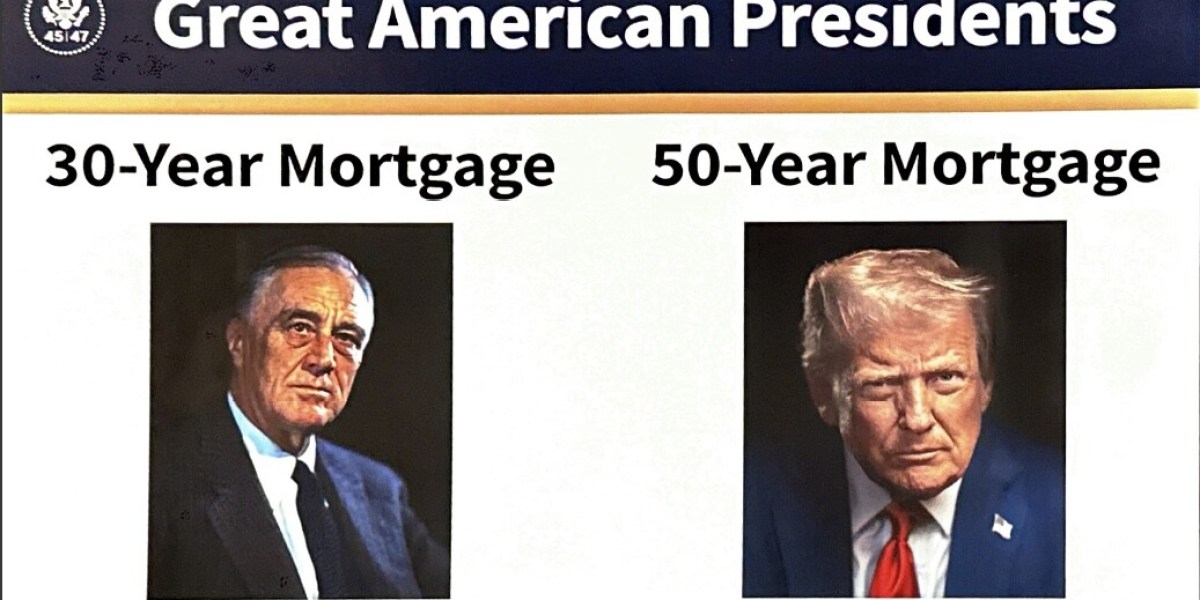
Trump, Pulte float 50-year mortgage use in U.S.
American Banker· 2025-11-09 16:15
Core Viewpoint - The proposal for a 50-year fixed-rate mortgage has gained traction, with President Trump and Bill Pulte advocating for it as a transformative strategy for government-sponsored enterprises (GSEs) like Fannie Mae and Freddie Mac [1][2]. Group 1: Mortgage Term Innovations - The introduction of a 50-year mortgage term represents a significant shift from the traditional 30-year fixed-rate mortgage, which has been a staple since the New Deal era [2]. - The U.S. has previously experimented with long-term fixed-rate mortgages, including a 40-year option introduced during the pandemic and a 40-year mortgage trial by Fannie Mae in 2005 [3]. Group 2: Market Comparisons - Unlike Japan, which offers a 50-year mortgage, the U.S. has not widely adopted this product, although the UK has licensed lenders to provide similar loans [4]. Group 3: Risks and Challenges - A 50-year mortgage could lower monthly payments for consumers but poses significant risk management challenges for lenders, as borrowers can refinance at lower rates, impacting lenders' interest income [5][6]. - Consumers may face higher overall costs and longer debt periods with a 50-year mortgage, potentially leading to financial strain [7]. - The slower accumulation of equity in a 50-year mortgage could delay borrowers' ability to access funds for future expenses and reduce their commitment to the mortgage [9]. Group 4: Secondary Market Implications - If the GSEs were to purchase 50-year mortgages, they would need to consider the implications for securitization and investor response, similar to how Ginnie Mae created special pools for 40-year modifications [10].