
UPS

Search documents
United Parcel Service (UPS) Rises As Market Takes a Dip: Key Facts
ZACKS· 2024-06-20 23:21
Company Overview - United Parcel Service (UPS) stock closed at $136.87, reflecting a +1.99% change from the previous day, outperforming the S&P 500's daily loss of 0.25% [1] - Over the past month, UPS stock has decreased by 6.66%, underperforming the Transportation sector's loss of 4.81% and the S&P 500's gain of 3.59% [1] Earnings Forecast - The upcoming earnings release is anticipated, with an expected EPS of $2, indicating a 21.26% decline compared to the same quarter last year [1] - Quarterly revenue is projected at $22.37 billion, representing a 1.42% increase from the previous year [1] - For the full year, earnings are estimated at $8.22 per share and revenue at $93.05 billion, reflecting changes of -6.38% and +2.3% respectively from the prior year [2] Analyst Estimates and Valuation - Recent adjustments to analyst estimates for UPS may indicate shifting business dynamics, with positive revisions suggesting analyst optimism [2] - UPS currently holds a Zacks Rank of 3 (Hold), with the consensus EPS projection remaining unchanged over the past 30 days [3] - The Forward P/E ratio for UPS is 16.32, which is a discount compared to the industry average of 16.66 [3] - UPS has a PEG ratio of 1.7, compared to the industry average PEG ratio of 1.42 [3] Industry Context - The Transportation - Air Freight and Cargo industry is ranked 97 in the Zacks Industry Rank, placing it in the top 39% of over 250 industries [4] - The top 50% rated industries tend to outperform the bottom half by a factor of 2 to 1 [4]


Should You Pick Disney Over UPS Stock?
Forbes· 2024-06-18 12:00
Core Viewpoint - Disney stock (NYSE: DIS) is considered a better investment choice compared to UPS stock (NYSE: UPS) due to its superior revenue growth and profitability, despite both companies having similar revenue bases of around $90 billion [1]. Group 1: Stock Performance - Both UPS and Disney have underperformed the broader markets over the last three years, with UPS declining 20% from $170 to $135 and Disney declining 45% from $180 to $100, while the S&P 500 increased by approximately 45% during the same period [2]. - UPS's stock returns were inconsistent, with a 27% increase in 2021, followed by declines of 19% in 2022 and 10% in 2023. Disney's returns were -15% in 2021, -44% in 2022, and a slight recovery of 4% in 2023 [2]. Group 2: Revenue Growth - Disney's average annual revenue growth rate over the last three years is 11%, significantly higher than UPS's 3% [4]. - UPS's revenue increased from $84.6 billion in 2020 to $90.6 billion in 2023, driven by e-commerce growth, but has recently slowed due to weakening consumer spending [4]. - Disney's revenue grew from $65.4 billion in 2020 to $88.9 billion in 2023, supported by a rebound in theme park attendance and increased streaming revenues [5]. Group 3: Profitability and Financial Risk - Disney's operating margin improved from 6% in 2020 to 11% in the last twelve months, while UPS's margin increased from 9% to 10% but has been trending downward due to rising operational costs [6]. - In terms of financial risk, UPS has a lower debt-to-equity ratio of 21% compared to Disney's 25%, and a higher cash-to-assets ratio of 9% versus Disney's 7% [6]. Group 4: Valuation and Future Prospects - The estimated valuation for UPS is $163 per share, indicating a potential upside of around 20% from its current price of $135, based on a 20x P/E multiple [7]. - Disney's estimated valuation is $137 per share, reflecting over 35% upside from its current market price of $100, supported by strong demand for its streaming and theme park businesses [7].

Focusing On Growth In High-Quality Dividend Growth: Comparing UPS And Home Depot
Seeking Alpha· 2024-06-17 19:37
Core Insights - The article emphasizes the importance of both growth and valuation in identifying investment opportunities, particularly focusing on high-quality dividend growth stocks [3][22] - Companies like United Parcel Service (UPS) and Home Depot (HD) are highlighted as strong candidates for investment, with a focus on their growth potential and valuation metrics [22] Valuation Analysis - Fair value estimation is conducted using historical and future fair value calculations, comparing current metrics to historical averages [4][5] - The analysis indicates that Salesforce, Inc. (CRM) and Bristol Myers Squibb Company (BMY) are attractive based on both historical and future fair value perspectives [5][22] - A bubble plot is utilized to visualize stocks trading at discounts to both historical and future fair values, identifying potential investment candidates [5] Growth Analysis - The article discusses the challenges of predicting growth and utilizes various metrics, including past EBITDA growth and dividend growth, to estimate future growth [6][8] - Companies like Mastercard, Intuit, and Visa are noted for their high growth potential, while UPS and HD are compared for their growth characteristics [8][12] - The analysis of Return on Invested Capital (ROIC) suggests that both UPS and HD have high ROICs, with HD appearing more attractive in sustaining growth [11][12] Comparative Analysis - The article compares UPS and HD based on growth expectations, with HD showing higher recent growth estimates compared to UPS [14][15] - Future earnings growth projections indicate that HD is more attractive than UPS, although both companies show solid revenue growth potential [15][16] - Payout ratios are examined, revealing that HD has a more favorable payout ratio compared to UPS, which is approaching 100% [17] Debt and Equity Considerations - The net debt positions of both companies are analyzed, with HD showing an increase in net debt over time while UPS maintains a stable net debt position [18][19] - The article highlights the importance of share count stability, noting that HD has decreased shares outstanding while UPS has maintained a consistent share count [19] Conclusion - The article concludes that both UPS and HD are excellent investment candidates, with UPS being attractively valued and HD showing strong growth characteristics [22] - The author expresses a preference for relying on valuation while incorporating growth into the investment decision-making process [22]

United Parcel Service: Robust Profitability Benefiting From Durable Competitive Advantages
Seeking Alpha· 2024-06-17 14:00
Company Overview - United Parcel Service, Inc. (UPS) is a global parcel delivery and supply chain management company with a market cap of $118 billion and over 500,000 employees [2] - The company operates across three segments: U.S. Domestic (66% of FY 2023 revenue), International (20%), and Supply Chain Solutions (14%) [2] - UPS is the world's largest package delivery company, delivering over 20 million packages daily across 120 countries using more than 500 planes and 100,000 vehicles [2] Investment Thesis - The long-term investment thesis for UPS is supported by two key tailwinds: rising global consumption due to population growth and increased wealth, and the significant rise of e-commerce driving demand for point-to-point shipping [2] - The company is well-positioned to benefit from the growing need for logistics services as more goods are shipped directly to consumers [2] Dividend Growth - UPS has increased its dividend for 15 consecutive years, with a 10-year dividend growth rate of 10.1% [3] - The most recent dividend increase was less than 1%, indicating potential volatility in future dividend growth [3] - The stock currently yields 4.8%, which is significantly higher than its five-year average by 190 basis points [4] Revenue and Earnings Growth - UPS's revenue grew from $58.2 billion in FY 2014 to $91 billion in FY 2023, representing a compound annual growth rate (CAGR) of 5.1% [5] - Earnings per share (EPS) increased from $3.28 to $7.80 over the same period, with a CAGR of 10.1% [5] - CFRA forecasts an 11% CAGR in EPS over the next three years, indicating a potential acceleration in growth [5] Financial Position - UPS maintains a solid financial position with a long-term debt/equity ratio of 1.1 and an interest coverage ratio over 10 [6] - The company has an average return on equity (ROE) of 87.7% and a net margin of 8% over the last five years, reflecting robust profitability [6] - UPS faces competitive pressures, particularly from customers like Amazon, which is developing its own delivery network [6] Valuation - The P/E ratio using adjusted TTM EPS is 17.1, which is considered low in the current market [7] - The P/CF ratio of 10.6 and sales multiple of 1.3 are also below their respective five-year averages, indicating the stock may be undervalued [8] - A dividend discount model analysis estimates a fair value of $172.78 for UPS shares, suggesting the stock could be undervalued by approximately 15% [8] Conclusion - UPS is well-positioned for growth in the e-commerce sector, with a strong dividend yield and a history of dividend increases [10] - The company is expected to navigate through competitive pressures while maintaining robust profitability and a solid financial position [10]

Should You Buy UPS While It's Below $140?
The Motley Fool· 2024-06-16 11:30
Core Viewpoint - UPS is in a recovery phase in 2024, facing challenges such as declining delivery volumes and elevated costs, but potential for value exists as the company aims for a turnaround [1][2]. Financial Performance - UPS expects adjusted operating profit to decline by 20% to 30% in the first half of 2024 compared to the same period in 2023, with a projected increase of 20% to 30% in the second half [2]. - The company aims to cut $1 billion in costs and is reducing its workforce by 12,000 jobs, with cost-saving impacts expected to be more significant in the second half of 2024 [3]. Growth Strategy - UPS is focusing on higher-margin markets such as healthcare and small and medium-sized businesses (SMBs) to maximize profitability rather than just chasing volume [5]. - The company plans to invest in technology and automation to improve productivity and reduce costs, targeting an adjusted operating profit of $14.3 billion in 2026, up from $9.9 billion in 2023, representing an annualized increase of 13% [5]. Market Conditions - The U.S. small package delivery market is currently experiencing overcapacity, which poses a risk to UPS's revenue growth targets [5]. - If delivery volumes recover as expected, revenue per piece is anticipated to grow again, particularly due to the focus on healthcare and SMBs [6]. Investment Outlook - Analysts project UPS to generate $8.22 per share in 2024, increasing by 19.5% to $9.82 per share in 2025, suggesting a valuation of less than 14 times 2025 earnings [3]. - The stock is viewed as a potential buy, with the recommendation to start with a small position and monitor delivery volume trends closely [7].

United Parcel Service: Buying Shares While It Is On The 'Operating Table'
Seeking Alpha· 2024-06-12 01:10
Core Viewpoint - UPS is currently facing significant challenges due to lower volumes and higher costs, particularly from wage inflation resulting from a new contract with the Teamsters union, which has led to a decline in share performance compared to the S&P index [2][5] Current Headwinds - UPS reported a revenue of $21.7 billion for the first quarter, down 5.3% year-over-year, with diluted earnings per share of $1.43 reflecting a 35% decline compared to the same period in 2023 [5] - Average daily volume decreased by 3.2% year-over-year, with B2B average daily volume down 5.5%, primarily due to declines in retail and manufacturing sectors [5] Secular Tailwinds - Despite current challenges, e-commerce continues to gain market share, which is expected to benefit UPS in the long term [6] - UPS is expanding its addressable market share, particularly in big and bulky deliveries and healthcare logistics, aiming for $20 billion in annual revenue from healthcare by 2026 [6] Financials - The combination of higher costs and lower revenue has significantly impacted profitability, with normalized diluted earnings per share falling almost by half [7] - Management is optimistic about revenue growth in the second half of the year [7] Strong Competitive Moat - UPS maintains attractive returns on invested capital, reflecting its strong competitive moat derived from its scale advantages and logistics network [8] - The company has secured a profitable air cargo contract with the U.S. Postal Service, enhancing its competitive position [10] Returns Business - UPS is leveraging its extensive store network to expand its returns business through initiatives like Happy Returns, which offers convenient return options [11] Peers - UPS has a stronger competitive moat compared to FedEx and DHL Express, as evidenced by its superior financial metrics [12][13] Dividend Policy - UPS has a high dividend yield of approximately 4.7% and intends to maintain its dividend despite reduced earnings, with a targeted payout ratio of 50% [14][15] Balance Sheet - UPS has a strong balance sheet with significant liquidity and investment-grade credit ratings, although its debt levels have increased over the past decade [16] Outlook - UPS is guiding for fiscal year 2024 revenue between $92 billion and $94.5 billion, with long-term targets of $108 billion to $114 billion by 2026 [18] Valuation - UPS is currently trading below its ten-year average price to cash flow from operations, indicating an undemanding valuation [19]
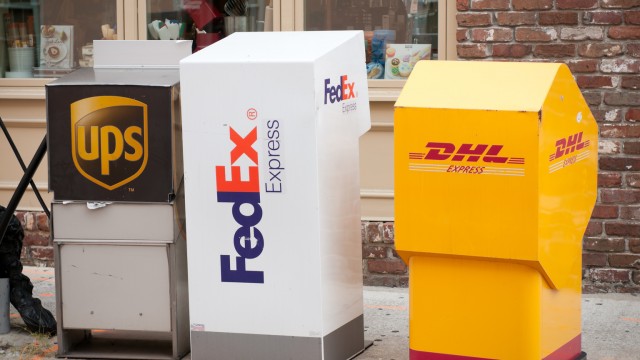
Where Will UPS Be in 3 Years?
The Motley Fool· 2024-06-11 11:07
The package delivery giant has laid out its medium-term goals. If it hits them, the stock at current prices will have been a great value opportunity.UPS (UPS 0.03%) management set out its targets for 2026 during its investor day event in March, and they will serve as a guidepost for investors. The question is not whether UPS will be a good value at current prices if it hits those goals, but whether it will achieve its aims. Here's what you need to know about the company's plans for the next three years.UPS ...

This Dividend Stock Hasn't Yielded This Much in Over 15 Years. Here's Why It's a Buy Near Its 52-Week Low
The Motley Fool· 2024-06-08 14:20
The sell-off in UPS has gone too far.United Parcel Service (UPS 0.06%) stock gained an impressive 83% between 2020 and the end of 2021 -- benefiting from a shift away from services and in-store shopping toward home delivery. But since the beginning of 2022, UPS is down over 35% compared to a 12% gain in the S&P 500.Here's why the high-yield dividend stock deserved to sell off but is worth buying now. A major slowdownOne look at a chart of UPS' stock price, sales, and operating margin, and it's easy to see w ...

What Is the Dividend Payout for UPS Stock?
The Motley Fool· 2024-06-06 12:30
The delivery giant's dividend looks sustainable, but there is little room for significant improvement in the coming years.Investors attracted to UPS (UPS 1.43%) stock are, no doubt, drawn at least in part by its generous 4.7% dividend yield. But how sustainable is that payout, and what are the prospects that the company will continue its 15-year run of raising its dividend per share next year? Here's the lowdown.UPS' dividend payoutUsually, when investors discuss a payout ratio, they compare dividends per s ...
Want $1,000 in Dividend Income? Here's How Much You Have to Invest in UPS Stock to Get It
The Motley Fool· 2024-06-05 13:26
The package delivery giant isn't firing on all cylinders right now, but its stock does offer a compelling dividend.United Parcel Service (UPS -2.02%) stock currently offers a compelling 4.7% dividend yield. Based on that yield, an investment of $21,276 in the stock would buy almost 157 shares that would generate roughly $1,000 in annual income in 2024. That's a pretty decent return all by itself.There's also potential for UPS' stock to appreciate if this multinational shipping & receiving and supply chain m ...
