Japan Airlines

Search documents
5月14日电,日本内阁官房长官林芳正表示,日本航空自卫队一架飞机在日本坠毁。
news flash· 2025-05-14 07:13
智通财经5月14日电,日本内阁官房长官林芳正表示,日本航空自卫队一架飞机在日本坠毁。 ...
Surf Air Mobility (SRFM) - 2025 Q1 - Earnings Call Transcript
2025-05-13 22:02
Financial Data and Key Metrics Changes - First quarter revenue was $23,500,000, at the high end of the expected range of $21,000,000 to $24,000,000, keeping the company on track to meet the full year expectation of over $100,000,000 in revenue [8][26] - Adjusted EBITDA loss in Q1 was $14,400,000, within the expected range provided in the last earnings release [8][27] - Scheduled service revenue decreased by 23% year over year, primarily due to the elimination of unprofitable routes and a brief interruption of service in January [27] - On-demand service revenue decreased by 25% year over year, driven by lower sales and flight completions [27] Business Line Data and Key Metrics Changes - The Essential Air Service (EAS) Program represents approximately 40% of revenue, with long-term subsidized contracts providing connectivity to underserved domestic markets [21] - The company is focusing on profitability in the on-demand business and has exited several unprofitable charter products [13][27] - The company returned five older aircraft to lessors during Q1, simplifying the fleet to focus on the operationally efficient Cessna Grand Caravan [10] Market Data and Key Metrics Changes - The company operates almost exclusively in the U.S., primarily flying aircraft manufactured domestically, which mitigates the impact of tariffs [4][20] - The current economic environment has benefited the company, particularly with lower fuel costs [22] Company Strategy and Development Direction - The company aims to become a premier regional air mobility platform, focusing on three growth vectors: expansion of air mobility operations, commercial rollout of the regional air mobility software platform, and sale of electrified powertrains for the Cessna Caravan [29] - The company is in late-stage discussions with key partners to advance its electrification initiative [18][29] Management's Comments on Operating Environment and Future Outlook - Management acknowledges a challenging economic, regulatory, and funding environment but emphasizes proactive management of operations and cost structure [29] - The company expects to achieve positive adjusted EBITDA in airline operations by 2025 [19][28] Other Important Information - The company raised an incremental $5,000,000 in funding subsequent to the end of Q1 [9] - The interline agreement with Japan Airlines allows for expanded access to over 435 million customers [12] Q&A Session Summary Question: Impact of changes to the essential air service budget - Management believes that being a low-cost operator provides a competitive advantage, especially if higher-cost operators face subsidy reductions [33][36] Question: Core versus non-core scheduled and charter flights - Hawaii is identified as a core area, with a focus on profitability and operational efficiency in route selection [37][38] Question: Adding new profitable routes - The company is currently focused on exiting unprofitable routes and plans to enter new tier one routes next year [41] Question: Progress on Surf OS product - The company is integrating feedback from beta users and plans a full commercial rollout of Surf OS in 2026 [44][46] Question: Service interruption details - The service interruption in January was unplanned and related to maintenance issues, which have since been resolved [48] Question: Future partnerships and geographic targets - The company is open to expanding partnerships beyond the U.S., following the successful agreement with Japan Airlines [50]

Surf Air Mobility (SRFM) - 2025 Q1 - Earnings Call Transcript
2025-05-13 22:00
Financial Data and Key Metrics Changes - First quarter revenue was $23,500,000, at the high end of the expected range of $21,000,000 to $24,000,000, keeping the company on track to meet the full year expectation of over $100,000,000 in revenue [7][25] - Adjusted EBITDA loss in Q1 was $14,400,000, within the expected range provided in the last earnings release [7][26] - Scheduled service revenue decreased by 23% year over year, primarily due to the elimination of unprofitable routes and a brief interruption of service in January [26] - On-demand service revenue decreased by 25% year over year, driven by lower sales and flight completions [26] Business Line Data and Key Metrics Changes - The Essential Air Service (EAS) Program represents approximately 40% of revenue, with the company being the lowest cost provider on routes below 500 miles [5][21] - The company returned five older aircraft to lessors during Q1, focusing on operationally efficient Cessna Grand Caravan [10] - Flight completion factors improved to above 92% in the first six weeks of Q2, with a goal to return to 96% prior to route expansion [12] Market Data and Key Metrics Changes - The company operates almost exclusively in the US, with minimal impact from tariffs due to domestic operations and aircraft manufacturing [4][20] - The current economic environment has benefited the company, particularly with lower fuel costs [22] Company Strategy and Development Direction - The company is focused on three growth vectors: expanding air mobility operations, commercial rollout of the regional air mobility software platform, and marketing electrified powertrains for the Cessna Caravan [28] - The transformation plan includes an optimization phase, with a goal to achieve positive adjusted EBITDA in airline operations in 2025 [19][24] Management's Comments on Operating Environment and Future Outlook - Management noted substantial changes in the economic, regulatory, and political environment, but expressed confidence in the company's competitive advantage as a low-cost provider [4][5] - The company anticipates minimal impacts from potential tariffs and is actively managing operations to improve cost structure and efficiencies [20][28] Other Important Information - The company raised an incremental $5,000,000 in funding after the end of Q1 [8] - An interline agreement with Japan Airlines was announced, expanding access to over 435 million customers [12][48] Q&A Session Summary Question: Thoughts on changes to the essential air service budget - Management acknowledged the potential budget cuts but emphasized their competitive advantage as a low-cost operator [31][34] Question: Discussion on core versus non-core scheduled and charter flights - Management identified Hawaii as a core area and discussed the importance of profitability in route selection [35][36] Question: Plans for adding new profitable routes - Management indicated that while they have targeted drafts to exit, some routes are being held longer than planned due to additional subsidies [38] Question: Service interruption details - Management clarified that the service interruption in January was unplanned and related to maintenance issues [47] Question: Potential for more interline agreements - Management expressed excitement about the Japan Airlines partnership and indicated interest in expanding to other carriers globally [48]
Japan Airlines Stock Has Room To Fly Higher
Seeking Alpha· 2025-05-11 16:02
Core Insights - Japan Airlines reported fourth quarter results on May 5, with revenues missing estimates, yet the stock has increased by 24% from its lows earlier this year [1] Group 1: Company Performance - Japan Airlines' fourth quarter results showed a revenue miss compared to estimates [1] - Despite the revenue miss, Japan Airlines' stock has risen significantly, indicating positive market sentiment [1] Group 2: Industry Context - The analysis is part of a broader investment research service focused on the aerospace, defense, and airline industry, highlighting significant growth prospects in this sector [1] - The investing group provides data analytics and insights to identify investment opportunities within the aerospace and airline industries [1]


Boeing Gets $50B in March Orders—Is BA Stock a Buy Now?
MarketBeat· 2025-04-04 12:30
Group 1: Company Performance - Boeing has secured over $50 billion in potential new aircraft orders and contracts in the last two weeks of March 2025, contributing to a backlog exceeding half a trillion dollars [1][3] - Despite strong demand and contract wins, Boeing is implementing a 10% workforce reduction, affecting approximately 17,000 jobs, excluding those impacted by a previous strike [3] - Boeing's stock is down 5.66% year-to-date as of April 1, 2025, despite the positive news regarding contracts [2][5] Group 2: Market Dynamics - Boeing shares are experiencing a selloff alongside the broader market, attributed to declining consumer confidence and concerns over tariffs and trade wars [5] - JPMorgan has added Boeing to its Analyst Focus List, indicating optimism in the commercial aerospace sector and supply chain normalization [4] Group 3: Recent Orders and Contracts - Japan Airlines ordered 17 additional Boeing 737-8 airplanes, bringing its total to 38 for delivery starting in 2026 [7] - Korean Airlines finalized an order for 20 Boeing 777-9 and 20 Boeing 787-10 airplanes, valued at approximately $32.7 billion, marking its largest deal with Boeing [7] - The United States Air Force awarded Boeing a contract under its Next Generation Air Dominance program for the development of the F-47 fighter jet, with the contract expected to be worth hundreds of billions over its lifetime [7]

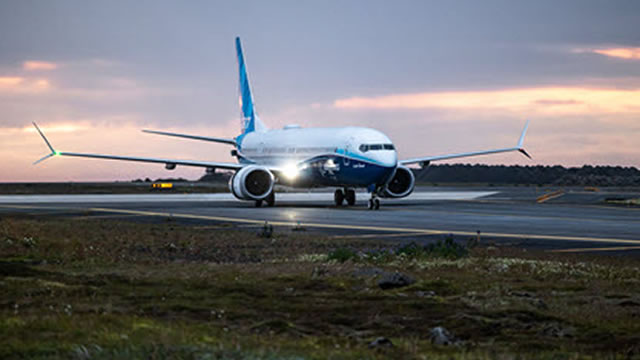
Boeing Charting A Quiet Comeback? Aircraft Maker Bags Five Major Contracts In Last 10 Days: Here's What Its Chart Shows
Benzinga· 2025-04-01 10:32
Core Insights - Boeing Co. has expanded its order pipeline significantly with five major deals in a span of ten days, indicating strong demand for its aircraft [1] Group 1: Recent Orders - Malaysia Aviation Group has ordered 30 Boeing 737 MAX aircraft, including options for 30 more, to modernize its fleet and enhance passenger experience in Southeast Asia [2] - Japan Airlines has placed an order for 17 additional Boeing 737-8s, nearly doubling its backlog for the 737 MAX [3] - Korean Air finalized an order for up to 50 widebody aircraft, including 20 each of 777-9 and 787-10 jets, with options for 10 more 787 Dreamliners, marking its largest order from Boeing [4] - The U.S. Army Special Operations Aviation Command has ordered five additional MH-47G Block II Chinook helicopters, bringing the total under contract to 51 [5] - BOC Aviation has ordered 50 Boeing 737-8 jets to support global airlines, expanding its 737 MAX portfolio [6] Group 2: Technical Analysis - Boeing's stock closed at $170.55, below its eight and 50-day moving averages, with near-term support at $167.02 and $167.67 [7] - The relative strength index is at 48.92, indicating a neutral zone, while the MACD momentum indicator shows a bullish trend [8] - Boeing's stock has faced challenges in 2024 due to safety concerns, production halts, and delivery shortfalls, leading to financial strain [8] Group 3: Price Action and Analyst Ratings - Boeing's stock fell 0.33% in premarket trading, with a year-to-date decline of 0.77% and a 10% drop over the past year [9] - Benzinga Edge Stock Rankings show positive medium and long-term price trends for Boeing, but a weak short-term outlook, with a solid momentum ranking at the 67.79th percentile [10] - Analysts have a consensus "hold" rating for Boeing, with an average price target of $201.63, suggesting a potential upside of 2.55% [11]
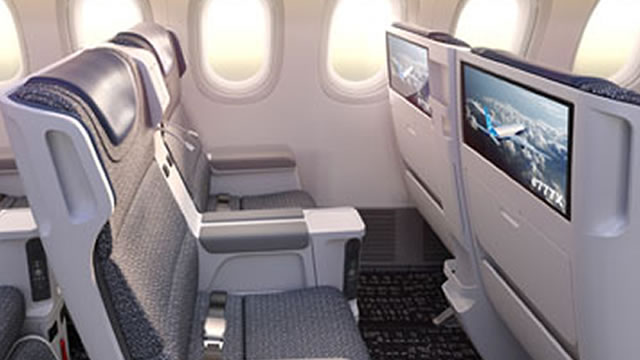
Boeing finally got some much-needed wins
Business Insider· 2025-03-27 09:20
Core Insights - Boeing is experiencing a positive turnaround, securing significant defense contracts and new aircraft orders, which may enhance investor and customer confidence [1][8][9] - The company has seen a stock price increase of approximately 16% over the past six months, indicating a recovery from earlier lows despite broader market challenges [2] - Analysts project a future price target of $196 for Boeing shares, suggesting optimism about the company's prospects [3] Aircraft Orders and Production - Korean Air has finalized an order for 20 Boeing 777X planes, following similar orders from Japan Airlines and Malaysia Airlines for 17 and up to 60 new 737 Max aircraft, respectively [4] - The 777X program is significantly delayed, with its launch now expected in 2026, while the production of the 737 Max is currently capped at 38 units per month [4][5] - Boeing's backlog exceeds 6,000 aircraft, reflecting customer confidence despite previous delivery slowdowns [5] Leadership and Operational Improvements - CEO Kelly Ortberg aims to increase the 737 Max production rate to 42 units per month by year-end, contingent on meeting quality and safety standards [6] - The company plans to close the "shadow factory" for quality fixes, which is expected to enhance operational efficiency [6] - United Airlines' CFO expressed confidence in Boeing's delivery schedule, highlighting improvements in reliability as a supplier [7] Defense Contracts and Future Outlook - Boeing secured a $20 billion contract for the F-47 fighter jet, which is expected to bolster its defense business and improve employee morale [8][10] - The contract is seen as a significant boost for Boeing, especially after challenges faced in other defense programs [9][10] - Analysts believe that the new defense program will help attract and retain engineering talent, aiding in the company's cultural recovery [10][11]

Boeing Wins Order to Supply 17 737-8 Airplanes to Japan Airlines
ZACKS· 2025-03-20 15:30
Group 1: Boeing's Recent Developments - Boeing secured an order from Japan Airlines for 17 737-8 commercial aircraft, in addition to 21 aircraft ordered in March 2023, with deliveries expected by 2026 [1] - This contract is anticipated to significantly enhance Boeing's commercial airplane business segment [1] Group 2: Aircraft Specifications and Market Demand - The 737-8 model can carry up to 210 passengers and has a range of 3,500 nautical miles (6,480 km), offering a 20% reduction in fuel use and emissions compared to previous models [2] - The demand for the 737 MAX family is bolstered by its efficiency and environmental performance, contributing to solid order growth [3] Group 3: Market Growth and Opportunities - Rising air passenger traffic and the demand for fuel-efficient aircraft are driving growth in the commercial aviation market [4] - Mordor Intelligence forecasts a compound annual growth rate of over 6.5% for the commercial aviation market from 2025 to 2030, presenting strong expansion opportunities for Boeing [5] Group 4: Boeing's Global Presence - Boeing has a strong global footprint, with over 10,000 commercial jetliners in service, accounting for nearly half of the global fleet [6] Group 5: Competitors in the Aerospace Market - Other aerospace companies like Airbus and Embraer are also positioned to benefit from the growing air traffic trends, with Airbus having over 12,000 commercial aircraft in service and a long-term earnings growth rate of 7.5% [7][8] - Embraer, the third-largest manufacturer of commercial aircraft, has a product portfolio that includes sustainable single-aisle aircraft and an expected sales improvement of 15.1% for 2025 [8][9]
6 Reasons to Buy Archer Aviation Stock Like There's No Tomorrow
The Motley Fool· 2025-03-10 16:14
The fledgling eVTOL aircraft maker could still have a bright future.Archer Aviation (ACHR -8.51%), a developer of electric vertical take-off and landing (eVTOL) aircraft, hasn't impressed too many investors since it went public by merging with a special-purpose acquisition (SPAC) company on Sept. 20, 2021. The combined company's stock started trading at $9.40 per share, but it didn't initially go much higher and subsequently sank to an all-time low of $1.63 on Dec. 27, 2022.Like many other SPAC-backed compa ...