Walgreens

Search documents
Want $1,000 Per Year in Reliable Dividend Income? Invest $17,300 in These 2 High-Yield Dividend Stocks
The Motley Fool· 2025-04-28 12:16
Core Insights - The article discusses the benefits of investing in Real Estate Investment Trusts (REITs) as a way to generate passive income during retirement without the hassles of property management [2][3]. Group 1: Realty Income - Realty Income is a net lease REIT with a portfolio of 15,621 properties, primarily retail, offering a 5.7% dividend yield [4][6]. - The company has a diversified tenant base, with its three largest tenants contributing only 10% of total rent, which helps mitigate risks [4]. - Realty Income has consistently increased its monthly dividend since its inception, raising it for the 130th quarter in March 2024, with a 3.9% annual growth rate since 2015 [6][7]. Group 2: W.P. Carey - W.P. Carey is a diversified net lease REIT that reduced its quarterly dividend by 19.7% in 2023 due to a spinoff, but has since resumed increasing its payouts [8][9]. - The REIT has a portfolio of 1,555 properties, with its top three tenants accounting for only 7.1% of annualized rent, indicating strong diversification [10]. - W.P. Carey benefits from low borrowing costs, having secured 600 million Euros at a 3.7% interest rate for 10 years, positioning it well for future dividend increases [12].



Walgreens tops estimates as drugstore chain cuts costs, prepares to go private
CNBC· 2025-04-08 11:19
Core Insights - Walgreens reported fiscal second-quarter earnings and revenue that exceeded expectations, driven by cost-cutting measures and preparations for a transition to private ownership [1][2] - The company is in the process of being taken private by Sycamore Partners, with the deal expected to close in the fourth quarter of this year [1] Financial Performance - Adjusted earnings per share were reported at 63 cents, surpassing the expected 53 cents [2] - Revenue for the three-month period ended February 28 was $38.59 billion, exceeding the anticipated $38 billion [2]

Walgreens Settles Allegations of Submitting Inflated Prices to Medicaid Programs
PYMNTS.com· 2025-03-27 23:26
Core Viewpoint - Walgreens has agreed to pay $2.8 million to settle allegations of submitting inflated prices to Medicaid programs in Massachusetts and Georgia for generic medications [1][2]. Group 1: Settlement Details - The settlement resolves a qui tam lawsuit alleging violations of the federal, Massachusetts, and Georgia False Claims Acts by Walgreens [1]. - The allegations state that between 2008 and 2023, Walgreens pharmacies submitted higher usual and customary prices for certain generic medications, leading to overpayments by Medicaid programs [2]. Group 2: False Claims Act Context - The False Claims Act imposes treble damages and penalties for knowingly false claims against the United States [3]. - In the fiscal year ending September 30, 2024, settlements and judgments under the False Claims Act exceeded $2.9 billion, with 588 settlements and judgments involving whistleblowers filing 979 qui tam lawsuits [3]. Group 3: Healthcare Industry Impact - Healthcare-related matters, including pharmacies, accounted for $1.67 billion of the total $2.9 billion in False Claims Act settlements and judgments [4]. - The number of qui tam lawsuits filed was the highest in a single year, with the second-highest number of settlements and judgments recorded [4]. Group 4: Previous Allegations Against Walgreens - Walgreens and its parent company, Walgreens Boots Alliance, previously agreed to pay $106.8 million to resolve allegations of billing government healthcare programs for prescriptions that were never dispensed [5]. - The government alleged that from 2009 to 2020, Walgreens received tens of millions of dollars for prescriptions processed but not picked up by beneficiaries [5].
Giftify, Inc. Reports Surge in Pharmacy Retailer Gift Card Demand Following GLP-1 Medication Savings Initiative
Globenewswire· 2025-03-12 12:30
Core Insights - The company has reported a significant increase in gift card sales due to a smart savings program for GLP-1 diabetes and weight loss medications, driven by consumer demand for cost-saving healthcare solutions [1][3] - CardCash.com, the company's secondary gift card exchange platform, saw a remarkable 916% week-over-week increase in the face value of gift cards sold at major pharmacy retailers [2] - The company has increased its inventory levels to meet the growing demand for pharmacy gift cards, ensuring competitive discount rates while supporting healthcare accessibility [3][4] Sales and Inventory Growth - The surge in sales is attributed to innovative savings opportunities for high-cost prescription medications like Ozempic and Zepbound, alongside increased demand for seasonal health products [2][4] - CVS inventory levels grew by 120% year-over-year, while Walgreens inventory experienced a 736% increase [8] Strategic Focus - The company emphasizes its pharmacy gift card program to address the need for affordable access to newer treatment options, supporting broader healthcare accessibility [4] - The CEO highlighted that the growth in sales validates the company's strategic expansion into the healthcare sector [3]

CVS opens smaller format stores as industry sees big shift
Fox Business· 2025-03-11 14:41
Core Insights - CVS Pharmacy is shifting towards smaller store formats that focus exclusively on pharmacy services to adapt to industry challenges and changing consumer preferences [1][5] - The company plans to open at least a dozen small-format pharmacies averaging less than 5,000 square feet, tailored to meet community pharmacy needs [2][3] - Despite the focus on smaller formats, CVS will continue to open traditional pharmacy locations, including nearly 30 new CVS Pharmacy stores this year [4] Industry Context - The retail pharmacy business model has faced difficulties as consumers increasingly prefer online shopping for household items, impacting companies like CVS and Walgreens [5] - CVS has closed 900 stores between 2022 and 2024 and plans to close an additional 270 stores in 2025 as part of its strategy to realign its operations [6] - Rite Aid filed for bankruptcy in 2023 and closed 154 locations, while Walgreens plans to close at least 1,200 stores over the next three years [8] Market Dynamics - Analysts predict that CVS and Walgreens will continue to close stores while focusing on pharmacy services in the locations they retain [9] - Consumer preferences are shifting towards price, speed, and convenience, which has led to challenges for retail pharmacy operations [10] - CVS and Walgreens rank first and second in the U.S. pharmacy market by total prescription revenues, indicating their significant role in the healthcare sector [11] Strategic Implications - CVS's new store formats may reduce reliance on front-of-store customer traffic and allow pharmacists to take a more active role in patient healthcare decisions [12] - Focusing on the more stable prescription and over-the-counter medication business is viewed as a strategic move for CVS [13]

CVS is opening smaller drugstores that only have pharmacies
New York Post· 2025-03-10 17:20
CVS said it will open a dozen or more drugstores that only have pharmacies as it scrambles to remain competitive against rivals like Target, Amazon, Walgreens, and Rite Aid.The smaller stores, each location averaging less than 5,000 square feet, will feature a full service pharmacy with limited over-the-counter products for purchase. “The new pharmacies will be introduced in select neighborhoods to help bridge gaps in care and make it easier for patients to access medications, immunizations, and other pharm ...
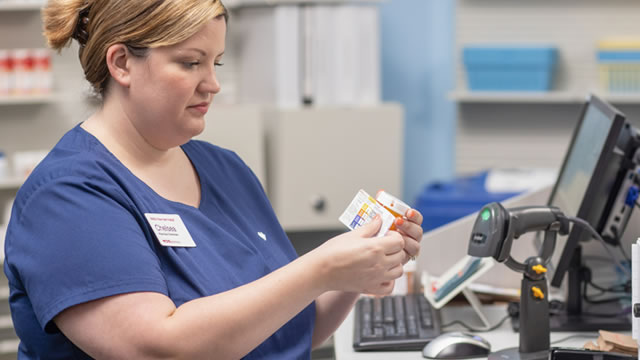
CVS Plans Chain of Smaller-Footprint Pharmacy-Focused Stores
PYMNTS.com· 2025-03-09 22:22
Core Insights - CVS is opening 12 smaller stores focused on healthcare, averaging under 5,000 square feet, which is less than half the size of typical CVS locations [1][2] - The new stores will offer full-service pharmacies but will limit retail products, excluding snacks and beauty items [2] - CVS has closed 800 locations since 2021 and plans to close an additional 270 this year as part of a broader store closure strategy [3] Company Strategy - The shift to smaller healthcare-focused stores aligns with CVS's sales, where 80% of last year's revenue came from the pharmacy department [4] - The company is undergoing a strategic review to address rising competition from both physical and online retailers in the prescription medication market [4] - Analysts suggest that while CVS is exploring private labels to boost sales, the current store model may not attract consumers effectively [5] Industry Context - Pharmacy chains, including CVS, are facing challenges from discount retailers and increasing shoplifting incidents, prompting cost-cutting measures and store closures [2] - The competitive landscape is further complicated by rising insurance costs and a downgraded star rating from Medicare Advantage, impacting long-term growth prospects [6]