
Imperial Oil

Search documents
Imperial Oil(IMO) - 2025 Q4 - Annual Report
2026-02-18 21:10
Risks and Uncertainties - The company faces risks from global, regional, and local changes in supply and demand for oil and gas, including potential impacts from government actions and trade policies [11]. - Future production and cash flows are highly dependent on the company's ability to replace produced reserves through exploration or acquisition [185]. - Economically recoverable oil and natural gas reserves involve significant uncertainties, including geological and engineering estimates [186]. - Future net cash flows are influenced by regulatory changes, including potential compliance costs related to greenhouse gas emissions [186]. - The company faces uncertainties related to future commodity prices that could impact reserves [186]. Financial Performance - Operating costs are expected to increase due to inflationary pressures, which could adversely affect financial results if not managed effectively [170]. - Low commodity prices may adversely affect reserves development and overall financial performance [186]. - Actual production and revenues may vary significantly from estimates, impacting financial forecasts [186]. - Variances in development costs and operating expenditures could be material to financial outcomes [186]. - Operating costs are subject to fluctuations that may influence overall profitability [186]. Technology and Innovation - The company has converted all haul trucks at the Kearl site to autonomous operation, enhancing productivity and safety, but risks remain if the system fails [177]. - The company may need to invest in new technology to comply with evolving regulations [186]. - The company relies on research and development to maintain its competitive position and must adapt to evolving technologies and regulatory environments [175]. Regulatory and Compliance - The company’s capital investment guidance in lower-emission technologies is contingent on public policy support and the availability of investment opportunities [16]. - Regulatory frameworks may impose significant compliance costs, affecting operational strategies [186]. Competitive Landscape - The competitive landscape includes growing competition from alternative energy sources and the need to effectively navigate changing market conditions [183]. Reputation and Project Management - The company’s reputation is a critical asset, influenced by operational incidents, consumer perceptions, and progress in energy transition efforts [184]. - The effectiveness of project management is crucial for maximizing efficiency in capital-intensive projects across the company's operations [172]. Cybersecurity - Cybersecurity threats pose significant risks, and the company employs multi-layered defenses to mitigate potential disruptions [180].

Imperial Oil Stock Near 52-Week High: Time to Lock in Gains?
ZACKS· 2026-02-10 18:15
Core Insights - Imperial Oil Limited (IMO) shares closed at $114.34, near its 52-week high of $114.52, reflecting a 66.2% gain over the past year, outperforming the sub-industry's 33.5% and the broader oil and energy sector's 17% increase [1][8] - The company has demonstrated strong operational performance with record production levels and cost leadership in its upstream segment, supported by its diversified portfolio [4][6][9] Performance Comparison - Imperial Oil outperformed its peers, including Gibson Energy Inc. (19.7% gain), Suncor Energy Inc. and Cenovus Energy Inc. (both 38.3% gains) over the past year [2][3] Operational Strength - The company achieved its highest annual production in over 30 years at 438,000 gross oil-equivalent barrels per day in 2025, with core oil sands assets like Kearl and Cold Lake providing long-term volume visibility [6][8] - Upstream cost leadership is evident, with normalized unit cash costs at Kearl below C$20 per barrel, targeting C$18 per barrel, and Cold Lake's costs at C$14.67 per barrel, aiming for C$13 per barrel by 2027 [7][9] Shareholder Returns - Imperial Oil returned over C$4.5 billion to shareholders through buybacks and dividends, with a quarterly dividend increase of 20% to 87 Canadian cents per share, reflecting management's confidence in cash flow durability [10][11] - Despite a strong track record of dividend payouts, the annualized yield of 1.8% lags behind peers like Cenovus Energy (2.8%), Gibson Energy (6.1%), and Suncor Energy (3.2%) [10] Financial Position - The company ended 2025 with C$1.1 billion in cash and stable debt of about C$4.0 billion, maintaining a conservative balance sheet and strong operating cash flow of C$6.7 billion [11] - This financial flexibility allows Imperial Oil to fund growth projects and continue shareholder returns without heavy reliance on external financing [11] Conclusion - Imperial Oil has established itself as a leading Canadian energy producer with record production levels and declining upstream costs, providing strong cash flow visibility [18] - The company's integrated model stabilizes returns during oil price weakness, supported by a conservative balance sheet and ExxonMobil's backing [18] - While near-term earnings per share may soften, the company's cost leadership and shareholder-friendly capital allocation justify a patient investment approach [19]


Imperial Oil Q4 Earnings Surpass Estimates, Revenues Miss
ZACKS· 2026-02-02 17:50
Core Insights - Imperial Oil Limited (IMO) reported fourth-quarter 2025 adjusted earnings per share of $1.41, exceeding the Zacks Consensus Estimate of $1.36, but down from $1.69 in the same quarter last year due to lower upstream price realizations [1] - Revenues for the quarter were $8.1 billion, missing the Zacks Consensus Estimate of $10.4 billion and decreasing from $9 billion in the prior year, attributed to weak performance in both Upstream and Downstream segments [1] Financial Performance - The company returned C$361 million to shareholders through dividend payments, increasing the quarterly dividend by 20% from 72 Canadian cents to 87 Canadian cents per share, payable on April 1, 2026 [2] - Total expenses for the quarter were C$10.7 billion, down from C$11 billion in the previous year, while capital and exploration expenditures rose to C$651 million from C$423 million [11] - Cash flow from operating activities was C$1.9 billion, slightly up from C$1.8 billion in the year-ago quarter, with cash and cash equivalents at C$1.1 billion and total debt at C$4 billion, resulting in a debt-to-capitalization ratio of 15.2% [12] Segment Performance - Upstream segment revenues were C$3.6 billion, down from C$4.7 billion year-over-year, with a net loss of C$2 million compared to a profit of C$878 million in the prior year [4] - Average upstream production was 444,000 gross oil-equivalent barrels per day (boe/d), down from 460,000 boe/d in the previous year and below the expectation of 466,000 boe/d [4] - Downstream segment revenues decreased to C$12.4 billion from C$14.1 billion year-over-year, with net income rising to C$519 million from C$356 million [8] Production and Pricing - Bitumen price realizations were C$59 per barrel, down from C$71.58 in the prior year, while synthetic oil averaged C$80.07 per barrel compared to C$99.10 previously [7] - Total gross bitumen production at Kearl averaged 274,000 barrels per day, down from 299,000 barrels per day in the fourth quarter of 2024, primarily due to wet weather [5] - The Cold Lake Leming SAGD project has reached first oil and is ramping up towards a peak production level of about 9,000 barrels per day [6] Outlook - For 2026, Imperial Oil has set a capital and exploration spending budget between C$2 billion and C$2.2 billion, with upstream production expected to range from 441,000 to 460,000 gross oil-equivalent barrels per day [13]
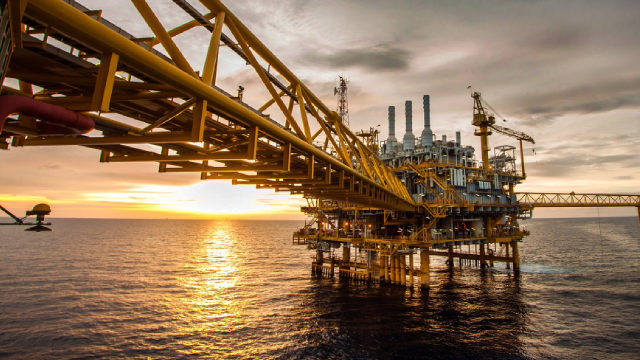
Imperial Oil: Evaluation After Its Earnings Report
Seeking Alpha· 2026-02-02 13:32
Core Insights - Imperial Oil (IMO) reported its fourth-quarter and full-year results, showing a contrast in stock performance compared to Exxon Mobil (XOM) and Chevron (CVX), which saw stock appreciation after their earnings release on the same day [1] Financial Performance - The financial results of Imperial Oil for the fourth quarter and full year were disclosed, indicating a different market reaction compared to its peers [1]
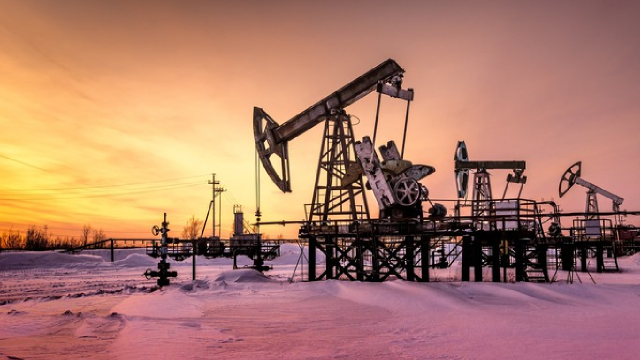
Parex Resources: The Rebound Continues
Seeking Alpha· 2026-02-02 13:32
Group 1 - The article discusses the analysis of oil and gas companies, specifically focusing on Parex Resources and similar firms, highlighting the importance of understanding their balance sheets, competitive positions, and development prospects [1] - The industry is characterized as a boom-bust, cyclical sector, requiring patience and experience for successful investment [2] - The investing group, Oil & Gas Value Research, seeks under-followed oil companies and out-of-favor midstream companies that present compelling investment opportunities [2] Group 2 - The article emphasizes the need for investors to review all company documents and press releases to ensure alignment with their investment qualifications [4] - It is noted that past performance does not guarantee future results, and no specific investment recommendations are provided [5]

Imperial Oil Limited (AMEX:IMO) Faces Financial Challenges Amidst Declining Oil Prices
Financial Modeling Prep· 2026-01-30 21:00
Core Viewpoint - Imperial Oil Limited is facing challenges in its financial performance, particularly due to declining crude oil prices, which have impacted its earnings and revenue generation [2][3][6] Financial Performance - The company reported earnings per share (EPS) of $1.05, missing the estimated EPS of $1.36, indicating difficulties in meeting market expectations [2][6] - Revenue for the period was approximately $6.02 billion, falling short of the anticipated $8.84 billion, highlighting struggles in generating sales amidst fluctuating oil prices [3][6] Valuation Metrics - Imperial Oil has a price-to-sales ratio of 1.12, suggesting that investors are still willing to pay $1.12 for every dollar of sales, reflecting some confidence in its sales potential [3][6] - The price-to-earnings (P/E) ratio stands at 12.81, indicating moderate market valuation of the company's earnings [4] - The enterprise value to sales ratio is 1.15, and the enterprise value to operating cash flow ratio is 8.12, suggesting a balanced valuation relative to sales and cash flow generation [4] Financial Health - The company has a debt-to-equity ratio of 0.18, indicating a low level of debt compared to equity, which reflects financial stability [5] - A current ratio of 1.47 suggests that Imperial Oil has a strong ability to cover its short-term liabilities with its short-term assets [5]
X @Bloomberg
Bloomberg· 2026-01-30 20:01
Imperial Oil plans to shut the historic Norman Wells oil production site near the Arctic Circle in Canada after a century of operation https://t.co/l7LuESNfx2 ...
Imperial Oil(IMO) - 2025 Q4 - Earnings Call Transcript
2026-01-30 17:02
Financial Data and Key Metrics Changes - The company generated over CAD 1.9 billion in cash flow from operations in Q4 2025 and CAD 6.7 billion for the full year [5] - Cash on hand at year-end 2025 exceeded CAD 1.1 billion after funding capital programs and returning CAD 2.1 billion to shareholders in Q4 [5] - Net income for Q4 was CAD 492 million, down CAD 257 million from Q4 2024, primarily due to lower upstream realizations [13] - Fourth quarter cash flows from operating activities were CAD 1.918 billion, with normalized cash flow at about CAD 1.585 billion [16] Business Line Data and Key Metrics Changes - Upstream production averaged 444,000 oil equivalent barrels per day in Q4, down 18,000 from Q3 and down 16,000 from Q4 2024 [19] - Upstream earnings lost CAD 2 million in Q4, down CAD 730 million from Q3, while downstream earnings were CAD 519 million, up CAD 75 million from Q3 [14] - Chemical business generated earnings of CAD 9 million, down CAD 12 million from Q4 2024 [14] Market Data and Key Metrics Changes - Refinery throughput averaged 408,000 barrels per day in Q4, with a utilization rate of 94% [26] - The company refined an average of 408,000 barrels per day, down 17,000 barrels from Q3 due to maintenance [26] - Distillate refining margins were strong in Q4, contributing to robust refining earnings [51] Company Strategy and Development Direction - The company aims to maximize the value of existing assets and continue delivering industry-leading shareholder returns [10] - Focus on optimizing production across the asset base, progressing towards volume and cost targets, and enhancing efficiency [28] - The restructuring plan announced in September is progressing as planned, aimed at maximizing asset value [28] Management's Comments on Operating Environment and Future Outlook - Management expressed confidence in the company's ability to navigate operational challenges and maintain production targets despite weather-related impacts [34] - The company remains focused on delivering reliable and growing dividends, with a commitment to return surplus cash in a timely manner [45] - The outlook for Canadian heavy oil remains stable, with no significant changes observed despite external market fluctuations [60] Other Important Information - The company declared a dividend of CAD 0.87 per share, marking a 20% increase, the largest nominal dividend increase in company history [10] - A one-time charge of CAD 320 million was recorded due to the decision to cease production at the Norman Wells asset [8] - The company completed a comprehensive review of inventory practices, identifying opportunities for enhanced efficiency [9] Q&A Session Summary Question: Discussion on Kearl's production impacts due to wet conditions - Management acknowledged the significant impact of exceptionally wet conditions on production and outlined plans to improve operational efficiency in similar future scenarios [32][34] Question: Background on the Mahihkan SA-SAGD project - The Mahihkan project will utilize similar technology to the successful Grand Rapids operation, targeting a production ramp-up to 30,000 barrels per day by 2029 [39][40] Question: Thoughts on shareholder returns and potential NCIB - Management confirmed that the dividend increase reflects confidence in long-term strategies and that NCIB remains a complementary part of their capital allocation approach [44][46] Question: Insights on refining earnings and market conditions - Management highlighted strong refining margins and the ability to adjust production to capture high-value markets, ensuring resilience in the downstream business [48][51] Question: Optimization of materials and supplies inventory - The company is implementing a standardized approach to inventory management informed by best practices, aiming for significant efficiency improvements [57][58] Question: Outlook for Western Canadian heavy oil - Management noted no significant changes in the market fundamentals for Canadian heavies despite external risks, maintaining a focus on their integrated business model [60][62]
Imperial Oil(IMO) - 2025 Q4 - Earnings Call Transcript
2026-01-30 17:02
Financial Data and Key Metrics Changes - The company generated CAD 1.9 billion in cash flow from operations in Q4 2025 and CAD 6.7 billion for the full year [5] - Cash on hand at year-end 2025 exceeded CAD 1.1 billion after funding capital programs and returning CAD 2.1 billion to shareholders in Q4 [5] - Net income for Q4 was CAD 492 million, down CAD 257 million from Q4 2024, primarily due to lower upstream realizations [13] - Fourth quarter cash flows from operating activities were CAD 1.918 billion, with normalized cash flow at approximately CAD 1.585 billion [16] Business Line Data and Key Metrics Changes - Upstream segment reported a loss of CAD 2 million in Q4, down CAD 730 million from Q3 2025, while downstream earnings increased to CAD 519 million, up CAD 75 million from Q3 [14] - Chemical business generated earnings of CAD 9 million, down CAD 12 million from Q4 2024, reflecting bottom-of-cycle margin conditions [14][27] - Kearl's production averaged 274,000 barrels per day in Q4, down 42,000 barrels from Q3, while Cold Lake's production averaged 153,000 barrels per day, up 3,000 barrels from Q3 [19][22] Market Data and Key Metrics Changes - Refinery throughput in Q4 averaged 408,000 barrels per day, with a utilization rate of 94%, down from Q3 due to maintenance [26] - The company noted strong distillate refining margins in Q4, particularly in November, contributing to robust refining earnings [51][82] Company Strategy and Development Direction - The company aims to maximize the value of existing assets, progress restructuring plans, and deliver industry-leading shareholder returns [10][28] - Focus on optimizing production across the asset base, lowering unit costs, and increasing cash flow generation remains a priority [28] - The restructuring announced in September is progressing as planned, with a goal of achieving CAD 150 million in annual savings starting in 2028 [86] Management's Comments on Operating Environment and Future Outlook - Management expressed confidence in the company's ability to navigate operational challenges, including extreme weather conditions impacting production [34] - The outlook for Canadian heavy oil remains stable, with no significant changes observed despite external market fluctuations [60] - The company is well-positioned to capture market demand and enhance profitability through its integrated business model and strategic investments [49][82] Other Important Information - The company declared a dividend of CAD 0.87 per share, marking a 20% increase, the largest nominal dividend increase in company history [10] - A one-time charge of CAD 320 million was recorded due to the decision to cease production at the Norman Wells asset [8] - The company completed a comprehensive review of inventory practices, identifying opportunities for enhanced efficiency [9][57] Q&A Session Summary Question: Discussion on Kearl's production impacts due to wet conditions - Management acknowledged the significant impact of wet conditions on production and outlined plans to improve operational protocols to mitigate future risks [32][34] Question: Background on the Mahican SA-SAGD project - The Mahican project will utilize similar technology to the successful Grand Rapids operation, targeting a production of 30,000 barrels per day starting in 2029 [39][40] Question: Shareholder returns and potential NCIB - Management confirmed that the dividend increase reflects confidence in long-term strategies and that NCIB remains a complementary part of their capital allocation approach [44][46] Question: Refining earnings resilience and market outlook - Management highlighted strong refining margins and the ability to adapt production to market demands, ensuring profitability even in fluctuating conditions [48][51] Question: Optimization of materials and supplies inventory - The company is implementing a standardized approach to inventory management, leveraging technology and best practices to enhance efficiency [57][58] Question: Outlook for Western Canadian heavy oil - Management noted no significant changes in market fundamentals for Canadian heavies, maintaining a focus on their integrated business model [60][62]
Imperial Oil(IMO) - 2025 Q4 - Earnings Call Transcript
2026-01-30 17:00
Financial Data and Key Metrics Changes - The company generated CAD 1.9 billion in cash flow from operations in Q4 2025 and CAD 6.7 billion for the full year [4] - Net income for Q4 was CAD 492 million, down CAD 257 million from Q4 2024, primarily due to lower upstream realizations [12] - The company ended the year with over CAD 1.1 billion in cash on hand after returning CAD 4.6 billion to shareholders in 2025 [4][16] Business Line Data and Key Metrics Changes - Upstream production averaged 444,000 oil equivalent barrels per day in Q4, down 18,000 from Q3 2025 [17] - Downstream earnings were CAD 519 million, up CAD 75 million from Q3, mainly due to higher margins [13] - The chemical business generated earnings of CAD 9 million, down CAD 12 million from Q4 2024, reflecting challenging market conditions [24] Market Data and Key Metrics Changes - The refining sector saw strong margins, particularly in November, contributing to robust downstream earnings [48] - Distillate refining margins were notably strong, allowing the company to optimize production for higher returns [48][79] Company Strategy and Development Direction - The company aims to maximize the value of existing assets and continue delivering industry-leading shareholder returns [9][25] - A focus on optimizing inventory management practices is expected to enhance operational efficiency and reduce costs [7][53] - The company is progressing with its restructuring plan, which is anticipated to yield CAD 150 million in annual savings starting in 2028 [83] Management's Comments on Operating Environment and Future Outlook - Management expressed confidence in achieving production targets despite challenges from weather conditions [32][33] - The company remains focused on maintaining a reliable and growing dividend, reflecting confidence in future cash flow generation [41][42] - The outlook for Canadian heavy oil remains stable, with no significant changes observed despite external market fluctuations [57][59] Other Important Information - The company declared a dividend of CAD 0.87 per share, marking a 21% increase, the largest nominal dividend increase in its history [9] - A one-time charge of CAD 320 million was recorded due to the accelerated cessation of production at the Norman Wells asset [6][11] Q&A Session Summary Question: Discussion on Kearl's production impacts due to wet conditions - Management acknowledged the significant impact of exceptionally wet conditions on production and outlined plans to improve operational protocols to mitigate future risks [30][32] Question: Details on the Mahican SA-SAGD project - The Mahican project will utilize similar technology to the successful Grand Rapids operation, with a planned startup in 2029 and a target production of 30,000 barrels per day [36][37] Question: Shareholder returns and potential NCIB - Management confirmed that the dividend increase reflects confidence in long-term strategies and that the NCIB remains a complementary part of their capital allocation approach [41][44] Question: Insights on refining margins and market conditions - Management highlighted strong refining margins and the ability to adjust production to capture high-value markets, ensuring resilience in the downstream business [45][48] Question: Optimization of materials and supplies inventory - The company is implementing a standardized approach to inventory management, leveraging technology and best practices to enhance efficiency and reduce complexity [53][55] Question: Outlook for Western Canadian heavy oil - Management noted no significant changes in the market fundamentals for Canadian heavy oil, maintaining a focus on their integrated business model and competitive positioning [57][59]