Target Corp

Search documents
In-Depth Analysis: Walmart Versus Competitors In Consumer Staples Distribution & Retail Industry - Walmart (NASDAQ:WMT)
Benzinga· 2026-01-21 15:01
Company Overview - Walmart, founded in 1962, is the world's largest retailer with over 10,700 stores globally, including 4,600 in the U.S. and 600 Sam's Club outlets, attracting 270 million customers weekly [2] - In fiscal 2025, Walmart reported sales exceeding $680 billion, with 68% from Walmart US, 18% from Walmart International, and 14% from Sam's Club [2] - Nearly 60% of Walmart's U.S. revenue of $465 billion came from grocery offerings, with another 25% from general merchandise [2] Financial Metrics Comparison - Walmart's Price to Earnings (P/E) ratio is 41.51, which is 1.5 times above the industry average, indicating a higher valuation [5] - The Price to Book (P/B) ratio stands at 9.85, exceeding the industry average by 1.56 times, suggesting a premium valuation relative to book value [5] - Walmart's Price to Sales (P/S) ratio of 1.36 is 1.45 times above the industry average, indicating potential overvaluation in sales performance [5] - The Return on Equity (ROE) is 6.6%, which is 1.3% above the industry average, reflecting efficient equity use for profit generation [5] - Walmart's EBITDA is $12.48 billion, which is 11.45 times above the industry average, indicating strong profitability and cash flow generation [5] - The gross profit of $44.79 billion is 12.17 times above the industry average, highlighting stronger profitability from core operations [5] - Revenue growth for Walmart is at 5.84%, slightly below the industry average of 5.93%, indicating challenges in sales growth [5] Debt to Equity Ratio - Walmart has a debt-to-equity (D/E) ratio of 0.71, indicating a lower level of debt relative to equity compared to its top four peers, suggesting a stronger financial position [9]



重新审视中国采购敞口-HardlineBroadlineFood Retail -Revisiting China Sourcing Exposure
2025-10-13 01:24
Summary of Conference Call on China Sourcing Exposure Industry Overview - **Industry**: Hardline/Broadline/Food Retail in North America [1][7] - **Context**: Ongoing discussions regarding U.S. tariffs on Chinese imports and recent changes in sourcing strategies due to tariffs and export curbs on rare earth minerals from China [2][3] Key Points on China Sourcing Exposure - **Diversification Efforts**: Most companies in the coverage have made efforts to diversify their supply chains away from China, but significant exposure remains [1][3] - **Updated Estimates**: The estimates of goods sourced from China have been updated to reflect the latest changes in sourcing strategies [1][3] Company-Specific Sourcing Exposure - **FIVE**: 45% sourced from China, reduced by 10 percentage points for the latter half of the year [10] - **AZO**: 35% sourced from China, down from 55% in March 2025 [10] - **BBY**: 32% sourced from China, with tariffs affecting half of these products [10] - **W**: 30% sourced from China, indicating continued flow of goods [10] - **ORLY**: 25% sourced from China, with ongoing reductions [10] - **TGT**: 25% sourced from China, down from 60% in 2017, aiming for below 25% by next year [10] - **DLTR**: 25% sourced from China [10] - **HD**: 20% sourced from China, with diversification efforts noted [10] - **LOW**: 20% sourced from China, with 60% sourced from the U.S. [10] - **TSCO**: 18% sourced from China [10] - **DKS**: 15% sourced from China, with significant diversification noted [10] - **ASO**: 15% sourced from China, reduced from 9% to 6% by year-end [10] - **OLLI**: 10% sourced from China, down from 15% [10] - **AAP**: 10% sourced from China, with plans to reduce further [10] - **WSM**: 10% sourced from China, actively resourcing to lower tariff countries [10] - **ULTA**: 10% sourced from China, with low tariff risk [10] - **DG**: 9% sourced from China [10] - **WMT**: 8% sourced from China [10] - **GOLF**: 6% sourced from China [10] - **COST**: 6% sourced from China [10] - **FND**: 5% sourced from China, with expectations to reduce further [10] - **ARHS**: 5% sourced from China, projecting closer to 5% by year-end [10] - **MODG**: 4% sourced from China [10] - **BJ**: 2% sourced from China [10] - **RH**: 2% sourced from China, down from 16% [10] - **KR**: 1% sourced from China [10] - **ACI**: 0% sourced from China [10] Additional Insights - **Tariff Changes**: The current Reciprocal Tariff of 10% is set to increase to 34% unless suspended [2] - **Sourcing Trends**: Companies are actively seeking to lower their exposure to China due to tariff implications and geopolitical factors [1][3][10] Conclusion - The conference call highlighted the ongoing challenges and strategies of companies in the Hardline/Broadline/Food Retail sector regarding their sourcing from China amidst changing tariff landscapes and geopolitical tensions. The data indicates a significant shift towards diversification, although many companies still maintain substantial exposure to Chinese goods.
Stephanie Link: 'Amazon's Market Share is Soaring' – Insights On Amazon, Palo Alto Networks, Target & Nextera Energy
Benzinga· 2025-03-19 21:01
Group 1: Amazon - Amazon's market share increased by 410 basis points last quarter, with improving profitability expected to accelerate in the latter half of the year despite capacity constraints [2][3] Group 2: Palo Alto Networks - Palo Alto Networks has a $15 billion annualized revenue opportunity in platformization, viewed as a stronger long-term investment compared to CrowdStrike Holdings, which was recently sold [3][5] Group 3: Target - Target's stock has declined by 24% since February due to product mix issues, but signs of recovery in discretionary spending could restore investor confidence [3][5] Group 4: NextEra Energy - NextEra Energy is seen as a valuation opportunity, trading at 18 times price-to-sales, with praise for its joint venture with GE Vernova in natural gas and data centers [4][5] Group 5: Boeing - Boeing is identified as a top stock for 2025 due to leadership changes and improving execution [5]


Tariffs Cast A Shadow Over Best Buy, Target: Could This Be A Buying Opportunity?
Benzinga· 2025-03-05 14:00
Core Insights - Best Buy and Target are facing challenges due to new tariffs impacting their sourcing from China and Mexico, which could affect their margins [1][2] Best Buy - Best Buy is significantly affected by tariff uncertainty, sourcing 60% of its goods from China and 20% from Mexico, despite reporting its first positive comparable sales since Q3 2021 [2] - Analyst Christopher Horvers has reduced Best Buy's stock price target from $115 to $110, while still believing in its long-term potential due to self-help measures like advertising growth and a new marketplace [3] - Year-to-date, Best Buy's stock has declined by 12.7%, trading below key moving averages, indicating further downside risk [6] Target - Target has reduced its reliance on China from 60% in 2017 to 30% currently, with plans to decrease it to 25% next year, aiming to mitigate tariff impacts [4] - Target is exploring alternative profit streams, such as its Roundel advertising business and marketplace expansion, to cushion the effects of tariffs, but the near-term outlook remains cautious with a price target reduction from $146 to $140 [5] - Year-to-date, Target's stock has declined by 14.6%, also trading below key moving averages, suggesting potential further downside [6]



Target Q4 Beats Expectations, Analysts See Profit Pressure Ahead
Benzinga· 2025-03-04 16:26
Core Viewpoint - Target Corp reported its fourth-quarter results, showing mixed performance with earnings beating consensus but facing challenges in sales growth and profit margins [1][2][3]. Financial Performance - Target's fourth-quarter earnings were $2.41 per share, exceeding the consensus estimate of $2.26 per share [2]. - The company experienced a 2.1% increase in traffic, although this was partially offset by a 0.6% decline in average ticket size [2]. - Operating margins contracted by 110 basis points to 4.7%, while gross margins decreased by 36 basis points to 26.2%, attributed to higher digital fulfillment and supply chain costs, as well as increased promotions [3]. Future Guidance - Target guided for fiscal 2025 net sales growth of approximately 1%, which is below the consensus expectation of 3% [4]. - The company anticipates flat comparable store sales, contrasting with the consensus of 1.6% growth [4]. - Management indicated that ongoing consumer uncertainty and a weak start to February could exert "meaningful" pressure on profits in the first quarter [5][7]. Analyst Ratings - Telsey Advisory Group maintained an Outperform rating with a price target of $150, citing better-than-expected operating margins [2]. - Roth Capital Partners held a Neutral rating with a price target of $131, suggesting that the macro environment may not improve [4]. - JPMorgan also reaffirmed a Neutral rating, noting that fourth-quarter comparable sales were in line with expectations but projecting flat sales growth moving forward [6]. Stock Performance - Following the earnings report, Target's shares fell by 5.7% to $113.84 [7].
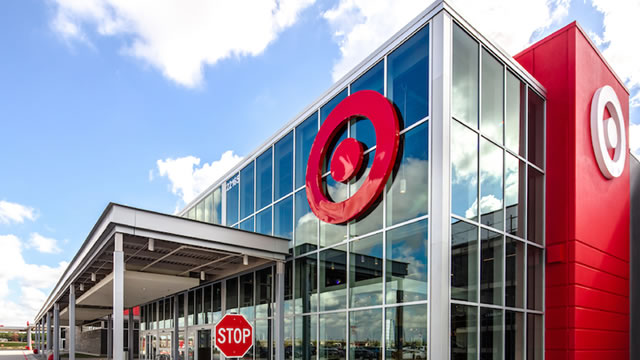
Target Stock Stages 4-Week Slide Before Earnings
Schaeffers Investment Research· 2025-03-03 17:04
Core Viewpoint - Target Corp is expected to report lower-than-expected earnings and revenue for the fourth quarter, despite an anticipated rise in comparable store sales [1] Financial Performance - Wall Street forecasts earnings of $2.24 per share and revenue of $30.83 billion for Target's fourth quarter, which is lower than both expectations and the same quarter last year [1] - Target's stock has experienced a significant decline, down 20% year-over-year and 8.1% year-to-date, following a 21.4% drop after earnings in November [2] Historical Context - Target has a generally optimistic earnings history, with the November drop being only the second post-earnings loss in the past two years, the first occurring in May 2024 [3] - The stock has averaged a 9.6% move in the last eight quarterly reports, with options pricing indicating an expected 11.8% swing for the upcoming report [3] Market Sentiment - There is a notable increase in put trading activity, with a 10-day put/call volume ratio of 1.34, indicating heightened pessimism among traders [4] - If Target's post-earnings performance is positive, the unwinding of this pessimism could provide upward momentum for the stock [4]