Xona Space Systems

Search documents
Aerospacelab Secures Galactic-Sized Funding: $110M Boosts Bid For Europe's New Satellite Constellation
Yahoo Finance· 2025-09-24 14:46
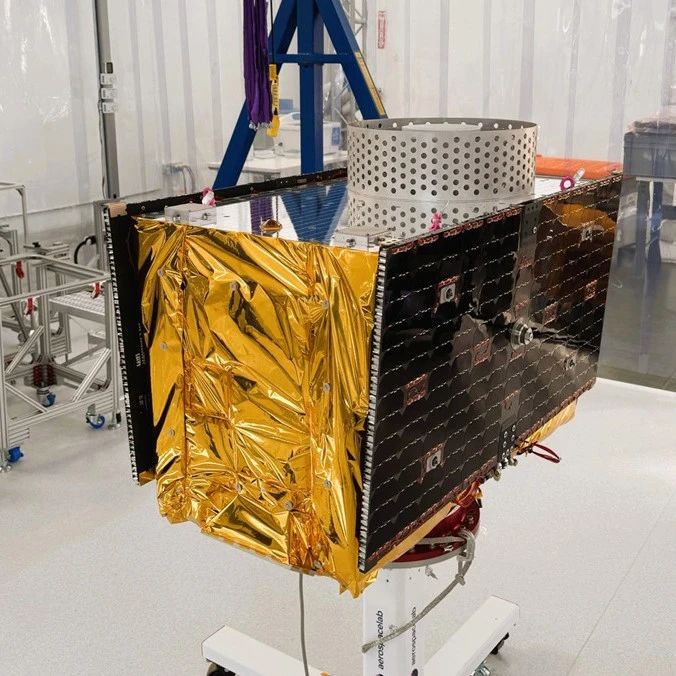
Core Insights - Aerospacelab has successfully closed an extended Series B funding round, raising €94 million ($110 million) to enhance its production capabilities for satellite constellations [1] - The funding will primarily support the Belgium Megafactory, which aims to produce up to 500 satellites annually and will also facilitate in-house research and development [2][3] Funding Details - The funding is composed of €56 million from private investors and €38 million from a European financial institution [1] - This financial backing is seen as a strong endorsement of Aerospacelab's vision and manufacturing capabilities [3] Production Plans - Groundbreaking for the Belgium Megafactory occurred in May 2024, with production expected to start in 2026 and reach full capacity by 2027 [3] - The company has also established a 35,000-square-foot facility in Torrance, California, to produce two satellites weekly for Xona Space Systems [4] Market Position - Aerospacelab is targeting private, commercial, and government customers with its satellite constellation systems [5] - The industry is witnessing significant investment, with firms allocating millions to startups that provide integrated ground-based software and global services [5]
这项技术要替代GPS:信号强100倍,精度10cm
半导体行业观察· 2025-06-08 01:16
Core Viewpoint - The article discusses the launch of the Pulsar satellite by Xona Space Systems, which aims to provide a more reliable and precise alternative to the existing GPS system, addressing its vulnerabilities to interference and deception [1][2][10]. Group 1: Satellite Technology and Development - The Pulsar satellite is the first of a planned constellation of 258 satellites designed to operate in low Earth orbit, approximately 12,000 miles above the Earth, offering stronger and more precise signals than GPS [1][2]. - Xona's CTO, Tyler Reid, claims that the signals from their satellites will be about 100 times stronger than GPS signals, allowing for better penetration through buildings and reduced interference coverage [1][2]. - The satellite system aims to achieve positioning accuracy of 3 inches (10 centimeters) or better, significantly improving navigation reliability in challenging environments [3][5][6]. Group 2: GPS Vulnerabilities and Market Need - The GPS system, operational since 1993, is critical for various applications but is susceptible to interference from various sources, including space weather and low-cost jammers [2][8]. - The ongoing conflict in Ukraine has highlighted the vulnerabilities of GPS, as interference has rendered precision-guided munitions ineffective, prompting a search for reliable alternatives [8][10]. - The proliferation of inexpensive jamming devices has raised concerns about GPS reliability, affecting commercial flights and other critical operations [8][10]. Group 3: Competitive Landscape and Future Plans - Xona is not the only company exploring alternatives to GPS; other firms like Anello Photonics and Advanced Navigation are developing ground-based solutions using inertial navigation systems [10][11]. - Xona plans to launch additional satellites in the coming years, with a goal to deploy most of its constellation by 2030, enhancing the resilience of critical infrastructure reliant on GPS [11][12]. - The company aims to design signals compatible with existing GPS technology, facilitating integration for GPS receiver manufacturers [11].