增值税纳税申报

Search documents
《中国税收居民身份证明》怎么开?操作步骤
蓝色柳林财税室· 2026-03-12 09:15
Overview - The article discusses the process for individuals to apply for a Chinese tax residency certificate, detailing the necessary steps and requirements for submission [3][4]. Application Process - Individuals can apply for the Chinese tax residency certificate through the tax authority's service hall or online via the electronic tax bureau [3]. - The application requires submission of the "Application Form for Chinese Tax Residency Certificate" along with supporting documents [3]. - The tax authority will assess the application based on relevant tax laws and regulations, and will issue the certificate or provide reasons for denial [3]. Online Application Steps - The application can be initiated on the electronic tax bureau website at https://etax.chinatax.gov.cn [4]. - Users must navigate to the "Tax Services" section and select "Chinese Tax Residency Certificate Issuance" [5]. - After entering the application page, users must read and acknowledge the application instructions before proceeding to fill out the application [7][8]. Information Submission - Applicants must select the application year, which can only be the current year or previous years (2019 to the current year) [10]. - Users can specify whether to include remarks on the certificate, such as their role in a business entity [10]. - The application requires detailed personal information and may necessitate the upload of additional documents, such as entry and exit records if the applicant claims no residence in China [19][20]. Confirmation and Submission - After filling out the application, users must confirm their information before submission [23]. - The system will remind applicants of their tax obligations if they have foreign income [23]. - Users can track their application status and receive notifications regarding approval or additional requirements through the "Message Center" on the website [25][26].


自然人出售报废产品经营所得汇算清缴热点问答
蓝色柳林财税室· 2026-03-12 01:40
Group 1 - The article discusses the tax obligations for individuals selling scrapped products under the "reverse invoicing" system, specifically the timing for personal income tax settlement [3] - According to the regulations, sellers must complete the income tax settlement by March 31 of the year following the "reverse invoicing" [3] - The article outlines how to calculate personal income tax for individuals selling scrapped products, emphasizing the need to deduct costs, expenses, and losses from total income to determine taxable income [5][6] Group 2 - It is stated that if individuals also invest in sole proprietorships, individual businesses, or partnerships, they must file income tax settlements separately for each investment and can choose one location for annual consolidated reporting [8] - The article highlights that if individuals cannot accurately calculate the costs associated with "reverse invoicing," they can opt for a simplified tax rate of 5% on their taxable income [6]

必看!个税汇算已经开始,一图读懂核心要点
蓝色柳林财税室· 2026-03-09 14:10
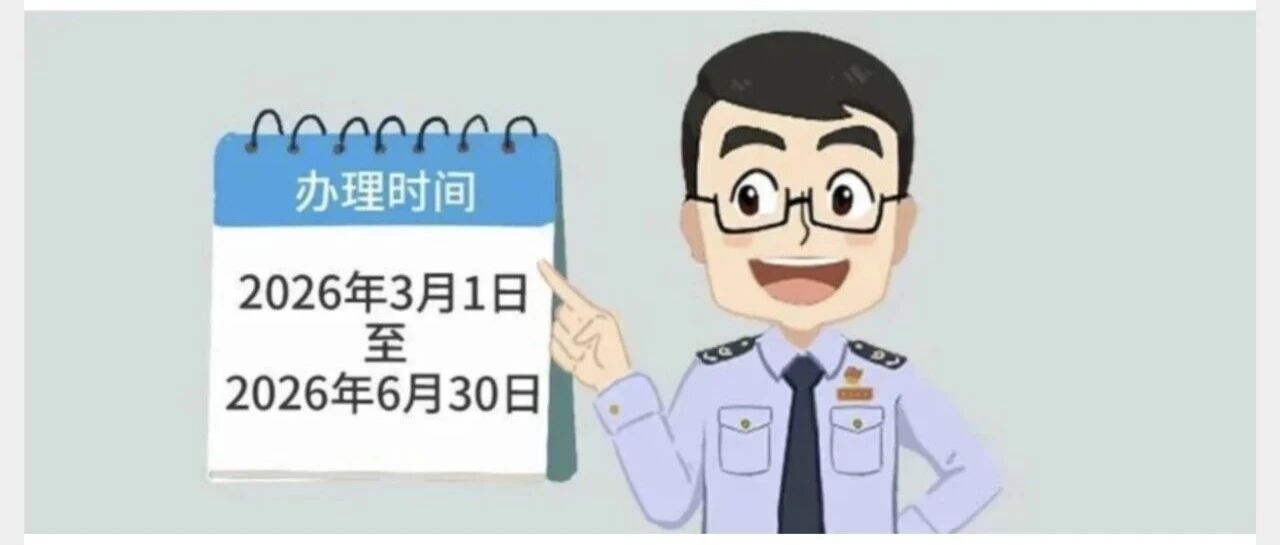
Group 1 - The article discusses the annual individual income tax reconciliation process, emphasizing the calculation of tax refunds or payments based on pre-paid taxes and actual tax liabilities [3][4] - The reconciliation period for the 2025 individual income tax is set from March 1 to June 30, 2026, allowing ample time for taxpayers to complete their filings [3] - Taxpayers who have discrepancies between pre-paid taxes and annual tax liabilities are required to file for reconciliation, with specific conditions outlined for those who need to apply for refunds or make additional payments [4] Group 2 - Certain taxpayers are exempt from filing if their total income does not exceed 120,000 yuan or if their pre-paid taxes match their actual tax liabilities [4] - The article provides guidance on the filing process, recommending that taxpayers use the personal income tax app for self-filing, especially for those who wish to file early [4][6] - It highlights the importance of understanding various deductions available, such as social insurance and charitable donations, which can affect the final tax calculation [4]

2025年度个税汇算开始了,手把手教你掌上办!操作步骤
蓝色柳林财税室· 2026-03-09 01:59
Group 1 - The article discusses the process of filing the annual comprehensive income tax return for the year 2025, highlighting the importance of understanding the requirements and conditions for tax filing [3][4][5] - Taxpayers with annual comprehensive income not exceeding 120,000 yuan or those whose tax payable does not exceed 400 yuan are exempt from filing the annual return [3] - The article emphasizes the need for taxpayers to accurately report their income, deductions, and any unreported income during the tax return process [4][5] Group 2 - It outlines the steps for taxpayers to confirm their basic information and income sources, including the selection of their employment unit or primary income source [4] - The article explains the calculation of taxable income, detailing the formula: Taxable Income = Income - Expenses - Tax-exempt Income - Deductions [4][5] - Taxpayers are advised to carefully review their reported income and deductions to avoid errors before proceeding with the tax return [5]
中国税务部门优化调整增值税纳税申报相关事项
Zhong Guo Xin Wen Wang· 2026-02-02 13:51
Core Viewpoint - The Chinese tax authority has announced adjustments to the value-added tax (VAT) filing process to enhance accuracy and convenience for taxpayers [1] Group 1: Adjustments to VAT Filing - The adjustments aim to maintain taxpayer filing habits and minimize changes to tax software, with the main VAT and additional tax forms remaining unchanged [1] - Changes include expanding the reporting criteria for service, intangible assets, and real estate in the main form for general taxpayers due to the integration of "labor" into the "service" category [1] - The reporting scope for differential deduction items has been optimized based on the definition of sales revenue [1] - For small-scale taxpayers, the main form has been adjusted to report tax-exempt sales and amounts that do not meet the threshold for exemption [1] Group 2: System Enhancements - To improve reporting accuracy, the filing system has introduced a detailed pop-up assistance feature [1] - The system includes intelligent reminders for common errors related to policy changes, such as notifying small-scale taxpayers of the unified 3% tax rate if they mistakenly report a 5% rate [1] Group 3: VAT Revenue Projections - According to the Ministry of Finance, China's domestic VAT revenue is projected to reach 68,947 billion yuan in 2025, reflecting a 3.4% increase from the previous year [2]
财政部出台3项增值税新规,事关抵税和预缴税
Di Yi Cai Jing· 2026-02-02 12:16
Group 1 - The core viewpoint of the news is the introduction of new regulations regarding VAT input tax deductions and long-term asset input tax deductions, aimed at ensuring the effective implementation of the VAT law and its regulations [1][2][3] - The Ministry of Finance and the State Taxation Administration released three VAT regulatory documents on February 2, including the Announcement on VAT Input Tax Deductions, the Interim Measures for Input Tax Deductions on Long-term Assets, and the Management Measures for Prepaid VAT [1][2] - The Announcement on Input Tax Deductions clarifies the details of input tax deductions, including a new calculation formula for determining non-deductible input tax amounts based on the proportion of sales or income [2][3] Group 2 - The Interim Measures for Input Tax Deductions on Long-term Assets define the scope of long-term assets, methods for input tax deductions, asset disposal, and daily management to ensure the regulations are effectively implemented [3] - The Management Measures for Prepaid VAT specify operational details for five scenarios requiring prepaid tax, including cross-regional construction services and real estate sales [3][4] - The Announcement on VAT Tax Filing optimizes the filing process for taxpayers, expanding reporting categories and adjusting definitions based on policy changes [4]

一次性全额缴回留抵退税款后,如何进行增值税纳税申报?
蓝色柳林财税室· 2026-01-20 01:33
Tax Filing Calendar - Taxpayers are required to declare and pay various taxes including value-added tax, consumption tax, corporate income tax, and personal income tax from the 1st to the 20th of each month [7] - Social insurance contributions must be declared and paid by the 25th of each month [7] Tax Regulations - The taxable basis for the stamp duty on business account books is the total amount of paid-in capital and capital reserves recorded in the books [9] - Taxpayers can declare and pay stamp duty through the electronic tax bureau [9] Employee Compensation Reporting - The report for employee compensation includes costs such as salaries, employee welfare, education expenses, and various social security contributions [11] - Actual payments to employees under the "payable employee compensation" account must also be reported [12] Online Tax Services - Taxpayers can prioritize using the electronic tax bureau or its app for tax filing, and if online services are insufficient, they can seek assistance from remote services [14] - Steps for online consultation include logging into the electronic tax bureau, accessing the "interaction" icon, and contacting support for assistance [15]

增值税纳税申报操作与常见误区
蓝色柳林财税室· 2025-10-31 01:15
Group 1 - The article provides detailed instructions for small-scale taxpayers on how to declare and pay value-added tax (VAT) and additional taxes through the electronic tax bureau [1][21] - It outlines two declaration methods for small-scale taxpayers: confirmation declaration and form-filling declaration, with specific steps for each method [4][22] - The confirmation declaration requires taxpayers to verify sales income and report any unbilled income separately for goods and services [5][6][7] Group 2 - General taxpayers must also log into the electronic tax bureau to declare VAT and additional taxes, with three declaration modes: confirmation, supplementary, and form-filling [21][22] - The confirmation mode for general taxpayers involves verifying displayed data and making necessary adjustments for unbilled income [23][25] - The article emphasizes the importance of timely tax declaration, even if no business activity occurred, to avoid negative impacts on the company's tax credit rating [31][42] Group 3 - Common misconceptions regarding VAT declaration are addressed, such as the belief that no declaration is needed if no invoices are issued [32][34] - Taxpayers are reminded that unbilled income creates a tax obligation and must be reported accordingly [32][46] - The article highlights the consequences of failing to declare taxes accurately, including potential penalties and impacts on business operations [43][44]

扣缴单位无法获取到纳税人填报的专项附加扣除信息该怎么处理?
蓝色柳林财税室· 2025-10-25 13:46
Core Viewpoint - The article emphasizes the importance of tax compliance for enterprises, highlighting common misconceptions regarding tax declaration obligations and the necessity of timely submissions regardless of business activity or income status [10][12][13]. Misconceptions and Compliance Guidelines - Misconception 1: Enterprises that have not conducted business and have no income are exempt from tax declaration. Compliance Reminder: According to the Tax Collection and Administration Law, taxpayers must submit tax declarations even if there is no taxable income [10][12]. - Misconception 2: Enterprises enjoying tax exemptions do not need to file tax declarations. Compliance Reminder: Taxpayers must still file tax declarations during the exemption period [13]. - Misconception 3: Income not invoiced does not require VAT declaration. Compliance Reminder: VAT obligations arise upon receipt of payment or issuance of invoices, necessitating timely VAT declarations [14][16]. - Misconception 4: Small-scale taxpayers can change their reporting frequency based on quarterly sales. Compliance Reminder: Once a reporting frequency is chosen, it cannot be changed within the same accounting year [18][19]. - Misconception 5: Small-scale taxpayers can enjoy VAT exemptions based on selective sales figures. Compliance Reminder: All taxable sales must be aggregated to determine eligibility for VAT exemptions [20][21].

国庆长假快乐游,ETC车主来看“纸改电”后发票怎么开
蓝色柳林财税室· 2025-09-25 11:53
Core Viewpoint - The article addresses the confusion among taxpayers regarding the accurate filling of the VAT tax declaration form when issuing both special and ordinary VAT invoices in the same month. It provides a detailed example to clarify the process for general taxpayers [12][13]. Group 1: VAT Invoices - Special VAT invoices are designed and printed under the supervision of the State Administration of Taxation and have a deduction function, serving as an important certificate for general VAT taxpayers to deduct VAT [12]. - Ordinary VAT invoices are issued during the sale of goods or provision of services and generally cannot be used for input tax deductions, except for special provisions [12]. Group 2: Example Analysis - A construction material sales company, as a general taxpayer, had a total sales revenue of 660,000 yuan (excluding tax) in May 2025, with 460,000 yuan from special VAT invoices and 200,000 yuan from ordinary VAT invoices [13][14]. - The output tax for the special VAT invoice sales is calculated as 460,000 × 13% = 59,800 yuan, while for the ordinary VAT invoice sales, it is 200,000 × 13% = 26,000 yuan [17]. Group 3: Filling the VAT Declaration Form - The VAT declaration form should reflect the sales amounts and corresponding output tax for both special and ordinary invoices, ensuring accurate reporting of the total sales and tax liabilities [18][19]. - The example illustrates how to fill out the VAT declaration form, specifying the sales amounts and output tax for both types of invoices under the applicable tax rates [18][19].