
核设施安全

Search documents
俄罗斯警告美国!
中国能源报· 2026-03-24 05:30
Group 1 - Russia warns the US about the potential consequences of attacking Iran's nuclear facilities, stating it could lead to "irreparable consequences" [1] - The Bushehr nuclear power plant is under the supervision of the United Nations and the International Atomic Energy Agency (IAEA) [1] - Russia is maintaining close dialogue with the IAEA regarding the situation around the Bushehr nuclear power plant [1] Group 2 - The Iranian Atomic Energy Organization reported that an enemy projectile hit the Bushehr nuclear power plant area, but there were no economic or technical damages, nor any casualties [1] - Russia emphasizes that only political and diplomatic means can effectively alleviate the "catastrophic" tensions in the Middle East [1]


突发!伊朗核设施遭袭
中国能源报· 2026-03-21 09:48
Core Viewpoint - The article discusses the attack on Iran's Natanz nuclear facility by the United States and Israel, highlighting the violation of international laws, including the Treaty on the Non-Proliferation of Nuclear Weapons [1]. Group 1 - The attack occurred on March 21, with Iran claiming it violated international regulations [1]. - Following the attack, Iran's nuclear safety center conducted research on the potential leakage of radioactive materials, concluding that there was no leakage and surrounding residents were not threatened [1].

日本发生含放射性水泄漏事件,外交部回应
Xin Lang Cai Jing· 2025-12-25 16:21
Group 1 - The core issue highlighted is the leakage of radioactive water from the "Puxian" nuclear reactor in Fukui Prefecture, Japan, which has raised concerns about the operational safety and regulatory oversight of Japan's nuclear facilities [1] - The Chinese government criticizes Japan for its inadequate management and safety protocols, citing a series of nuclear safety incidents, including the falsification of radiation detection data at Fukushima and a cooling water overflow incident at a reprocessing plant in Aomori Prefecture [1] - There is a call for Japan to learn from the Fukushima nuclear disaster, fulfill its nuclear safety responsibilities, and accept international supervision to alleviate global concerns regarding nuclear waste management and decommissioning processes [1] Group 2 - The Chinese government emphasizes the need for enhanced international monitoring of the management of contaminated water from Fukushima and the operational status of nuclear facilities to ensure marine environmental safety [1]

日本核反应堆发生含放射性物质水泄漏事件,外交部发声
第一财经· 2025-12-24 07:52
Core Viewpoint - The recent radioactive water leak incident at the "Puxian" nuclear reactor in Fukui Prefecture, Japan, highlights serious deficiencies in Japan's nuclear facility operations, maintenance capabilities, and safety regulations [1] Group 1: Incident Overview - On December 23, a radioactive water leak occurred during the decommissioning of the "Puxian" nuclear reactor, with the concentration of radioactive substances deemed "high" and potential radiation exposure for several individuals [1] Group 2: Safety Concerns - The incident is part of a series of safety issues in Japan's nuclear facilities, including the falsification of radiation detection equipment quality checks at the Fukushima Daiichi Nuclear Power Plant and a cooling water overflow incident at the spent fuel pool in Aomori Prefecture [1] - The aging of nuclear facilities, chaotic management, and inadequate regulation have raised significant concerns, especially as Japan plans to restart the Kashiwazaki-Kariwa Nuclear Power Plant, which previously experienced a cooling water overflow incident [1] Group 3: Recommendations and International Oversight - The Chinese side urges Japan to learn from the Fukushima nuclear accident, fulfill its nuclear safety responsibilities, provide timely updates, and take measures for proper decommissioning of nuclear power plants and disposal of radioactive waste [1] - There is a call for enhanced international supervision and monitoring of the management of Fukushima's contaminated water discharge and the operational status of nuclear facilities to ensure marine environmental safety [1]

日本发生含放射性物质水泄漏事件,外交部:再次暴露日方核设施运维能力等有严重漏洞
Xin Lang Cai Jing· 2025-12-24 07:50
Core Viewpoint - The recent radioactive water leak from the "Puxian" nuclear reactor in Japan highlights serious deficiencies in Japan's nuclear facility operations, maintenance capabilities, and safety regulations [1][2] Group 1: Incident Details - On December 23, a radioactive water leak occurred at the "Puxian" nuclear reactor in Fukui Prefecture, Japan, with the Japanese Nuclear Regulation Authority indicating that the concentration of radioactive materials in the leaked water is considered "high" and may have exposed several individuals to radiation [1] - This incident is part of a series of concerning safety events involving Japan's nuclear facilities, including issues at the Fukushima Daiichi Nuclear Power Plant and a cooling water overflow incident at a spent fuel pool in Aomori Prefecture [2] Group 2: Regulatory and Public Response - The Japanese government's decision to restart the Kashiwazaki-Kariwa Nuclear Power Plant, which previously experienced a cooling water overflow incident, has sparked public opposition and protests within Japan [2] - The Chinese government urges Japan to learn from the Fukushima nuclear accident, fulfill its nuclear safety responsibilities, provide timely updates, and properly manage the decommissioning of nuclear power plants and radioactive waste disposal, while also accepting international supervision to alleviate global concerns [2]
7.5级强震后,日本警告:后续或有更大地震
第一财经· 2025-12-08 23:46
Core Viewpoint - A 6.6 magnitude earthquake occurred off the eastern coast of Honshu, Japan, on December 9, 2025, with a depth of 30 kilometers, leading to injuries, evacuations, and power outages in several regions [5][7][11]. Earthquake Details - The earthquake was initially reported as a 7.5 magnitude by the Japan Meteorological Agency [6]. - The earthquake resulted in multiple injuries in Hokkaido and Aomori Prefecture, prompting evacuation orders in Hokkaido, Aomori, Iwate, Miyagi, and Fukushima Prefectures [7]. - Tsunami warnings were issued, with wave heights reaching up to 70 centimeters in Iwate Prefecture and between 10 to 50 centimeters in other areas [8]. Impact on Infrastructure - A fire broke out near a nursery in Aomori City following the earthquake, with significant smoke observed [9]. - Approximately 3,900 households in Aomori and 300 in Iwate experienced power outages due to the earthquake [11]. - The planned discharge of nuclear contaminated water from the Fukushima Daiichi Nuclear Power Plant was halted following tsunami warnings [14]. Nuclear Facilities Status - No abnormalities were reported at the Fukushima Daiichi and Daini Nuclear Power Plants after the earthquake [17]. - At a nuclear waste treatment facility in Aomori, over 100 liters of water overflowed from a spent fuel pool, but it was contained within the building and did not pose a safety risk [15]. Future Risks - The Japan Meteorological Agency warned of the potential for stronger aftershocks in the following week [18]. - An expert meeting is expected to release estimates of potential damage from a hypothetical 7.3 magnitude earthquake in Tokyo, predicting 18,000 fatalities and economic losses of 83 trillion yen [18][19].

俄罗斯一核电站遭袭
Yang Shi Xin Wen· 2025-10-10 08:37
Core Viewpoint - A Ukrainian drone attack on the new Voronezh nuclear power plant was reported, but it did not cause significant damage or casualties, and radiation levels remained unchanged [3][5]. Group 1: Incident Details - On the morning of the 7th, a Ukrainian military drone was suppressed in the area of the new Voronezh nuclear power plant, colliding with the cooling tower of an operational unit and resulting in an explosion that left black marks [3]. - The nuclear power plant has three operational units, with one unit undergoing scheduled maintenance since the 4th of this month. The total installed capacity of the plant is 2,556 megawatts [4]. Group 2: Response and Context - There has been no response from the Ukrainian side regarding the incident. Russian media reported previous attempts by Ukraine to attack nuclear power plants in Kursk and Smolensk regions [5]. - Russian President Putin emphasized that ensuring the safety of nuclear facilities is a "top priority" for Russia [5].
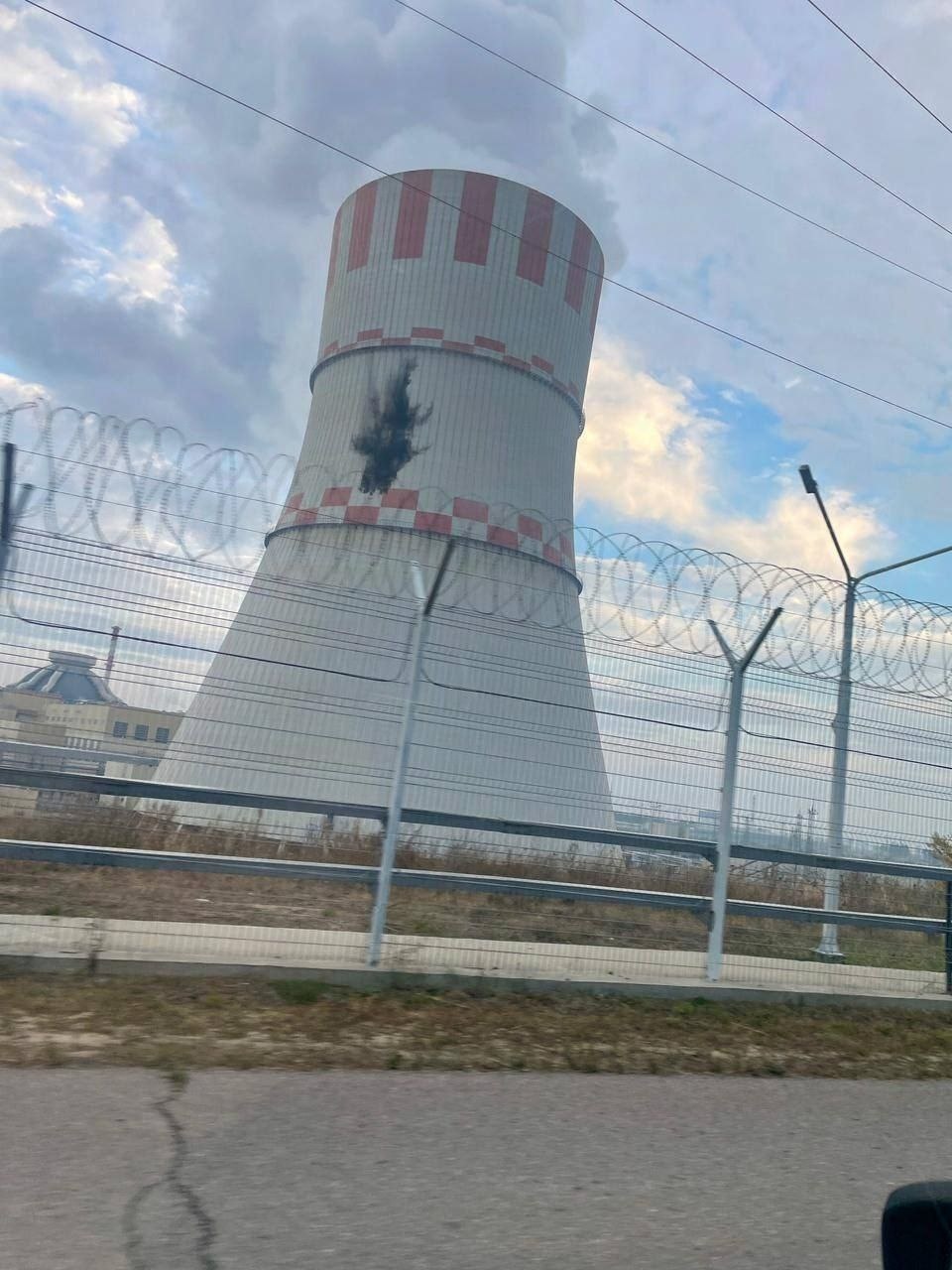
普京:确保核设施安全是俄罗斯的“绝对优先事项”
Yang Shi Xin Wen· 2025-09-25 16:19
Core Points - Russia is developing new technologies for the peaceful use of nuclear energy, with a focus on ensuring the safety of nuclear facilities as a top priority [1] - The country aims to create stable and long-term conditions for nuclear energy cooperation projects amidst a changing global technological landscape [1] - Russia plans to begin the construction of small land-based and floating nuclear power plants soon [1] - The country emphasizes its commitment to fulfilling all obligations in the nuclear field, regardless of the political situation [1] - Russia aims to avoid placing its nuclear partners in a position of dependency and seeks a balance between peaceful nuclear development and strengthening non-proliferation mechanisms [1]
俄罗斯方面表示,轰炸核设施绝不能成为“常规”。
news flash· 2025-07-30 10:49
Core Viewpoint - The Russian side emphasizes that bombing nuclear facilities must never become a "norm" [1] Group 1 - The statement reflects a strong stance against the normalization of attacks on nuclear sites, indicating potential geopolitical tensions [1]
国际原子能机构:伊朗核设施受损后 海湾地区辐射水平保持正常
news flash· 2025-06-27 17:25
Core Viewpoint - The International Atomic Energy Agency (IAEA) reported that radiation levels in the Gulf region remain normal following damage to Iranian nuclear facilities due to Israeli airstrikes targeting Iran's nuclear program and military sites [1]. Summary by Relevant Sections - **IAEA Report**: The IAEA confirmed that despite the damage to Iranian nuclear facilities, the radiation levels in the Gulf region are stable and within normal ranges [1]. - **Israeli Military Actions**: Since June 13, Israel has conducted a military operation named "Operation Rising Lion," targeting dozens of sites in Iran related to its nuclear program and military capabilities [1]. - **Specific Targets**: Israeli Prime Minister Netanyahu stated that the Israeli military has destroyed key facilities, including the Natanz uranium enrichment facility, the Isfahan uranium conversion plant, and the Arak heavy water facility, along with numerous other nuclear-related sites such as centrifuge production plants and laboratories [1].