Genetic engineering

Search documents
Azitra Announces Pricing of Private Placement Financing of up to Approximately $10.5 Million with up to an Additional Approximately $20.9 Million
Prnewswire· 2026-03-19 17:13
Core Viewpoint - Azitra, Inc. has announced a private placement financing of up to approximately $31.4 million, which includes an initial funding of about $10.5 million and an additional potential $20.9 million through the exercise of warrants, aimed at advancing its innovative protein and peptide research programs for the cosmetic and cosmeceutical markets [1][3]. Financing Details - The financing involves a securities purchase agreement with institutional investors, including Stonepine Capital and Nantahala Capital, and is expected to close around March 20, 2026, pending customary closing conditions [1][2]. - The company will issue 10,470 shares of Series A convertible non-redeemable preferred stock at a price of $1,000 per share, along with Series B and Series C warrants to purchase up to 85,101,201 shares of common stock [4][5]. Market Potential - The market for biotech-oriented cosmetic ingredients was valued at $2.3 billion in 2024 and is projected to grow to $3.7 billion by 2030, indicating significant growth opportunities for Azitra's new initiatives [3]. Product Development Focus - Azitra is focusing on developing proprietary filaggrin protein and peptide technologies aimed at addressing skin issues such as fine lines, wrinkles, and eczema-like rashes, leveraging its expertise in skin science and microbial genetic engineering [4][9]. - The company’s lead program, ATR-12, targets Netherton syndrome, a rare skin disease, while ATR-04 addresses EGFR inhibitor-associated rash, with both programs utilizing engineered strains of S. epidermidis [9]. Use of Proceeds - The initial net proceeds from the financing will be allocated towards research and development, general corporate expenses, and working capital needs [7].



Gene editing and clones | 60 Minutes Full Episodes
60 Minutes· 2026-03-07 12:00
AMERICA'S future as a science leader may depend on students like the ones you're going to meet tonight. Teenagers from Lambert High School in suburban Atlanta. They may have just found a better way to detect and treat Lyme disease, which affects nearly a half million Americans annually. Their primary tool, the revolutionary gene editing technique known as Crisper. And these Crisper kids did it to try to prove they are the best in the world, competing at a kind of science Olympics in Paris called Gem, short ...

Demeetra Announces Renewal of Research License for piggyBac® Technology with Taiho Pharmaceutical Co., Ltd.
PRWEB· 2026-02-19 15:00
Demeetra AgBio, Inc. (hereafter "Demeetra") today announced that Taiho Pharmaceutical Co., Ltd. (hereinafter "Taiho") has renewed its research license agreement for the piggyBac® transposase technology, a widely used platform for genetic engineering in research applications.LEXINGTON, Ky., Feb. 19, 2026 /PRNewswire-PRWeb/ -- Under the renewed agreement, Taiho will continue to leverage the piggyBac technology for its internal research activities. The license has been granted directly by Demeetra, which acqui ...
24/7 Market News - Not Magic, Just Science: Kraig Labs’ Transgenic Silkworms Make History at Scale
Globenewswire· 2026-02-11 13:35
Core Insights - Kraig Biocraft Laboratories is advancing its commercial scale-up of spider silk production to meet increasing demand from global brands [1][4] - The company employs advanced gene-editing techniques to enable silkworms to produce recombinant spider silk fiber [2] - Kraig Labs is engaged with major global brands for the supply of spider silk materials, marking significant milestones in commercialization [3][7] Production and Capacity - Kraig Labs is expected to achieve production capacity exceeding 10 metric tons of recombinant spider silk cocoons per month, indicating a shift from development to industrial execution [4] - The company is currently building inventory to fulfill existing material demand and future orders [2] Major Brand Engagements - Kraig Labs has secured orders for biodegradable spider silk and is working with a globally recognized performance sports apparel brand [3] - The company is preparing to deliver materials to three major global brands, including a high-end luxury fashion brand and a leader in premium performance sportswear [7][8] Historical Significance - Kraig Labs may become the second company in history to achieve commercial-scale output from a transgenic animal platform, following Sanofi's success with a transgenic goat product [5][6] - This achievement would represent a significant milestone in biotechnology, as it involves the production of a biodegradable structural material rather than a pharmaceutical protein [6]
24/7 Market News - Not Magic, Just Science: Kraig Labs' Transgenic Silkworms Make History at Scale
Globenewswire· 2026-02-11 13:35
DENVER, Feb. 11, 2026 (GLOBE NEWSWIRE) -- 247marketnews.com, a pioneer in digital media dedicated to the swift distribution of financial market news and information, reports that Kraig Biocraft Laboratories (OTCQB: KBLB) (“the Company” or “Kraig Labs”), the undisputed global leader in the development and commercialization of spider silk, is entering a new phase of commercial scale-up as it accelerates production to meet growing demand from global brands. Kraig Labs utilizes advanced gene-editing techniques ...

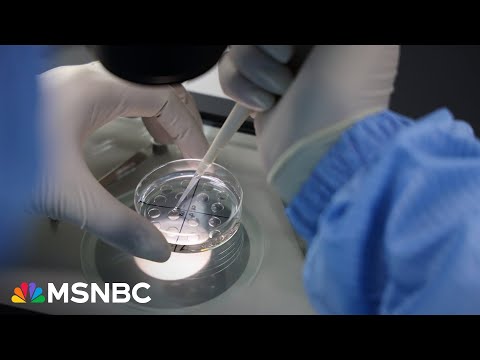
'Science fiction gone bad.' Execs quietly compete to create genetically engineered baby, WSJ reports
MSNBC· 2025-11-12 11:36
Company's Activities - Preventive, backed by Sam Altman's family office and Coinbase co-founder Brian Armstrong, is conducting pre-clinical research to create a baby from a genetically engineered embryo to prevent hereditary diseases [3] - Preventive is searching for locations outside the US, including the UAE, to conduct embryo editing research, as it is banned in the US for reproductive purposes [2][10] - The company claims to be focused on preclinical research, proving the safety of embryo editing, transparency, and high ethical standards [14][15] Ethical and Regulatory Concerns - Editing genes in embryos to create babies is banned in the United States [2][9] - Concerns exist about where to draw the line between preventing hereditary diseases and selecting for traits like long legs, large breasts, blue eyes, and high intelligence [6] - Scientists have issued calls for a moratorium on embryo editing, suggesting the technology is not ready [10] - The industry is being compared to the "move fast and break things" mentality of Silicon Valley, raising concerns about ethics and regulation [8][19] Potential Risks and Implications - There are concerns about what happens if the genetic information is wrong or if something goes wrong with a genetically modified embryo [8] - The possibility of "designer babies" raises ethical questions reminiscent of dystopian science fiction scenarios [11][12][13] - Polygenic screening companies are already offering insights into potential child's IQ, height, eye color, allowing parents to choose embryos based on this information [7]
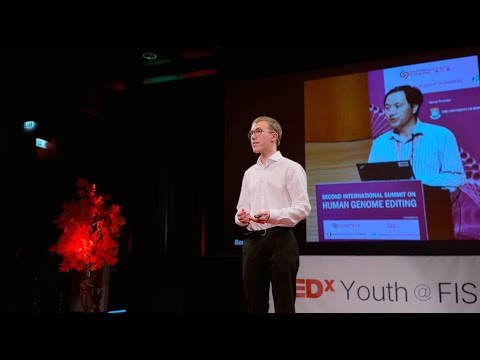
Genetic Modification: Problem or Progress? | Ewan Godfrey | TEDxYouth@FIS
TEDx Talks· 2025-11-07 16:21
Genetic Modification & Applications - Genetic modification is evolving from scary monster scenarios to a tool for solving problems by working with nature [2][3][4] - CRISPR, a gene editing mechanism, functions by substituting targeted nucleotides, similar to substituting players on a sports team [5][6][7] - The FDA has approved genetically modified crops since 1994, indicating a history of safe use [4] Industry Impact & Disease Control - The pork industry faces significant economic losses, with over $1.2 billion spent annually in the US alone to control Porcine Reproductive and Respiratory Syndrome (PRRS) [8][9] - CRISPR technology is being applied to combat infectious diseases like dengue fever by modifying mosquito genes to prevent viral infection [11][12][13] Human Health & Ethical Considerations - CRISPR offers potential treatments for genetic conditions like sickle cell anemia, caused by a single nucleotide mutation [14][15] - Modifying genes can have unintended consequences, as seen with sickle cell anemia where carriers have malaria resistance [16][17] - Gene editing tools like CRISPR require careful management to ensure ethical use, highlighted by instances of illegal experimentation [17][18]
24/7 Market News- Kraig Labs Unlocks Spider Silk at Scale, Solving a Centuries-Old Problem of Nature’s Strongest Fiber
Globenewswire· 2025-10-07 13:15
Core Insights - Kraig Biocraft Laboratories has achieved a significant milestone in biotechnology by successfully mass-producing spider silk using genetically engineered silkworms, addressing a long-standing challenge in the field [1][4][5] Company Overview - Kraig Biocraft Laboratories, Inc. (OTCQB: KBLB) focuses on the development and commercialization of spider silk-based fiber technologies, utilizing a proprietary silkworm-based genetic engineering platform to produce high-performance, cost-effective, and scalable spider silk materials [8] Technological Breakthrough - The company’s genetically engineered silkworms serve as a factory for spider silk production, enabling a scalable and sustainable supply chain that transitions spider silk from laboratory research to practical applications [4][5] Market Potential - The global spider silk market is projected to grow significantly, with forecasts estimating it will reach $1.3–$1.5 billion by 2035, driven by a compound annual growth rate (CAGR) of over 30% [6] - Key sectors contributing to this growth include biomedical applications (sutures, scaffolds, and implants), textiles, military applications, and sustainable materials for aerospace and automotive industries [6] Unique Properties of Spider Silk - Spider silk is recognized for its exceptional mechanical properties, including a superior tensile strength-to-weight ratio, outperforming materials like Kevlar and steel [6][7] - Its biocompatibility and biodegradability make it an attractive option for various applications, particularly in biomedical and sustainable material sectors [2][6] Applications and Opportunities - Potential applications for spider silk include stronger and lighter wearables, biodegradable sutures, next-generation body armor, sustainable textiles, and biomimetic actuators in robotics [9]
24/7 Market News: Kraig Labs Unlocks Spider Silk at Scale, Solving a Historical Problem for Nature’s Toughest Fiber
Globenewswire· 2025-10-02 13:37
Core Insights - Kraig Biocraft Laboratories has achieved a significant milestone by successfully mass-producing spider silk using genetically engineered silkworms, addressing a long-standing challenge in biotechnology [1][2][3] Company Overview - Kraig Biocraft Laboratories, Inc. (OTCQB: KBLB) focuses on the development and commercialization of spider silk-based fiber technologies, utilizing a proprietary silkworm-based genetic engineering platform [5] - The company aims to produce high-performance, cost-effective, and scalable spider silk materials for various applications, including defense, performance apparel, technical textiles, and medical uses [5] Technological Breakthrough - The company’s genetically engineered silkworms serve as a factory for spider silk production, enabling a scalable, cost-effective, and sustainable supply chain [2][3] - This breakthrough allows spider silk to transition from laboratory research to practical applications, making it accessible to various industries [3] Market Applications - Interest in Kraig's spider silk technology spans multiple sectors, including: - Inventors creating stronger, lighter wearables or materials [7] - Biomedical engineers developing biodegradable sutures and scaffolds [7] - Defense contractors designing next-generation body armor [7] - Outdoor brands seeking sustainable, high-performance textiles [7] - Robotics teams working on biomimetic actuators or tethers [7]
24/7 Market News: Kraig Labs Unlocks Spider Silk at Scale, Solving a Historical Problem for Nature's Toughest Fiber
Globenewswire· 2025-10-02 13:37
Core Insights - Kraig Biocraft Laboratories (OTCQB: KBLB) has achieved a significant milestone by successfully mass-producing spider silk using genetically engineered silkworms, addressing a long-standing challenge in biotechnology [1][2][3] Company Overview - Kraig Biocraft Laboratories is a biotechnology company focused on developing and commercializing spider silk-based fiber technologies, utilizing a proprietary silkworm-based genetic engineering platform [5] - The company aims to produce high-performance, cost-effective, and scalable spider silk materials for various applications, including defense, performance apparel, technical textiles, and medical uses [5] Technological Breakthrough - The company's genetically engineered silkworms serve as a factory for spider silk production, enabling a scalable and sustainable supply chain that was previously unattainable due to the challenges of farming spiders [2][3] - This breakthrough allows spider silk to transition from laboratory research to practical applications, making it accessible to a wide range of industries, including construction, biomedical engineering, and outdoor apparel [3][7] Market Applications - Potential applications for spider silk include stronger and lighter materials for wearables, biodegradable sutures and scaffolds in biomedical engineering, next-generation body armor for defense contractors, and sustainable textiles for outdoor brands [7]