Vision 2030

Search documents
X @BSCN
BSCN· 2026-02-18 13:33
🚨MASSIVE: SAUDI-BACKED AI FIRM HUMAIN POURS $3 BILLION INTO ELON MUSK'S XAISaudi Arabia-backed artificial intelligence company @Humain has invested $3 billion into Elon Musk's @xAI, marking one of the largest single capital injections into a frontier AI company and deepening the kingdom's ties to Musk's expanding tech empire.The $3 billion investment places xAI in a financial position to compete directly with OpenAI, Anthropic, and Google DeepMind in the costly race to develop advanced large language models ...
Ascendis Pharma(ASND) - 2025 Q4 - Earnings Call Transcript
2026-02-11 22:32
Financial Data and Key Metrics Changes - Revenue for Q4 2025 was EUR 248 million, with full-year 2025 revenue totaling EUR 720 million, reflecting strong performance [22][23] - YORVIPATH revenue for Q4 was EUR 187 million, up from EUR 140 million in Q3, with full-year revenue reaching EUR 477 million [22] - SKYTROFA generated EUR 53 million in Q4, contributing to a total of EUR 206 million for the full year [22] - Operating profit for Q4 2025 was EUR 10 million, with operating cash flow of EUR 73 million [23] - The company ended 2025 with EUR 616 million in cash and cash equivalents, an increase from EUR 560 million at the end of 2024 [23] Business Line Data and Key Metrics Changes - YORVIPATH saw over 5,300 patients prescribed by nearly 2,400 unique healthcare providers in the U.S., indicating strong demand [8] - SKYTROFA maintained a market share of around 7% in the U.S. for pediatric growth hormone deficiency and adult growth hormone deficiency [11] - The company initiated a phase III basket trial for TransCon Growth Hormone in established growth hormone indications, expanding its market potential [12] Market Data and Key Metrics Changes - In the U.S., the insurance approval rate for YORVIPATH is approximately 70%, with expectations for gradual improvement [8][36] - YORVIPATH is commercially available in over 30 countries, with full reimbursement in four European countries and two international markets [9] - The company anticipates full commercial launches in 10 additional countries in 2026 [9] Company Strategy and Development Direction - The company aims to achieve operating cash flow of around EUR 500 million in 2026 and at least EUR 5 billion in annual product revenue by 2030, as part of its Vision 2030 strategy [7][19] - Ascendis Pharma is focused on expanding its pipeline of blockbuster product opportunities while strengthening its global commercial infrastructure [7][19] - The company plans to invest in label expansion for current products and develop new blockbuster opportunities in rare endocrine diseases [16] Management's Comments on Operating Environment and Future Outlook - Management expressed confidence in the long-term growth potential of YORVIPATH, citing a significant opportunity as less than 5% of U.S. patients are currently on treatment [8] - The company is optimistic about the upcoming approval of TransCon CNP and its potential impact on revenue [24][57] - Management highlighted the importance of partnerships and collaborations to create additional value and support the development of differentiated product opportunities [17] Other Important Information - TransCon Growth Hormone is now approved in the U.S. for both adult and pediatric growth hormone deficiency, with ongoing trials to expand its indications [5][12] - The company is advancing its once-weekly TransCon PTH candidate for hypoparathyroidism, with expectations for significant market impact [6][21] Q&A Session Summary Question: Confidence level heading into the TransCon CNP PDUFA - Management expressed high confidence in the approval of TransCon CNP, similar to previous assurances regarding TransCon PTH [30] Question: Insurance approval rate for YORVIPATH - Management is satisfied with the current 70% approval rate and noted that reaching 100% is unlikely due to natural filtering in patient eligibility [36][39] Question: YORVIPATH pricing and net pricing trends - Management refrained from discussing net pricing but indicated a focus on revenue growth as the product matures in the market [44][45] Question: Usage of YORVIPATH among prescribers - Management noted broad uptake among prescribers, with some treating multiple patients, and emphasized the importance of awareness among patients [50] Question: Update on the COACH Trial for achondroplasia - Management reported positive feedback from regulatory meetings regarding the trial data and readiness to initiate phase III trials [52][53] Question: TransCon CNP launch expectations - Management anticipates a strong initial uptake for TransCon CNP, leveraging existing approvals to facilitate entry into international markets [57] Question: Strategy for commercializing TransCon CNP globally - Management highlighted the established infrastructure from YORVIPATH as a foundation for rapid global commercialization of TransCon CNP [73]

X @The Economist
The Economist· 2026-02-11 15:20
In trying to diversify the economy, Saudi Arabia’s Vision 2030 project has introduced the sorts of dilemmas that exist everywhere else in the rich world https://t.co/Qxl9HC4rQz ...
X @The Economist
The Economist· 2026-02-11 14:00
In trying to diversify the economy, Saudi Arabia’s Vision 2030 project has introduced the sorts of dilemmas that exist everywhere else in the rich world https://t.co/oJNhYzXyTqPhoto: AFP https://t.co/Y3jFQximvQ ...
X @Bloomberg
Bloomberg· 2026-02-09 15:21
Saudi Finance Minister Mohammed Al-Jadaan tells @joumannatv why the kingdom is updating its Vision 2030 strategy https://t.co/UM90uBSAYR https://t.co/YKRaTZBlSS ...
Saudi Arabia to Update Its 2030 Economic Plan
Bloomberg Television· 2026-02-09 14:09
Well, Your Excellency, it's a real pleasure to be talking to you here today in such a beautiful landscape and a lot of really wonderful to be here. And of course, the ALALA conference is a conference for emerging market economies. So maybe that's a good place to start.In your opening remarks, you were talking about the fact that emerging market economies now account for 56% of the world economy, almost 60%, and its share has doubled since 2000. And yet with all of that, we should not be complacent because t ...


十年进步:沙特阿拉伯劳动力市场转型内幕(英)
Shi Jie Yin Hang· 2026-02-09 06:45
Investment Rating - The report does not explicitly provide an investment rating for the industry Core Insights - The report highlights significant improvements in Saudi Arabia's labor market over the past decade, driven by Vision 2030 and the National Labor Market Strategy (LMS), which have catalyzed private sector job creation and increased labor force participation, particularly among women and youth [6][24][25] - Key reforms have modernized labor market institutions, enhanced inclusion, and positioned the private sector as a primary driver of job creation [6][24][25] Summary by Sections Executive Summary - Saudi Arabia's Vision 2030 and LMS have improved labor market outcomes, shifting the economy beyond oil and increasing private sector job creation [24] - The report benchmarks 2025 outcomes against a 2015 pre-Vision 2030 baseline, showcasing key reforms and achievements [24] Key Achievements - Labor force participation has significantly increased, especially for women, with a notable reduction in unemployment rates [25] - The private sector has become more dynamic, with a younger, more educated workforce and a shift towards private employment, particularly among women [25][27] - Changing social norms have improved perceptions of private sector work, leading to increased job-seeking behavior among unemployed individuals [27] Vision 2030 and LMS - Vision 2030 aims to diversify the economy and improve living standards through labor market reforms [39] - The LMS focuses on modernizing governance, increasing employment creation, and improving skills and job quality in the private sector [39][40] - The LMS includes 27 initiatives, with 19 implemented, and has exceeded many key performance indicators [41][51] Labor Market Activation - The working-age population is increasingly educated, with a rise in tertiary education among both Saudis and expatriates [65] - Employment opportunities have expanded, particularly for vulnerable groups, leading to a decrease in youth not in employment, education, or training (NEET) [68] - The transition from inactivity to employment has improved, especially for women and youth, indicating a more inclusive labor market [68]
通过数字学习促进经济转型:沙特阿拉伯王国的FutureX案例(英)
Shi Jie Yin Hang· 2026-02-09 06:45
Investment Rating - The report does not explicitly provide an investment rating for the industry. Core Insights - FutureX is Saudi Arabia's flagship initiative aimed at transforming education and training through digital learning, addressing the challenges posed by technological advancements and evolving labor market demands [9][10][11] - The initiative aligns with Saudi Arabia's Vision 2030, focusing on economic diversification and the development of a skilled workforce [10][11][12] - FutureX has reached over 3.4 million learners and delivered nearly 18 million learning hours, showcasing its rapid expansion and impact [12][75] Summary by Sections Executive Summary - FutureX represents a strategic effort to equip learners with necessary skills for a rapidly changing world, particularly in the MENA region facing demographic and climate challenges [9][10] Digital Transformation for a Changing World - The report emphasizes the need for new approaches to education and skills development to adapt to technological and labor market changes [28][29] Background and Context: The Challenge - Saudi Arabia's Vision 2030 aims to reduce oil dependency and foster a skilled workforce through initiatives that enhance education and training [37][38] Saudi Arabia—Innovating a Way Forward with FutureX - FutureX serves as a national eLearning hub, connecting learners with a wide range of educational resources and ensuring quality through regulatory oversight by the National eLearning Center (NeLC) [11][67][73] FutureX Design Features - The platform is designed to be fully interoperable, offering a centralized ecosystem for education and training, and partners with over 50 eLearning platforms [67][72] Scale and Scope - FutureX has developed over 131,000 courses and more than 87,000 tailored learning paths, enabling organizations to customize training according to their workforce needs [12][80] Course Offerings, Pathways Curation and Demand - The platform allows organizations to create customized learning pathways, ensuring alignment with specific skills and workforce development needs [80][88]
Saudi graphite plant is ‘wake-up call’ for Quebec, France: CEO
MINING.COM· 2026-02-06 20:11
Core Viewpoint - Northern Graphite's decision to build a $200-million battery material plant in Saudi Arabia highlights the need for Canadian and French governments to provide incentives to retain similar projects domestically [1][3]. Group 1: Project Details - Northern Graphite has partnered with Al Obeikan Group for Investment to construct and operate the facility in Saudi Arabia, with construction expected to begin in the second half of the year after a feasibility study [2]. - The Saudi plant will have an initial capacity of 25,000 tonnes per year, with supply sourced from the Okanjande mine in Namibia, which is expected to start producing graphite concentrate in 2028 [5][7]. - The restart of the Okanjande mine is projected to cost approximately $35 million, with an expected annual output of 31,000 tonnes over a 10-year lifespan [8]. Group 2: Strategic Implications - The Saudi venture is prioritized over previously planned projects in Canada and France, emphasizing the urgency for those regions to enhance their competitive landscape [3][4]. - The partnership aligns with Saudi Arabia's Vision 2030, focusing on reducing oil dependency and advancing manufacturing and energy transition technologies [10][11]. - The Saudi government is expected to fund 50-75% of the project through the Saudi Industrial Development Fund, facilitating rapid progress due to short permitting timelines [12]. Group 3: Market Positioning - Northern Graphite aims to establish a fully integrated supply chain between Namibia and Saudi Arabia, positioning itself as a first mover in the market for graphite anode materials, crucial for lithium-ion batteries [6][7]. - Negotiations for a long-term offtake agreement for 25,000 tonnes per year with global battery manufacturers are well advanced, indicating strong market demand [7].
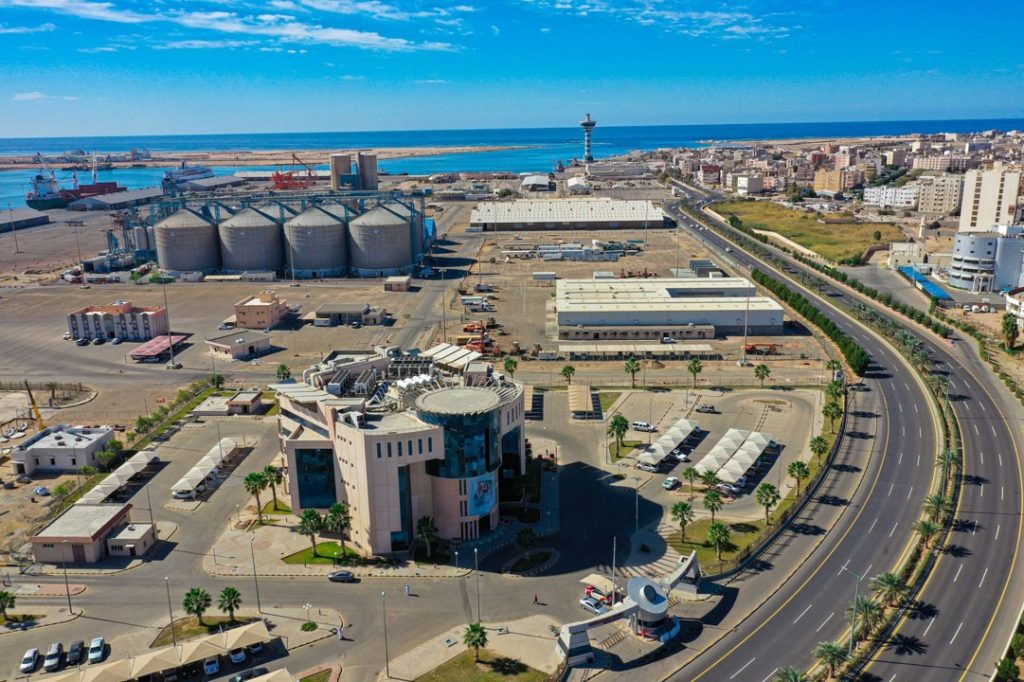
Saudi Arabia Supply Chain Market to Surpass US$ 970 Million by 2033 | Vision 2030 Investments, Digitalization, and Logistics Infrastructure Expansion Drive Growth | Astute Analytica
Globenewswire· 2026-02-06 13:00
Core Insights - The Saudi Arabia supply chain market is projected to grow from US$ 560 million in 2024 to US$ 970 million by 2033, with a CAGR of 6.70% from 2025 to 2033 [1][2] Market Growth Drivers - The expansion of the supply chain market is driven by strategic initiatives, technological advancements, and significant infrastructure developments, particularly under the Vision 2030 plan aimed at diversifying the economy and reducing oil dependency [2][4] - A US$ 267 billion investment was announced in 2024 to modernize the logistics sector, focusing on upgrading transportation systems and integrating advanced technologies [2][4] - The establishment of 18 new logistics zones as part of a SAR 10 billion initiative aims to improve capacity and reduce bottlenecks [2][4] Technological Advancements - The integration of AI, IoT, and blockchain technologies is enhancing efficiency and transparency in the supply chain [3] - Aramex launched an AI-powered route optimization platform in October 2024 to improve last-mile delivery efficiency [3] Infrastructure Developments - The maritime sector has shown significant growth, with King Abdul Aziz Port in Dammam handling 235,820 TEUs in February 2024, reflecting a 25.41% year-on-year increase [2][4] - The Makkah region initiated 20 road projects valued at US$ 373 million, covering 385 km to enhance connectivity [2][4] Investment and Foreign Direct Investment - In November 2024, Saudi Arabia signed nine investment agreements in the metal and mining sector, valued at over US$ 9.3 billion, to strengthen supply chain infrastructure [5] - The logistics sector attracted US$ 12 billion in foreign direct investment (FDI) inflows in 2024 [5] Freight Transportation - Freight transportation accounts for over 35% of the supply chain market, with road freight projected to handle 85% of domestic cargo, transporting an estimated 6.73 billion tons annually [6][7] - The extensive road network spans over 221,372 kilometers, making it the backbone of domestic logistics [6] Third-Party Logistics (3PL) Market - 3PL providers control more than 50% of the Saudi Arabian supply chain market, offering integrated logistics solutions that optimize costs and improve efficiency [8] - The rise of e-commerce, which experienced a 30% annual growth in 2024, has significantly increased the demand for 3PL services [8]