Sustainability

Search documents
Designing a Greener Future: One Step at a Time | Dato Lewre Lew Fong Voon | TEDxSunway University
TEDx Talks· 2025-09-22 16:51
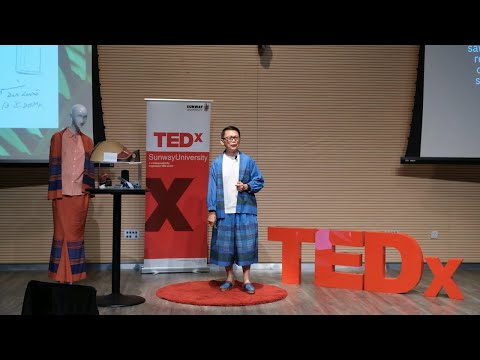
Company History and Development - The company started in 1987 under the name Rundi Enterprise, later known as Lur [4] - In the early 1990s, the company participated in shoe exhibitions in Germany but initially received no orders for three consecutive years [4][5][6] - The company achieved a breakthrough by securing two international orders from Japan and Lebanon at a GDS exhibition [6] - By 1997, after 10 years of OEM business, selling to 40 countries, the company launched its own brand, Lur [7] Sustainable Fashion Initiatives - The company is exploring the use of oil palm waste to create wood for high heel shoes [12][13] - The company is also utilizing pineapple leather (Piñatex) for sustainable shoe production [14][15] - KL Green Fashion was formed to promote sustainability and green fashion, using materials like pineapple leather, apple leather, oyster shells, and recycled PET bottles [17][18][19] - The fashion industry faces challenges with 92 million tons of textile waste being burned or dumped annually, with only 1% being recycled [16] Collaborations and Recognition - The company collaborated with Jimmy Choo, which provided significant learning opportunities and exposure [6][7][8] - The company designed shoes for Kate Middleton as a national present from the Queen in 2014 [9] - The company has designed for Malaysian queens and collaborated with top designers at London Fashion Week from 2010 to 2012 [10] - In 2017, the company designed a pair of shoes valued at 5 million MYR, recognized by the Malaysia Book of Records [11]

Choosing connection over consumption | Rolena Richardson | TEDxBard College
TEDx Talks· 2025-09-22 16:50
Environmental Impact of Consumerism - Annually, Americans discard over 12 million tons of furniture, equivalent to filling 1,600 Olympic swimming pools [1] - An estimated three-fifths (60%) of all clothing ends up in landfills or incinerators within a year of production, translating to a truckload of used clothing dumped or burned every second [2] - Global waste generation is projected to increase by 70% over the next 30 years, equating to 34 billion tons of waste each year [25] Critique of Capitalism - Capitalism is criticized for leading to the destruction of traditional values, environmental degradation, worker and consumer exploitation, and negative mental health effects [2] - Over the last 55 years, the global population has doubled, while global resource extraction has tripled [12] - From 2016 to 2021, global consumption exceeded 75% of the entire 20th-century consumption [13] - Capitalism prioritizes products that generate quick profits, such as fossil fuel vehicles, fast fashion, and cheap gadgets, leading to endless production and waste [14][15] Alternative Consumption Model - The report advocates for slow and empathetic consumerism, emphasizing choices that honor relationships between consumers and items, the people who made them, and the land the materials come from [8] - Slow consumerism challenges the fast-paced disposable culture, promoting fewer, higher quality items crafted with care and designed to last [8][9] - Empathetic consumerism invites compassion into purchasing decisions, considering the lives, traditions, and stories of the people behind the products [10] Call to Action - The report suggests five simple actions: question the value and impact of purchases, engage in creation, build relationships (not just transactions), prioritize giving over getting, and reconnect with nature [26][27][28][29][30][31]
Dare to be Plastainable | Prachi Nagar & Sanskriti Kashyap | TEDxYouth@NPSKRM
TEDx Talks· 2025-09-22 16:47
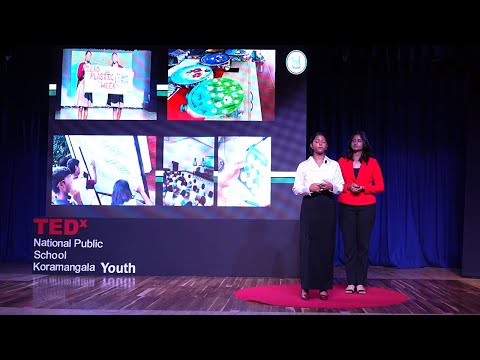
Environmental Impact of Plastics - Plastic takes a very long time to decompose, longer than a human lifespan [2] - The average person consumes over 20 kilograms of plastic in their lifetime [13] - Approximately 400 million tons of plastic are generated globally each year, equivalent to the weight of 80 million elephants or 7 billion humans [13] Project Plustainable Initiatives - Project Plustainable is a social impact initiative under the 1 million for 1 billion foundation [2] - The project started with personal changes, eliminating plastic bottles, bags, and excessive packaging [3] - The initiative expanded to families, friends, and neighbors, creating a "plastainable family" [3][4] - Conducted cleanups, joined public events, and volunteered with NGOs to understand how change works [5][6] - Launched a plastic-free eco week at NPS Koramangla in 2023 [7] - Distributed over 100 reusable cloth bags to local vendors [9] - Raised over 7,000 rupees by selling over 50 hand-painted cloth bags [10] Future Plans - Creating eco kits with plastic-free essentials in partnership with rural women [11] - Painting a mural in Bengaluru to promote a plastic-free message [12] - Taking their story to the United Nations headquarters through the 1 million for 1 billion foundation [12] Call to Action - Encourages individuals to make one small change to reduce plastic consumption [16] - Suggests creating an everyday eco kit with reusable utensils and a cloth napkin [16]
X @Forbes
Forbes· 2025-09-22 16:31
“We are the most intellectual species to walk the planet, but we’re not intelligent. If you’re intelligent you don’t destroy your only home.”Dr. Jane Goodall, DBE, founder of The Jane Goodall Institute, spoke at the 2025 #ForbesSustainabilityLeaders Summit. https://t.co/FUVC04nj8C ...
The Missing Puzzle in Sustainability | Nina Mbah | TEDxNUTM
TEDx Talks· 2025-09-22 16:19
Sustainability & Behavioral Change - Behavioral change is a strategy, not just a slogan, for shifting behaviors from negative to positive [4][5] - Habit change can be leveraged to drive adoption of sustainable products and services [9] - Making sustainability desirable, interesting, and exciting is crucial for large-scale adoption [12] Waste & Recycling - Globally, 92 million tons of fabric waste are generated annually [9] - 57% of fabric waste ends up in landfills [10] - Fashion for climate runway was introduced to make waste recycling for fashion desirable [10][11] Impact & Solutions - 9 million people die every year as a result of pollution and carbon emissions [14] - Changing habits can lead to significant reductions in carbon emissions and energy consumption [14] - Japan reduced 15 million tons of carbon emissions and saved 210 million kilowatt hours in electricity by promoting casual clothing [14]

Can Lego really build a sustainable future? | Tomas Spirit | TEDxDulwich College Singapore
TEDx Talks· 2025-09-22 15:53
Thank you, William. Up next, everyone's favorite childhood toy, Lego. Have you ever wondered if Lego was truly sustainable.Up next, we have an enthusiastic speaker, Thomas. Imagine stepping on a Lego brick. That sharp pain.It's a universal experience for parents. But despite that, I'm sure we all love Lego, and so do your kids. These tiny plastic bricks have sparked creativity for generations, allowing children to build entire worlds from their own imagination and creativity.Yet today, there's a pressing co ...
X @Bloomberg
Bloomberg· 2025-09-22 15:47
RT Bloomberg Live (@BloombergLive)Leaders from business, finance, policy, academia & NGOs are gathering in São Paulo with @BloombergLive at #BloombergGreen.Don't miss conversations designed to meet the urgent goals of #COP30 on 11/4.https://t.co/5iD7g2J8hu https://t.co/eNIvpsE55f ...
What fashion teaches about goodbyes and starting over | Sheila Estaniel | TEDxFolsom
TEDx Talks· 2025-09-22 15:45
Environmental Impact of Fast Fashion - Only 16% of donated clothes are reused, with the remainder being incinerated or landfilled [4] - Kenya receives over 300 million synthetic garments annually, contributing to plastic pollution in the Nairobi River [4][5] - By 2050, textile waste production is projected to exceed 150 tons per year [5] - A typical garment is worn approximately 7 to 10 times before disposal [18] Circularity and Sustainability Solutions - The fashion industry needs to reimagine the whole system to prioritize waste prevention [7] - Circularity, a model that keeps materials in use for as long as possible, involves designing better goodbyes, building support systems, and redefining value [8][9] - Designing clothes for second lives includes choosing durable fabrics and trims that are easily repairable [11] - Technology, such as AI and GPS, can help scale individual behavior by providing guidance on clothing disposal and routing materials efficiently [14][15] Policy and Cultural Shifts - California passed the nation's first responsible textile recovery act, holding brands and retailers accountable for fashion waste [7] - A cultural shift is needed to value rewear, remove the stigma from buying used, and celebrate second acts for clothes [19] - Consumers can support secondhand and upcycling designers, test circularity tools, and donate wearable clothes [21]
5 Takeaways from Levi Strauss & Co.’s 2024 Sustainability Goals and Metrics Report
Yahoo Finance· 2025-09-22 15:00
Sustainability Commitment - Levi Strauss & Co. (LS&Co.) is enhancing its sustainability efforts through targeted actions in key impact areas, as outlined in its 2024 Sustainability Goals and Metrics Report [1] - The report highlights progress in waste reduction, circularity, responsible cotton sourcing, and chemical management [1] Waste Management - LS&Co. is pursuing TRUE Zero Waste certifications for its company-operated facilities, with the Henderson, Nevada distribution center achieving TRUE Silver certification and a 95.2% waste diversion rate in 2023 [2] - The Northampton Distribution Center in the U.K. has also achieved TRUE Certification, diverting 90.8% of waste from landfills during the same period [2] - The company aims for zero waste to landfill from its facilities and a 50% waste diversion rate across strategic suppliers by 2030, with key suppliers diverting 77% of waste from landfills in 2024, a 1% increase from the previous year [3] Cotton Sourcing - In 2024, LS&Co. sourced over 80,000 metric tonnes of cotton, which constitutes nearly 90% of the raw materials used annually for its products [4] - The company acknowledges that climate change poses risks to cotton supply and production, despite some short-term benefits suggested by climate modeling [5] - To mitigate these risks, LS&Co. participates in the U.S. Cotton Trust Protocol and supports initiatives like the Better Cotton Initiative and the Organic Cotton Accelerator [6] Supply Chain Resilience - LS&Co.'s suppliers purchase cotton globally and ensure redundancy in the supply chain to minimize risks from disruptions caused by weather and climate-related issues [7] - The company’s supply chain is designed to be resilient, with any associated cost increases expected to be absorbed into regular business activities and considered in financial planning [7]
Nickel Industries Limited (NICMF) June Quarter Activities Webcast (Transcript)
Seeking Alpha· 2025-09-22 14:39
Core Insights - Nickel Industries Limited reported a strong safety performance with a Lost Time Injury Frequency Rate (LTIFR) of 0.05 at the end of June, with no lost time injuries during the quarter and a total of 4.6 million work hours registered [3] - The company released its 2024 sustainability report, aligning with IFRS Sustainability Disclosure Standards and Australian Accounting Standards Board Guidance [4] - The establishment of the Nickel Industries Foundation marks a significant milestone, aimed at enhancing community programs in education, health, and environmental conservation [5] Safety Performance - The LTIFR at the end of June was 0.05, with no lost time injuries recorded during the quarter [3] - For the 12 months ending June 30, the company registered 18.6 million work hours with only one lost time injury [3] - The company-wide 12-month rolling Total Recordable Injury Frequency Rate (TRIFR) was 1.29 at the end of June [3] Sustainability Initiatives - The 2024 sustainability report was released, indicating progress towards compliance with international and national sustainability standards [4] - The Nickel Industries Foundation was formally established to support community engagement in education, health, and environmental conservation [5] - The company successfully established a biodiversity area near its mining operations, a rare achievement among mining companies [5]