Happiness

Search documents
X @The Motley Fool
The Motley Fool· 2025-08-03 12:46
Core Argument - The report suggests that while money itself may not guarantee happiness, it facilitates the acquisition of space, which in turn enables happiness [1] Implication - The industry implies that financial resources can indirectly contribute to well-being by providing access to environments conducive to happiness [1]
Want to live a happier life? Watch this.
The Diary Of A CEO· 2025-08-01 21:38
We're all going to die. >> Does that mean that I'm I'm worthless. I'm pointless. I'm I'm meaningless.No. It means who was the most rich and famous person in 1743. Who knows. And who cares.Same thing about us. Thousand years from now, is anybody going to know our name. No. No.Anybody going to care. No. We're all going to die.Does that mean that I'm I'm worthless. I'm pointless. I'm I'm meaningless.No. It means enjoy it. Life is full of all these irritations, things that go wrong all the time.It's just like o ...

Mutluluk Yolun Sonunda Değil Yolda Olma Halindedir | Kübra Şenyaylar | TEDxYildizTechnicalUniversity
TEDx Talks· 2025-07-31 15:43
[Müzik] [Alkış] [Müzik] [Müzik] Herkese merhaba. Hoş geldiniz. Hayatımda yapacağım en heyecanlı konuşma olacaktır bu.O yüzden şimdiden sürçilisannedersem af ola. Milestone kilometre taşı. Hayatımızdaki kilometre taşları.Sanırım önce bunu anlatabilmek için insanın kendisine sorması gereken birkaç soru var. Ben kimim. Yaşam amacım ne.Neye hizmet etmeliyim. Benim kilometre taşımı oluştururken kendime sorduğum ilk üç soru buydu ve inanın bu soruyu sorduğumda sadece 11 yaşındaydım. Müzisyen bir ailenin kızıyım.E ...
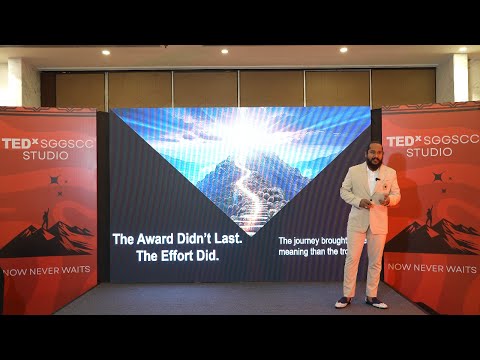
The ROI of Happiness: What Business Never Taught Me | Harday Gupta | TEDxSGGSCC Studio
TEDx Talks· 2025-07-24 15:10
After spearheading high-stakes IPOs and navigating the fast-paced startup world, he discovered a truth often overlooked in boardrooms—happiness is the ultimate return on investment. This talk explores the intersection of ambition and fulfilment, and why success without joy is an incomplete equation. Over the past decade, he has orchestrated transformative initiatives for IPO launches, real estate ventures, and emerging startups. He is currently pursuing a Ph.D. at LNCT University, Bhopal. This talk was give ...
Il coraggio non è assenza di paura | Ilenia Curiale | TEDxEnna
TEDx Talks· 2025-07-24 15:05
[Musica] [Applauso] Se io chiedessi a ognuno di voi cos'è la Sicilia per te, cosa mi rispondereste? Io questa domanda me la sono fatta anni fa e mi sono data una risposta perché Sicilia per me sta tutta nelle mani di mia nonna, quelle mani che impastano dolci e che io ammirerei ipnotizzata per ore. Per me l'energia della Sicilia sta tutta lì. Questa è una domanda che io ho fatto alla mia community esattamente 6 mesi dopo aver aperto la mia finestra sul mondo chiamata Ti ci devo portare in Sicilia e le rispo ...
X @Bankless
Bankless· 2025-07-23 12:00
Wealth Building Stages - Explores six stages of wealth and evolving strategies at each level [1] - Focuses on practical, data-driven ways to build wealth [2] - Targets individuals with net worth between 10 thousand and 10 million dollars [2] Key Strategies & Considerations - Discusses early savings and side hustles [2] - Addresses ownership leverage and lifestyle trade-offs [2] - Highlights the role of time in wealth building [2] - Considers demographics, inflation, and shifting economic factors [2] - Emphasizes the importance of knowing when to stop climbing the wealth ladder [2] Risk Management & Happiness - Provides guidance on how to climb and avoid falling from the wealth ladder [2] - Explores the relationship between wealth and happiness [2] - Offers final advice on crypto and leverage [2]
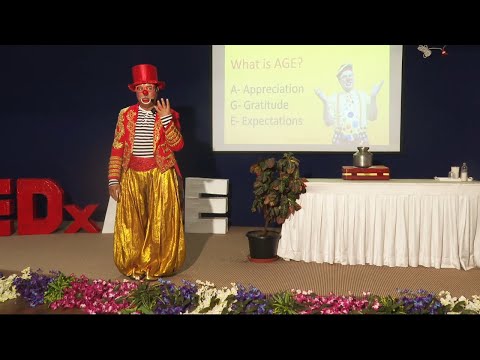
Pravin Tulpule | Pravin Tulpule | TEDxACE
TEDx Talks· 2025-07-16 16:21
Core Idea - Happiness is achievable through simple, affordable, legal, and safe actions [1] - Sharing happiness with others amplifies personal happiness [1] - The key to happiness lies in managing expectations, practicing gratitude, and appreciating surroundings [2][3] Practical Application - Finding happiness involves identifying affordable, legal, and safe activities [1] - Gratitude is essential, aiming to express thanks to at least 10 people daily [3] - Lowering expectations increases the likelihood of satisfaction and happiness [2][3] Personal Transformation - The speaker transitioned from a naval officer to a "happy clown" to spread joy [3][5] - A pivotal moment involving a terminally ill child inspired a commitment to sharing happiness [4][5] - Happiness is viewed as a prerequisite for success, enabling one to give to others [3]
Patience | Akram Adil | TEDxYouth@TCHS
TEDx Talks· 2025-07-14 15:04
Core Argument - Patience is presented as a crucial strength for navigating life's challenges and maintaining perspective [1][2] - The concept of the hedonic treadmill illustrates that happiness levels tend to return to a baseline despite positive or negative events [3][4][5] - Gratitude for positive moments and acceptance of negative moments are essential for personal growth [9] Personal Development & Resilience - Embracing struggles can lead to toughness, which is a valuable reward [9] - Rushing the process weakens the results, emphasizing the importance of patience in achieving goals [10] - A balanced approach is more effective than seeking immediate solutions when facing problems [7] Perspective on Life - Life is viewed as a wave with ups and downs, suggesting that difficult times are temporary [5][6] - Blessings and struggles are both transient, encouraging a balanced outlook [8]
X @The Economist
The Economist· 2025-07-13 03:00
Society bombards us with instructions to be happier, fitter and richer. Why have we become so dissatisfied with being ordinary? https://t.co/NCjKZ8BR2j ...
The Madness Behind My Success: Sharans Unfiltered Journey | Sharan Chilimbi | TEDxNITKSurathkalSalon
TEDx Talks· 2025-07-11 16:38
Career Development & Mindset - At 21, the speaker prioritized happiness over career or money, focusing on activities that brought joy such as talking and being in front of the camera [1] - The speaker initially chased fame, but controversies led to the realization that fame should not be the primary goal [2][3][4] - The speaker emphasizes the importance of having a bigger intention beyond fame and money, focusing on contributing to the community and creating impact [5] - The speaker acknowledges the evolving nature of perspectives with age and experience, recognizing that current views may be seen as "stupid" in the future [5] - The speaker highlights the constant presence of "madness" as a driving force, encouraging individuals to add their own flavor to their work [5][6] Challenges & Turning Points - The speaker experienced a period of zero income for one and a half years, relying on savings to support their initial ventures [1] - The speaker faced controversies and backlash, leading to a reevaluation of their priorities and a shift away from solely chasing fame [3][4] - The speaker realized the limitations on freedom of speech and the need to be responsible due to having an audience [3][5]