
Free cash flow

Search documents
Flowserve (FLS) Climbs to Fresh High on Earnings Blowout
Yahoo Finance· 2025-10-30 14:33
Core Insights - Flowserve Corp. (NYSE:FLS) has achieved significant stock performance, reaching an all-time high driven by strong earnings and positive cash flow projections from a subsidiary divestment [1][3]. Financial Performance - The company reported a 277% increase in attributable net income for Q3, amounting to $219 million compared to $58 million in the same quarter last year [3]. - Sales increased by 3.5% year-on-year, rising to $1.17 billion from $1.13 billion [3]. Future Outlook - For the full-year 2025, Flowserve raised its adjusted EPS forecast to a range of $3.40 to $3.50, up from a previous range of $3.25 to $3.40 [4]. - However, the company revised its total sales growth expectations down to 4-5% from 5-6%, and organic sales growth to around 2% from 3-4% [4]. Strategic Moves - Flowserve announced the divestment of its subsidiary BW/IP – New Mexico, Inc., which holds asbestos liabilities, to an affiliate of Acorn Investment Partners. This transaction is expected to close in Q4 2025 and enhance free cash flow by approximately $15 million to $20 million annually [5].
Lincoln(LNC) - 2025 Q3 - Earnings Call Transcript
2025-10-30 13:00
Financial Data and Key Metrics Changes - The company reported third quarter adjusted operating income available to common stockholders of $397 million, or $2.04 per share, marking a year-over-year growth for the fifth consecutive quarter [22][21] - Net income available to common stockholders was $411 million, or $2.12 per diluted share, with a notable difference from adjusted operating income primarily due to changes in fair value and non-operating income [22][23] - The annualized return on alternative investments was just under 10%, amounting to $101 million after tax, slightly below the target [22] Business Line Data and Key Metrics Changes - Annuities business reported sales of $4.5 billion, marking the fourth consecutive quarter of increased sales, with spread-based products representing 63% of the new business total [9][10] - Life insurance earnings reached $54 million, significantly improving year-over-year, with sales totaling nearly $300 million, driven largely by executive benefits [13][14] - Group protection delivered earnings consistent with the prior year, with a 5% year-over-year premium growth and nearly 40% sales growth across market segments [16][17] - Retirement Plan Services achieved operating income of $46 million, up from $44 million in the prior year, with total deposits increasing by 20% year-over-year [31][18] Market Data and Key Metrics Changes - The annuities business saw a 36% year-over-year increase in fixed annuity sales, while registered index-linked annuities (RILA) sales increased by 21% [10][11] - Group protection's premium growth was broad-based, with supplemental health increasing by 33% year-over-year [17] - Retirement Plan Services reported a 5% year-over-year increase in account balances, reaching $123 billion, with net inflows totaling $755 million [33][31] Company Strategy and Development Direction - The company is focused on increasing risk-adjusted returns, reducing result volatility, and growing its franchise, with a clear strategy for profitable growth [5][6] - The annual Assumption Review indicated a small favorable impact on adjusted operating income, reflecting alignment between underlying experience and future expectations [8][25] - The company is transitioning to retaining all fixed annuity business, which is expected to enhance spread-based earnings over time [39][80] Management's Comments on Operating Environment and Future Outlook - Management expressed confidence in the company's trajectory and the effectiveness of its strategic initiatives, emphasizing the importance of disciplined execution [20][21] - The company anticipates some variability in results but remains optimistic about long-term growth potential across all business lines [19][18] - Management highlighted the importance of maintaining a strong capital position and the disciplined deployment of excess capital to enhance risk-adjusted returns [39][42] Other Important Information - The company ended the quarter with an estimated RBC ratio well above the 420% buffer, maintaining a strong excess capital position [39] - The investment portfolio showed solid results, with 97% of investments rated investment grade and a focus on private credit and structured strategies [42][43] Q&A Session Summary Question: Drivers of improved Life earnings and future outlook - Management noted that the quarter reflected stable performance for the life insurance block, with mortality and alternative investment returns aligning with expectations, indicating a positive growth trajectory [48][49][54] Question: Capital plans and share repurchase program - Management indicated that detailed capital plans and free cash flow outlook would be discussed in the fourth quarter earnings call, expressing confidence in the company's direction and metrics [55][56] Question: Group protection margin expectations - Management affirmed a positive outlook for group protection, with expected margin improvements and continued premium growth, despite some normalization in disability trends [59][60][74]

BorgWarner Reports Strong Third Quarter 2025 Results
Prnewswire· 2025-10-30 10:30
Core Insights - BorgWarner Inc. reported a third quarter net sales increase of approximately 4.1% year-over-year, reaching $3,591 million, with organic sales growth of about 2.1% [4][5] - The company returned $136 million to stockholders in the third quarter, which included approximately $100 million in share repurchases and $36 million in cash dividends [4][5] - BorgWarner has increased its full-year 2025 guidance for net sales, operating margin, EPS, and free cash flow, expecting net sales to be between $14.1 billion and $14.3 billion [6][7] Financial Performance - U.S. GAAP net earnings for the third quarter were $0.73 per diluted share, down from $1.08 in the same quarter of 2024, while adjusted net earnings per diluted share increased by 14% to $1.24 [4][5] - The U.S. GAAP operating margin for the third quarter was 6.9%, with an adjusted operating margin of 10.7%, reflecting a 60 basis point increase compared to the previous year [4][5] - Net cash provided by operating activities was $368 million, with free cash flow of $266 million for the third quarter [4][5] Business Developments - The company secured multiple new business awards, including contracts for all-wheel drive systems with Chery and a variable turbine geometry turbocharger with Stellantis [4][5] - Production for several new contracts is expected to begin between 2026 and 2027, indicating a focus on long-term growth [4][5] Guidance Update - BorgWarner expects its U.S. GAAP operating margin for 2025 to be in the range of 7.8% to 7.9%, with adjusted operating margin projected between 10.3% and 10.5% [6][7] - The company anticipates net earnings per diluted share for 2025 to be between $3.52 and $3.63, with adjusted net earnings expected to range from $4.60 to $4.75 per diluted share [6][7]


Alamos Gold Reports Third Quarter 2025 Results
Globenewswire· 2025-10-29 21:15
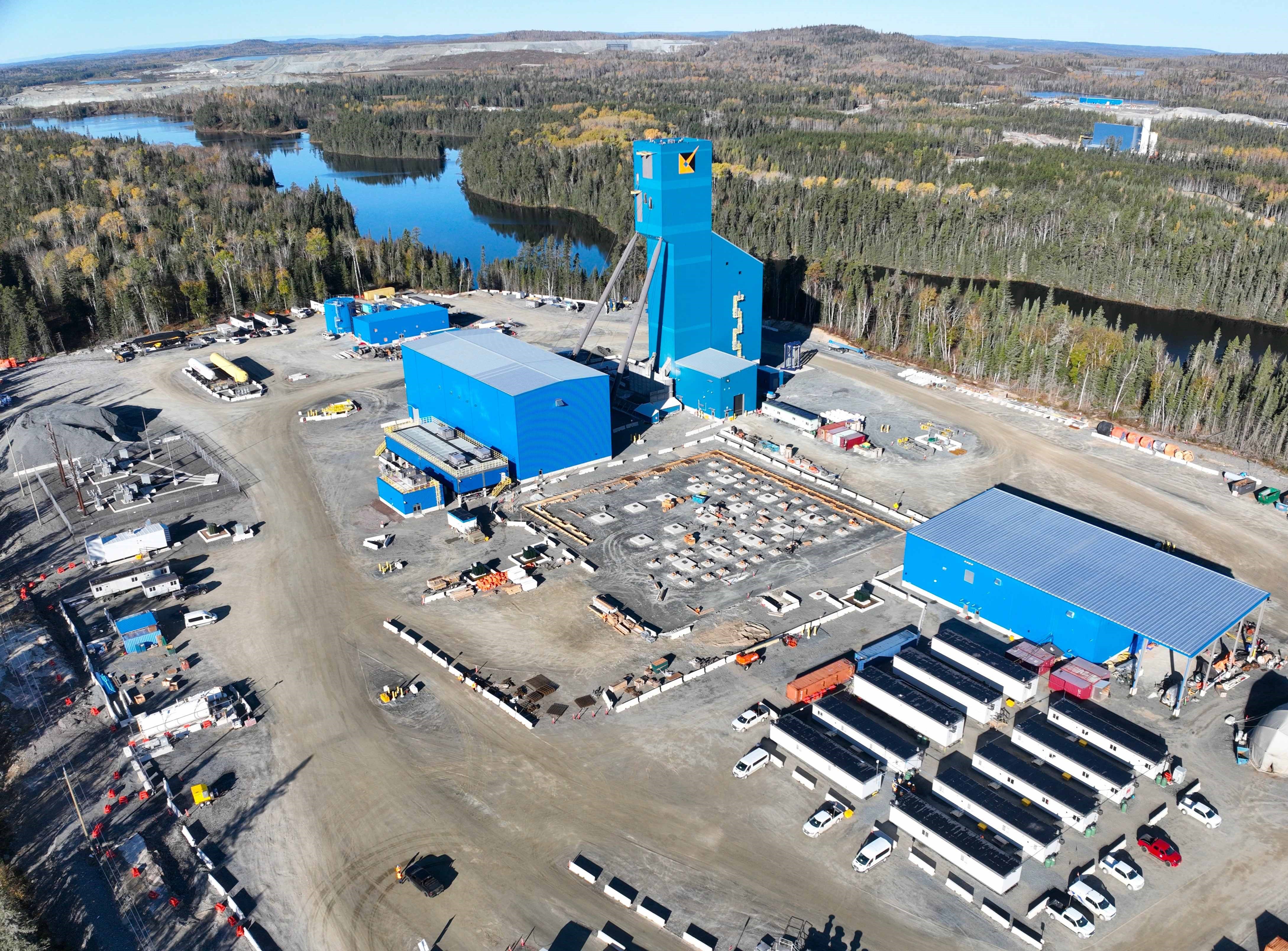
Core Insights - Alamos Gold Inc. reported record free cash flow of $130 million for Q3 2025, driven by increased production and margin expansion [2][4][35] - The company revised its 2025 production guidance down by approximately 6% due to unplanned downtime at the Magino mill and lower expected grades from Island Gold [3][36] - A significant production increase of 18% is expected in Q4 2025, alongside a 5% decrease in costs [3][38] Financial Performance - Q3 2025 operating revenues reached $462.3 million, a 28% increase from Q3 2024, with net earnings of $276.3 million or $0.66 per share [6][7][59] - Total cash costs decreased to $973 per ounce, a 9% reduction from Q2 2025, while all-in sustaining costs (AISC) fell to $1,375 per ounce, down 7% [4][34][61] - Cash flow from operating activities increased to $265.3 million, reflecting strong margin expansion [4][34] Production and Operations - Gold production for Q3 2025 was 141,700 ounces, a 3% increase from Q2 2025, although slightly below the guidance of 145,000 ounces [4][32] - The Island Gold District produced 66,800 ounces, a 17% increase year-over-year, while the Young-Davidson and Mulatos Districts produced 37,900 and 37,000 ounces, respectively [11][64] - The company expects Q4 2025 production to range between 157,000 and 177,000 ounces, marking the strongest quarter of the year [3][37] Growth Initiatives - Alamos is advancing the Phase 3+ Expansion at the Island Gold District, with the shaft sinking progressing to 1,350 meters, or 98% of the planned depth [7][39] - The company announced the sale of its Turkish development projects for $470 million, enhancing its cash position to over $600 million [7][43] - Future production growth is anticipated from the Lynn Lake project, expected to contribute significantly post-2029 [41][42] Environmental, Social, and Governance (ESG) Performance - Alamos reported a total recordable injury frequency rate (TRIFR) of 0.97 in Q3 2025, a significant improvement from 2.01 in the prior year [18][27] - The company is committed to reducing its environmental footprint and has published its 2024 ESG report outlining progress in sustainability initiatives [20][27]

New Gold(NGD) - 2025 Q3 - Earnings Call Transcript
2025-10-29 13:30
Financial Data and Key Metrics Changes - The third quarter revenue was $463 million, higher than the prior year quarter due to increased gold and copper prices and sales volumes [16] - Cash generated from operations before working capital adjustments was $296 million, or $0.37 per share, higher than the prior year period primarily due to higher revenues [16] - The company recorded net earnings of approximately $142 million, or $0.18 per share during the third quarter, primarily due to increased revenues [16][17] - The all-in sustaining costs reduced from the second quarter by $425 to $966 per ounce, with an average realized gold price of $3,458 per ounce, resulting in a margin of $2,492 per ounce [5][16] Business Line Data and Key Metrics Changes - New Afton produced approximately 115,200 ounces of gold and 12 million pounds of copper in the quarter, with B3 cave contributing approximately 4,300 tons per day [5][9] - Rainy River achieved record quarterly production of over 100,000 ounces of gold, a 63% increase over the second quarter, with all-in sustaining costs at $1,043 per ounce sold, a 39% decrease compared to the second quarter [4][12][13] Market Data and Key Metrics Changes - The average realized gold price was $3,458 per ounce, contributing to the overall revenue increase [5][16] - The company generated record quarterly free cash flow of $205 million, with Rainy River contributing $183 million in free cash flow [5][16] Company Strategy and Development Direction - The company aims to ramp up production at New Afton and Rainy River, with a focus on increasing underground development and production rates [6][14] - Exploration initiatives are being advanced, particularly at New Afton’s K Zone, with a budget increase to $22 million for approximately 63,000 meters of drilling [18][19] - The company is focused on maintaining a strong balance sheet while investing in exploration and organic opportunities, with plans for potential capital returns to shareholders [30][32] Management's Comments on Operating Environment and Future Outlook - Management expressed confidence in continued significant growth in gold and copper production over the next two years, projecting substantial free cash flow generation [22][24] - The company remains committed to health and safety, with a focus on reducing total reportable incident frequency rates [24] - Management highlighted the importance of local hiring and infrastructure improvements to enhance workforce retention [42] Other Important Information - The company repaid a total of $260 million in debt during the quarter, including $150 million drawn on the credit facility [6][17] - New Afton’s C Zone cave construction is approximately 79% complete, with plans to ramp up processing rates to 16,000 tons per day by early 2026 [6][12] Q&A Session Summary Question: Can you provide a breakout of tonnage from the C and B zones? - The B3 cave contributed 4,300 tons per day, with the C Zone contributing the remainder [26][27] Question: What are your plans for capital allocation with the free cash flow? - The company plans to maintain a strong balance sheet, invest in exploration, and evaluate capital returns to shareholders [30][31] Question: What is the current turnover rate and what are your targets for improvement? - The company is focusing on attracting local talent and improving infrastructure to retain workers, addressing the shortage of skilled miners in Ontario [42] Question: What should we expect for Rainy River's performance for the balance of the year? - The company expects continued positive performance in Rainy River, with no significant changes in trajectory [49] Question: How should we think about grades coming into 2026 at New Afton? - Grades at the start of a cave will be lower, but are expected to improve as the cave grows [56]

Timken Reports Third-Quarter 2025 Results
Prnewswire· 2025-10-29 10:51
Core Insights - The Timken Company reported third-quarter 2025 results showing a 2.7% increase in net sales to $1.16 billion compared to the same period last year, driven by higher pricing and favorable foreign currency translation [3][12] - The company experienced a decline in net income margin to 6.0% from 7.3% year-over-year, with diluted EPS decreasing by 14.7% to $0.99, while adjusted EPS increased by 11.4% to $1.37 [4][5][12] - Timken's net cash from operations rose significantly by 63.2% to $201.1 million, and free cash flow increased by 85.7% to $163.8 million [6][12] Financial Performance - Net sales for Q3 2025 were $1,157.1 million, up from $1,126.8 million in Q3 2024, reflecting a 2.7% increase [2] - Net income for the quarter was $69.3 million, or $0.99 per diluted share, compared to $81.8 million, or $1.16 per diluted share, in the prior year [4][12] - Adjusted net income was $96.2 million, or $1.37 per diluted share, compared to $87.0 million, or $1.23 per diluted share, in Q3 2024 [5][12] Segment Performance - Engineered Bearings segment sales reached $765.8 million, a 3.4% increase driven by renewable energy demand and higher pricing [7] - Industrial Motion segment sales were $391.3 million, up 1.3%, benefiting from the CGI acquisition and favorable pricing [9] Operational Highlights - Adjusted EBITDA for the quarter was $201.7 million, representing 17.4% of sales, compared to $190.0 million or 16.9% of sales in Q3 2024 [5][12] - The company emphasized a focus on improving margins and growth in profitable verticals, aiming for significant shareholder value [3] Outlook - Timken updated its full-year 2025 earnings per diluted share forecast to a range of $3.90 to $4.00, with adjusted EPS expected between $5.20 and $5.30 [11][12]


Red Rock Resorts(RRR) - 2025 Q3 - Earnings Call Transcript
2025-10-28 21:30
Financial Data and Key Metrics Changes - In Q3 2025, the company's Las Vegas operations achieved net revenue of $468.6 million, an increase of almost 1% year-over-year, and adjusted EBITDA of $209.4 million, up 3.4% from the previous year [8][9] - Consolidated net revenue for the quarter was $475.6 million, reflecting a 1.6% increase from the prior year, while adjusted EBITDA was $190.9 million, up 4.5% [9] - The adjusted EBITDA margin improved to 40.1%, an increase of 110 basis points from the prior year [9] Business Line Data and Key Metrics Changes - The hotel segment performed exceptionally well, achieving near-record results despite renovations at Green Valley Ranch, with occupancy rates increasing across the portfolio [11] - The food and beverage segment also reported record revenue and near-record profitability, driven by higher cover counts [11] - The gaming segment experienced the highest third-quarter revenue and profitability in the company's history, supported by robust visitation and net theoretical win [10] Market Data and Key Metrics Changes - The company noted continued strength in carded slot play across its database, including regional and national segments, indicating a healthy demand from both local and out-of-town guests [10] - The Las Vegas locals' market remains resilient, with the company positioned to capture market share due to its gaming-centric business model [38] Company Strategy and Development Direction - The company is focused on expanding the Durango Casino Resort, with a total project cost of approximately $120 million, expected to be completed in late December [5][12] - Future phases of the Durango Master Plan will add significant new amenities and gaming capacity, with an estimated cost of $385 million [6][7] - The company is committed to disciplined capital allocation, returning approximately $221 million to shareholders year-to-date through dividends and share repurchases [18] Management's Comments on Operating Environment and Future Outlook - Management expressed confidence in the strength and resilience of the business, despite ongoing construction disruptions at several properties [12][19] - The company anticipates continued stability in its core gaming operations and a return to normal hold in its sports betting business [11][29] - Management highlighted the favorable demographic trends and high barriers to entry in the Las Vegas locals' market as key drivers for long-term growth [19] Other Important Information - The company reported cash and cash equivalents of $129.8 million and total debt of $3.4 billion, resulting in a net debt to EBITDA ratio of 3.89 times [12] - The board approved an increase in the quarterly dividend to $0.26 per Class A share, reflecting confidence in the company's long-term earnings power [18] Q&A Session Summary Question: Can you discuss the rationale for the expansion at Durango? - Management noted that the expansion aims to drive additional traffic and guests by adding capacity and entertainment assets, with expected returns similar to the initial build [24][25] Question: What was the impact of sports betting hold this quarter? - Management indicated that the hold returned to normal levels after a previous unfavorable hold last year, with an estimated disruption impact of $2.5 to $3 million for the quarter [29][30] Question: How did the hotel performance compare to the Strip? - Management reported strong hotel performance, with occupancy up and RevPAR only slightly down, outperforming the Strip by about 25% on an ADR basis [33] Question: What is the outlook for construction disruption? - Management expects disruption from ongoing projects to extend into 2026, with estimated impacts of around $8 million for Q4 [30][81] Question: Can you provide an update on the tavern business? - Management reported that two taverns are operational with strong early performance, and five more are expected to open in 2026, targeting a younger customer base [84][85]

Flowserve Divests Legacy Asbestos Liabilities
Businesswire· 2025-10-28 20:06
Core Viewpoint - Flowserve Corporation has agreed to divest its wholly owned subsidiary BW/IP - New Mexico, Inc., which holds asbestos liabilities, to Acorn Investment Partners, allowing Flowserve to simplify its capital structure and focus on value-enhancing opportunities [1][2][4]. Transaction Overview - Acorn will acquire 100% of BW/IP, which will be capitalized with approximately $219 million in cash, including $199 million from Flowserve and $20 million from Acorn [4]. - Flowserve will remove all asbestos liabilities, related insurance assets, and associated deferred tax assets from its consolidated balance sheet as a result of this transaction [4]. Financial Impact - The divestiture is expected to result in a one-time loss of approximately $135 million in the fourth quarter of 2025, which will be excluded from adjusted earnings per share [5]. - The transaction is anticipated to improve Flowserve's free cash flow by approximately $15 million to $20 million annually [5]. Advisors - J.P. Morgan Securities LLC is serving as the financial advisor, while Baker McKenzie is the legal advisor for Flowserve [7].

Rogers Communications Q3 Earnings Beat Estimates, Revenues Rise Y/Y
ZACKS· 2025-10-24 17:46
Core Insights - Rogers Communications (RCI) reported third-quarter 2025 adjusted earnings of 99 cents per share, exceeding the Zacks Consensus Estimate by 7.61% but down 3.5% year over year [1] - Revenues reached $3.88 billion, surpassing the consensus mark by 1.16% and increasing 4.3% year over year, primarily driven by growth in the Media segment [1][7] - The company raised its 2025 free cash flow guidance to C$3.2 billion-C$3.3 billion, reflecting improved cash generation [7] Financial Performance - Adjusted earnings per share decreased 3.5% year over year to $0.99, while revenues rose 3.3% to $3.88 billion [7] - Total revenues in Canadian dollars increased 4.3% year over year to C$5.35 billion [1] - Adjusted EBITDA decreased 1.2% year over year to C$2.52 billion, with a margin contraction of 260 basis points to 47% [9] Segment Performance Wireless Segment - Wireless revenues, accounting for 49.8% of total revenues, increased 1.6% year over year to C$2.66 billion, with service revenues falling 0.3% to C$2.06 billion [2] - Monthly mobile phone ARPU was C$56.7, down 3.2% year over year [2] - The prepaid mobile phone subscriber base grew by 44K year over year to 1.21 million, while postpaid subscribers increased by 262K to 10.96 million [3] Cable Segment - Cable revenues, making up 37% of total revenues, rose 0.6% year over year to C$1.98 billion [5] - Retail Internet subscribers increased by 228K year over year to nearly 4.475 million [5] - Segment operating expenses declined 1.1% year over year to C$828 million, with adjusted EBITDA increasing 1.8% to C$1.15 billion [6] Media Segment - Media revenues surged 26.1% year over year to C$753 million, while operating expenses increased 47.1% to C$678 million [8] Balance Sheet & Cash Flow - As of September 30, 2025, available liquidity was C$6.4 billion, down from C$11.8 billion as of June 30, 2025 [10] - The debt leverage ratio stood at 3.9 times, influenced by the MLSE transaction [11] - Cash flow from operating activities decreased 20% year over year to C$1.52 billion [11] Guidance - For 2025, RCI expects total service revenues to grow between 3% and 5%, and adjusted EBITDA to rise between 0% and 3% [13] - Capital expenditures are projected at approximately C$3.7 billion, slightly below prior guidance [13]


GCOW: Attractive Strategy That Fails To Deliver Full Value
Seeking Alpha· 2025-10-24 03:46
Core Insights - Philipp is a seasoned value investor with nearly 20 years of experience, focusing on global investment opportunities in undervalued companies that provide a significant margin of safety and attractive dividend yields [1] - The investment strategy emphasizes companies with a solid earnings track record, particularly those trading at less than 8 times free cash flow, which reflects a strong potential for future growth [1] Investment Strategy - The approach is not limited to specific sectors or countries, allowing for a broader range of investment opportunities [1] - A thorough understanding of the companies is essential for assessing their future growth potential [1] Performance Metrics - Philipp's investment enthusiasm is particularly high for companies with a free cash flow multiple of less than 8, indicating a focus on value and potential returns [1]