
Digital Payments

Search documents
Discover Financial & Skipify Partner to Enhance Checkout Experience
ZACKS· 2025-03-06 17:10
Core Insights - Discover Financial Services (DFS) has partnered with Skipify to enhance cardholder experience during digital transactions, focusing on security and efficiency [1][2] - The integration of advanced tokenization technology is expected to reduce fraud risks and improve transaction security, potentially increasing authorization rates and merchant conversions [2][3] - This partnership reflects DFS's commitment to innovation in response to the growing adoption of digital payments and associated risks [3][4] Company Performance - DFS's payment services segment volume improved by 4% year over year in Q4 2024, indicating positive growth in the digital payments space [4] - DFS shares have gained 35.7% over the past six months, outperforming the industry growth of 23.5% [5] Market Position - The partnership with Skipify positions DFS to capitalize on the booming digital payments market while strengthening its global network [4] - DFS currently holds a Zacks Rank 2 (Buy), indicating a favorable outlook among analysts [7]



Skipify and Discover Announce Strategic Partnership to Enhance Tokenization & Streamline Digital Payments
Prnewswire· 2025-03-05 14:00
Core Insights - Skipify has partnered with Discover Global Network to enhance the checkout experience for Discover cardholders, aiming to improve shopper satisfaction and increase authorization, conversion, and security for merchants [1][2][3] Company Overview - Skipify is a fintech company based in San Francisco, focused on creating secure and seamless digital shopping experiences through its Commerce Identity Cloud, which aims to reduce friction and abandonment at checkout [6][8] - Discover Financial Services is a major player in the digital banking and payment services sector, recognized for its commitment to cardholder security and benefits, and operates a vast network of merchants and cash access locations [5] Partnership Details - The partnership will integrate Discover's advanced tokenization technology into Skipify's platform, enhancing security by replacing sensitive card information with encrypted tokens, thereby reducing fraud and safeguarding customer data [2][4] - Skipify's Commerce Identity Cloud is projected to recognize 1 in every 2 U.S. shoppers by the end of 2025, leveraging its existing network of over 100 million consumer cards [4] Strategic Goals - Both companies are committed to advancing the future of commerce through innovation, aligning their product development roadmaps to create new digital shopping experiences that cater to the evolving needs of consumers and businesses [3][4]
Why Visa & PayPal are Must-Buy Stocks in Apple's Cashless Revolution
ZACKS· 2025-03-04 14:15
Core Insights - The world is transitioning towards a cashless future, with Apple Inc. leading this transformation through Apple Pay and Apple Card, creating significant investment opportunities in digital payments [1] Visa - Visa is the largest payment processor globally, benefiting from its direct integration with Apple Pay, which enhances its competitive advantage [3] - In Q1 fiscal 2025, Visa reported a 10% year-over-year increase in net revenues, with total payments volume surpassing $4 trillion, highlighting its critical role in digital transactions [4] - The adoption of contactless payments, particularly Tap to Pay, is driving Visa's growth, with 74% of face-to-face transactions globally utilizing this method [5] - Visa's partnerships with major banks and fintech companies, along with a 34% increase in Visa Direct transactions, are strengthening its market presence [6] - The security of Visa's network, bolstered by Apple Pay's reliance on its tokenization technology, has led to a 44% increase in tokens issued, enhancing transaction security [7] - Visa's strong earnings, merchant adoption, and investments in tokenization and real-time payments position it as a long-term leader in digital payments [8] PayPal - PayPal is a leader in online payments and P2P transfers, benefiting from Apple's expansion into digital payments [9] - PayPal's Q4 2024 earnings indicated strong growth in its branded checkout and Venmo platforms, aligning with Apple's mobile-driven financial transactions [10] - The integration of PayPal accounts within Apple's ecosystem is expected to drive transaction volume, with Venmo seeing a 30% increase in debit card monthly active users [11] - PayPal's merchant solutions, including Braintree and PayPal Complete Payments, enhance its role in connecting Apple Pay with businesses [12] - PayPal's focus on innovation and partnerships positions it as a key player in the evolving digital payments landscape, benefiting from Apple's expanding payment offerings [13] Investment Consideration - Investors are encouraged to consider Visa and PayPal as compelling long-term investment opportunities, both benefiting from the global shift towards cashless transactions [14]


Mastercard Ties Up to Strengthen Digital Payments Across EEMEA
ZACKS· 2025-03-03 19:00
Core Insights - Mastercard is expanding its presence in the Eastern Europe, Middle East, and Africa (EEMEA) region through multiple partnerships aimed at enhancing digital payment solutions and security [1][3][4]. Partnership Initiatives - The first partnership with MTN Mobile Money in Uganda introduces the Virtual Card by MoMo, allowing users to make secure online payments without needing a physical card or bank account [1][2]. - The collaboration with Emirates NBD integrates Mastercard Gateway into its payment platform, making it the first acquiring bank to use Mastercard's Brighterion AI technology for improved payment security and efficiency [3]. - A partnership with Sadad in Qatar aims to launch a digital payment gateway that enhances security through tokenization and biometric authentication, providing local merchants with access to over 30 payment methods [4]. - The extension of the partnership with Checkout.com will enable seamless fund transfers directly to Mastercard cards, enhancing disbursements and payouts for businesses and individuals in the UAE [5]. Financial Implications - The partnerships are expected to expand Mastercard's customer base and increase net revenues from its payment network, which saw a 10% year-over-year growth in 2024 [6]. - The value-added services from the collaborations with Emirates NBD, Sadad, and Checkout.com are projected to drive higher revenues, with this revenue component reporting a 17% year-over-year growth during 2024 [7]. Market Performance - Mastercard's shares have increased by 9.4% year-to-date, slightly outperforming the industry average growth of 9.1% [8].

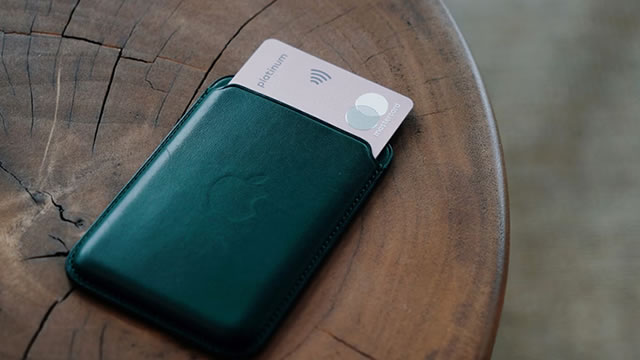
When were credit cards invented?
Yahoo Finance· 2024-08-01 15:54
Core Insights - Credit cards are widely used in the U.S., with 82% of Americans holding at least one card and an average of 3.84 cards per person, resulting in an average balance of $6,365 as of 2023 [1] Historical Development - Early 1900s: The first credit cards were introduced by department stores and oil companies, resembling store cards more than traditional credit cards [2] - 1950s: Charge cards gained popularity, with the Diner's Club card launched in 1950 and American Express following in 1958 [3] - Late 1950s: Introduction of credit cards allowing for revolving balances, differing from charge cards that required full payment each month [4] - 1960s: The BankAmericard was introduced as the first general-use credit card, not tied to specific retailers [5] - 1968: The Truth in Lending Act was passed, standardizing credit card account disclosures for better consumer comparison [6] - 1970s: Major regulatory changes occurred, including the Fair Credit Reporting Act and the Equal Credit Opportunity Act, which prohibited discrimination based on gender or marital status [7][8][9] - 1980s: The first rewards credit card was launched by Discover Financial Services, changing the landscape of credit card offerings [10] - 1990s: Introduction of travel rewards cards, with American Express launching Membership Miles [11] - 2000s: Premium travel cards emerged, offering higher benefits and fees, alongside the Credit Card Accountability Responsibility and Disclosure Act of 2009 [13][14] - 2010s: Growth of digital payments and touchless methods, adapting to new technologies [15] - Present: A variety of credit card networks and issuers exist, catering to diverse financial needs [16][17]