
Unemployment

Search documents
X @Bloomberg
Bloomberg· 2025-11-11 17:10
Rising unemployment has given Britain's Labour government a warning over tax hikes — but Chancellor Rachel Reeves has little option but to come back for more. Get the Readout with Julian Harris. https://t.co/PiheBjzBN3 ...
X @Bloomberg
Bloomberg· 2025-11-11 13:47
The latest jobs data suggests that the UK labour market is continuing to cool, with unemployment now hitting 5%, higher than had been forecast. A December interest rate cut may now be on the cards. What does that mean for your money? https://t.co/9LaN4BEbGN ...
X @Bloomberg
Bloomberg· 2025-11-11 11:14
Bank of England policymaker Megan Greene signaled she continues to back keeping interest rates on hold, despite figures showing UK unemployment climbing to its highest rate since the pandemic https://t.co/XEGNL7hKuC ...
X @Bloomberg
Bloomberg· 2025-11-11 07:12
UK unemployment rose more than expected, further evidence of a cooling jobs market https://t.co/HPBuYQB7Ek ...
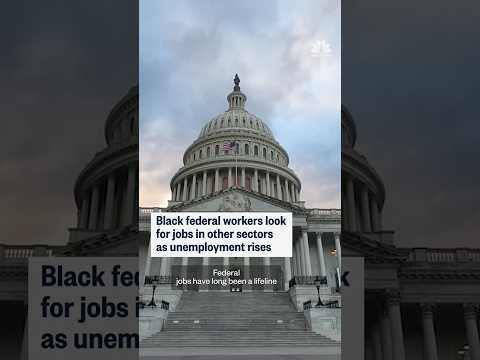
Black federal workers look for jobs in other sectors as unemployment rises
NBC News· 2025-11-11 03:45
Federal jobs have long been a lifeline for the black middle class. But as the government shutdown drags on, that lifeline may be unraveling. >> When I was terminated, I was devastated.>> Denise Joseph was terminated after nearly a decade at the Department of Education. She thought her job was secure. But just one day after the inauguration, >> I got the email stating that I was put on admin leave.I thought it was a joke. She along with these two other former federal government employees are now turning to o ...

JPMorgan finds AI stocks added $5 trillion to Amercians household wealth, but not for everybody
Yahoo Finance· 2025-11-10 20:41
Market Trends & Economic Disparities - AI stocks gains have added $5 trillion to household wealth in the last year [1] - Americans gained over $63 trillion in wealth from Q1 2020 through Q2 2025 [1] - The stock market is performing well, but the average household doesn't seem to be participating [2] - The economy is K-shaped, with the upper end driving consumer spending and the lower end struggling with inflation [4] - The lower-income cohort is at or near a recession, with unemployment rates twice the national average [4][5][6] Equity Ownership & Wealth Distribution - 62% of Americans own US equities [3] - Equity ownership is bifurcated: 84% for households with over $100,000, and 22% for households with under $50,000 [3] - Asset holders, including those holding stocks, metals, and crypto, have generally done well [10] Retail & Consumer Behavior - A K-shaped economy is playing out across retail and fast food [7][8] - Wendy's reported almost a 5% decline in same-store sales in the US [7] - McDonald's is resonating with low-income consumers by offering value meals at $5 and $8 price points [8] - Student loan repayments are hurting Gen Z [9] Investment Strategies & Inflation - Those who waited for a better time to enter the market effectively "shorted" the market [11] - People are buying assets to get ahead of inflation, as the value of money decreases [12]

X @Nick Szabo
Nick Szabo· 2025-11-10 00:50
RT Evelina Hahne (@EvelinaHahne)Swedish proposal: Unemployed (mostly immigrants) are offered jobs in northern Sweden to pick berries. Immigrant Jafar responds:- Stop treating us like ratsThey think they are too "good" to pick berries and want to continue receiving taxpayers' money without doing anything. https://t.co/UKF4Bp99OT ...
X @Bloomberg
Bloomberg· 2025-11-06 17:24
The Bank of England used its regular business survey to warn that UK Chancellor of the Exchequer Rachel Reeves will unveil her budget against a grim backdrop of weak business investment, rising unemployment and slowing growth https://t.co/mNIqkq8N3t ...
First Light News: Fed Officials Divided as December Rate Cut Remains Uncertain
FX Empire· 2025-11-04 09:18
Group 1: Federal Reserve Insights - US Treasury yields increased, with the benchmark 10-year yield reaching 4.10% [1] - Internal divisions within the Fed are evident, with differing views on rate cuts and inflation concerns among key officials [1] - Fed cut the Federal funds target rate by 25 basis points to a range of 3.75% – 4.00%, characterized as a 'hawkish cut' [2] Group 2: Economic Indicators - US manufacturing contracted in October, with ISM manufacturing PMI falling to 48.7 from 49.1 in September [3] - Price pressures in manufacturing eased to 58.0 from 61.9, while the employment component rose to 46.0 from 45.3 [3] - Anticipation of mixed signals in upcoming ISM services PMI data, which could impact market reactions [3] Group 3: Reserve Bank of Australia (RBA) Update - RBA decided to maintain the cash rate at 3.60%, with minimal market surprise following stronger-than-expected CPI inflation [4] - RBA's projections indicate inflation will remain above the target band until mid-2026, despite rising unemployment [5] - Only one rate reduction is anticipated in the coming year, reflecting conflicting economic signals [5]

The Fed will be paralyzed by divisions unless it takes a strategic view, says Mohamed El-Erian
Youtube· 2025-11-03 14:27
Core Insights - The Federal Reserve (Fed) is experiencing significant internal divisions regarding its approach to inflation and unemployment, which could impact future monetary policy decisions [2][4][6] - There is a belief that the economy is on the verge of a productivity surge, which could justify continued rate cuts by the Fed [4][5][6] - Inflation is expected to stabilize around 2.5% to 3%, which is considered acceptable as long as it remains stable [6] Federal Reserve's Monetary Policy - Major divisions within the Federal Open Market Committee (FOMC) revolve around prioritizing inflation concerns versus unemployment issues [2] - Different perspectives exist on how to respond to economic uncertainty, with some advocating for a pause in rate changes while others support continued cuts [3][4] - The Fed's decision to halt quantitative tightening (QT) as of December 1 is seen as a necessary step in response to tight financial conditions [9][10] Economic Indicators - There is a decoupling of growth from employment, influenced by factors such as artificial intelligence and changing corporate behaviors [5] - Both supply and demand elements are affecting the labor market, indicating a complex economic landscape [5] - The repo market activity suggests tight financial conditions, but it is not expected to lead to systemic risks [9] Cryptocurrency Market Insights - The cryptocurrency market is characterized by a growing institutional investor base, although speculative "tourist" investors still dominate [7][8] - The structural differences between the crypto and gold markets are highlighted, with gold showing more stability compared to the volatility in crypto [7]
