
金穹导弹防御系统

Search documents
特朗普:美国将对格陵兰岛“全面进入”
券商中国· 2026-01-22 23:34
Core Viewpoint - The ongoing Greenland agreement will grant the United States "full military access" to Greenland, as stated by President Trump [1][2]. Group 1: Military Access and Strategic Importance - The agreement will allow the U.S. to deploy components of its "Iron Dome" missile defense system in Greenland, which is deemed crucial for the U.S.'s missile defense capabilities [3]. - Trump emphasized that the U.S. will have "all the military access we need" once the agreement is finalized [2]. Group 2: Economic Implications and International Relations - Trump previously threatened to impose a 10% tariff on eight European countries opposing the U.S. acquisition of Greenland, which led to strong backlash from Europe [3]. - Following discussions with NATO Secretary General Jens Stoltenberg, Trump announced a framework for the Greenland agreement, resulting in the suspension of the planned tariffs [3]. Group 3: Financial Aspects of Missile Defense System - The "Iron Dome" missile defense system is projected to cost approximately $175 billion and aims to integrate with existing U.S. missile defense capabilities [3].

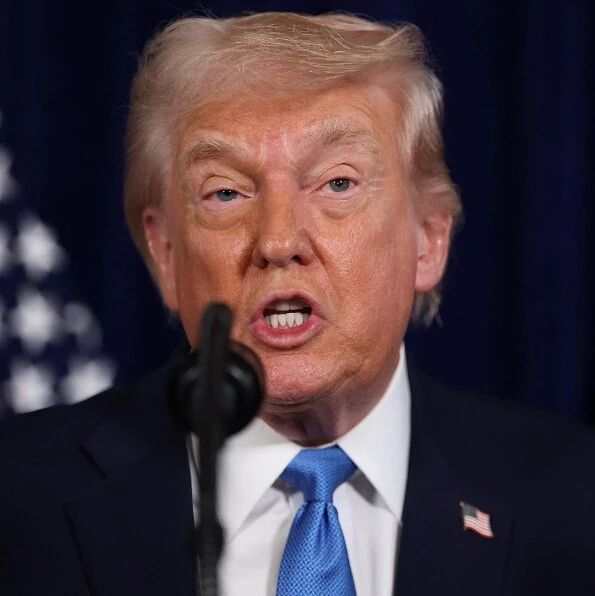
格陵兰岛协议框架 暂时止血的“创可贴”?
Xin Lang Cai Jing· 2026-01-22 19:12
Core Viewpoint - The article discusses a newly reached framework agreement between the United States and NATO regarding Greenland, which aims to address security and mineral access without infringing on Danish sovereignty. This agreement allows the U.S. to withdraw tariffs on eight European countries while maintaining its strategic interests in Greenland and the Arctic region [4][5][12]. Summary by Sections Agreement Framework - The agreement focuses on enhancing U.S. military presence in Greenland as a key node for Arctic security, emphasizing missile defense and space monitoring without touching on Danish sovereignty [4][5]. - The U.S. seeks access to critical minerals through a licensing system rather than territorial concessions, aiming for project approvals and infrastructure tied to security reviews [4][5]. Political Dynamics - The framework is seen as a temporary solution that allows the U.S. to retract tariffs while keeping its objectives intact, with NATO acting as a facilitator rather than a decision-maker [4][6][8]. - The agreement reflects a shift in NATO's burden-sharing logic, with European allies expected to increase defense spending in exchange for U.S. commitments [6][7]. Implementation Challenges - The transition from framework to execution faces several hurdles, including the need to translate political statements into actionable terms and respect for Greenland's sovereignty [8][9]. - Denmark's leadership has firmly stated that sovereignty issues are non-negotiable, indicating potential political backlash if the agreement infringes on these rights [9][10]. International Reactions - Denmark's Prime Minister and Foreign Minister have reiterated that discussions on sovereignty are off the table, while Greenlandic representatives express skepticism about NATO's role in negotiations [10][11]. - European leaders, including Sweden's Prime Minister, have voiced support for Denmark's stance, emphasizing that Greenland is not for sale [11]. Market and Political Context - The U.S. administration's softening stance on Greenland is attributed to market signals and the potential economic repercussions of continued hardline tactics, including trade and financial losses [12][13]. - Increased pressure from European leaders and domestic criticism in the U.S. has prompted a reevaluation of the approach to Greenland, highlighting the need for a balanced resolution [13].
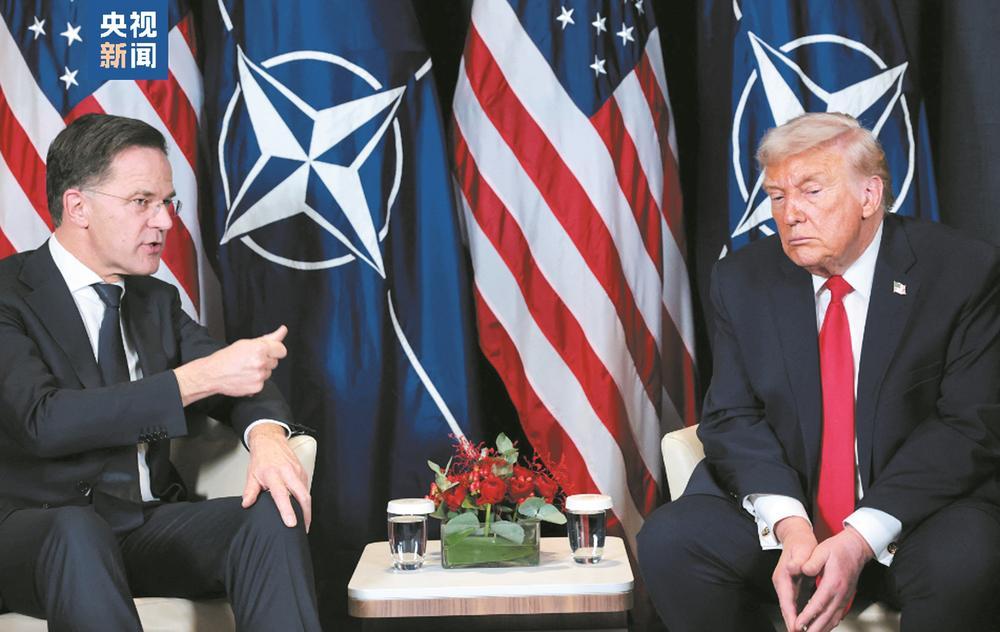
特朗普称格陵兰岛协议将赋予美方“全面军事进入权”
Yang Shi Xin Wen· 2026-01-22 14:18
Core Viewpoint - The ongoing Greenland agreement will grant the United States "full military access" to Greenland, as stated by President Trump, emphasizing the strategic importance of the island for U.S. military operations [1] Group 1: Military Access and Strategic Importance - The agreement will allow the U.S. to deploy components of the "Iron Dome" missile defense system in Greenland, highlighting the island's critical role in U.S. defense strategy [1] - Trump mentioned that the U.S. will achieve "comprehensive access" to Greenland, reinforcing the military significance of the location [1] Group 2: Economic Measures and International Relations - Trump previously threatened to impose a 10% tariff on eight European countries opposing U.S. acquisition of Greenland, which led to strong backlash from Europe [1] - Following discussions with NATO Secretary General Jens Stoltenberg, Trump announced a framework for the Greenland agreement, resulting in the suspension of the planned tariffs set to take effect on February 1 [1] Group 3: Financial Aspects of Missile Defense System - The "Iron Dome" missile defense system is part of a broader defense strategy, with an estimated total cost of approximately $175 billion for its full development [1] - Trump indicated that the system will integrate with existing U.S. missile defense capabilities, aiming to intercept missiles launched from various locations, including space [1]
特朗普称已就格陵兰岛制定协议框架 不会对欧洲8国加征关税
Zhong Guo Xin Wen Wang· 2026-01-22 05:56
Group 1 - The core message of the news is that President Trump has established a framework for an agreement regarding Greenland, which will prevent the imposition of tariffs on eight European countries originally set to take effect on February 1 [1][2] - Trump stated that the agreement framework will benefit the U.S. and other NATO member countries, particularly in terms of security and mineral resources [1] - The discussions included the U.S. missile defense system known as "Iron Dome," which is related to Greenland [1] Group 2 - Trump had previously announced a 10% tariff on the eight European countries opposing U.S. acquisition of Greenland, which faced strong backlash from Europe [2] - During the World Economic Forum, Trump emphasized that the U.S. would not use force to acquire Greenland, but he reiterated that it is a core national security interest for the U.S. [2]
特朗普宣布就格陵兰达成未来协议的“框架” 不实施先前威胁的关税
Xin Lang Cai Jing· 2026-01-21 19:55
Core Viewpoint - President Trump announced that he will not impose tariffs on European countries opposing the U.S. acquisition of Greenland, stating that a "framework for future agreements" has been established regarding the island and the Arctic region [1][2]. Group 1: Tariff Decision - Trump indicated that based on a productive meeting with NATO Secretary General Mark Rutte, a framework for future agreements concerning Greenland has been formed [1][2]. - As a result of this agreement, Trump will not implement the tariffs originally set to take effect on February 1 [1][2]. Group 2: Previous Threats - Trump had previously threatened to impose tariffs on products from eight European countries if they did not accept his request regarding Greenland [1][2]. Group 3: Missile Defense System Discussion - The President mentioned that further discussions will take place regarding the Iron Dome missile defense system, emphasizing that U.S. control over Greenland is crucial for supporting this system [1][2]. - Trump noted that Vice President Pence, Secretary of State Rubio, Special Envoy Whittaker, and several others will be responsible for negotiations [1][2].
美财长贝森特放话:欧洲“太软弱” 美国必须拿下格陵兰
智通财经网· 2026-01-19 01:11
Core Viewpoint - The U.S. Secretary of the Treasury, Scott Bentsen, reinforced President Trump's message to European allies regarding the U.S. stance on Greenland, emphasizing that the U.S. will not back down due to perceived European weakness in ensuring their own security [1][2]. Group 1: U.S. Trade Policy and Greenland - The U.S. has imposed a 10% tariff on goods from eight European countries starting February 1, which was later increased to 25% in June, as part of efforts to assert control over Greenland [1]. - Trump's actions are seen as leveraging strategic power to achieve desired outcomes, with Bentsen indicating that the trade agreement with Europe is not finalized and could change in nature [1][2]. Group 2: European Response and Internal U.S. Dissent - European leaders, including French President Macron, have expressed strong opposition to the tariffs and the U.S. approach, with calls for retaliation [1]. - There is growing dissent within Washington, with bipartisan concerns raised by Senators urging the Trump administration to shift from threats to diplomatic negotiations [2]. Group 3: Strategic Logic Behind U.S. Actions - Bentsen outlined the strategic rationale for seeking control over Greenland, citing global competition in the Arctic, U.S. missile defense plans, and Europe's reliance on Russian energy as factors that contribute to U.S. security interests [2]. - The notion that without Greenland, the U.S. cannot achieve enhanced security was emphasized, reflecting a broader strategy of demonstrating strength against perceived European weakness [2][3].
贝森特称欧洲“太弱”无法保障安全 意味着特朗普必须吞并格陵兰
Xin Lang Cai Jing· 2026-01-18 23:58
Core Viewpoint - The U.S. Secretary of the Treasury, Steven Mnuchin, emphasized that President Donald Trump will not back down on the issue of acquiring Greenland, asserting that Europe is too weak to ensure its own security [1][3]. Trade Agreements - Mnuchin dismissed the EU's threats to terminate the tariff agreement reached last year, stating that Trump is leveraging strategic influence to achieve his goals [1][3]. - Trump announced a 10% tariff on goods from eight European countries starting February 1, which will increase to 25% in June, provoking strong discontent from EU leaders [1][3]. Geopolitical Context - Mnuchin outlined reasons for Trump's interest in Greenland, including global competition in the Arctic, the U.S. missile defense system plans, and Europe's previous reliance on Russian energy, which he claimed has funded Russia's war in Ukraine [1][3]. Negotiation Strategy - When asked if Trump's stance towards Europe is a negotiation tactic, Mnuchin stated that the President would not change his mind, asserting that Europe shows weakness while the U.S. demonstrates strength [2][4]. - Kevin Hassett, Trump's chief economic advisor, suggested that there is still potential for an agreement regarding Greenland, although specifics remain unclear [5]. Political Reactions - Some voices in Washington, including Republican Senator Thom Tillis and Democratic Senator Jeanne Shaheen, expressed concerns and urged the Trump administration to cease threats and pursue diplomacy [5].
美媒:美国准备就格陵兰岛问题与丹麦“摊牌”
Huan Qiu Shi Bao· 2026-01-14 22:38
Group 1 - The core issue revolves around the U.S. administration's intention to assert control over Greenland, with President Trump emphasizing its importance for national security and missile defense systems [1][2] - U.S. Vice President Pence and Secretary of State Rubio held discussions with Danish officials regarding Greenland's future, indicating a potential for a public fallout similar to past confrontations [2] - Danish Prime Minister Frederiksen and Greenland's Premier Nielsen reiterated their firm stance against the sale of Greenland, asserting that it will not be under U.S. control [1][2] Group 2 - The upcoming talks are expected to be challenging, with analysts predicting no agreements will be reached, highlighting a shift in the traditional transatlantic alliance [2] - Nielsen's statement that Greenland would choose Denmark over the U.S. if forced to make a choice underscores the tension in U.S.-Danish relations [2] - Trump's dismissive remarks about Nielsen's position suggest a potential escalation in diplomatic tensions, indicating that the discussions may have significant implications for the Arctic region and the fate of Greenland's inhabitants [2]
美国将暂停对俄罗斯、巴西等75国所有签证!丹麦增兵格陵兰岛 特朗普:该岛对美国“金穹”系统至关重要
Mei Ri Jing Ji Xin Wen· 2026-01-14 17:48
Group 1 - The U.S. State Department announced a suspension of visa processing for applicants from 75 countries to combat potential public burden issues [2][3] - Affected countries include Somalia, Russia, Afghanistan, Brazil, Iran, Iraq, Egypt, Nigeria, Thailand, and Yemen [3] Group 2 - President Trump reiterated the U.S. interest in acquiring Greenland, stating its importance for the U.S. missile defense system known as "Iron Dome," which is projected to cost approximately $175 billion [5][6] - Denmark has begun deploying military resources to Greenland in response to U.S. claims, with a focus on enhancing its military presence [7][8] - European leaders, including French President Macron and EU Commission President von der Leyen, have expressed strong opposition to any infringement on Greenland's sovereignty, emphasizing support for the island's autonomy [9][11]
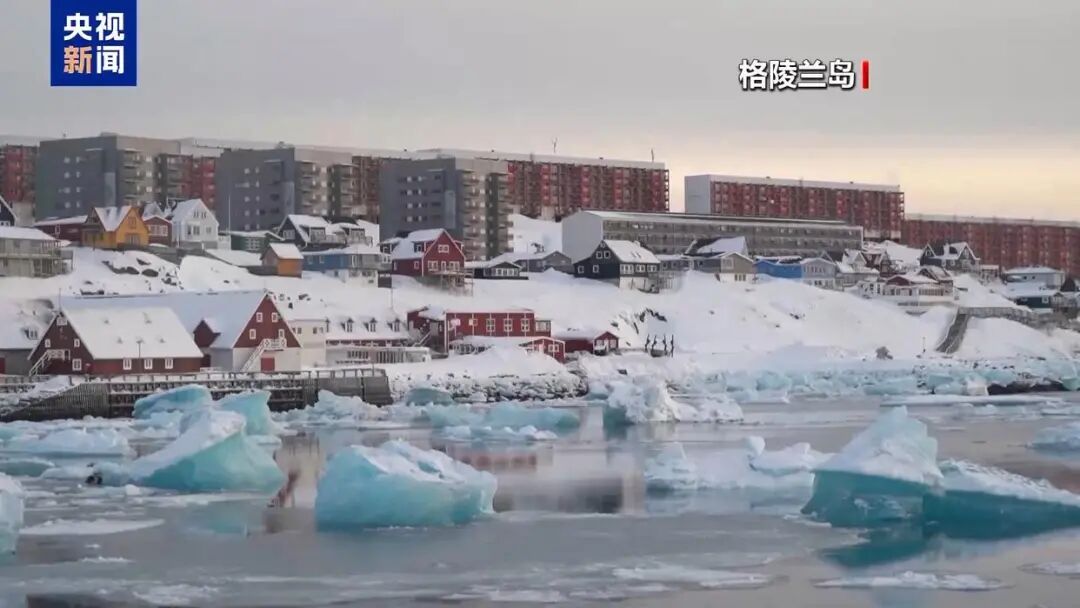
突发!美国将暂停对俄罗斯、巴西等75国所有签证!丹麦增兵格陵兰岛,特朗普:该岛对美国“金穹”系统至关重要
Mei Ri Jing Ji Xin Wen· 2026-01-14 16:23
Group 1 - The U.S. State Department announced a suspension of visa processing for applicants from 75 countries to combat potential public burden issues [2] - Affected countries include Somalia, Russia, Afghanistan, Brazil, Iran, Iraq, Egypt, Nigeria, Thailand, and Yemen [2] Group 2 - President Trump reiterated the U.S. interest in acquiring Greenland, stating its importance for the U.S. missile defense system known as "Iron Dome" [4][6] - The "Iron Dome" system is projected to cost approximately $175 billion and aims to integrate with existing U.S. missile defense capabilities [6] - Denmark has begun deploying military resources to Greenland in response to Trump's comments, indicating a potential increase in military presence [7] Group 3 - EU Commission President von der Leyen emphasized the EU's respect for the wishes of the Greenlandic people and their support [8] - French President Macron warned that any infringement on Greenland's sovereignty would lead to unprecedented repercussions, highlighting the EU's solidarity with Denmark [10]
