黄河调水调沙

Search documents
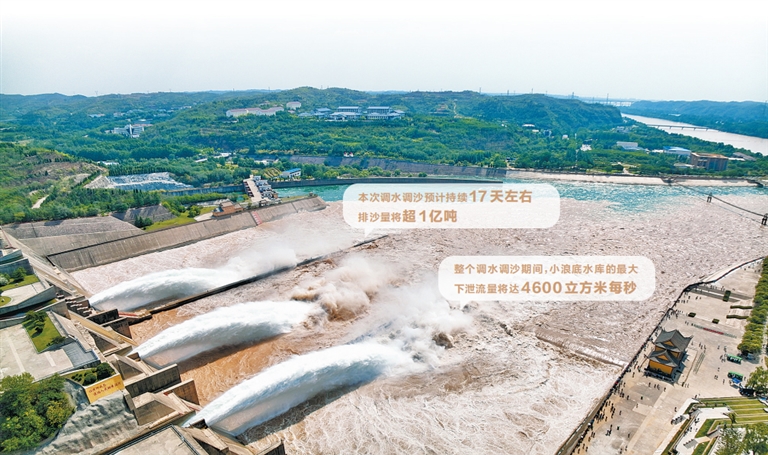
图解黄河调水调沙“名场面”
Ren Min Ri Bao Hai Wai Ban· 2025-07-01 22:47
Core Viewpoint - The Yellow River Xiaolangdi Water Conservancy Project has officially launched its water and sediment regulation for 2025, with an expected total sediment discharge exceeding 100 million tons during the operation period of approximately 17 days [2]. Group 1: Purpose of Water and Sediment Regulation - The water and sediment regulation aims to "create storage for flood prevention," reduce sediment accumulation in the reservoir, and maintain the flow capacity of downstream rivers. The Xiaolangdi project controls 91.2% of the Yellow River's runoff and nearly 100% of its sediment transport [3]. Group 2: Visitor Experience - During the water and sediment regulation period, the Xiaolangdi scenic area remains open to the public, allowing visitors to experience the impressive sight of the rushing water, which resembles a waterfall [4]. Group 3: Water-Sediment Relationship - The term "regulation" in the context of water and sediment management refers to adjusting the water-sediment relationship to enhance the flood discharge capacity of the river [5]. Group 4: Impact on Power Generation - When the sediment concentration in the water reaches a certain level, the power generation units will shut down to avoid damage. The Xiaolangdi power station has an average annual output of 5.8 billion kilowatt-hours, playing a crucial role in peak regulation within the Henan power grid [6]. Group 5: Impact on Aquatic Life - To mitigate the impact of high-sediment water on fish, clear water is released from three upstream reservoirs to dilute the sediment concentration. Additionally, special fishing operations have been conducted in advance, and fish stocking activities are ongoing to support aquatic life [7]. Group 6: Downstream Sediment Accumulation - Research indicates that maintaining a discharge flow of 2,600 cubic meters per second for over six days will effectively flush sediment from the downstream river into the sea. The regulation process consists of two phases: first, a large volume of clear water is released, followed by sediment discharge [8]. Group 7: Xiaolangdi Water Conservancy Project Overview - The Xiaolangdi Water Conservancy Project is a key engineering project for the management and development of the Yellow River, controlling a drainage area of 694,000 square kilometers, which is 92.3% of the total basin area. The project has a total designed capacity of 12.65 billion cubic meters and aims to provide flood control, sediment reduction, water supply, irrigation, and power generation [9].

黄河山东段河道迎来涨水过程,山东做好调水调沙期间黄河防汛工作
Qi Lu Wan Bao· 2025-06-25 08:20
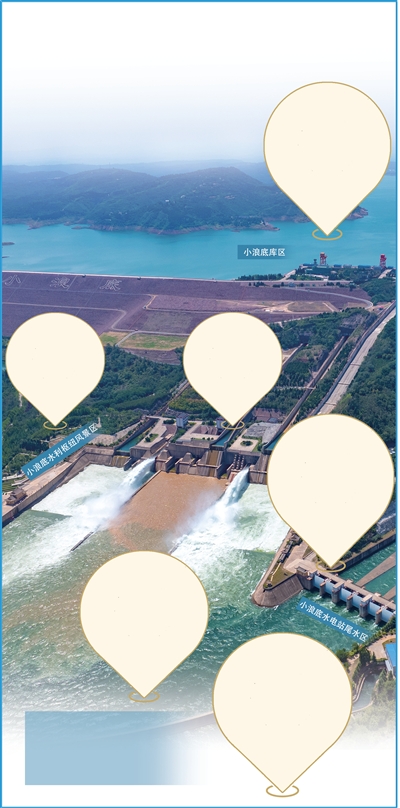
Core Points - The Yellow River's water diversion and sediment transport project is currently underway, with significant water flow entering Shandong province, indicating a proactive approach to manage water resources and mitigate drought conditions [1][2]. Group 1: Water Management and Flood Control - The Yellow River will officially enter its main flood season on July 1, necessitating the reduction of water levels in relevant reservoirs to ensure flood control capacity [2]. - The Yellow River Water Resources Commission has initiated a coordinated operation of multiple reservoirs to manage water flow effectively, with maximum discharge from the Xiaolangdi Reservoir expected to reach approximately 4,600 cubic meters per second [2]. - The ongoing water diversion and sediment transport project is characterized by high flow rates and extended duration, which may alter river dynamics and pose risks to river engineering structures in Shandong [2][3]. Group 2: Preparedness and Monitoring - The Shandong Yellow River Administration has revised and implemented water diversion and sediment transport plans, conducting over 40 flood prevention drills and identifying 134 key defense points [3]. - Continuous monitoring is being conducted using nearly 3,000 video surveillance units and over 220 drones to ensure early detection and response to potential flood risks [3]. - The administration is also preparing flood control materials, including 1.33 million cubic meters of stone and 28,300 tons of hemp rope, to ensure readiness during the water diversion process [3].
黄河第30次实施调水调沙 2025年黄河调水调沙正式启动
He Nan Ri Bao· 2025-06-23 23:27
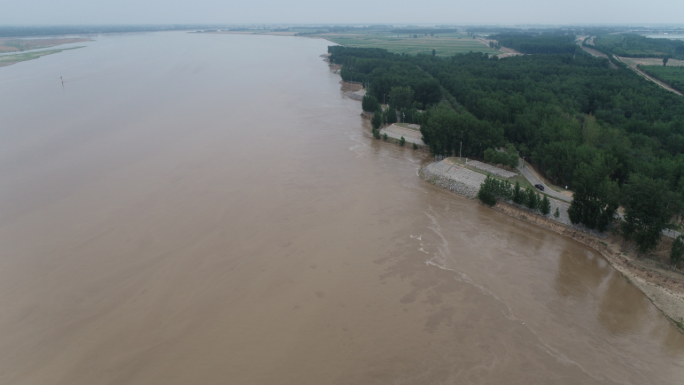
Core Points - The 2025 Yellow River water and sediment regulation officially commenced on June 23, with a significant increase in discharge flow to 2,600 cubic meters per second, marking the 30th implementation of this initiative [1][3] - The operation is expected to last approximately 17 days, with a total sediment discharge exceeding 100 million tons [1] - The Xiaolangdi Reservoir plays a crucial role in controlling 91% of the Yellow River's runoff and nearly 100% of its sediment transport [1] Summary by Sections Water Management Strategy - The water management strategy involves coordinated operations among the Wanjiazai, Sanmenxia, and Xiaolangdi reservoirs, with a maximum discharge flow of around 4,600 cubic meters per second [2] - The aim is to balance sediment discharge and ecological considerations, ensuring that sediment concentration at the Huayankou hydrological station does not exceed 359 kilograms per cubic meter [2] Historical Context and Impact - Since 2002, the Yellow River Water Resources Commission has conducted extensive research and experiments, leading to 29 previous sediment discharge operations that have cumulatively released over 2.5 billion tons of sediment [2] - These operations have successfully reduced the average riverbed elevation by 3.1 meters and increased the maximum flood capacity from 1,800 cubic meters per second to approximately 5,000 cubic meters per second [2] Objectives and Goals - The current operation aims to achieve multiple objectives, including ensuring irrigation and water supply for the downstream areas, maintaining the riverbed structure, and minimizing ecological impacts on aquatic life [2] - The initiative also focuses on ecological scheduling and delta ecological replenishment, while exploring sediment transport patterns in reservoirs and downstream rivers [2] Safety and Monitoring - The Yellow River Water Resources Commission will closely monitor weather conditions and enhance emergency response measures to ensure the safety and stability of the operation [4] - The Xiaolangdi management center will implement rigorous safety monitoring and inspections to maintain operational integrity throughout the discharge process [4]